
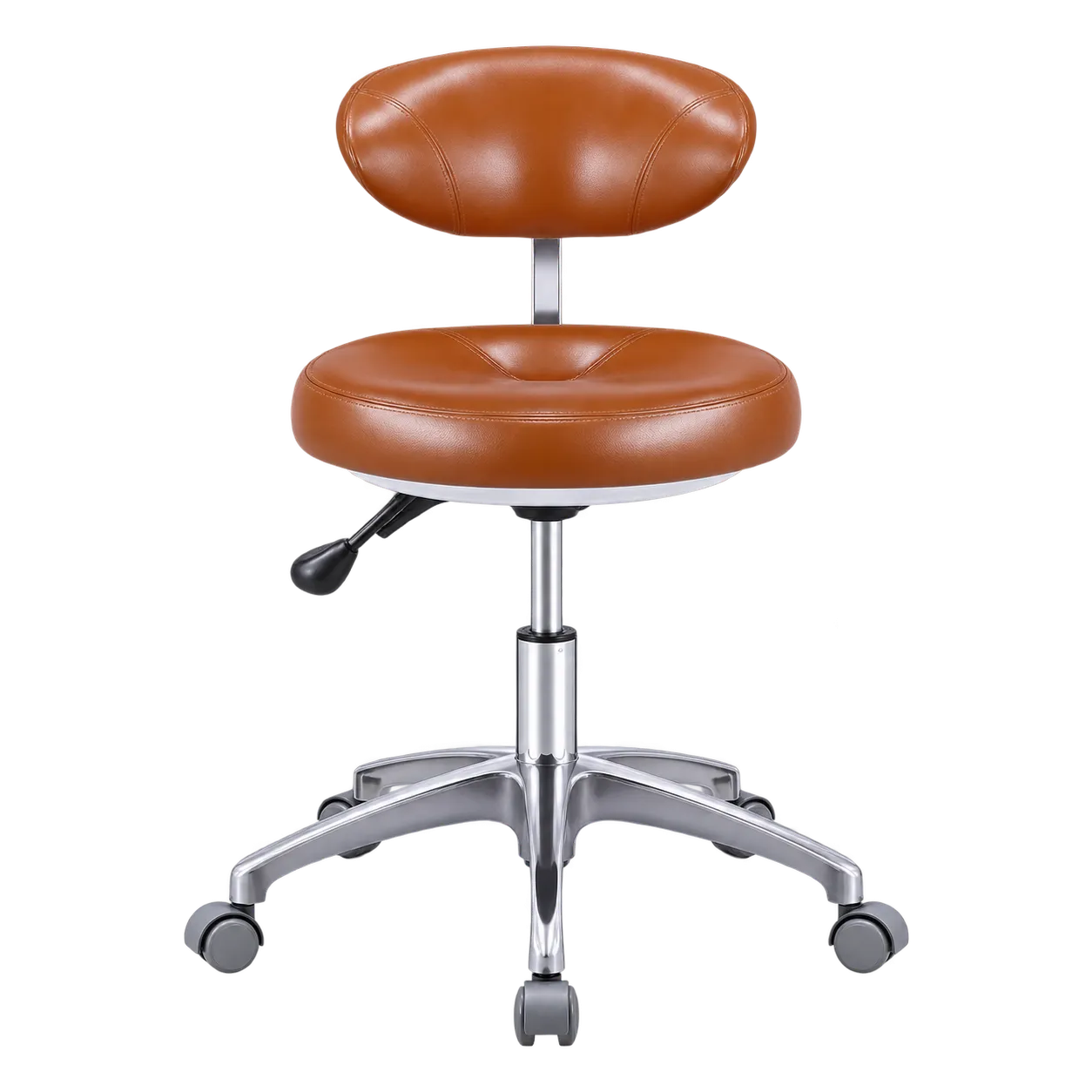
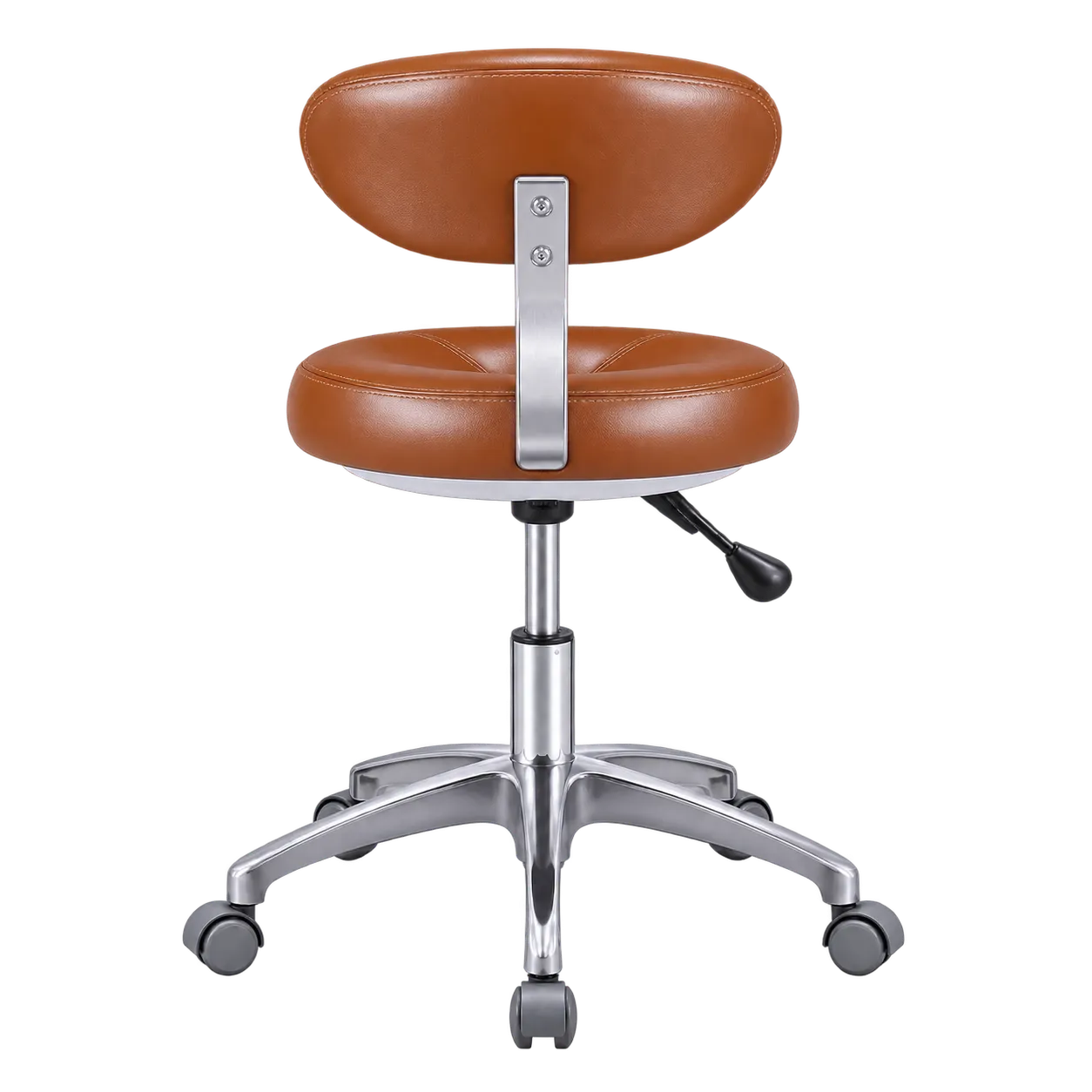
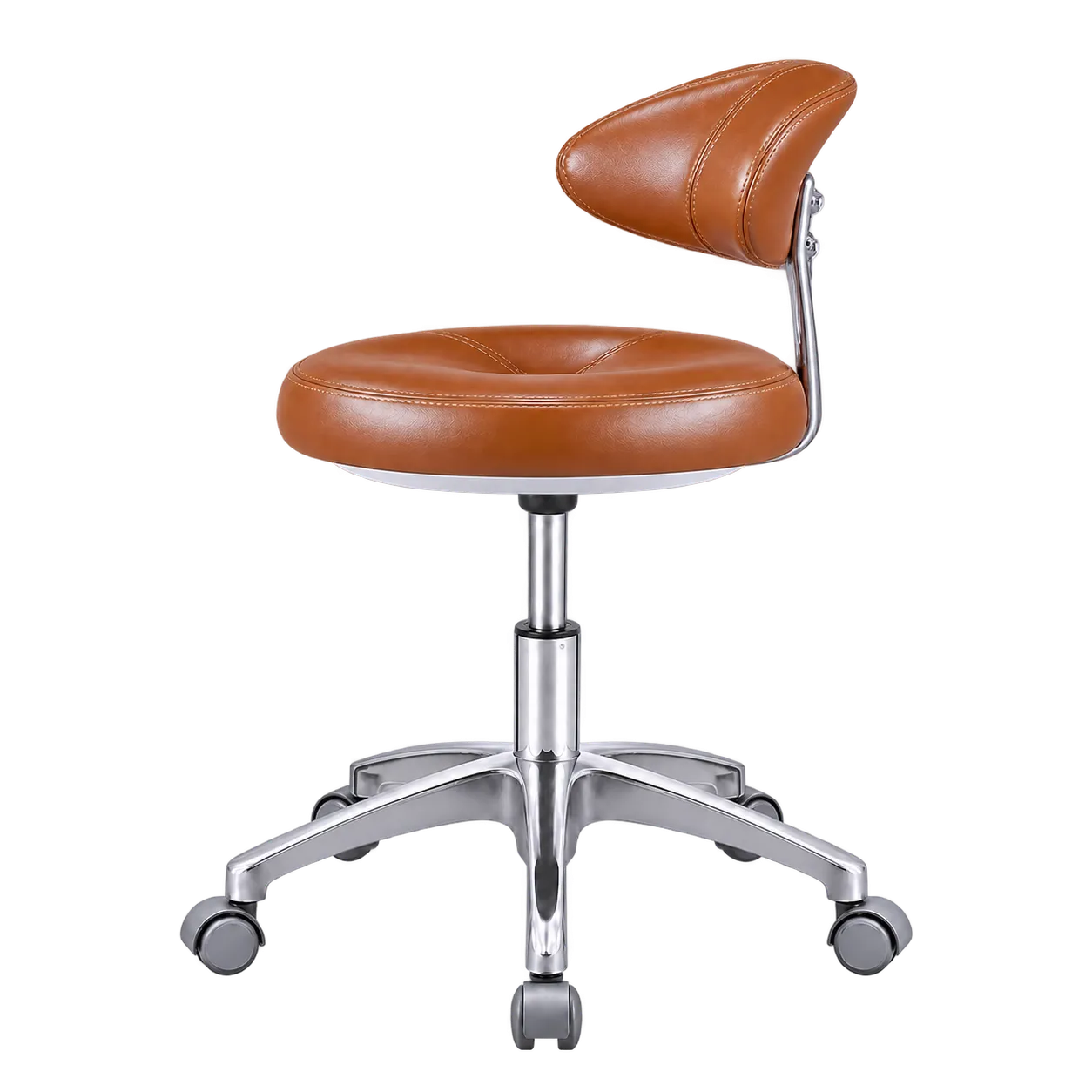
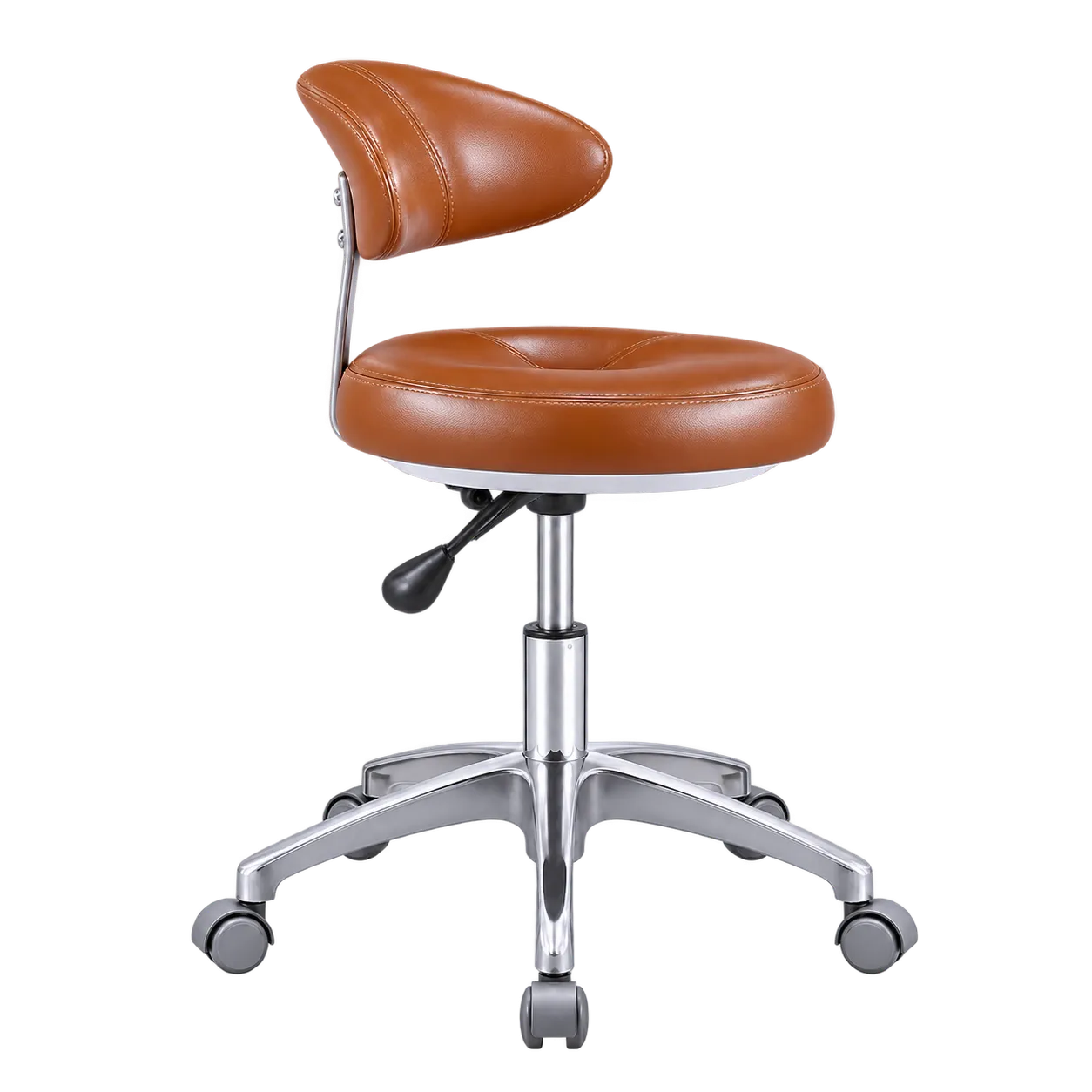
Sustained close work is the clearest fit. Slit lamp examination, contact lens fitting and detailed inspection keep a clinician in one position for long stretches, and a back that holds from three directions removes the small constant corrections a body makes to stay centred.
Rotating between instrument and record suits the high sides, since the sitter stays located through the turn rather than sliding towards the edge of the support.
Long clinic lists benefit most, as with any postural feature the advantage accumulates across hours rather than showing in a single appointment.
Patient-facing rooms suit the tan finish, which reads as warmer and less clinical than black or grey upholstery, subject to confirming how well it wears.
Practices addressing staff seating can treat this as a considered choice, since the enclosing form is a genuine design decision rather than a styling one.
Clinicians who stand frequently should try it first, because high curled sides make rising and sideways exit less easy than a narrow pad allows.
Wide working arcs are less well served, since leaning far out of the seat means leaving the support rather than taking it with you.
Shared rooms need the backrest adjustment established first, as an enclosing shape suits a narrower range of builds than a flat pad.