
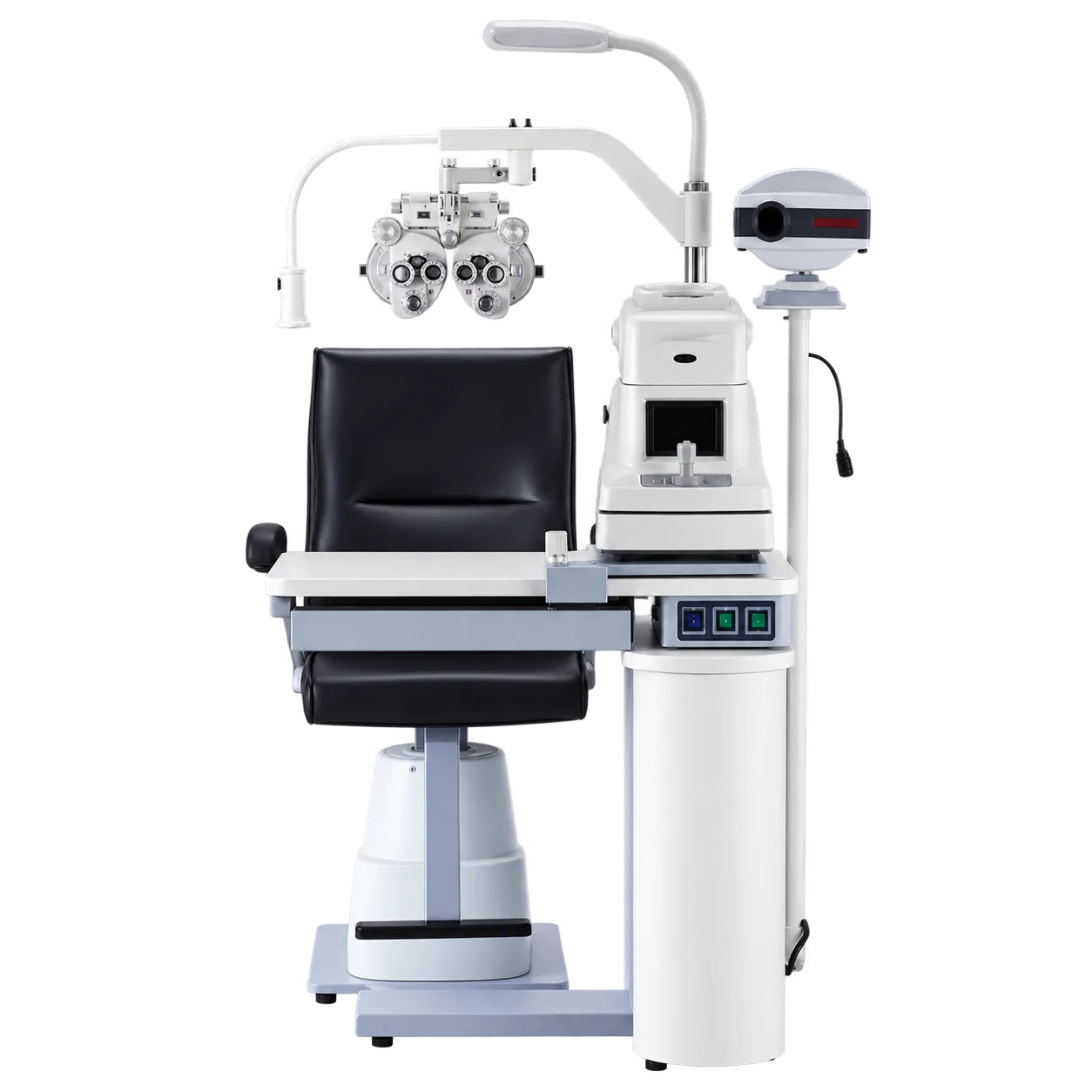
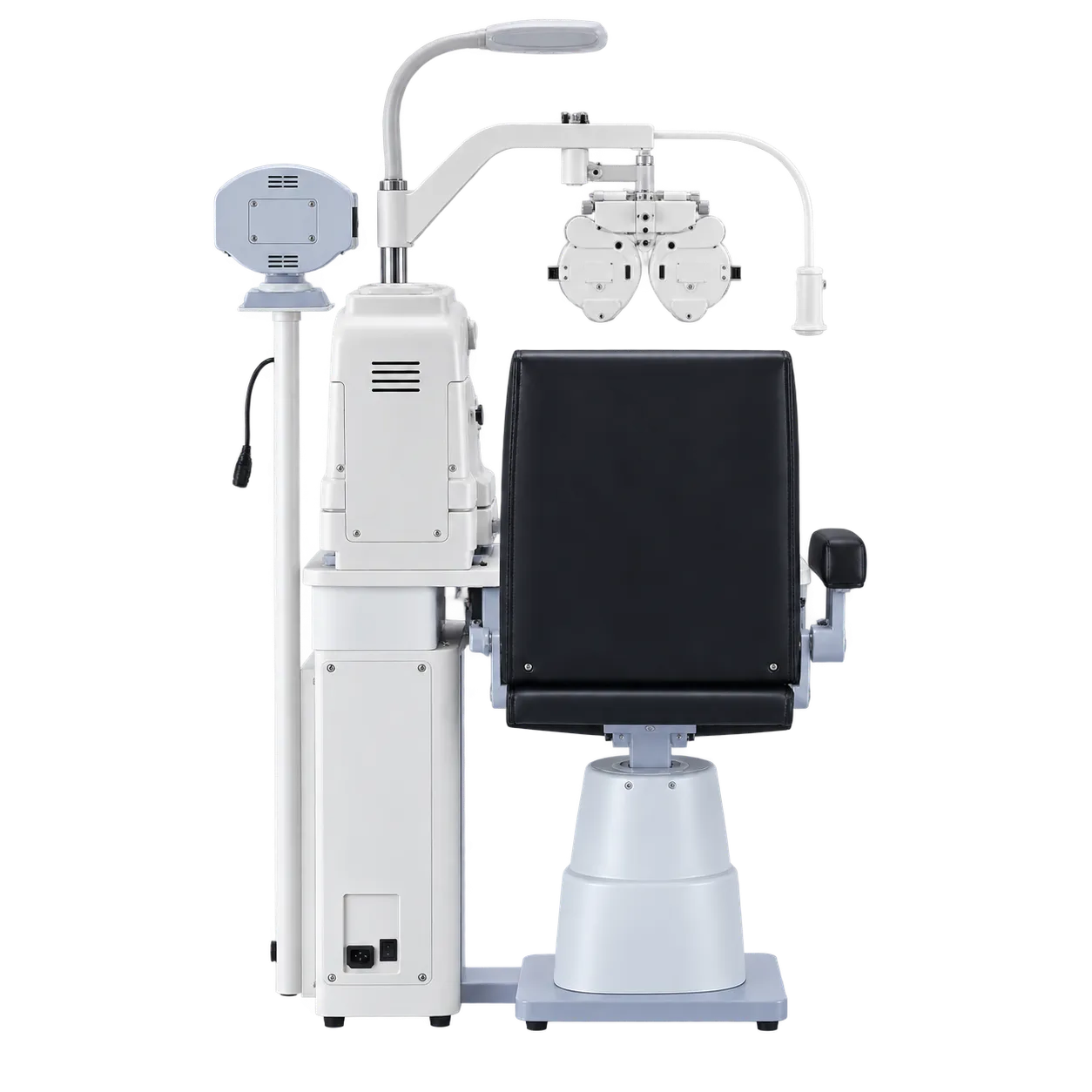
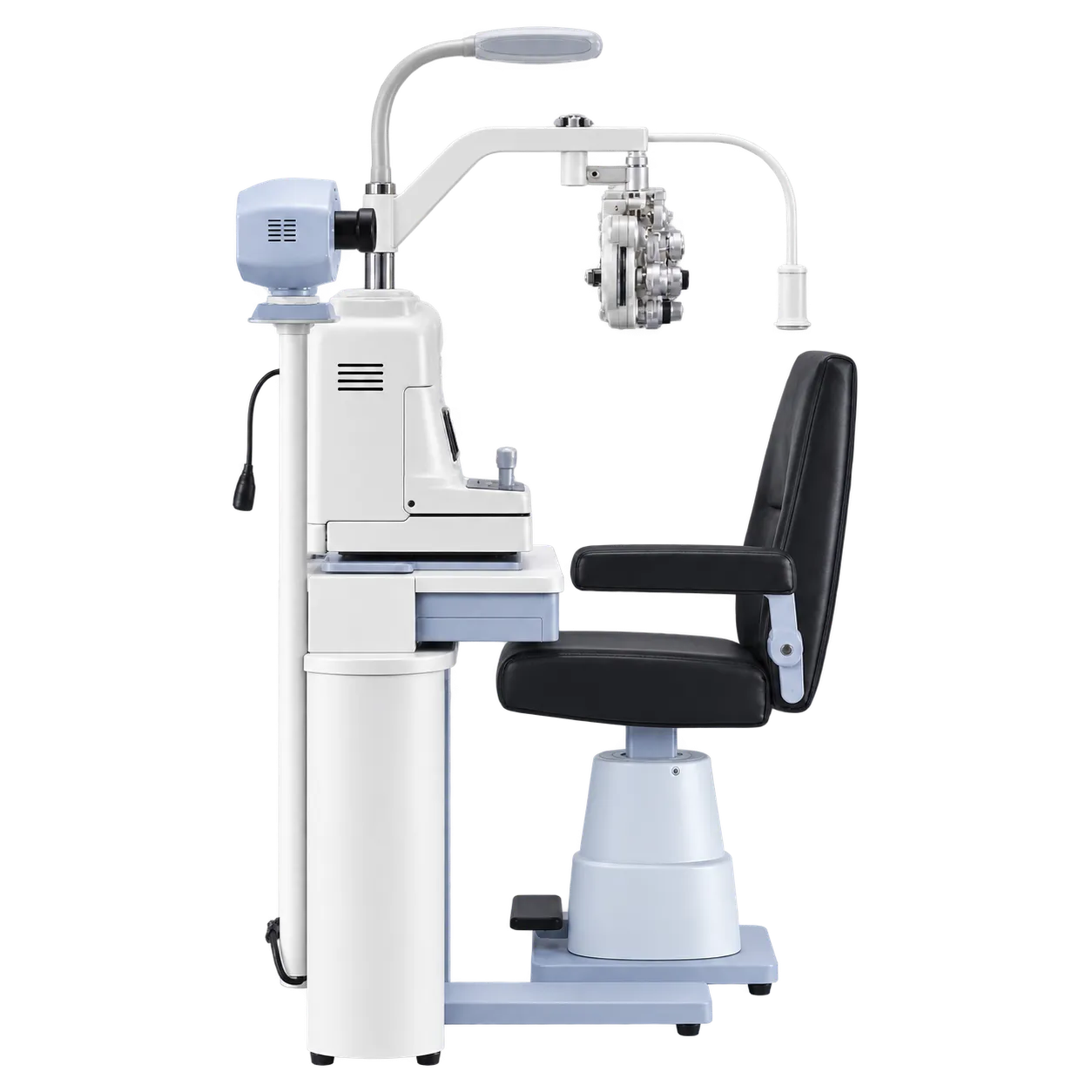
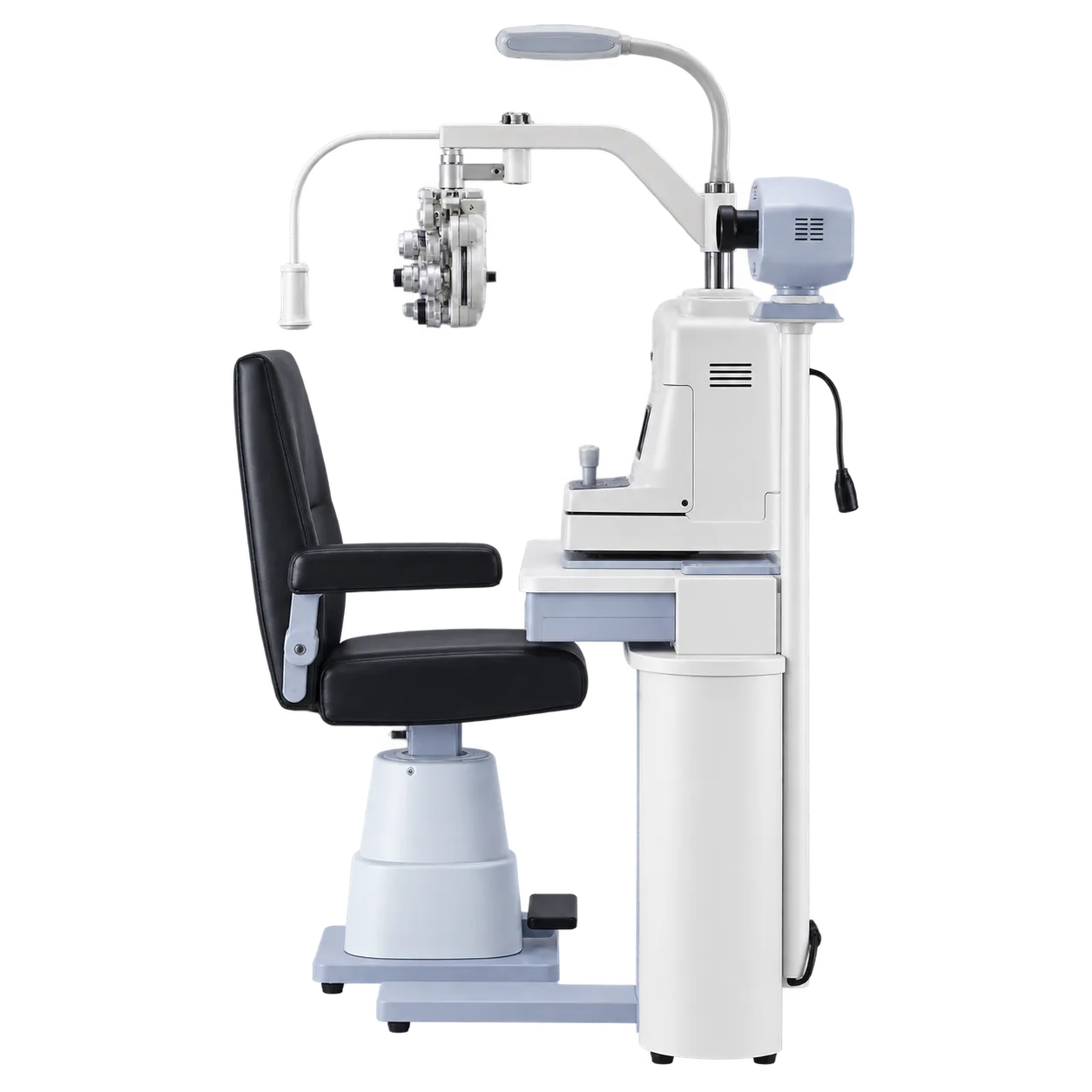
Laterally constrained rooms are the target, and they are the common case. A consulting room usually has depth to stand equipment against a wall and runs short across, particularly once a chair, a chart position and circulation space are accounted for. Taking 100 mm off the width while holding the 500 mm worktop depth constant addresses exactly that, rather than shrinking the dimension instruments actually need.
Corner installations gain most directly. A unit set into a corner requires its own width plus working space beside it, and in a room already carrying several functions that 100 mm is frequently what separates a layout that works from one merely tolerated.
Delivery into difficult premises is the second application. Standard UK internal door openings sit around 762 mm and 838 mm, so neither this nor the wider model passes straight through, but 910 mm is appreciably easier to angle through a frame or turn along a corridor — and 20 kg less to carry makes an upper-floor or period building a different proposition altogether.
Instrument capability is unchanged. Worktop depth stays at 500 mm, so a deep slit lamp base sits exactly as squarely as it would on the wider unit, and the drawer remains 60 mm internally — the deepest recess in this range and enough for trial lens cases that shallower units reject.
Two things belong in the decision. The table is 130 mm shorter along its length, which affects how much sits side by side rather than how anything sits front to back, so an instrument layout should be checked against 880 mm before ordering. And chair loading is unpublished, so the rated capacity must be requested in writing before any accessibility question can be answered.