
High Volume Screening
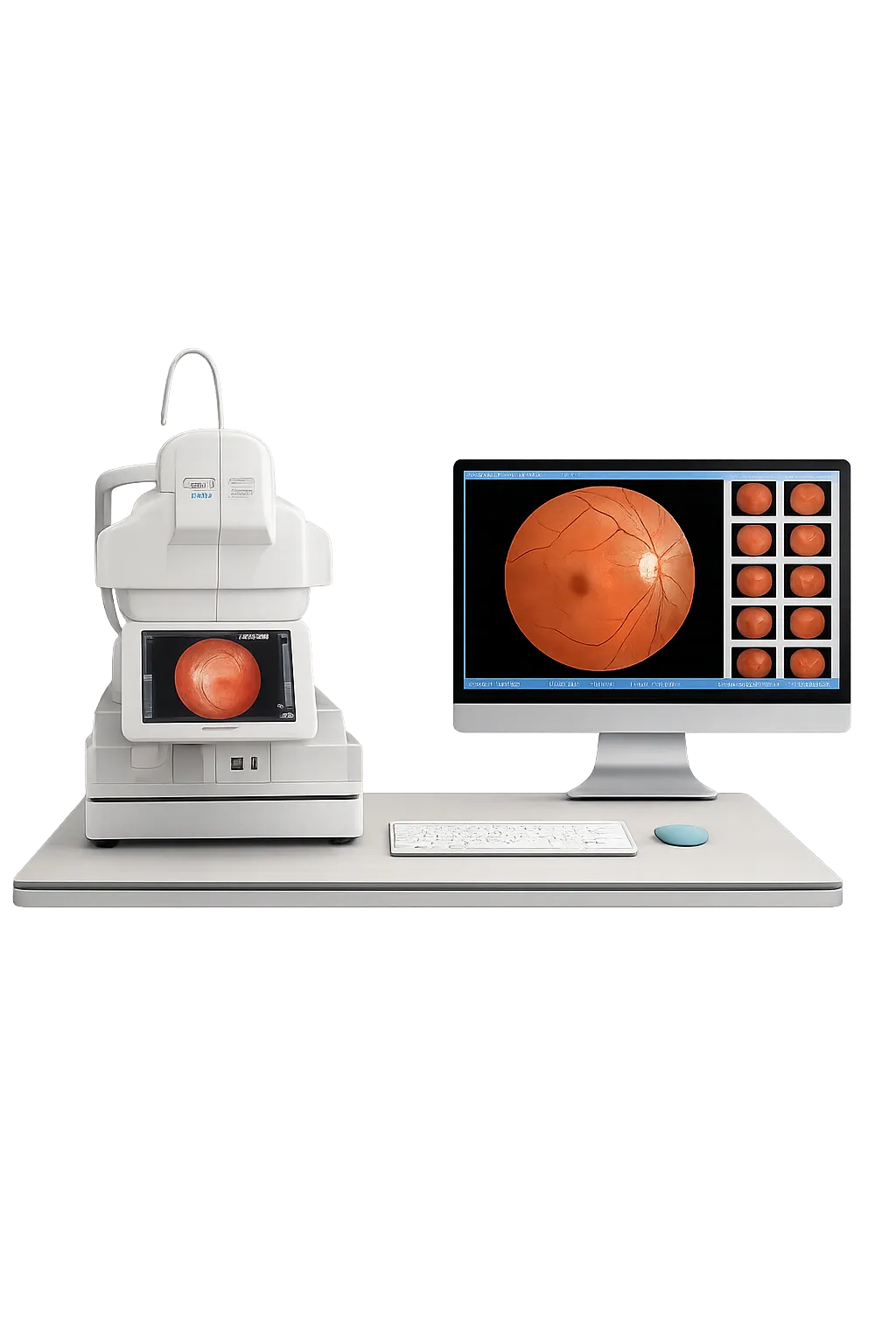
Automating alignment, focus and chinrest positioning means a capture sequence runs with minimal operator input, which suits services imaging many patients in succession. Consistency of process across operators is where variation would otherwise enter, and interpretation of any image rests with the clinician or grader reviewing it. Throughput and consistency both improve accordingly. Graders review what the instrument records. Minimal input keeps a sequence moving quickly. Variation between operators is where quality slips.
Services With Varied Operator Experience
An instrument that positions and focuses itself reduces dependence on individual technique. Where imaging is performed by staff of differing experience, that consistency matters, and the manual mode remains for the cases automation cannot handle. Individual technique matters less as a result. Experience levels vary across most services. Consistency follows from the automation itself. A fallback covers what automation misses.
Patients With Small Pupils
A 3.3 millimetre minimum with a dedicated small pupil mode extends undilated imaging to patients who would otherwise need drops. Whether any individual patient can be imaged without dilation is a clinical judgement rather than a specification question. Drops are avoided for a wider group of patients. Dilation remains a clinical decision throughout. Undilated imaging suits routine appointments well. Narrow pupils no longer rule out an examination.
Departments Performing Angiography
Fluorescein angiography is documented among the capture modes, but it requires intravenous dye and therefore consent, trained staff and emergency provision. Those sit with the service, and the card supplies no angiographic specification for the instrument itself. Equipment is the smaller part of adopting angiography. No angiographic figures appear on the card. Consent and staffing are service responsibilities. Angiographic figures are absent from this card.