
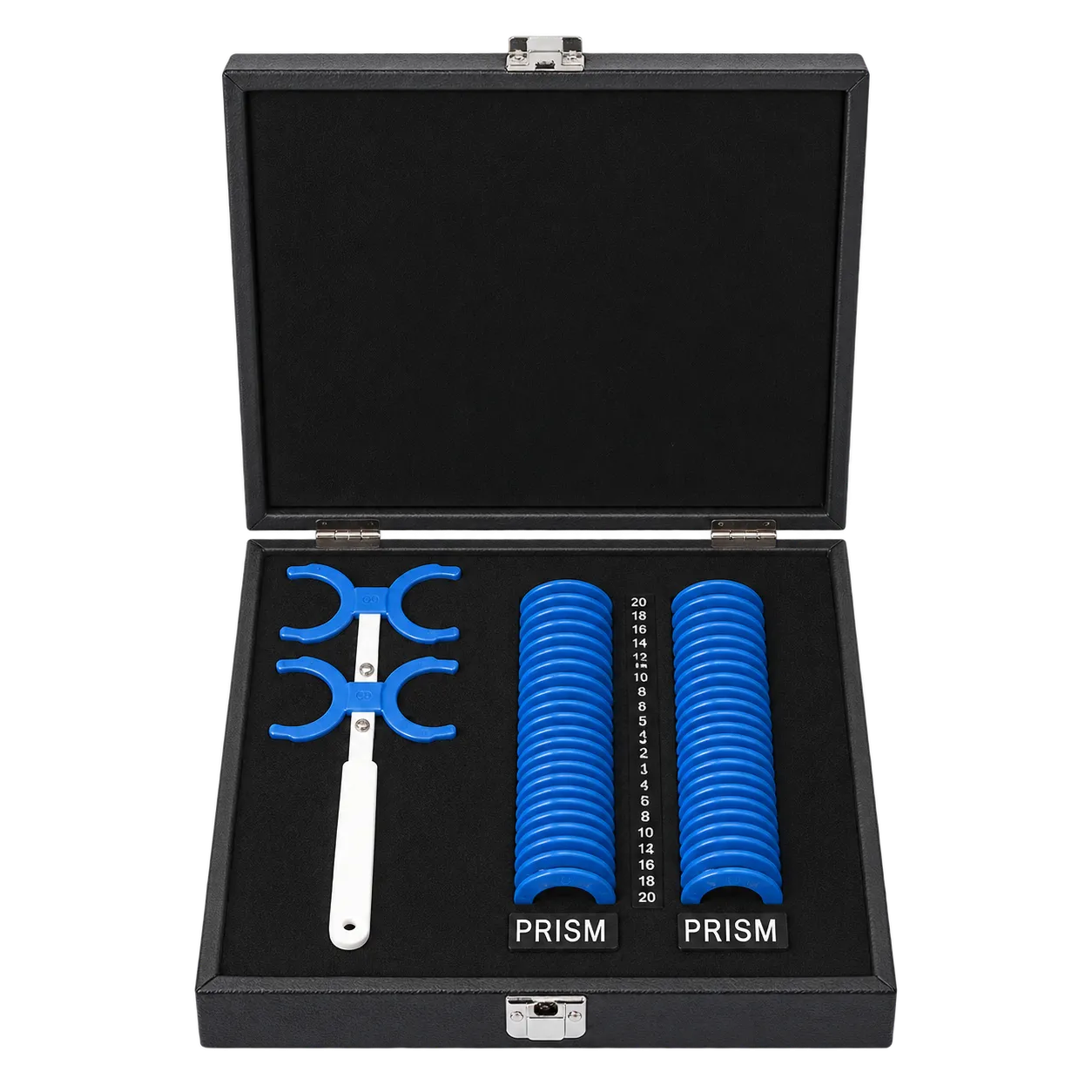
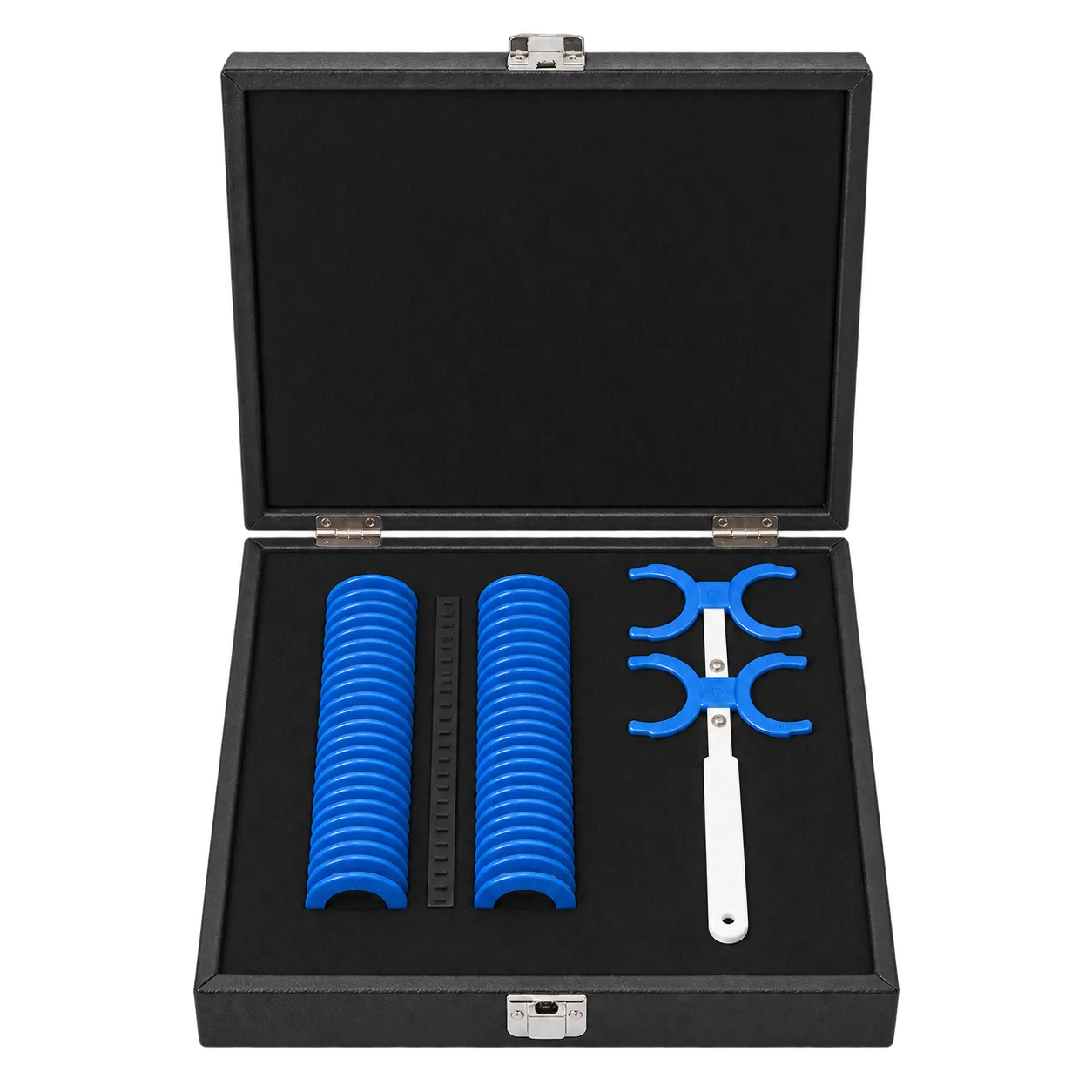
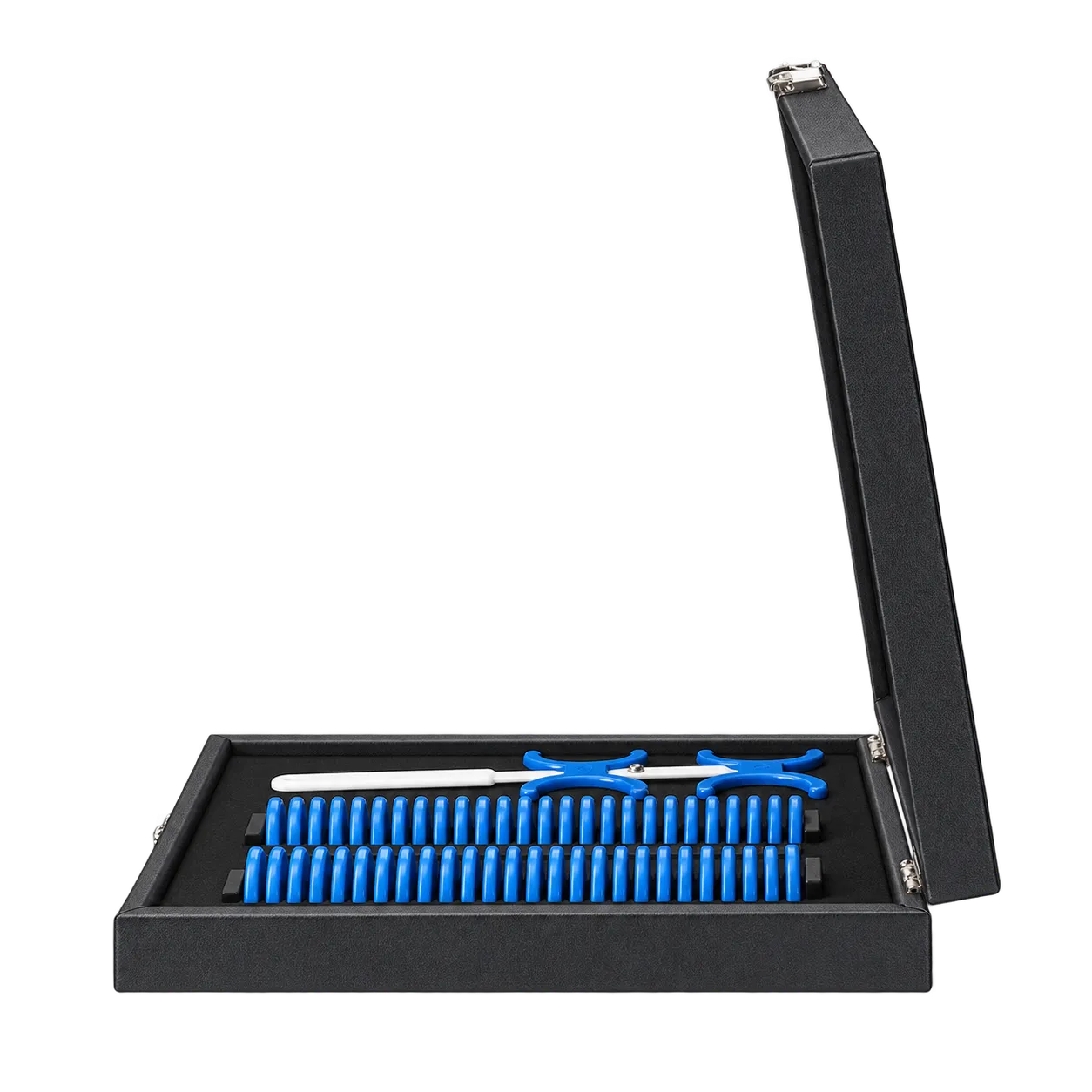
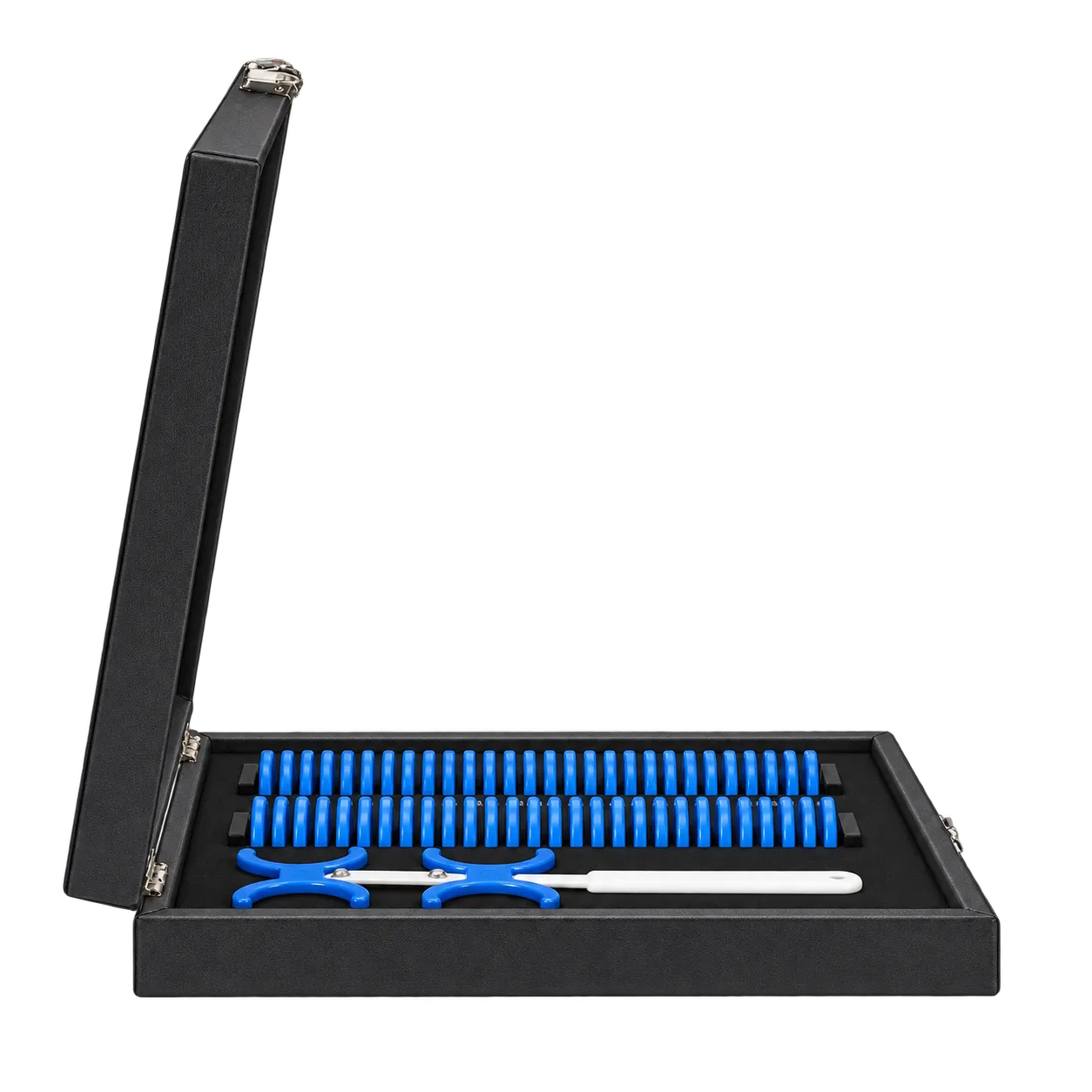
Binocular vision clinics and orthoptic departments are the natural setting. Measuring a heterophoria, neutralising a fixation disparity and running a prism trial in free space all need a set of loose prisms that can be placed and changed quickly. The quarter-step range up to 4 suits the small vertical and horizontal amounts that often relieve symptoms.
Community optometry practices use prisms at the end of a sight test when a patient reports intermittent double vision, eyestrain at near or a vertical imbalance. Finding the smallest effective prism before prescribing keeps spectacle lenses thinner and avoids a costly remake if the prism proves unnecessary. Published trials disagree about base-in prism for convergence insufficiency, so a careful trial before prescribing is the prudent course.
Neuro-ophthalmology and stroke services see acquired diplopia from nerve palsies. Trying prism in a trial frame shows whether the patient can fuse with a given amount, and at which gaze positions, before a temporary or permanent correction is ordered.
Paediatric and squint clinics use prisms alongside cover testing to measure deviations, though larger strabismic angles need methods that reach beyond 10 per piece.
Teaching clinics use loose prisms to show students how base direction and power affect image displacement.
The set does not suit a buyer who needs a documented unit, base marking or holder without first confirming them, or a practice that needs spheres and cylinders. Institutional buyers commonly ask for evidence of conformity. The conformity documentation those procurement routes require is issued by the manufacturer and provided by the seller.