
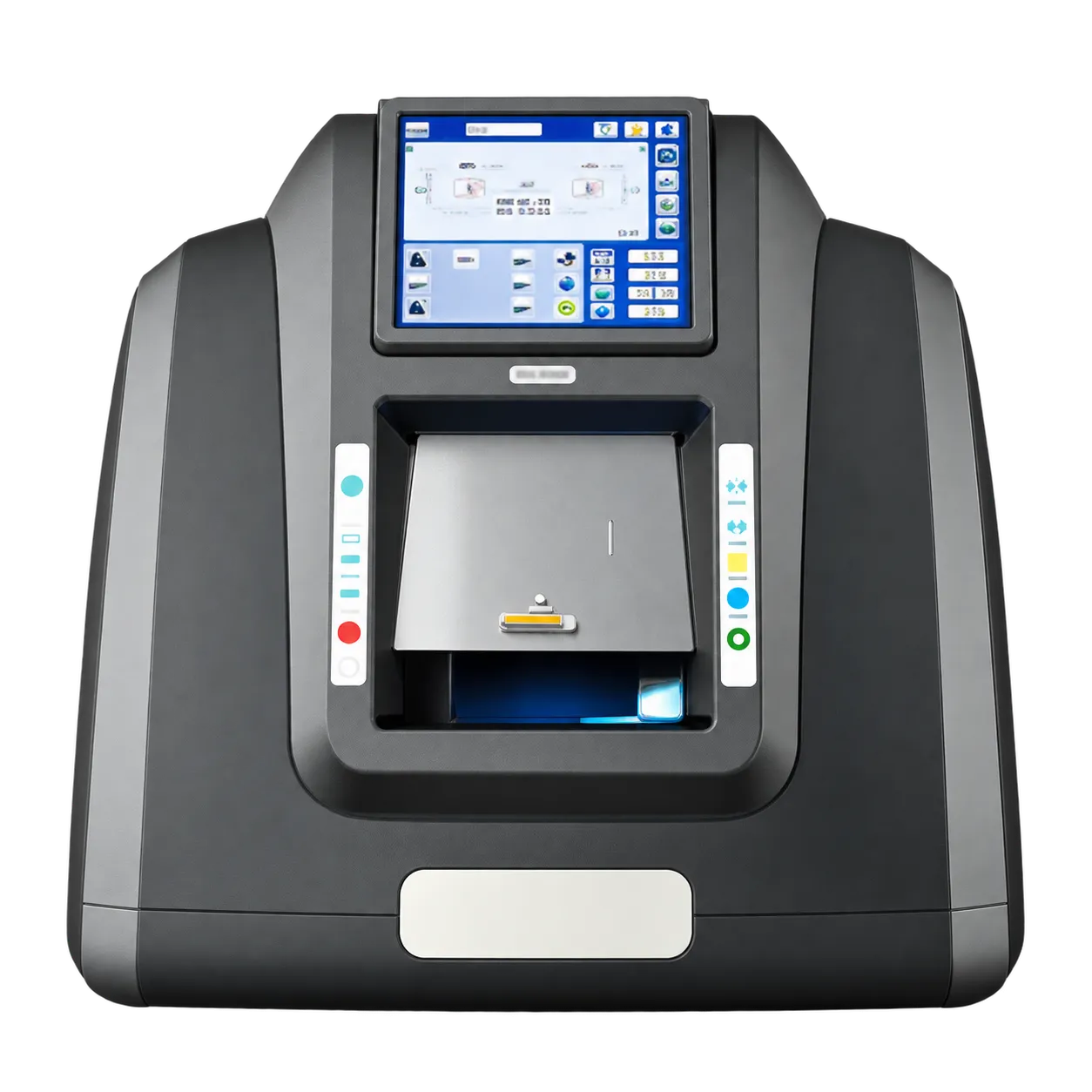
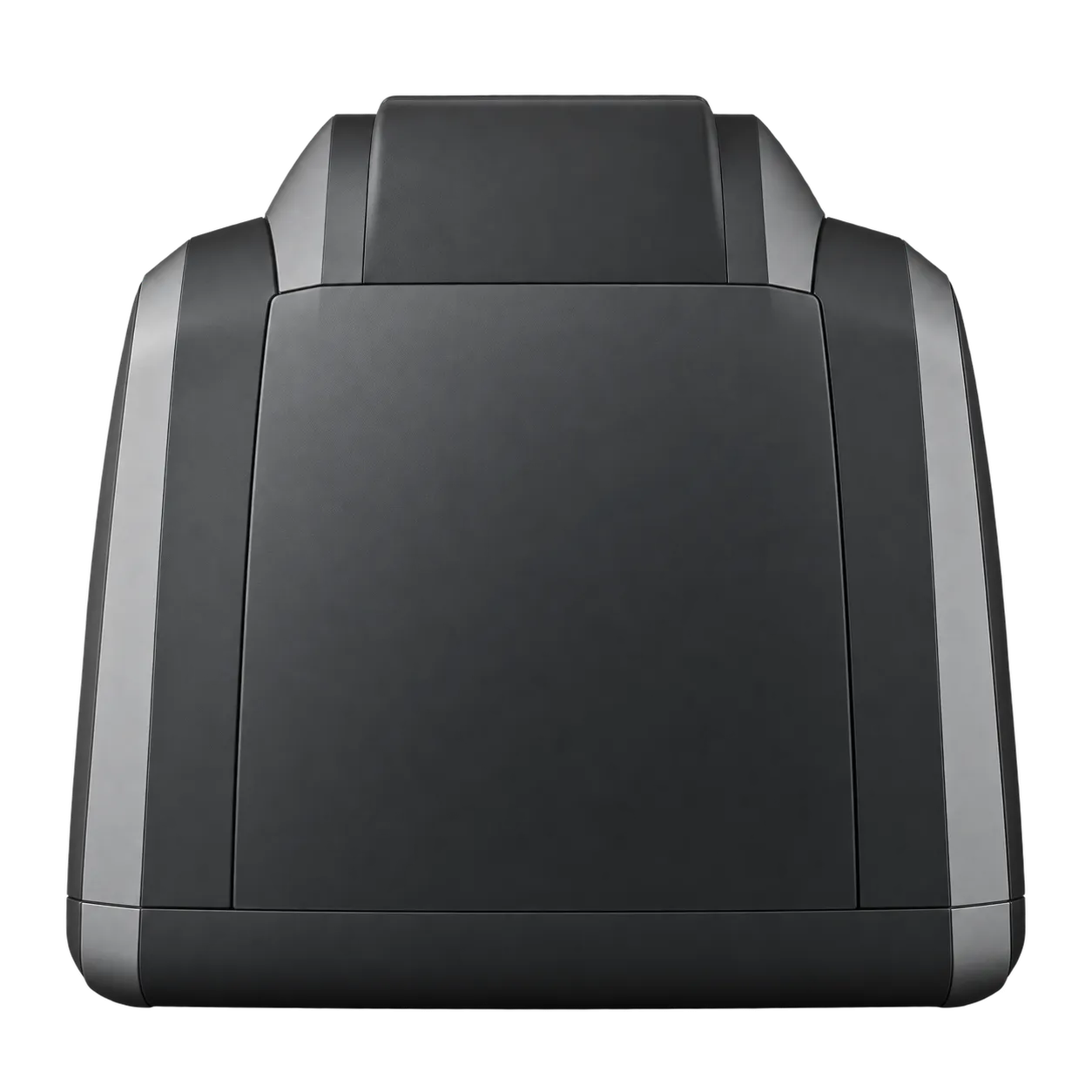
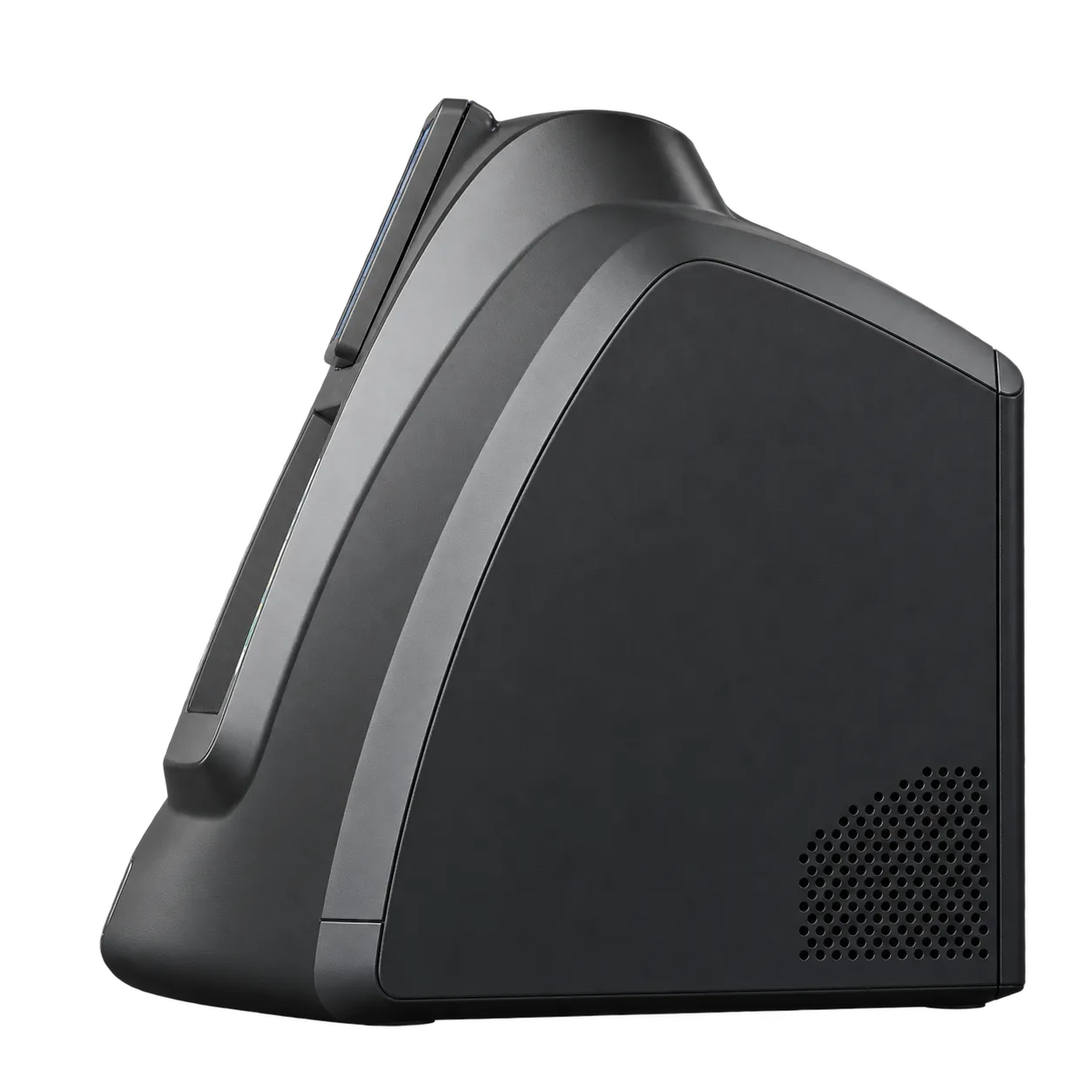
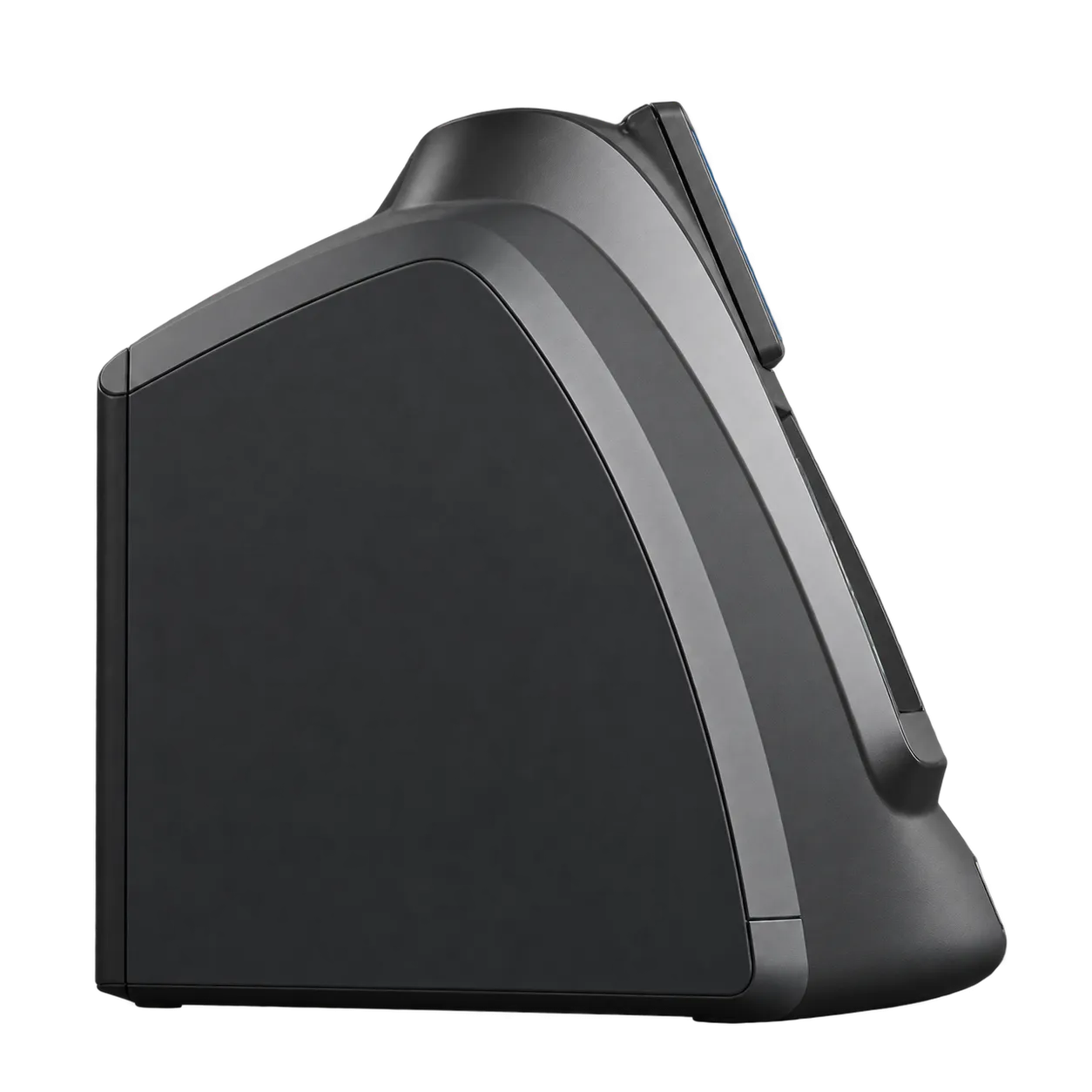
The PLE-6800 is aimed at optical practices and laboratories that regularly glaze high-curve lenses, such as wrap sunglasses and sports frames, alongside everyday prescriptions. In an independent optical practice with a workroom, the adaptive clamp chuck and bidirectional feelers allow these steeper lenses to be edged in-house, with clamping force balanced through each cycle.
Optical technicians and glazing staff work from the 10.4-inch touch screen, angled to suit their working height. Shapes appear at 1:1, so a frame can be laid against the screen and compared with the scanned graphic. The screen gives direct access to edge type, polishing, bevelling ratio, size correction and regrinding, and scanned graphics can be edited before cutting.
Dispensing opticians can place the PLE-680 scanner at the dispensing desk and trace the customer's chosen frame during the appointment. Its dual-centre optical imaging completes a scan in under 3 seconds to a precision of 0.1 mm.
Optical laboratories serving several practices can interconnect more than one machine and store up to 400 images on the edger. The material range covers plastic, polycarbonate, high-index plastic, glass and Trivex, so mixed orders can share one edging station. Flat edging and polishing suit rimless and semi-rimless work, while normal, auto and manual bevelling cover full-rim frames.
Hospital eye departments and eye clinics with an on-site glazing room can use the system to complete spectacles for patients within the building. The scanner can sit in the clinic area while the edger runs in the glazing room.
Eyewear retailers with a central workshop can run interconnected machines in a hub, with scanners placed where frames are dispensed.