
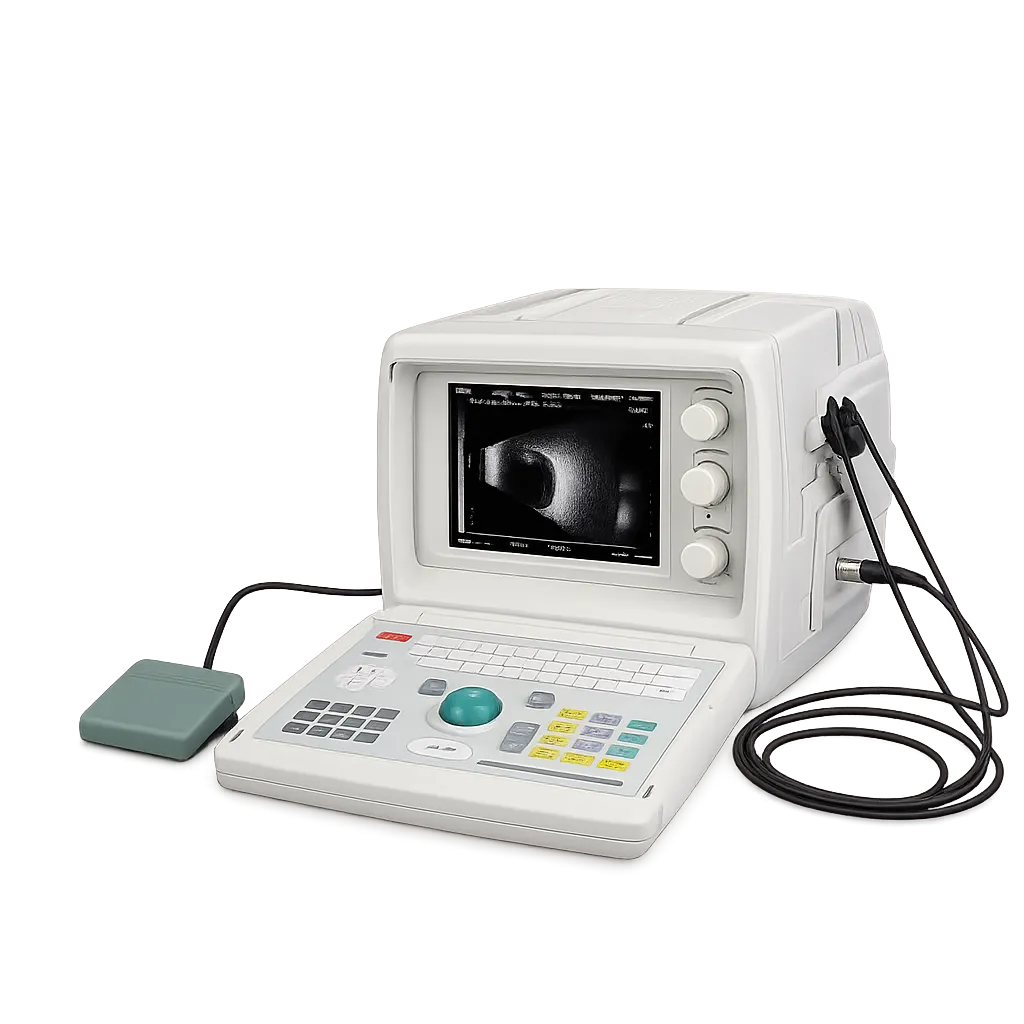
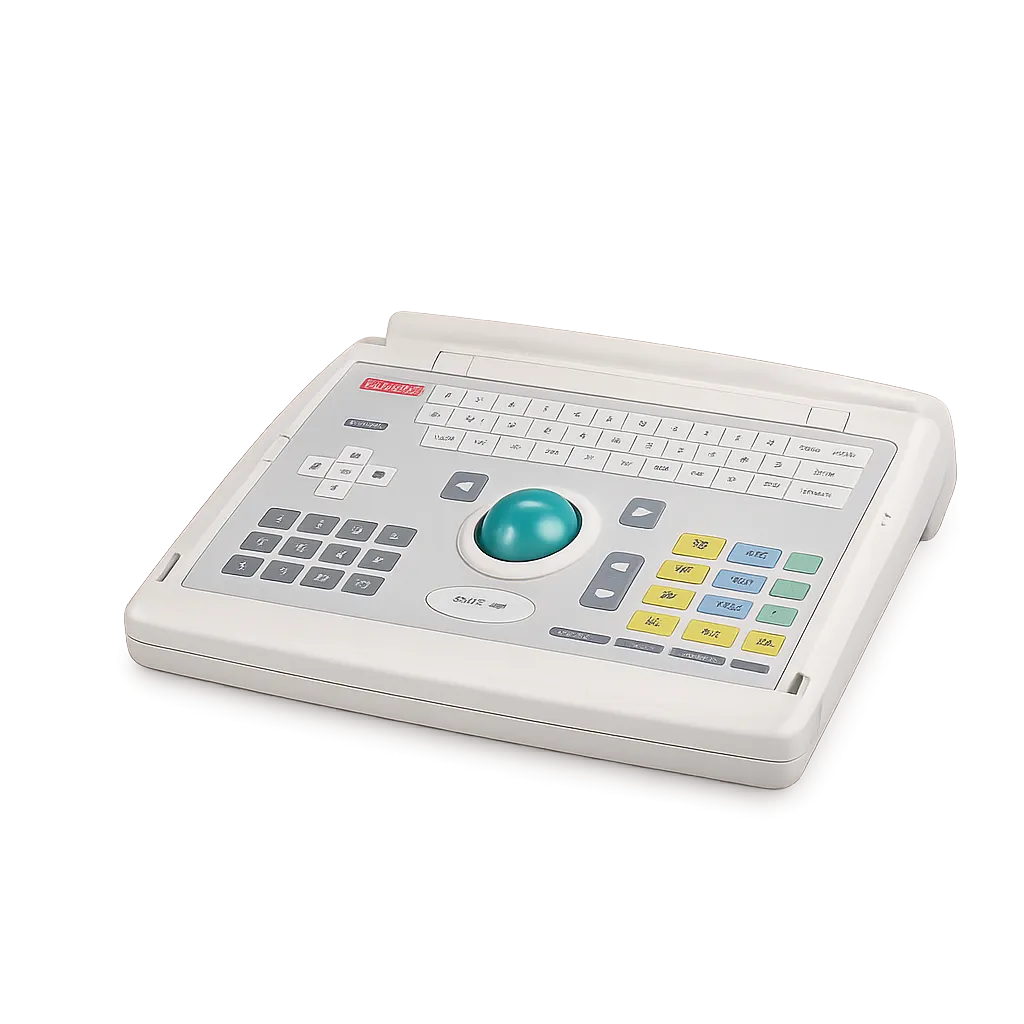
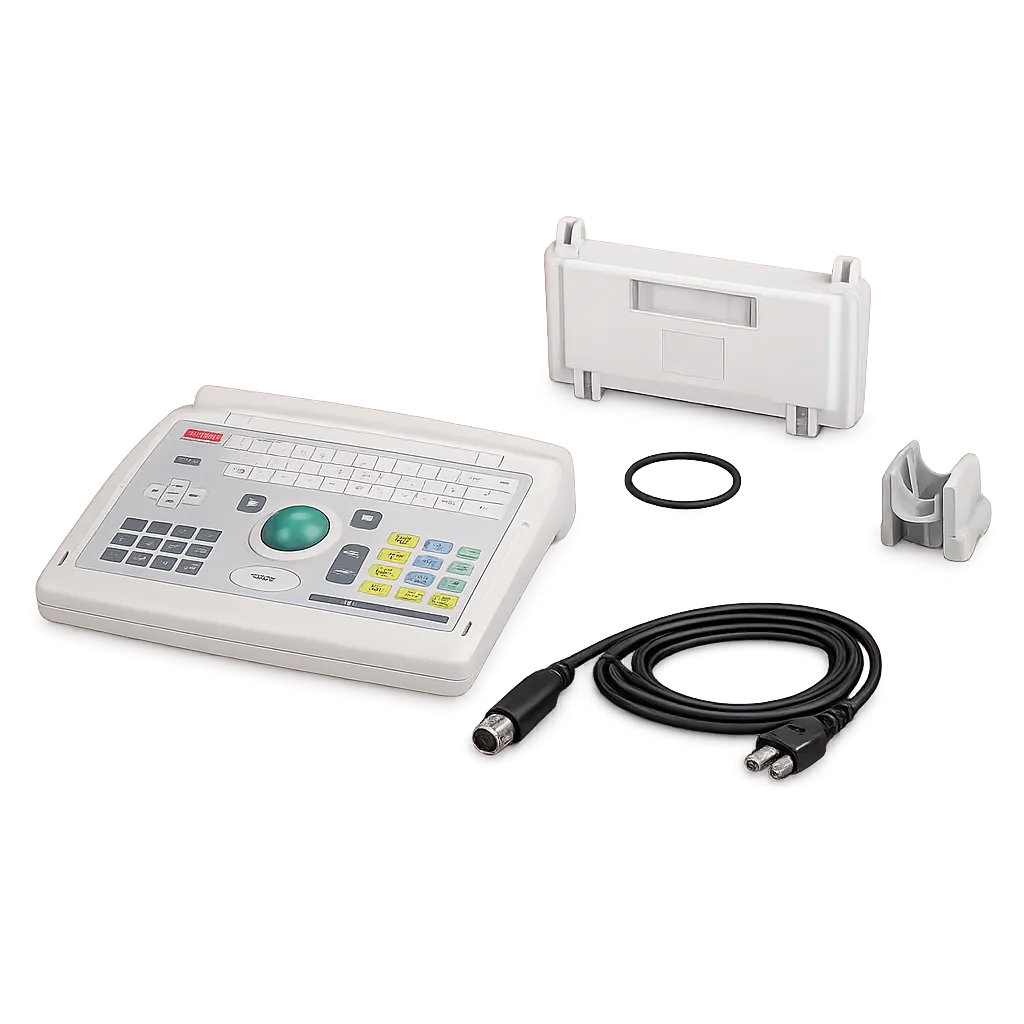
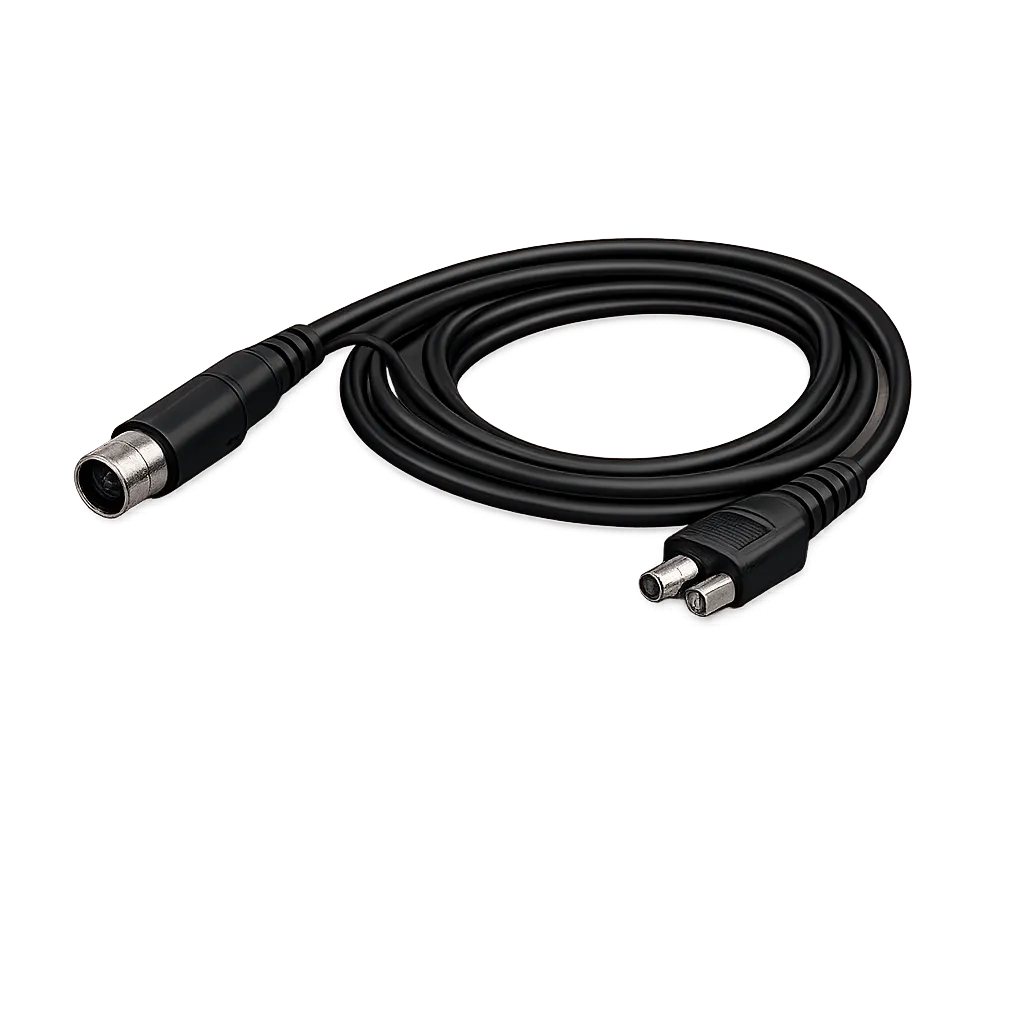
Ophthalmology clinics performing B-scan work under a practical constraint that the specification sheet does not describe: both hands are occupied. One steadies the probe against the eye, the other frequently supports or reassures the patient, and neither is available for the console. Foot switch operation removes that constraint, allowing freeze and capture without breaking contact or asking an assistant to press keys. Product imagery shows a foot switch, and Medigear.uk confirms whether it forms part of standard supply.
Services procuring against a documented audit trail are well served here. The manufacturer holds an FDA 510(k) clearance for 10 MHz A-scan and B-scan that specifically names the ODM-2100. That clearance is traceable to a regulator's own document because it appears as a cited predicate in a separate manufacturer's submission. For procurement that must evidence provenance rather than accept a badge, this is a stronger position than most equipment in the class offers.
Posterior segment assessment benefits from depth adjustment across 34 to 60 mm with eight zoom steps and a variable display area, alongside five-segment time gain compensation that independently balances near-, mid-, and far-field. Cineloop allows a sweep to be reviewed rather than judged on the frozen frame, which is how B-scan findings are most reliably identified. All interpretation remains with the practitioner.
Cataract planning uses the supplied 10 MHz A-mode biometric probe, with axial length biometric measurement stated among the intended applications. Both probes ship as standard, so biometry is available from delivery rather than requiring a separate purchase and a second supplier conversation.