
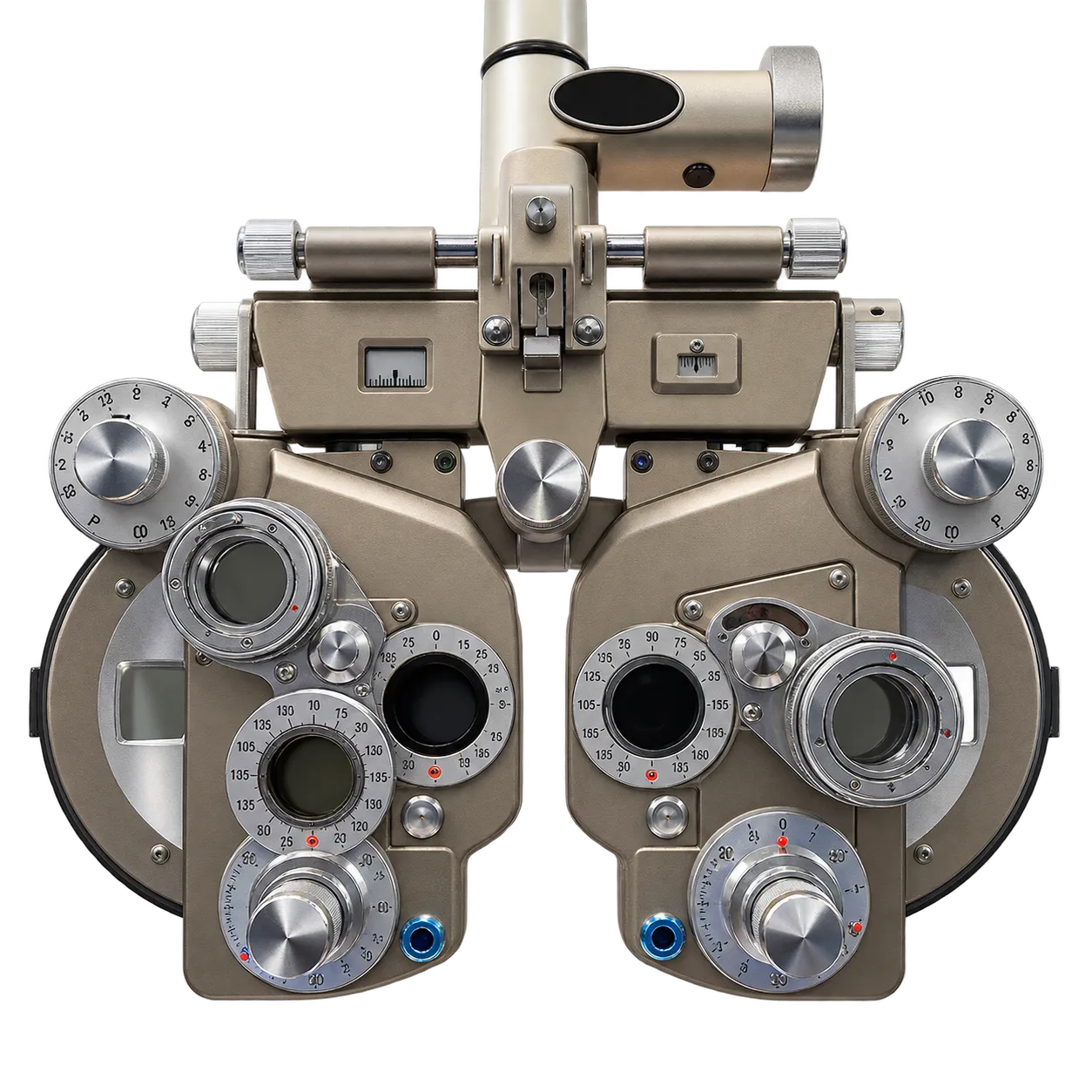
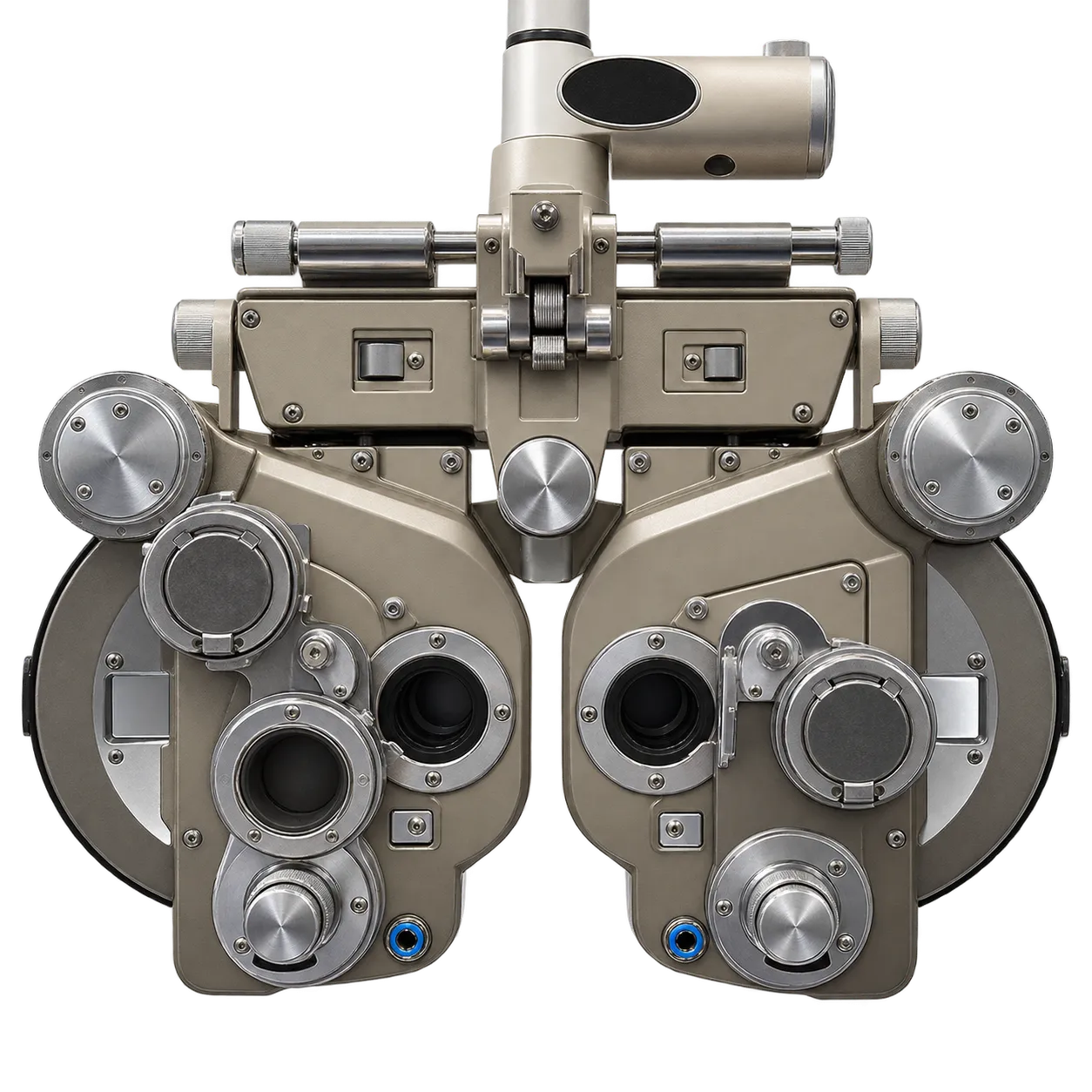
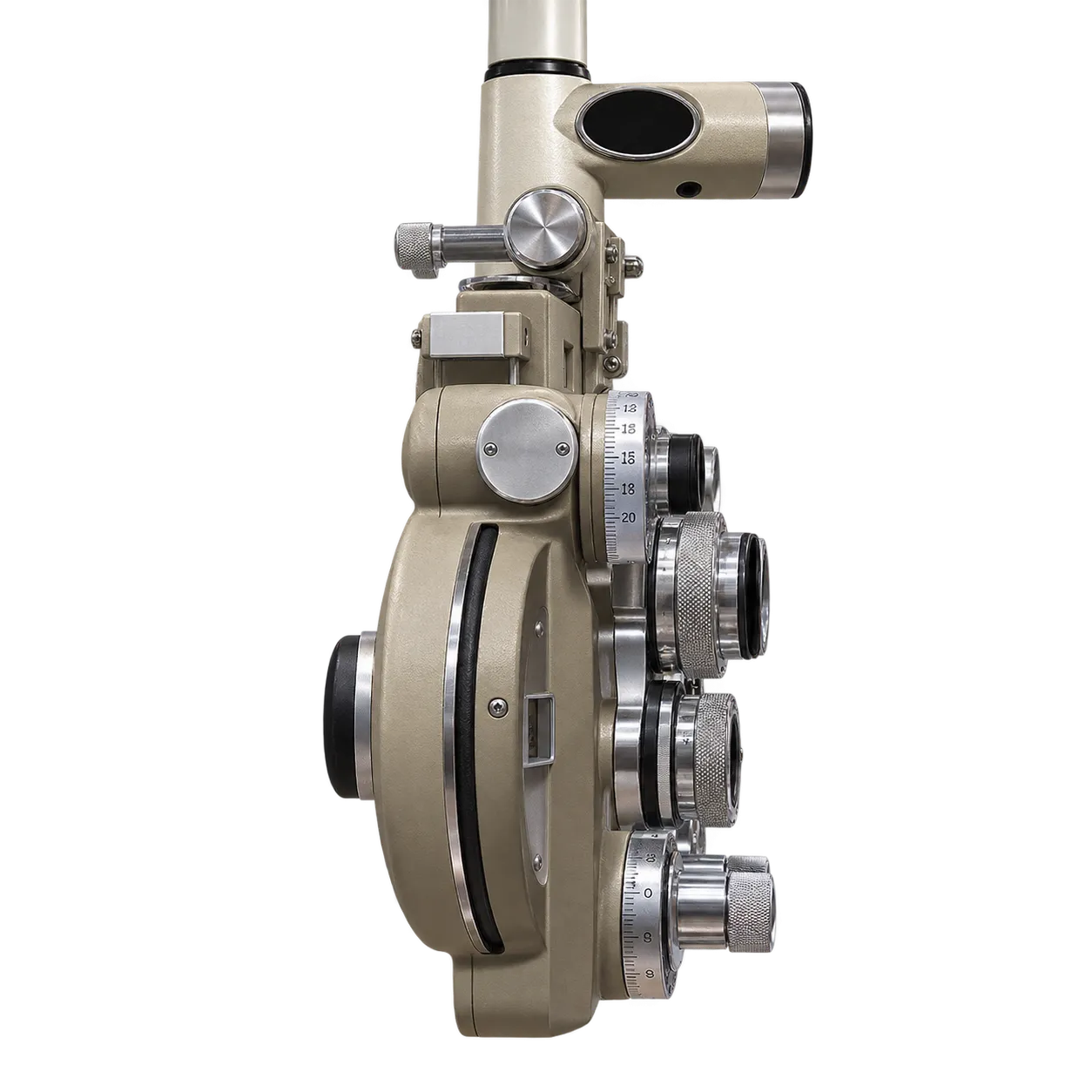
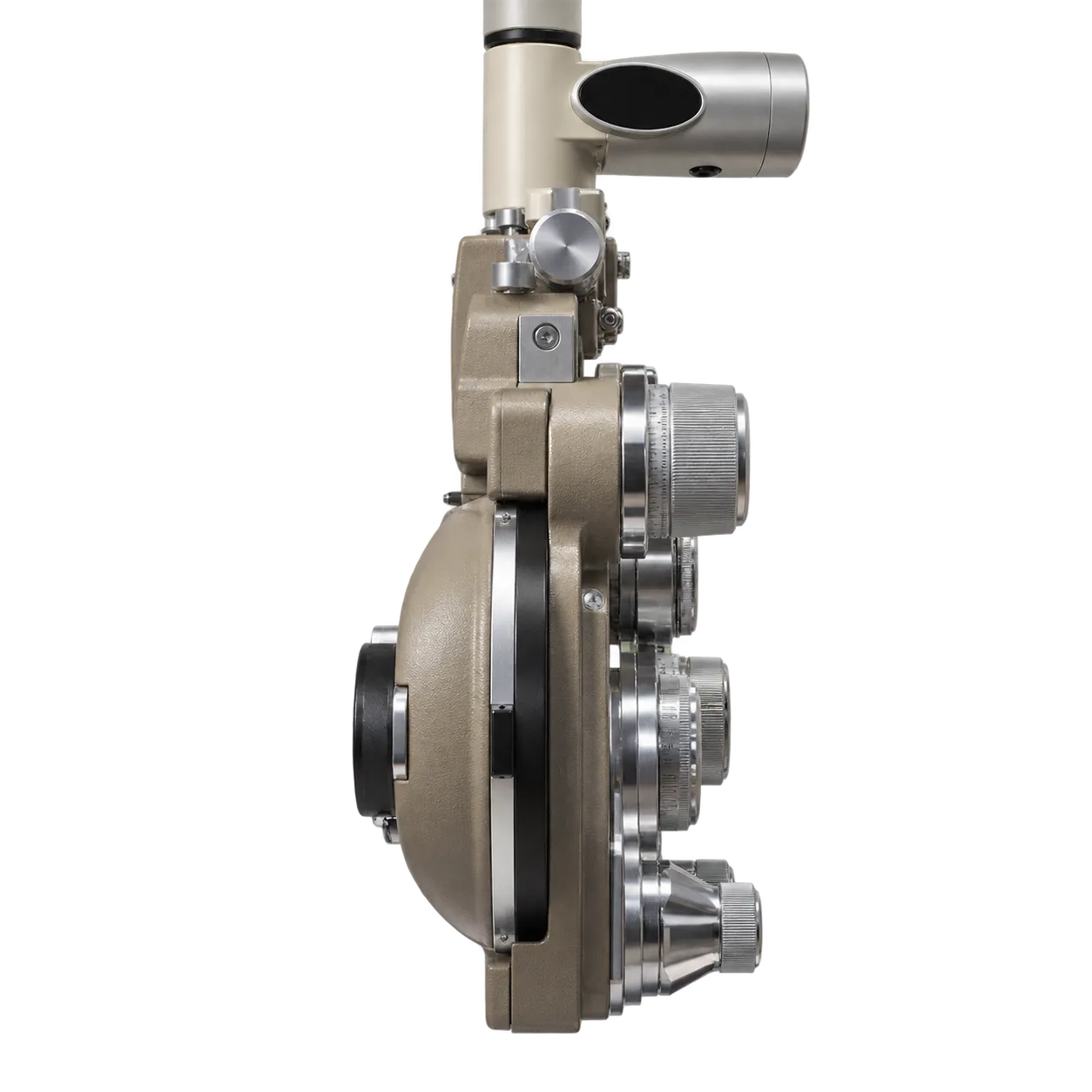
The independent high-street practice running its own testing room is the natural home for this instrument. A single consulting room needs one refraction head, and that head must handle every sight test the business runs — routine adult refraction, presbyopic near addition, binocular vision assessment and the occasional complex prescription. The full auxiliary dial covers all of it without a separate trial lens set, and the absence of any power requirement means a testing room can be sited wherever the floor plan allows rather than wherever a socket happens to be.
Dispensing-led businesses have a particular fit. A practice whose revenue comes from frames and lenses rather than from testing volume gains nothing from paying an automation premium on the refraction instrument. Capital that would have gone into a motorised head goes into frame stock or a glazing bench instead, and the clinical result is identical — the difference between manual and automated refraction is speed and paperwork, not accuracy.
General Optical Council registrants rely on the same clinical steps regardless of instrument. Duochrome refinement of the spherical endpoint, binocular balance, phoria measurement by von Graefe using the dissociating prisms or by Maddox rod in either meridian, pinhole assessment to separate refractive from pathological acuity loss, and near addition by the fused cross cylinder technique are all supported directly from the auxiliary dial.
Training and second-room use follow naturally in practices that later expand. Two honest limitations apply throughout: the 5° cylinder axis step limits precision on high cylinders, where trial frame confirmation remains advisable, and any phoropter requires an upright seated patient able to reach the head, so young children and patients unable to hold position need trial frame refraction regardless of which instrument the practice owns.