
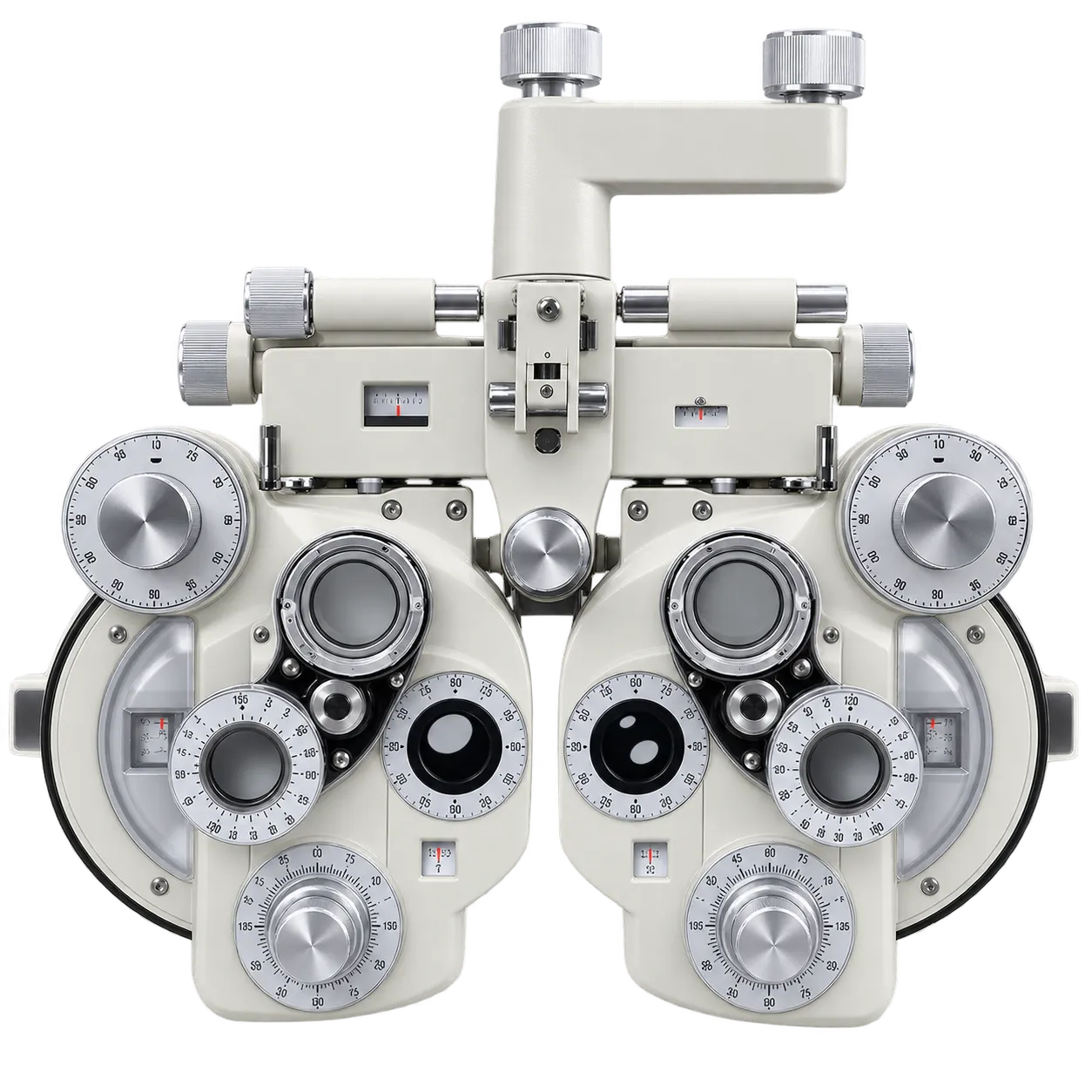
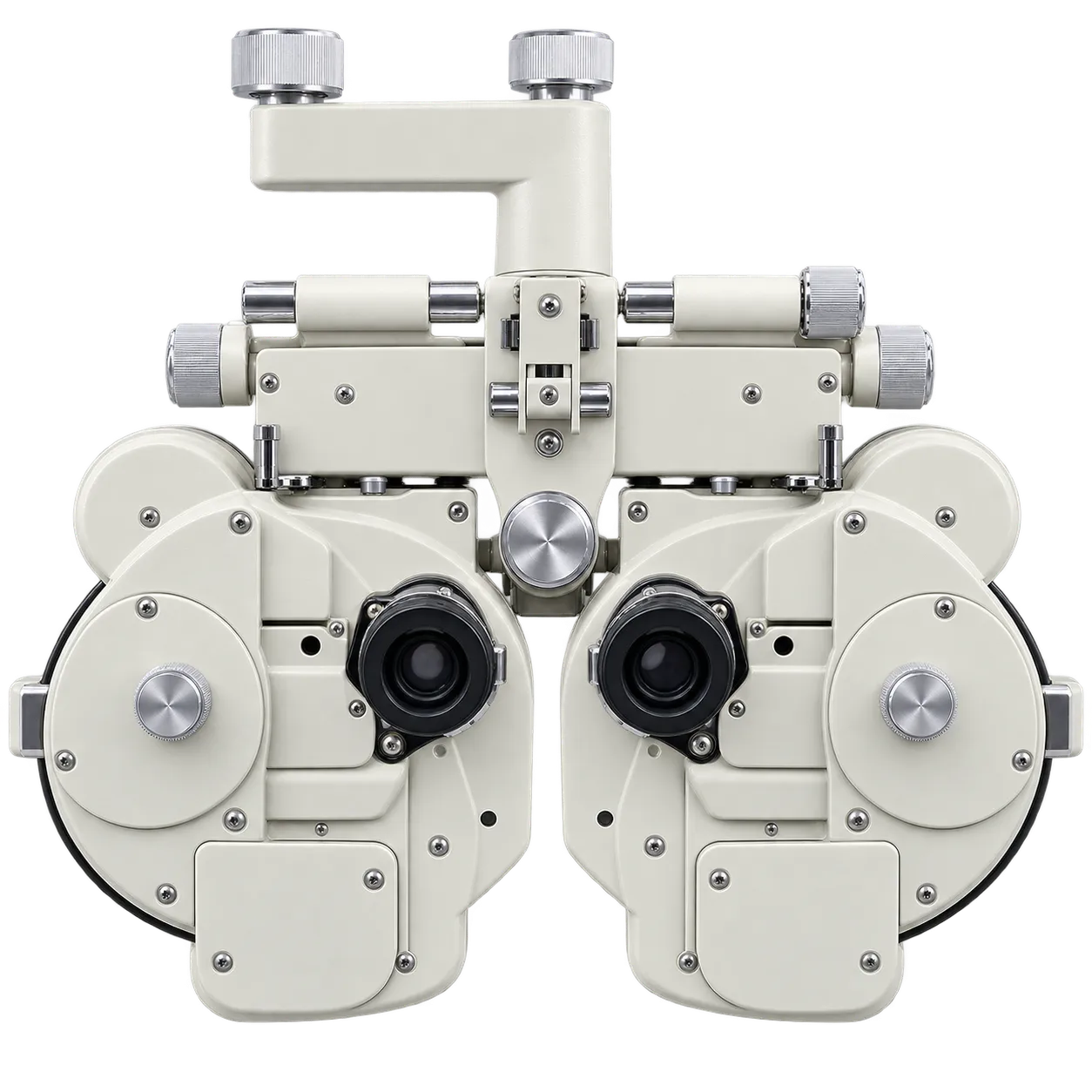
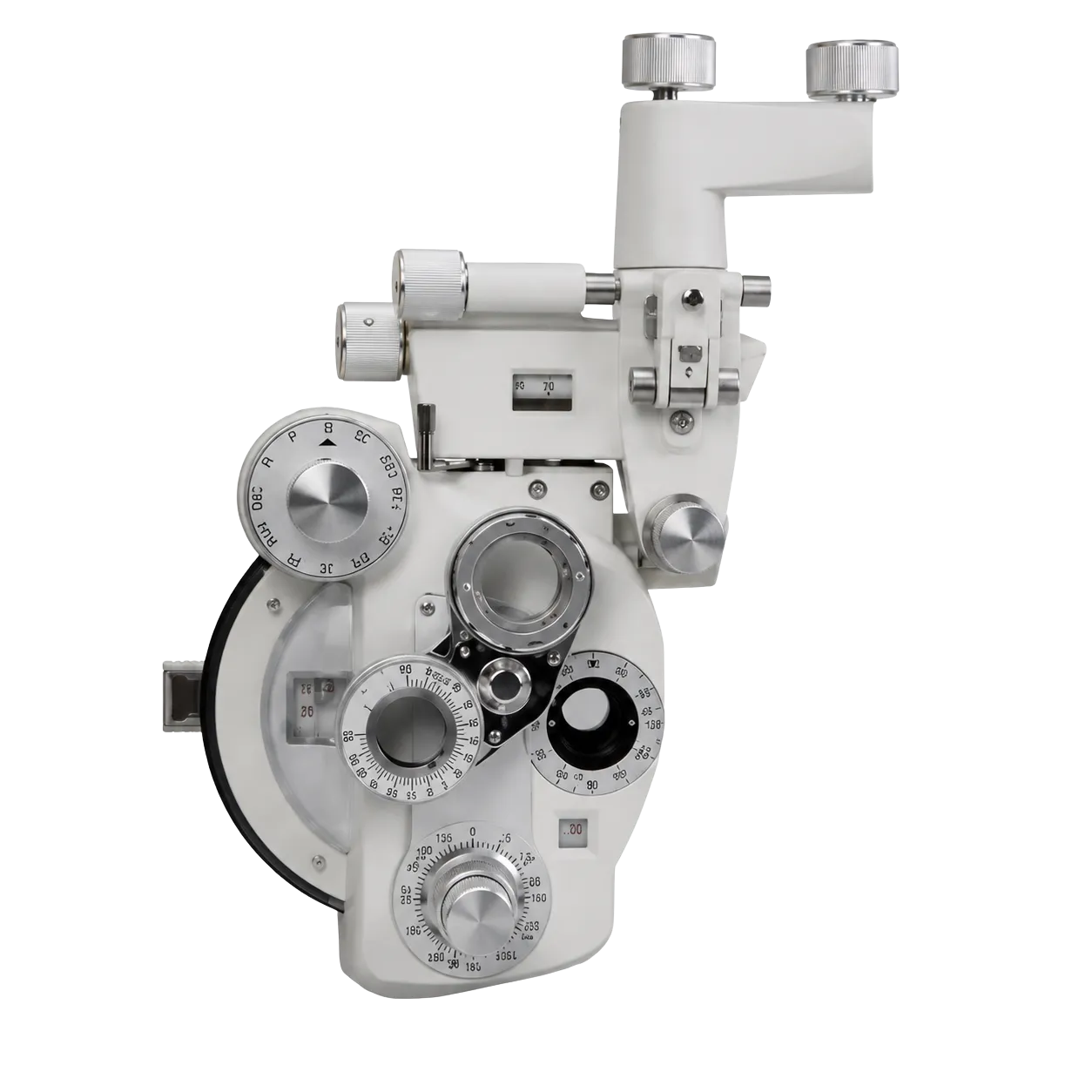
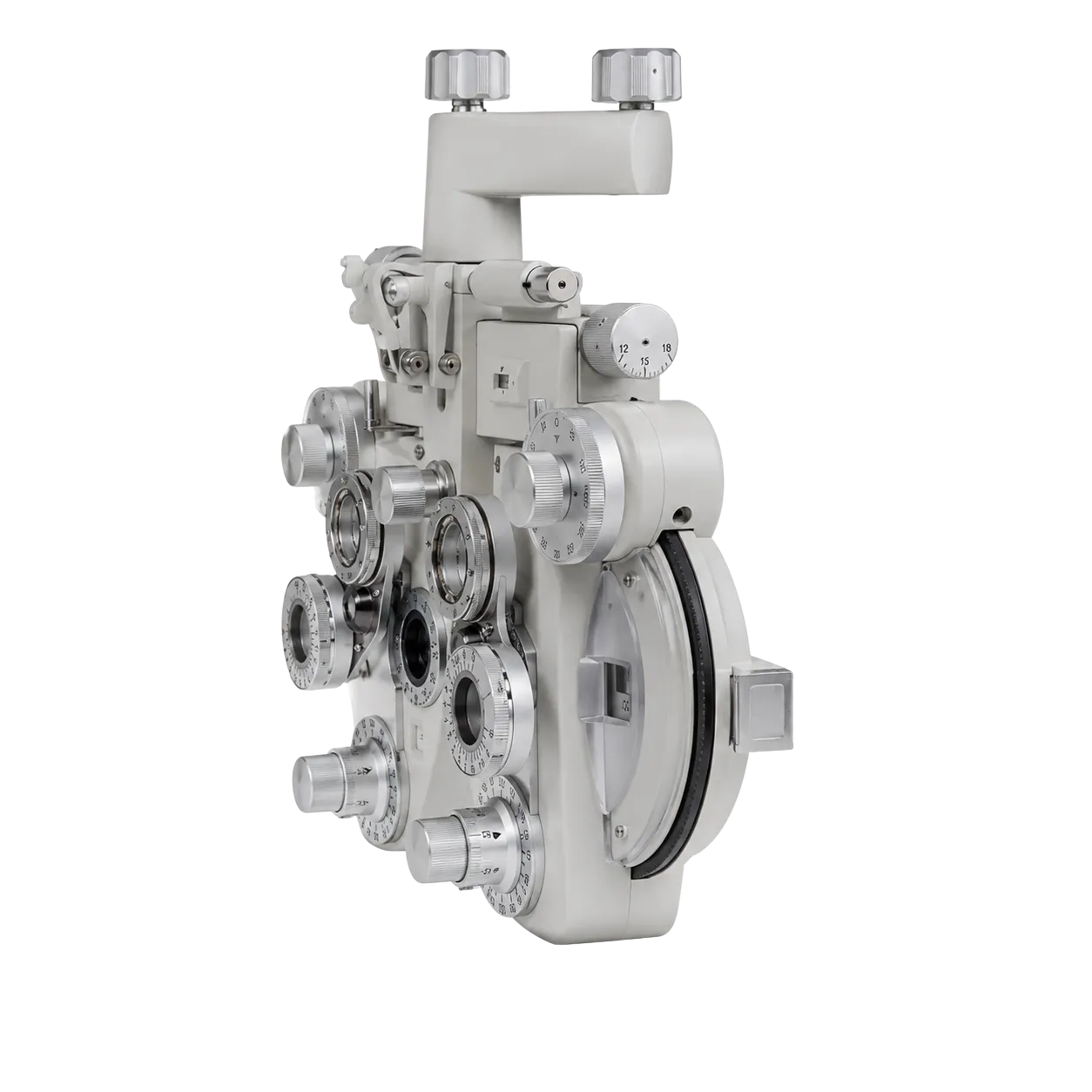
The second consulting room is the clearest commercial case. Many UK practices run a main lane equipped with an automated refractor head and a secondary room that still requires full refraction capability — for a second optometrist, a locum working a busy Saturday, an overflow list or a pre-registration trainee under supervision. Equipping that room with a manual head costs a fraction of automating it and produces the same optical result, which turns a capital constraint into a solved problem rather than a compromise.
Hospital ophthalmology departments use manual heads in clinic rooms shared between staff and purposes across a week. An instrument with no power requirement, no login and no software state is straightforward to site in a room that serves several functions, and it cannot be found unusable because a console was left uncharged or a network was down. Refraction clinics, orthoptic support and pre-operative assessment rooms all fit this pattern.
Binocular vision work is well supported by the auxiliary dial. Phoria can be measured by von Graefe using the 10Δ base in and 6Δ base up dissociating prisms, or by Maddox rod in either meridian and in white or red — having both methods available without leaving the instrument is genuinely useful when a result needs cross-checking. Duochrome and binocular balance run from the red and red-green lens positions, and the pinhole separates refractive from pathological causes of reduced acuity.
Spectacle shops and dispensing-led practices use manual heads as their primary refraction instrument where volumes do not justify automation. Practices should note two limitations honestly: the 5° cylinder axis step limits precision on high cylinders, where trial frame confirmation remains advisable, and any phoropter requires an upright seated patient who can reach the head, so young children and patients unable to hold position need trial frame refraction regardless.