
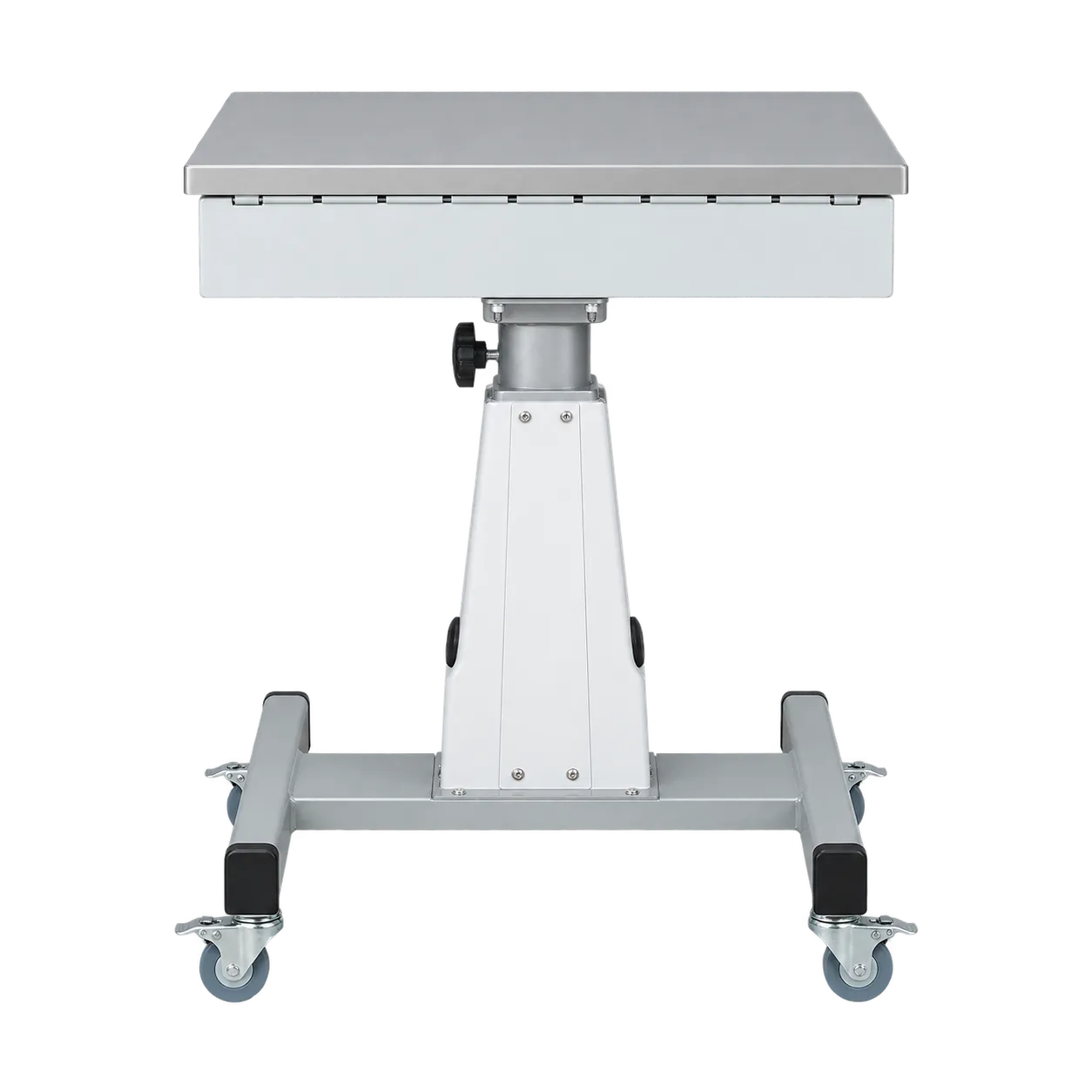
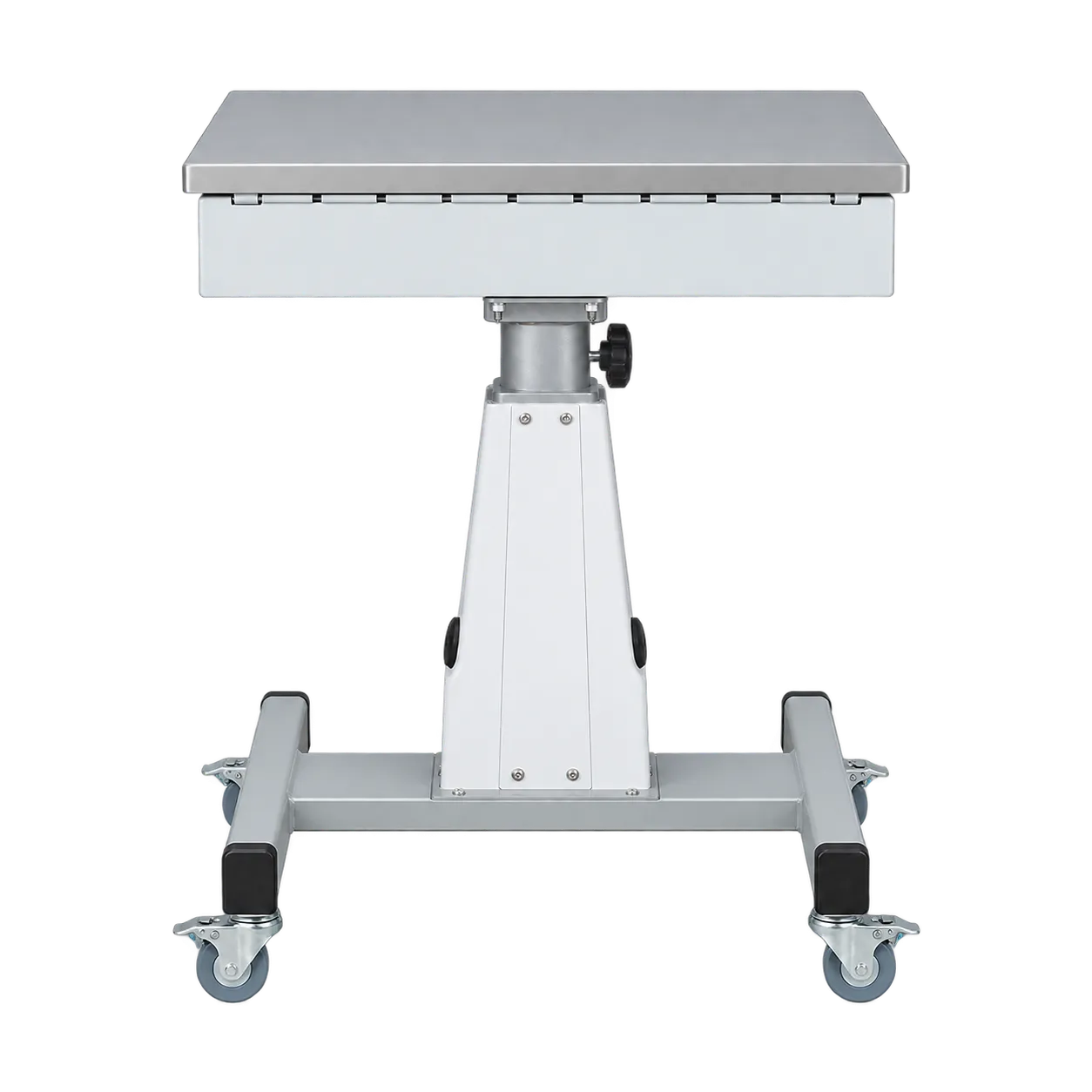
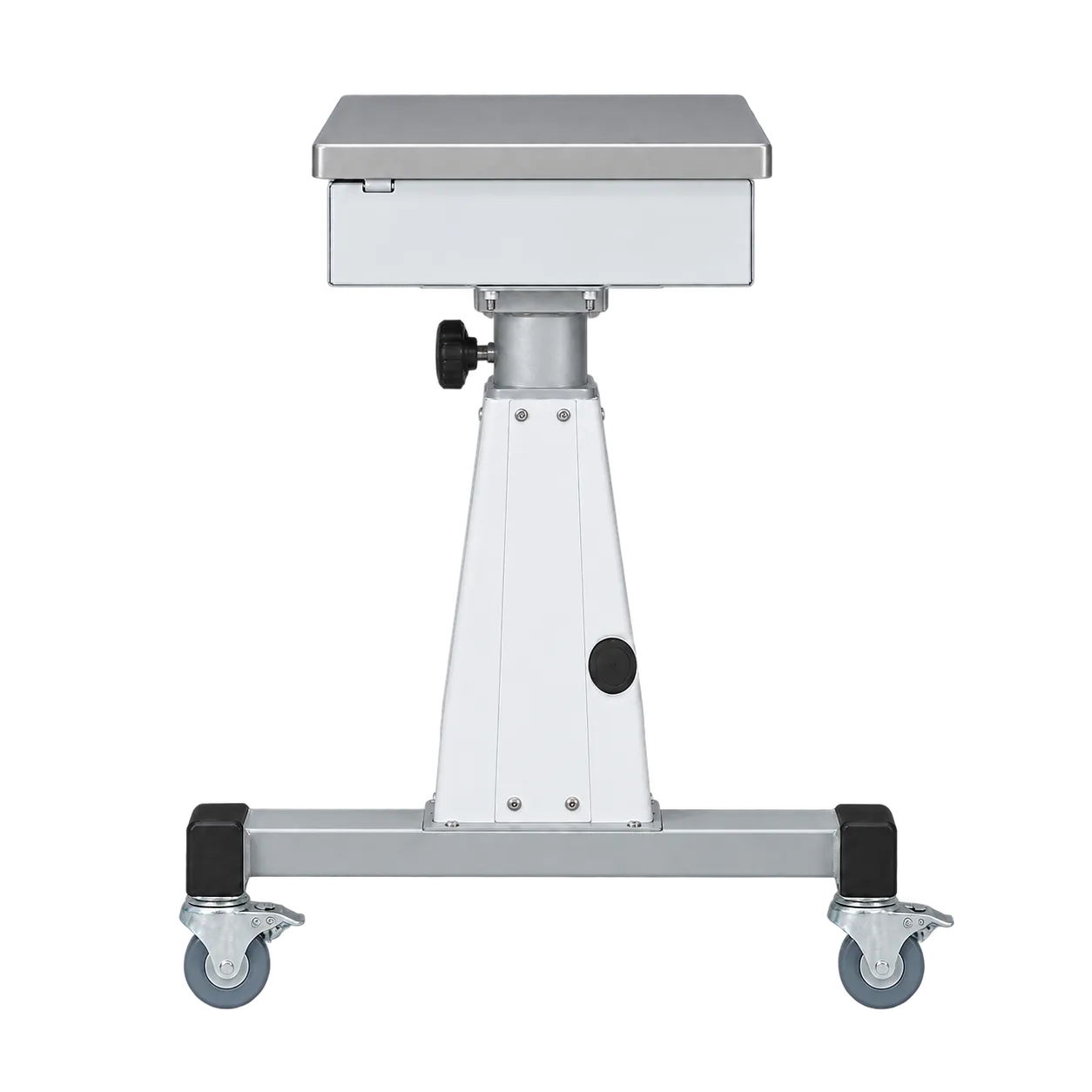
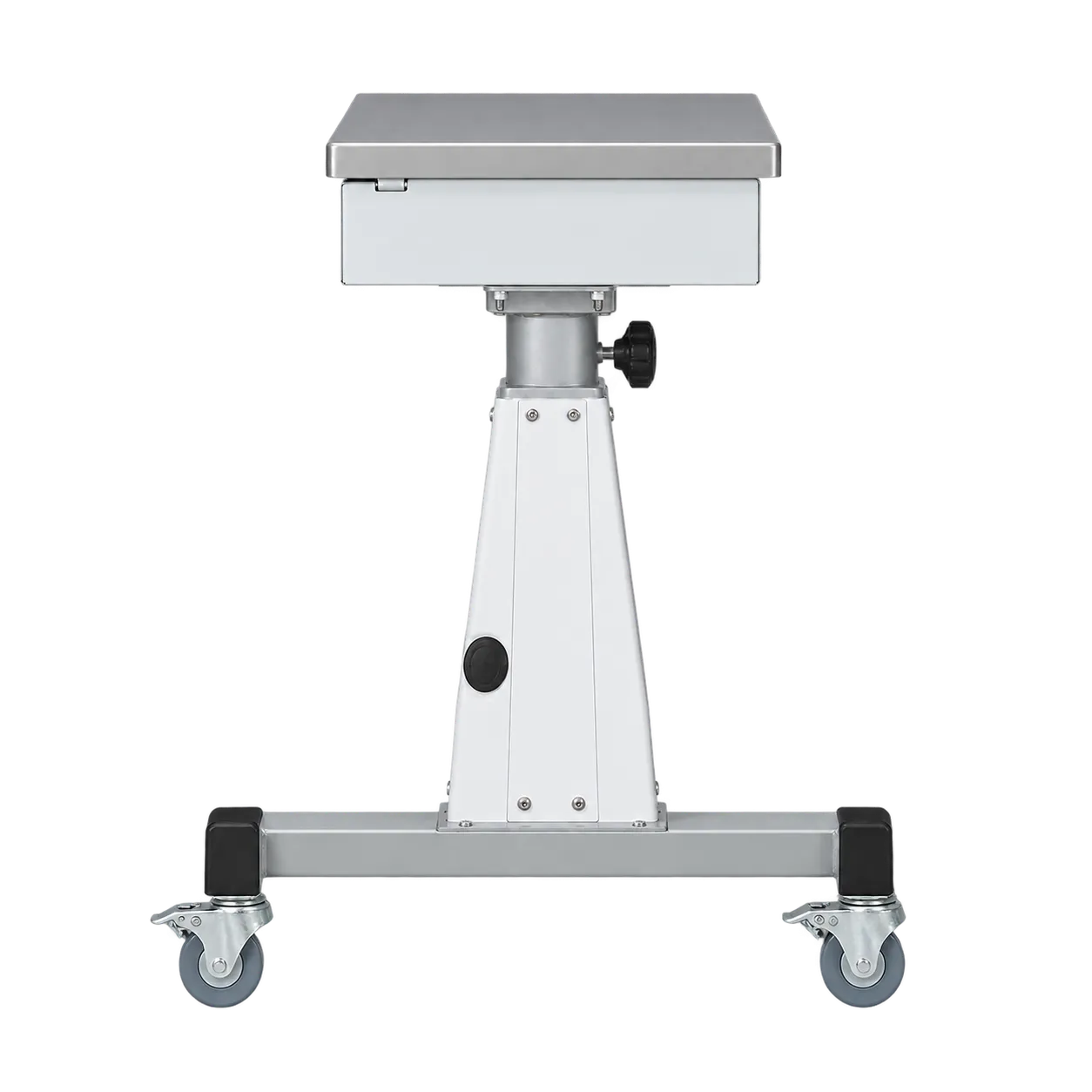
Slit lamp positions are the natural home. Anterior segment assessment, dilated fundus examination with a condensing lens, gonioscopy and applanation tonometry each draw on small accessories that are costly to drop and slow to fetch. Kept in a drawer beneath the instrument, they are within reach while the patient stays at the headrest, and the heavier column and strengthened base give the slit lamp a firm platform.
Hospital eye service outpatient clinics suit the combination well. Clinics run to time, rooms are shared between clinicians, and floors are usually clinical vinyl, where quiet rubber castors are welcome. A drawer that holds the room's accessory set means a clinician arriving for a session finds everything in place, subject to confirming the tread compound for pale floors.
Community enhanced services benefit similarly. Minor eye conditions services, glaucoma referral refinement and post-operative cataract reviews all lean on slit lamp work, gonioscopy lenses and tonometry. NICE glaucoma guidance names slit lamp-mounted Goldmann-type applanation tonometry for measuring pressure, so the prisms and strips for it belong at the slit lamp. Keep clean and used prisms apart in line with your decontamination policy.
Contact lens clinics can store fluorescein, lens cases and removal tools beside the slit lamp used for aftercare, supporting the thorough examination the GOC expects.
Shared rooms gain from a drawer that holds a complete accessory set and can be checked at the start of each session.
Paediatric clinics should check the fit, because the drawer box reduces knee room at the lower end of the range.
Wheelchair users are less well served than on a table without a drawer, since the box reduces clearance beneath the top. Practices with many wheelchair users usually keep a dedicated offset-column table as well.