
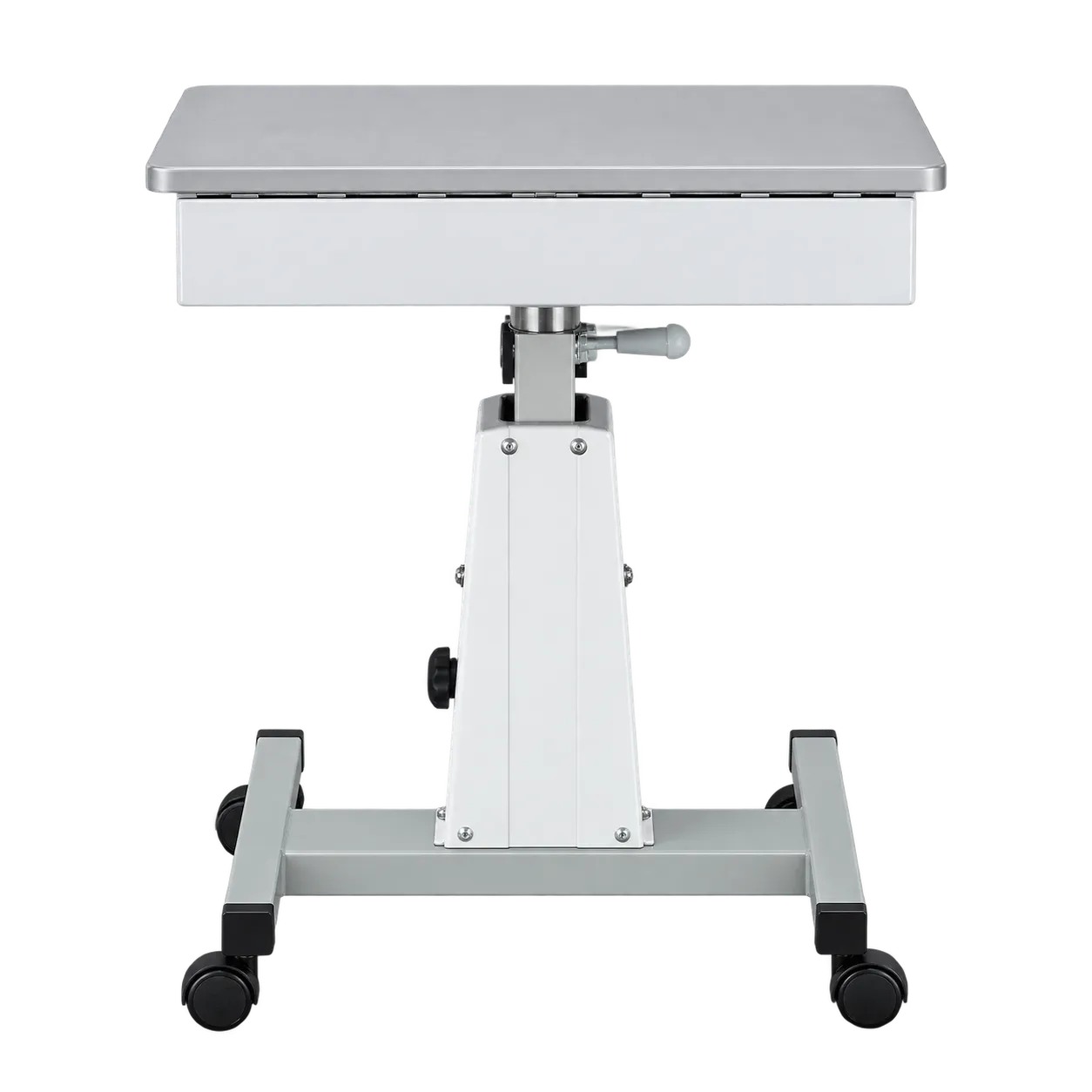
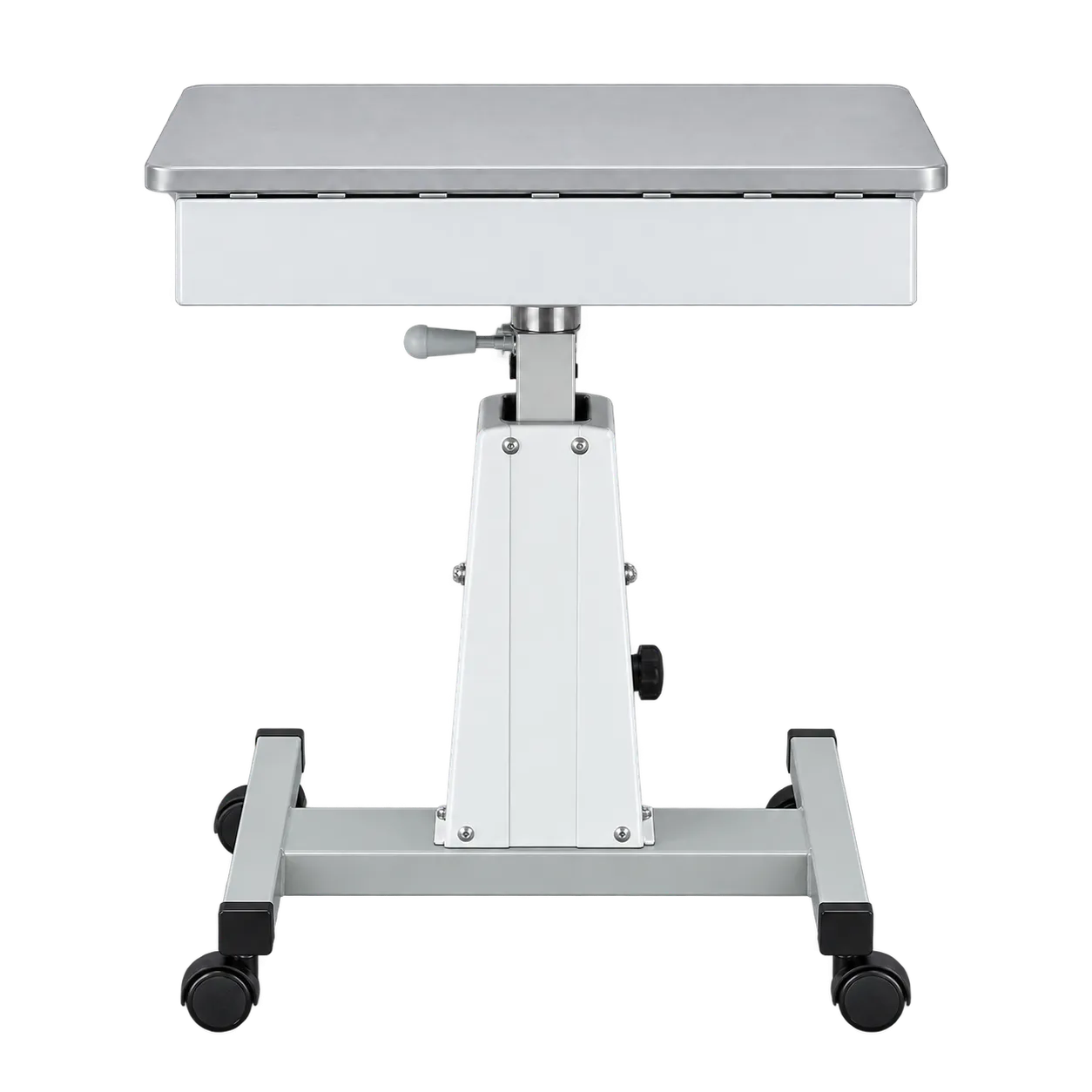
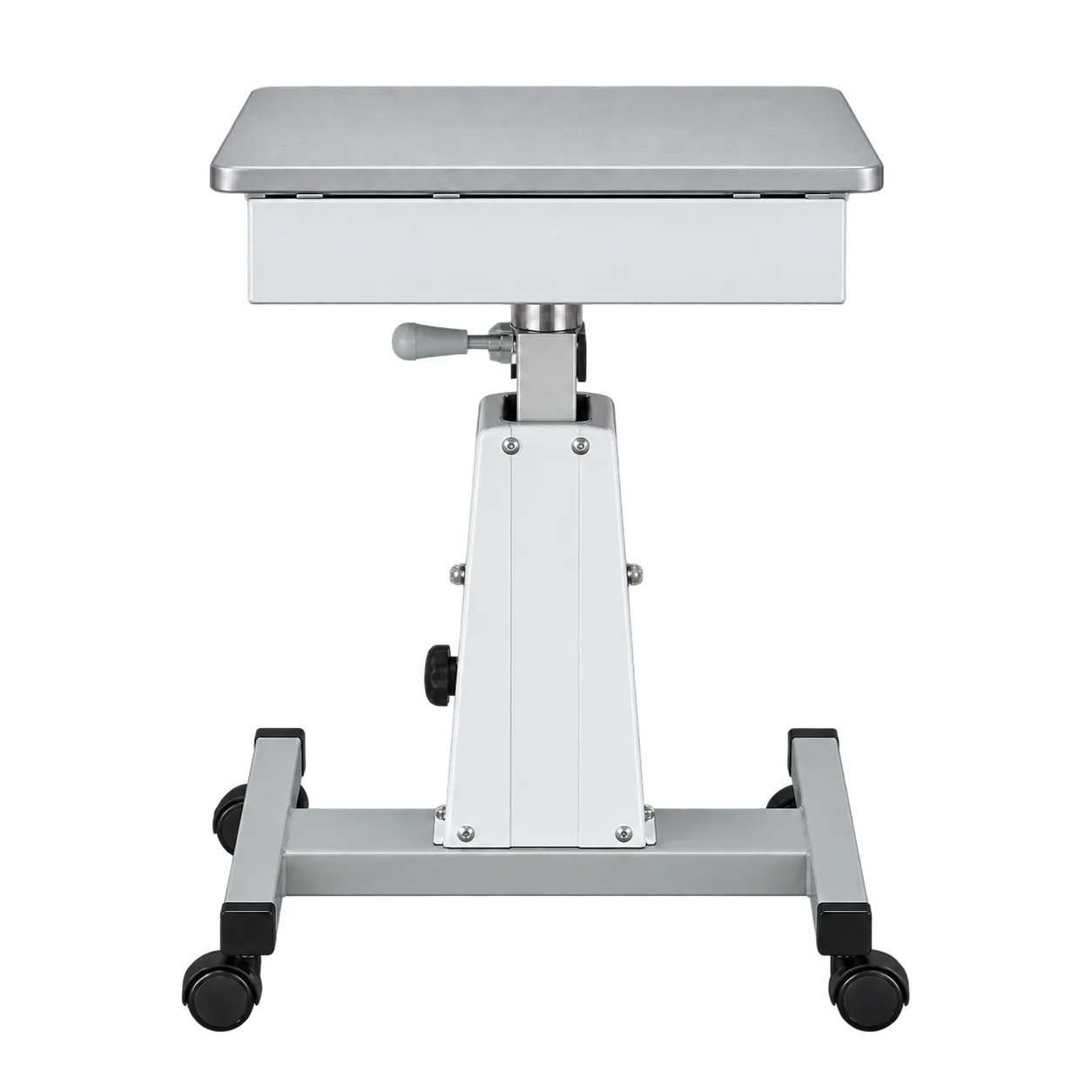
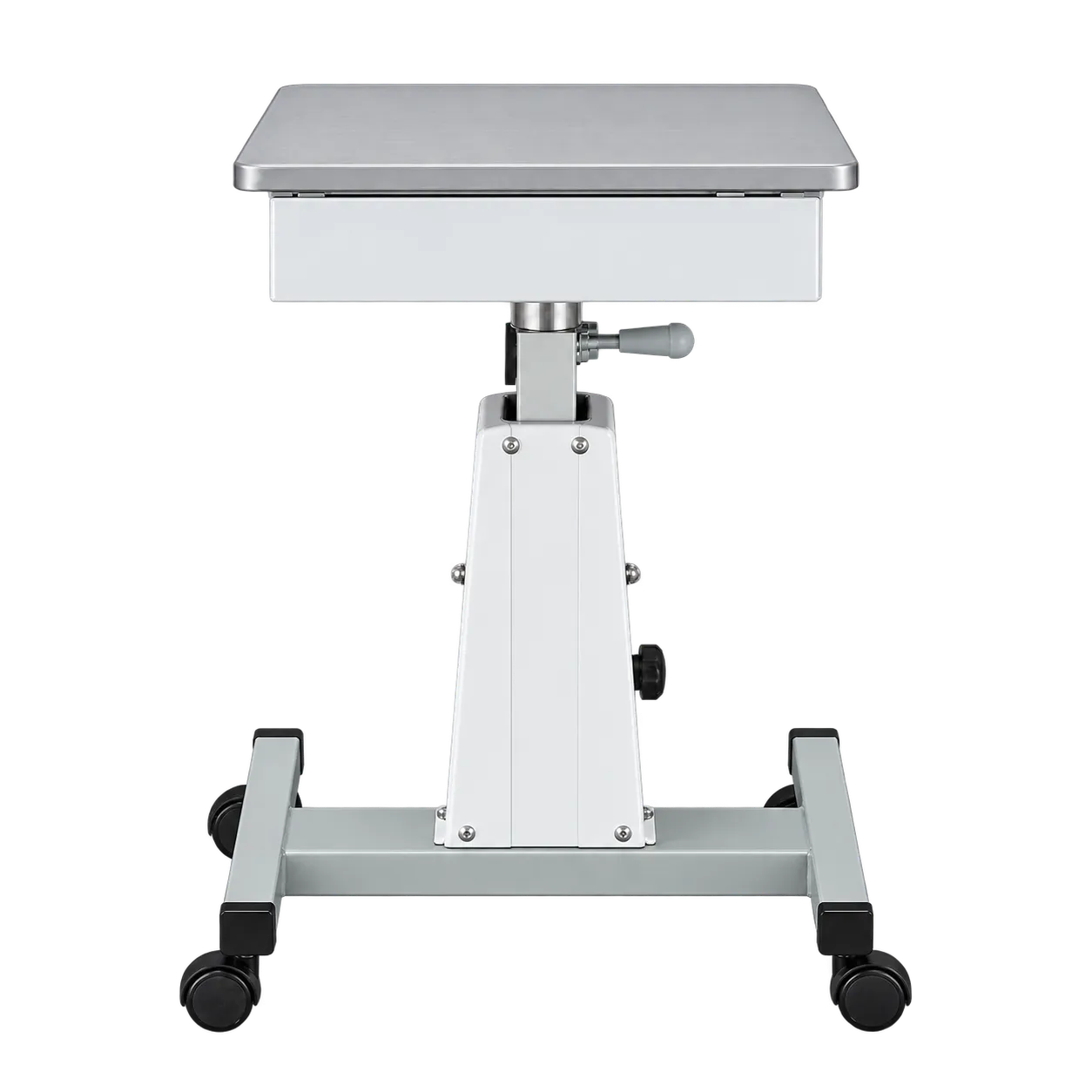
Refraction positions are the natural home. Subjective refraction draws on a steady stream of small items, including occluders, a PD rule, a pen torch, near cards and, in many practices, a trial lens set for trial framing or checking a final prescription. Kept in a drawer beneath the instrument, they are one pull away without crowding the worktop, and the patient sees a tidy room.
Trial framing and domiciliary preparation benefit particularly. Where a trial lens case lives in the table, a clinician confirming a prescription in a trial frame, or checking tolerance for a significant change, does not leave the room to fetch it. Measure your case against the confirmed internal dimensions first.
Pre-test rooms suit the combination of an autorefractor or keratometer on top and consumables below. Chinrest papers, wipes and spare printer rolls stay together, and assistants restock one drawer rather than a shelf across the room.
Dispensaries can use it as a lensmeter station, with the drawer holding frame rulers, adjustment tools and job tickets.
Consulting rooms with carpet suit the metal castors, which roll freely on soft flooring. On clinical vinyl, confirm the tread first.
Shared rooms gain from a drawer that can be emptied and handed over, supporting the orderly, well-equipped examination environment the GOC expects.
Slit lamp positions need a quick lean test, since the 80 × 80 mm column carries a wider drawer top.
Paediatric clinics should check the fit, because the drawer box reduces knee room at the lower end of the range, where children sit.
Wheelchair users are less well served than on a table without a drawer, since the drawer box reduces clearance beneath the top. Practices with many wheelchair users usually keep a dedicated offset-column table as well.