

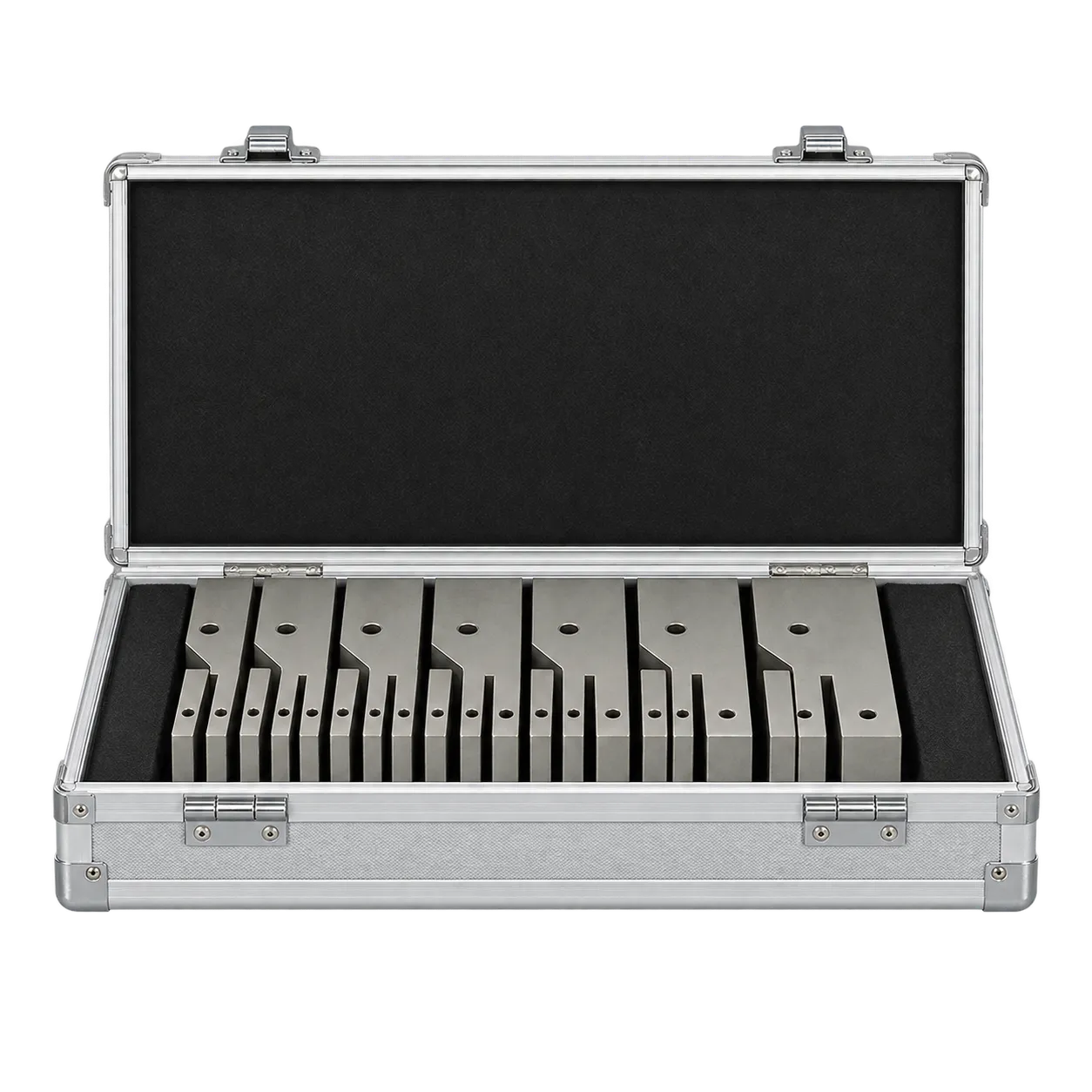


Orthoptic departments are the natural setting for loose prisms. Large infantile esotropias and sensory exotropias often need powers well above 20 Δ, and a single prism of up to 50 Δ lets the orthoptist neutralise most of them without combining prisms before one eye.
Strabismus surgery planning depends on accurate measurement of the largest angle at distance and near. Holding one prism in its calibrated position removes the error that stacking introduces, and confirming that position before surgical measurements is part of accurate dosing. For angles beyond 50 Δ, prism can be divided between the eyes.
Neuro-ophthalmology and stroke services measure acquired diplopia, and the low values from ½ to 10 Δ suit small vertical deviations and prism trials before a correction is prescribed. The red filter helps a patient identify which image belongs to which eye.
Paediatric clinics use loose prisms when a child's gaze needs to stay on a target while the examiner changes powers quickly, and the prisms can be held before either eye as needed.
Optometry practices with a binocular vision interest use the low powers for fusional reserves and prism trials, where single steps from 1 to 10 Δ give fine control.
Research and teaching clinics benefit from a set close to the increments specified in published intermittent exotropia protocols, which supports consistent technique across examiners.
The set is less suited to clinics that prefer sliding through powers on a bar, and to buyers needing documented calibration without first confirming it. Institutional buyers commonly ask for evidence of conformity. The conformity documentation those procurement routes require is issued by the manufacturer and provided by the seller.