
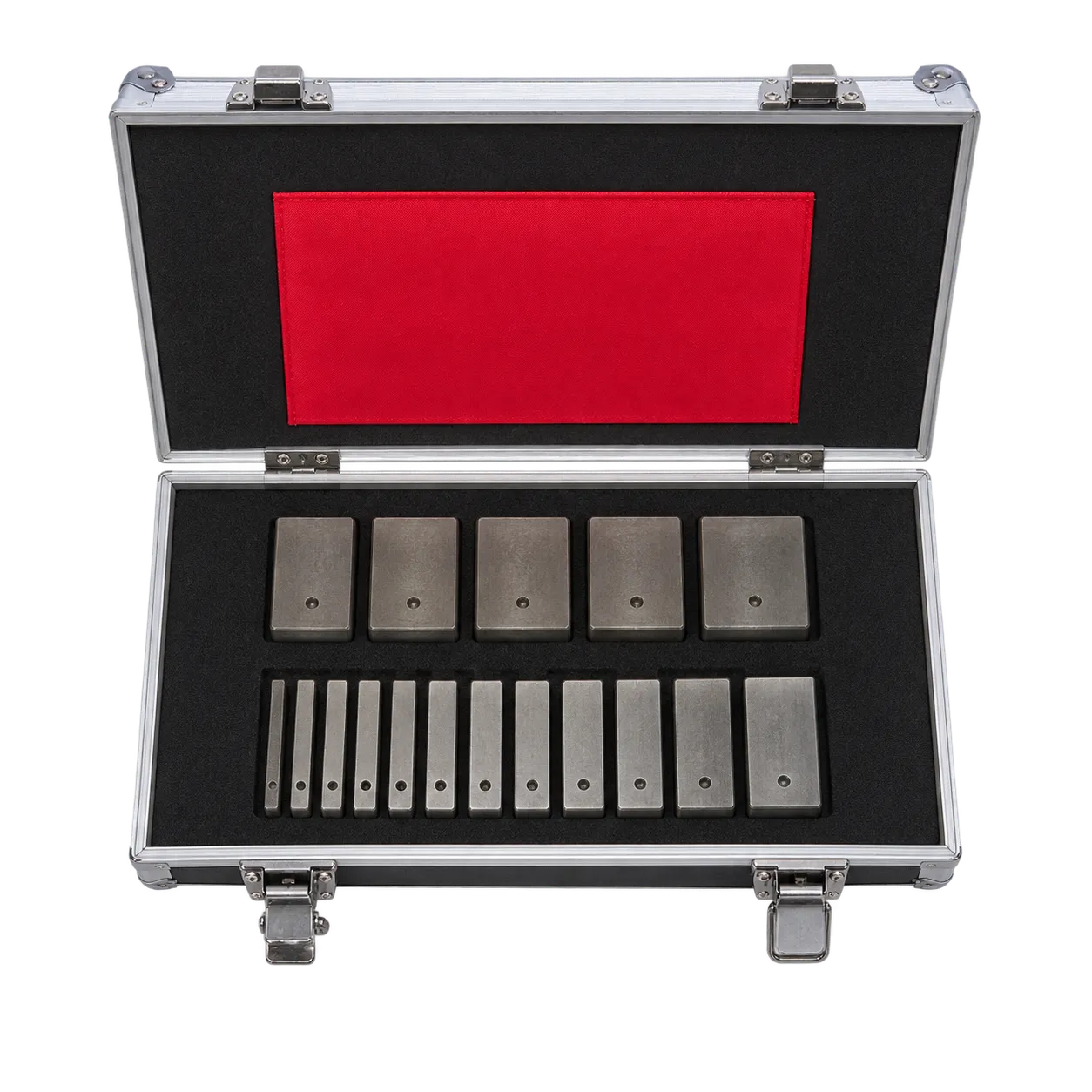
Orthoptic departments use loose prisms for the prism cover test, and this set reaches 50 Δ in single prisms, covering large infantile and sensory deviations without combining prisms before one eye. Above 20 Δ the 5 Δ steps sit within the normal variation of the test, so bracketing between prisms costs little.
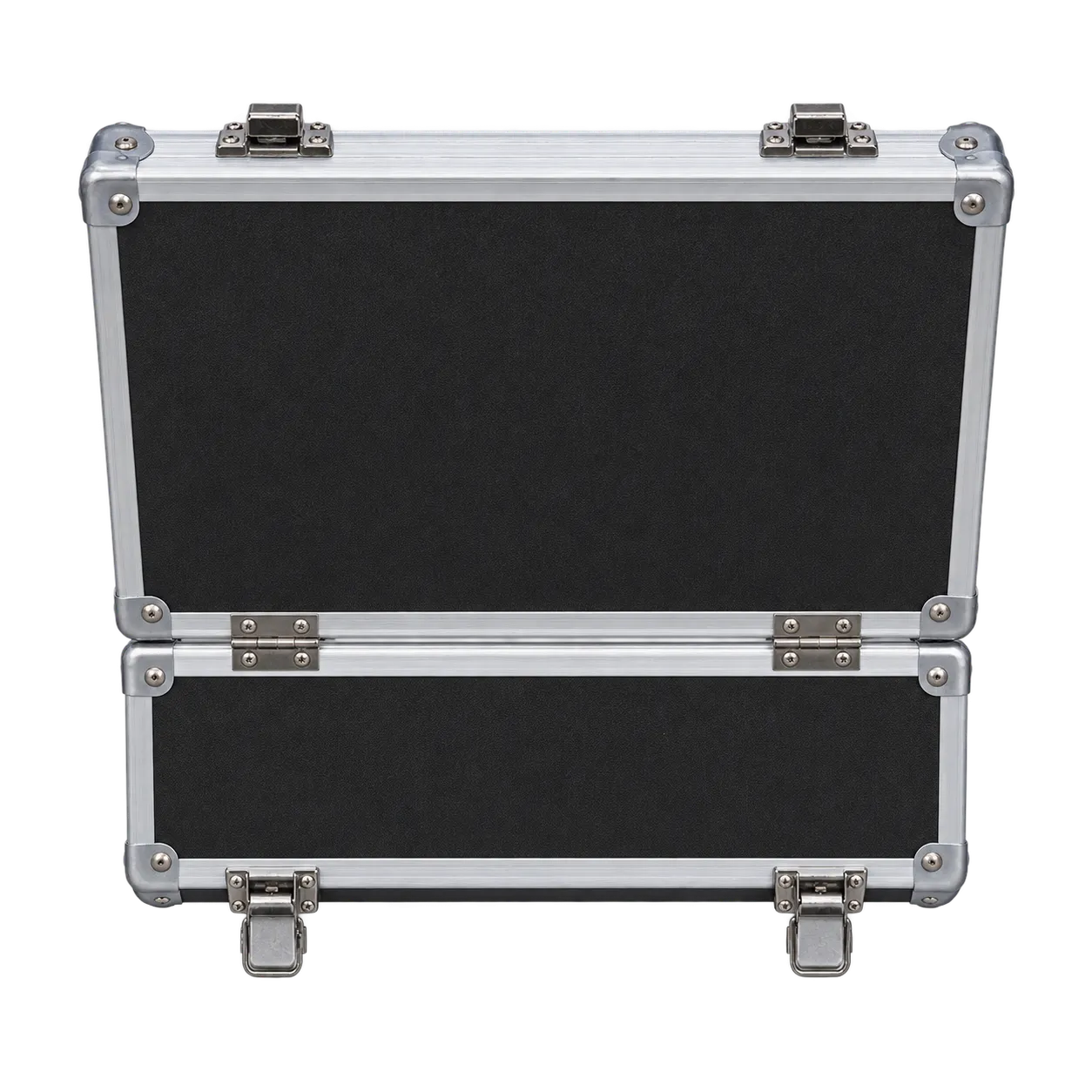
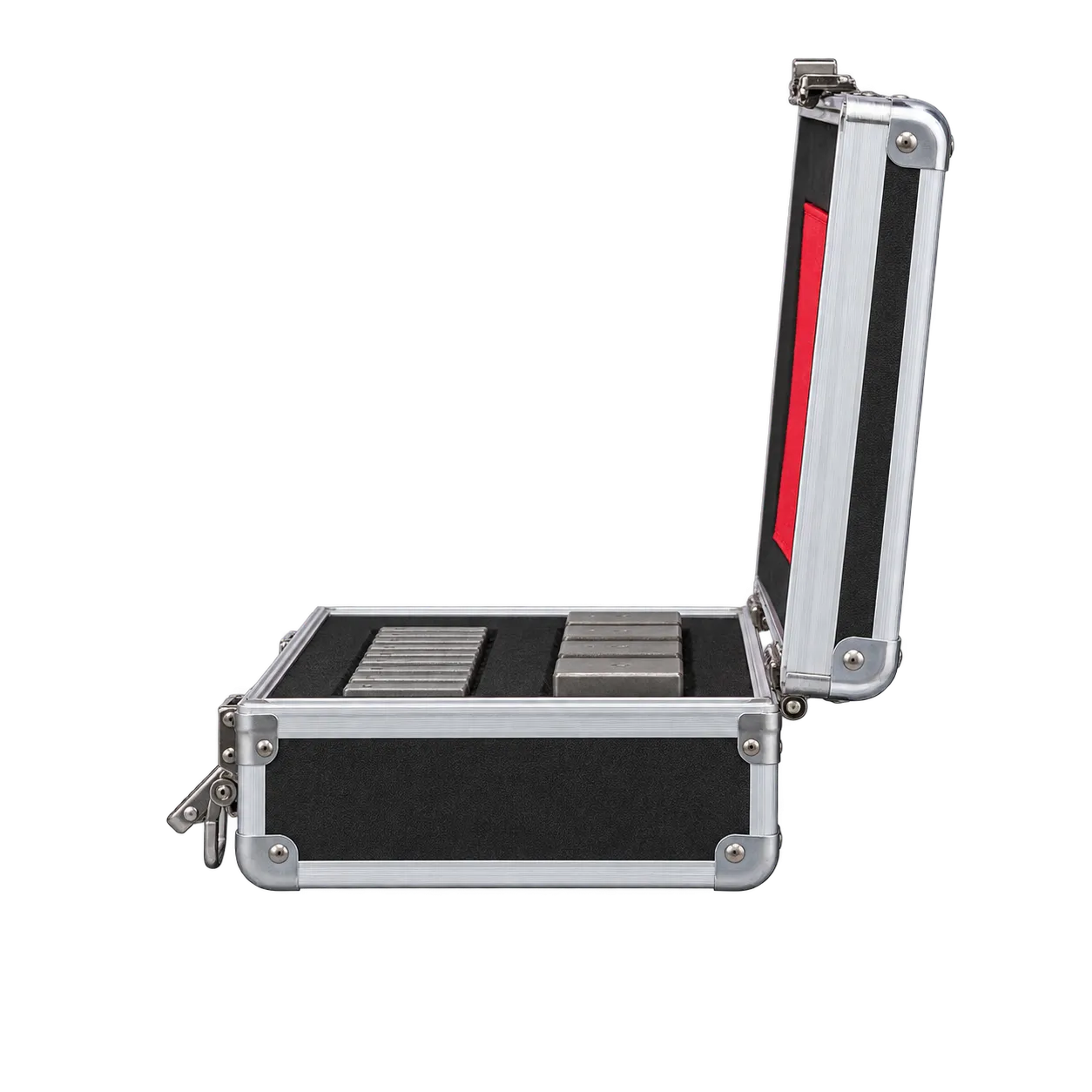
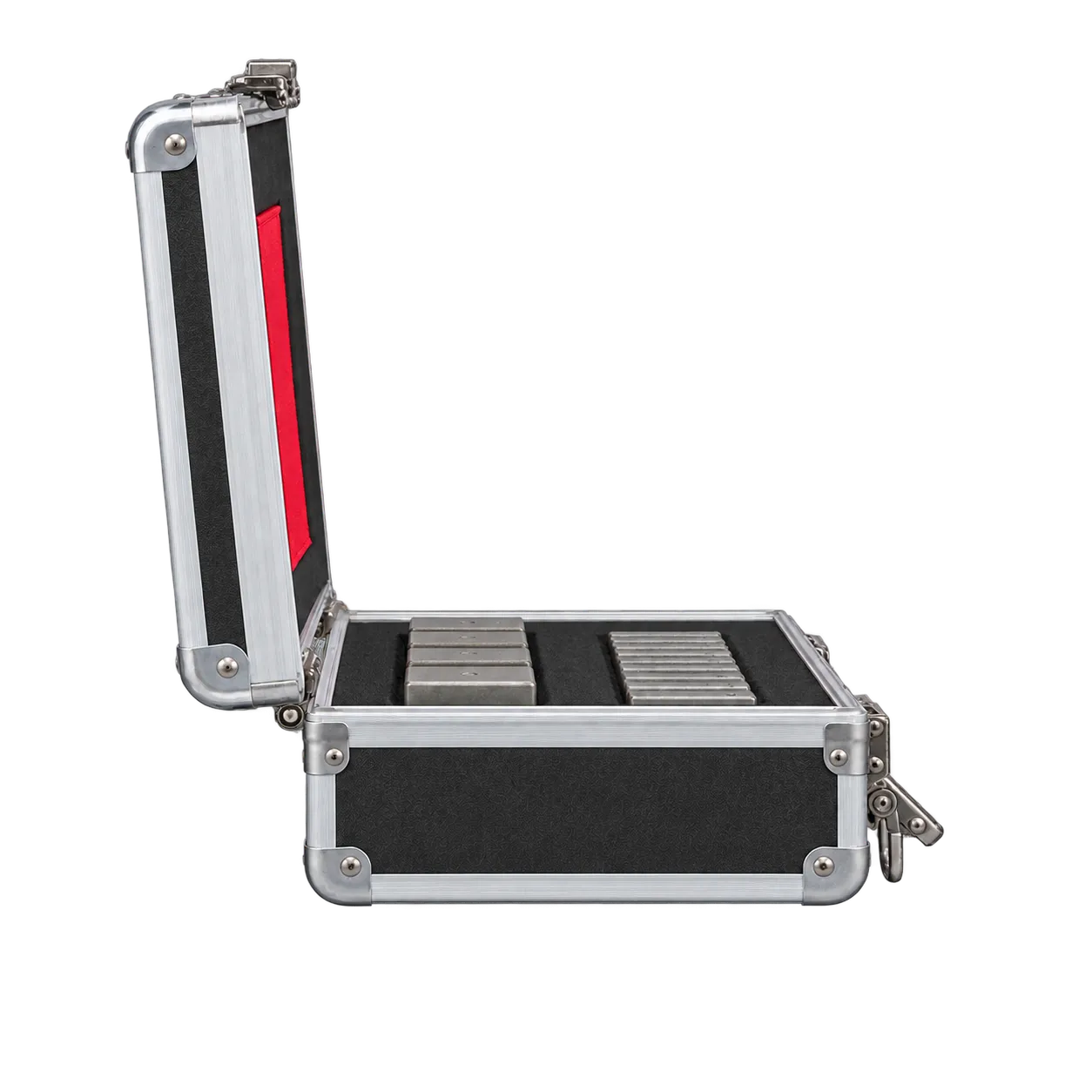
Outreach and peripatetic orthoptic services carrying equipment between hospital sites, community clinics and schools can take a case holding sixteen prisms and a red filter, with enough range for most measurements at a second site.
Strabismus surgery planning uses the largest reliable angle at distance and near. Holding a single prism in its confirmed calibration position avoids stacking error, and for angles beyond 50 Δ prism can be divided between the eyes.
Neuro-ophthalmology clinics assessing acquired diplopia can use the red filter to identify which image belongs to which eye, and the low prisms to measure small vertical and horizontal deviations.
Optometry practices with a binocular vision interest can measure phorias and fusional reserves with the ½ to 10 Δ prisms, bearing in mind that values such as 3, 5, 7 and 9 Δ are not included.
Teaching clinics can use the set to show students how bracketing is recorded and why stacking prisms before one eye is avoided.
The set is less suited to services that run frequent small-angle prism trials needing every whole value, and to buyers who need documented calibration without first confirming it. Institutional buyers commonly ask for evidence of conformity. The conformity documentation those procurement routes require is issued by the manufacturer and provided by the seller.