
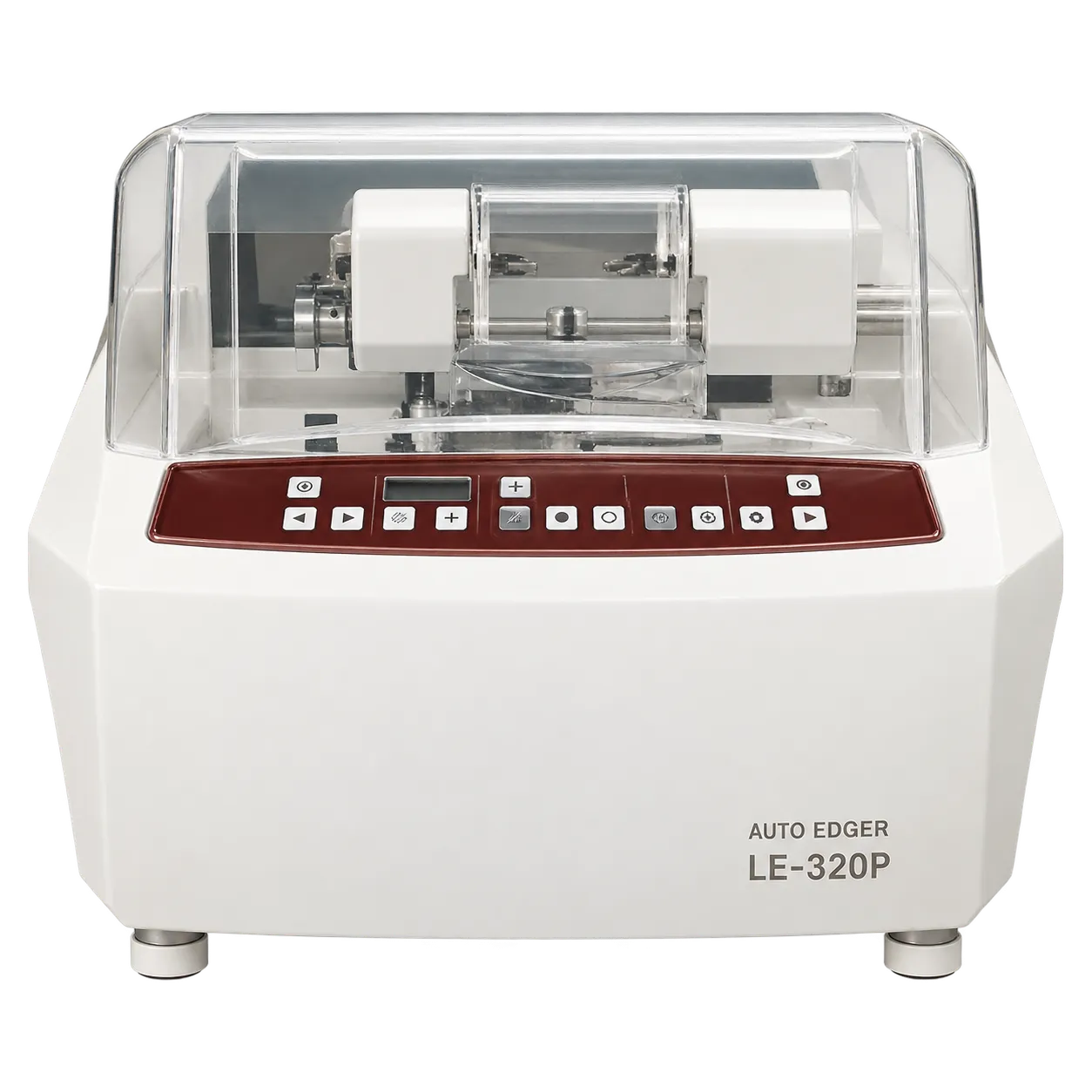
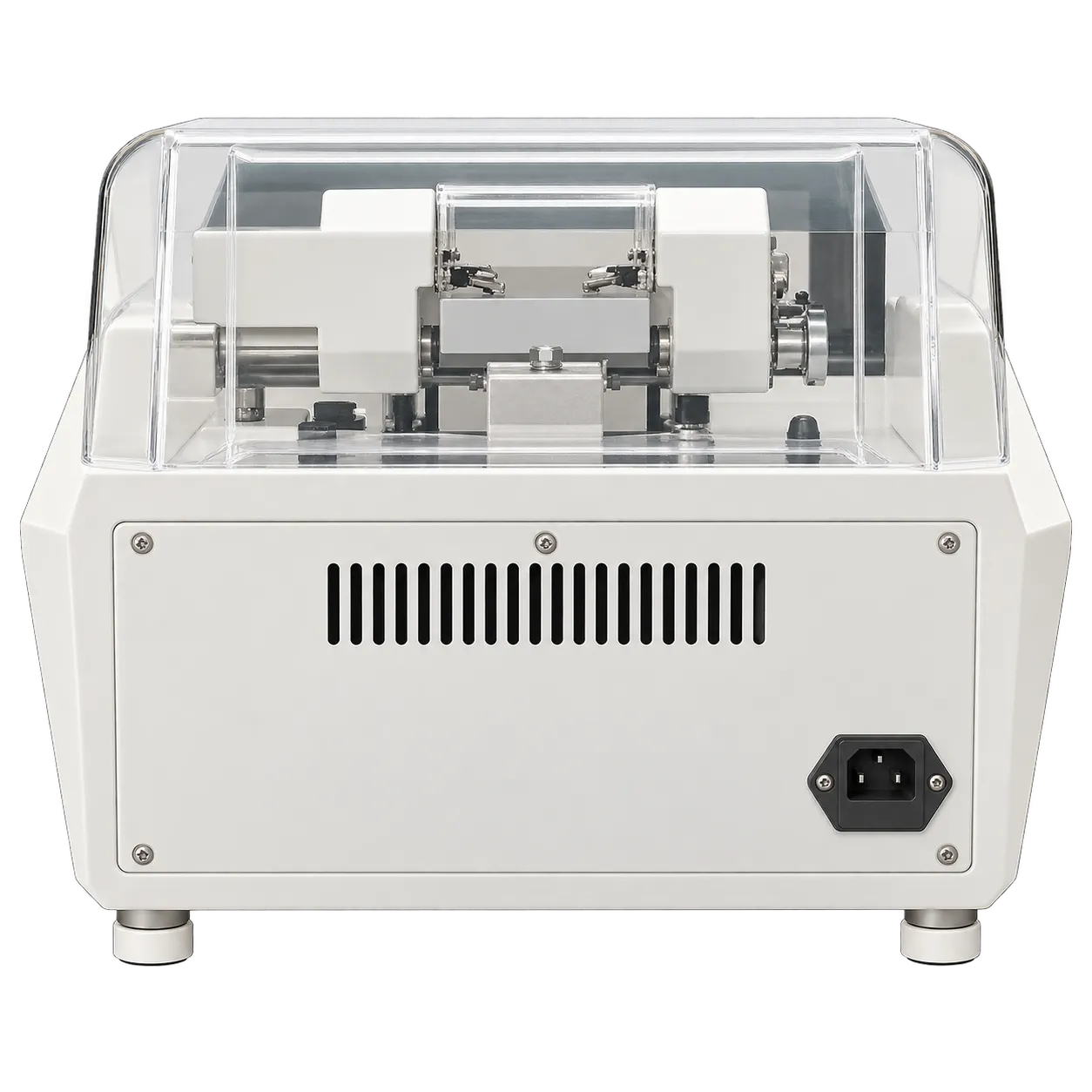
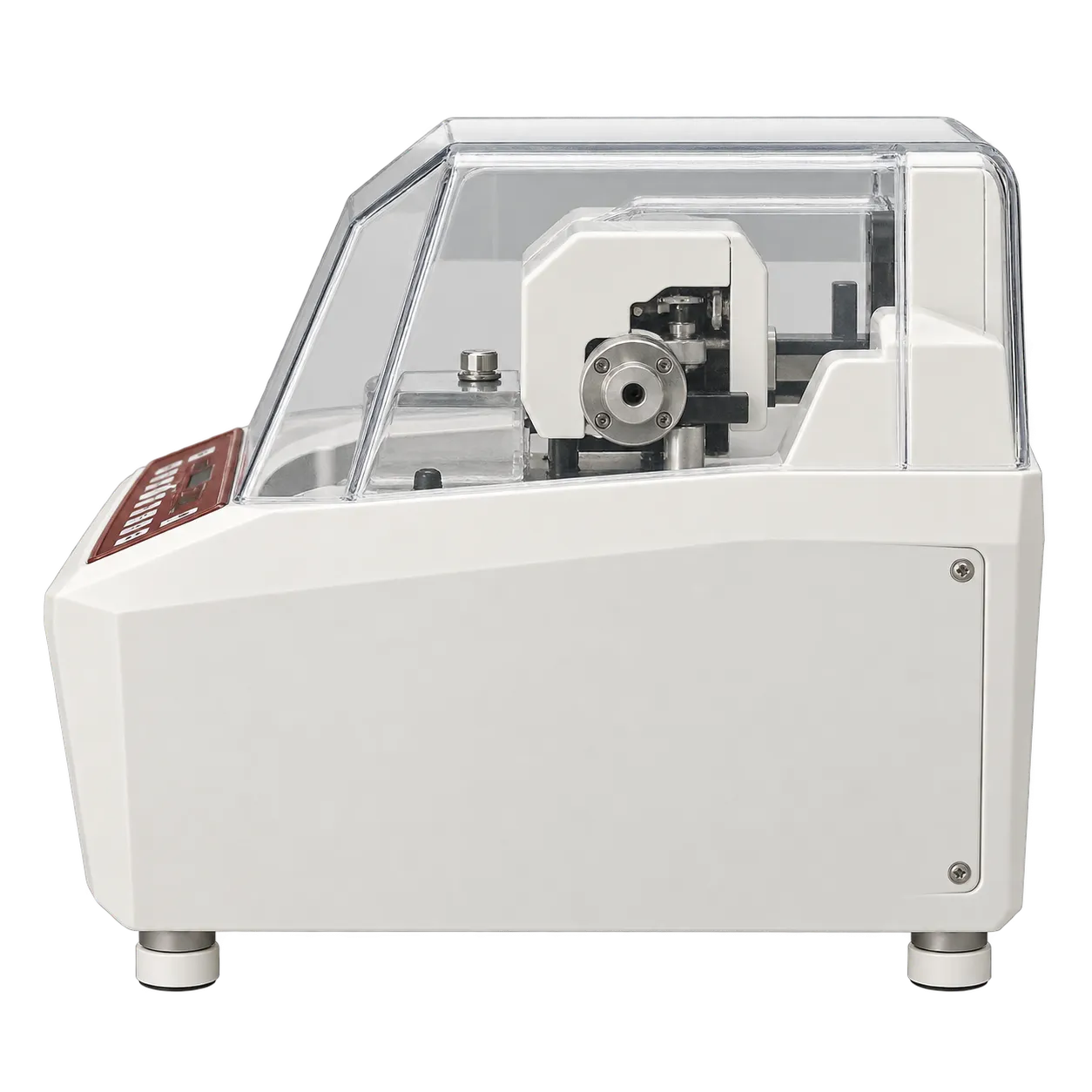
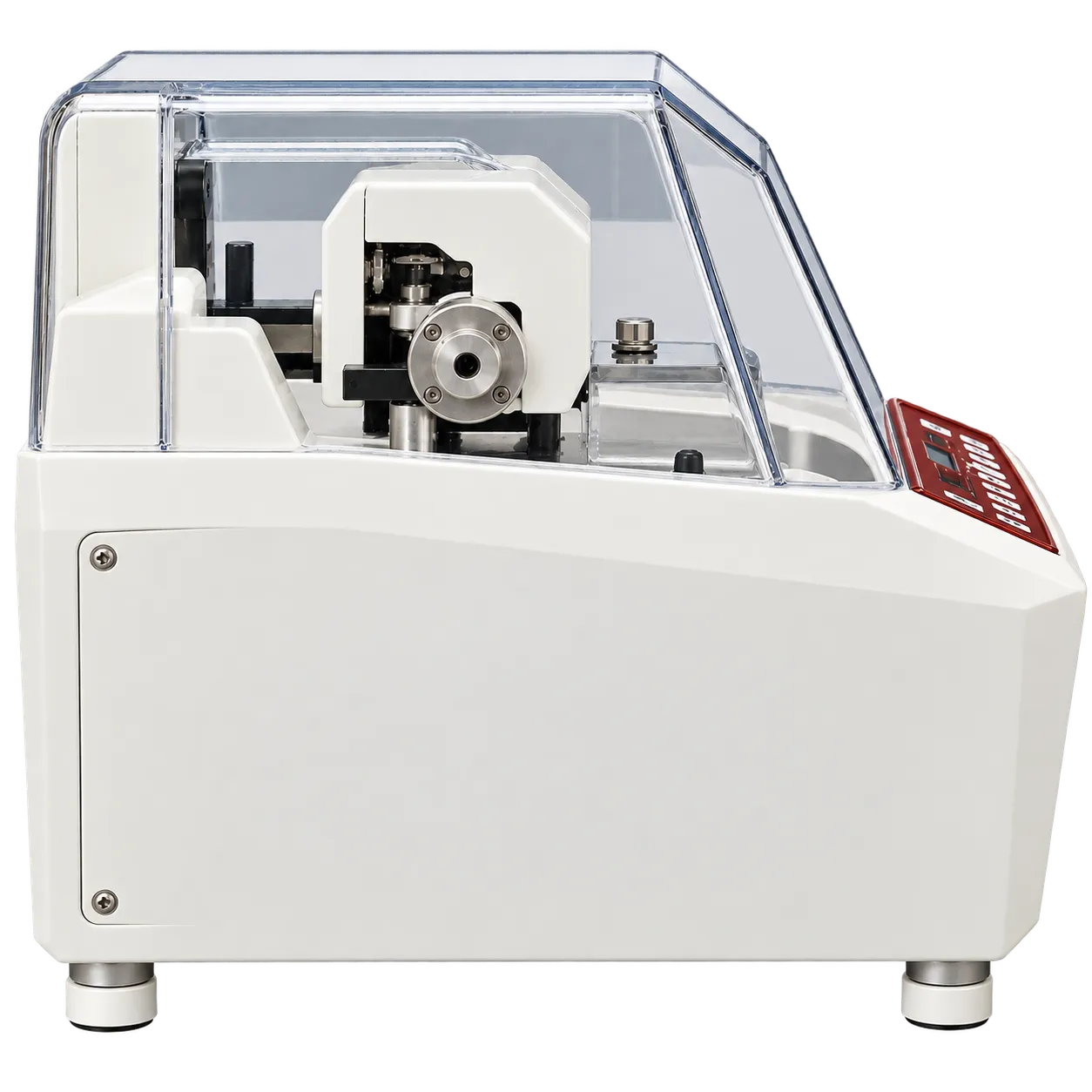
The LE-320P is aimed at optical practices and laboratories that need several kinds of edge from the same machine. In an independent optical practice, full-rim metal and acetate frames take the pointed V-bevel, while rimless and semi-rimless styles, where the lens edge is visible, can be given a flat band and then a polished bevel.
Optical technicians and glazing staff work across four wheels of set widths. Polycarbonate is roughed on the 16 mm PC wheel and glass on the 14 mm glass wheel, the 23 mm V-groove wheel shapes the pointed bevel, and the 11 mm polishing wheel brings up the finish. CR lenses are also listed for the machine.
Because the edger corrects itself at each start-up, staff begin the day with left and right sizes uniform, and can go straight to the first job.
Optical laboratories handling mixed orders can use the LE-320P for frames that call for a visible, polished edge as well as for routine full-rim work, keeping all three finishes at one station. The lens range of 22 to 100 mm takes in larger lenses for wide frame shapes.
Hospital eye departments and eye clinics with an on-site glazing room can use it to finish spectacles for patients within the building, choosing the edge finish to suit each frame.
Eyewear retailers fitting out a workshop can place the edger on a bench with its tank alongside, connected by the hose, on a 220 V, 50 Hz supply. The red front panel keeps the controls in one row, and the clear dome lets staff follow each lens as it is edged. A single machine then covers full-rim, semi-rimless and rimless work.