
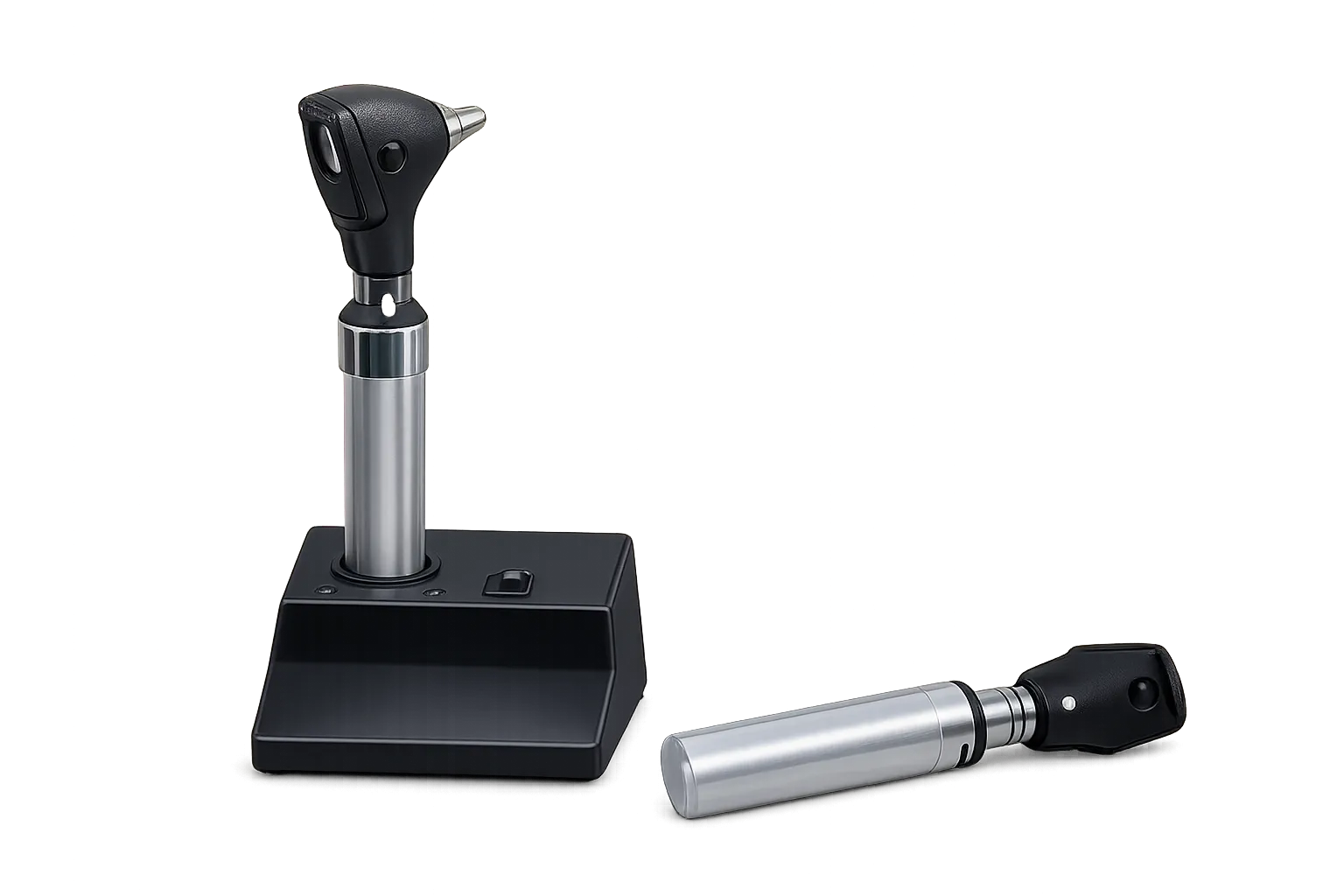
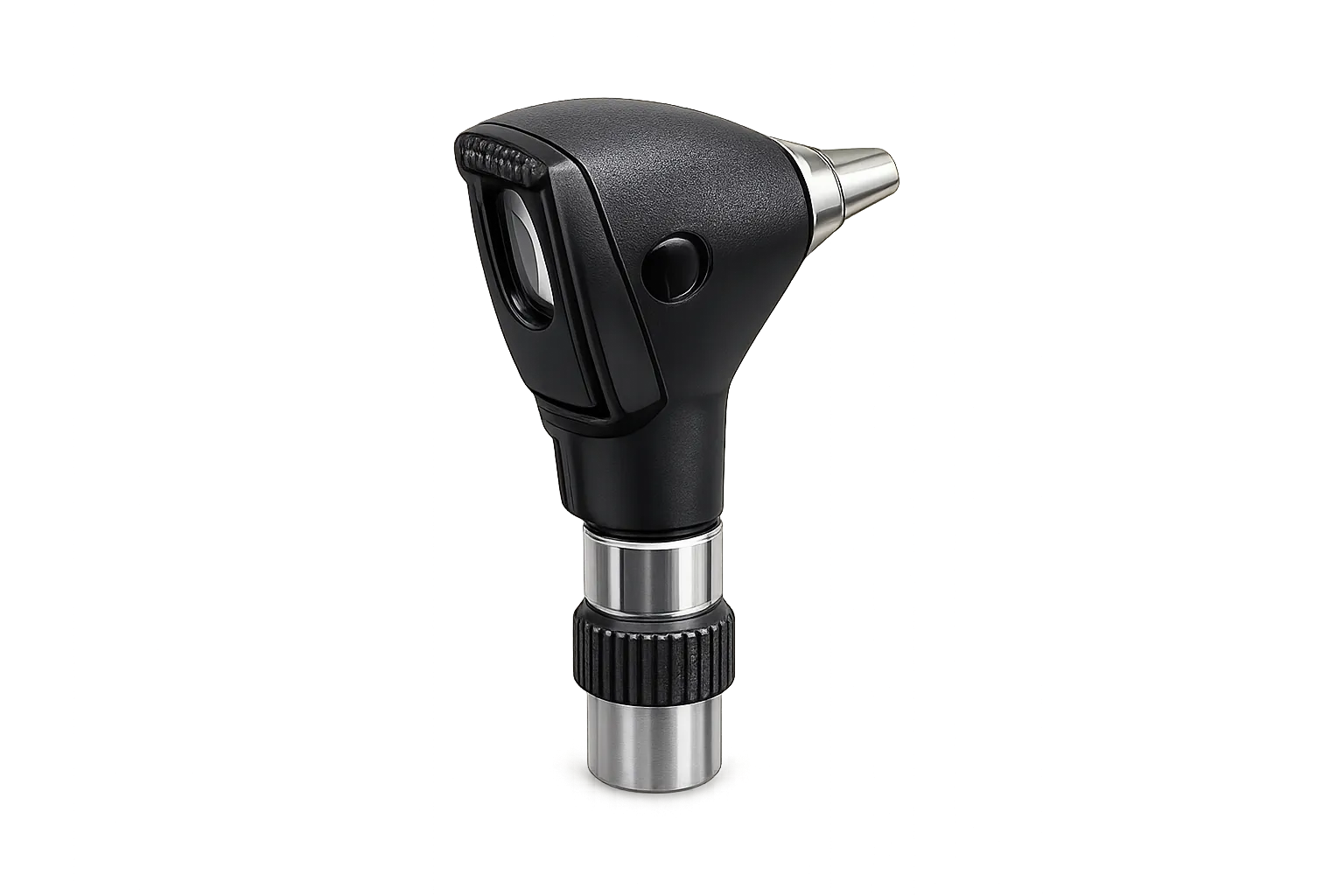
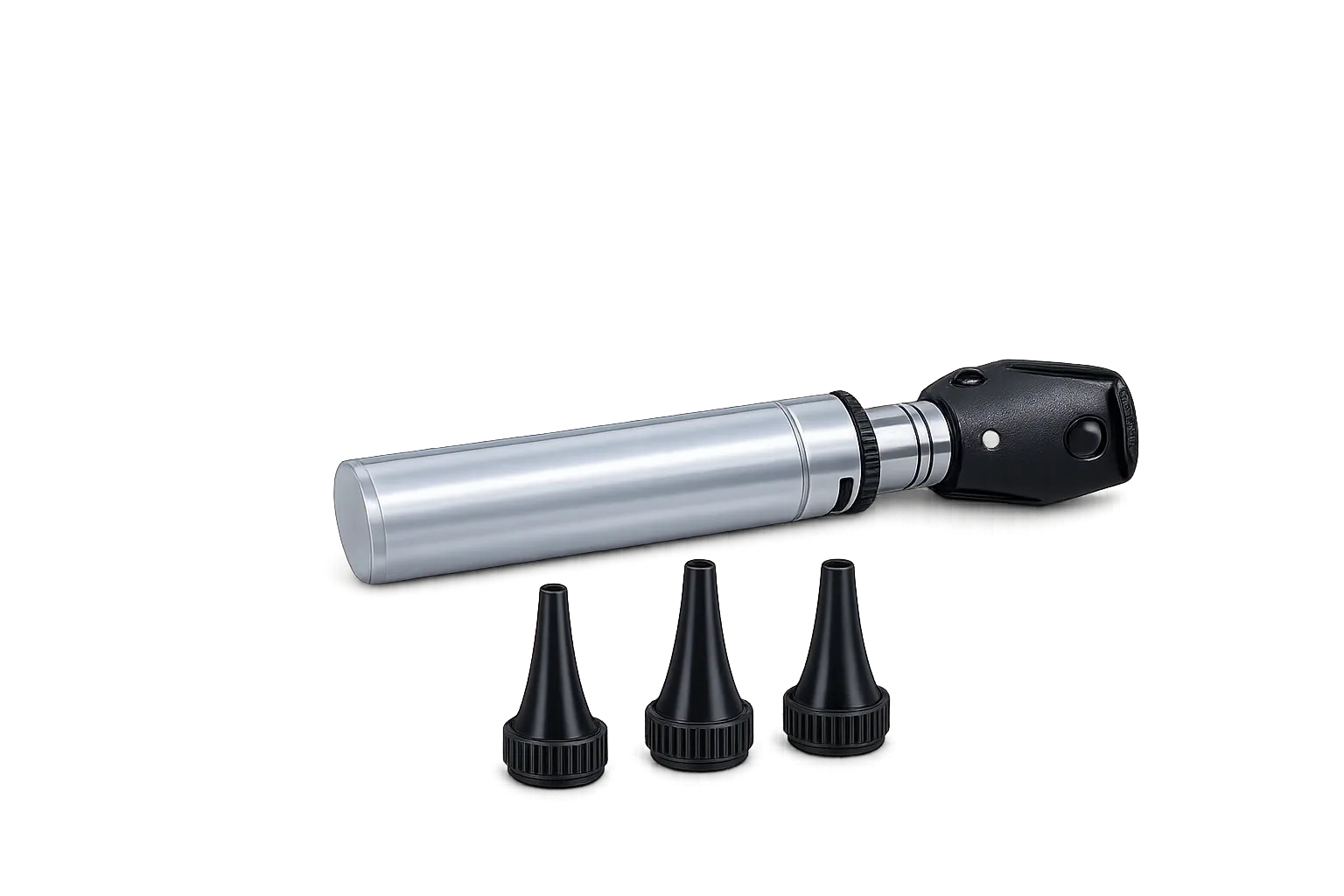
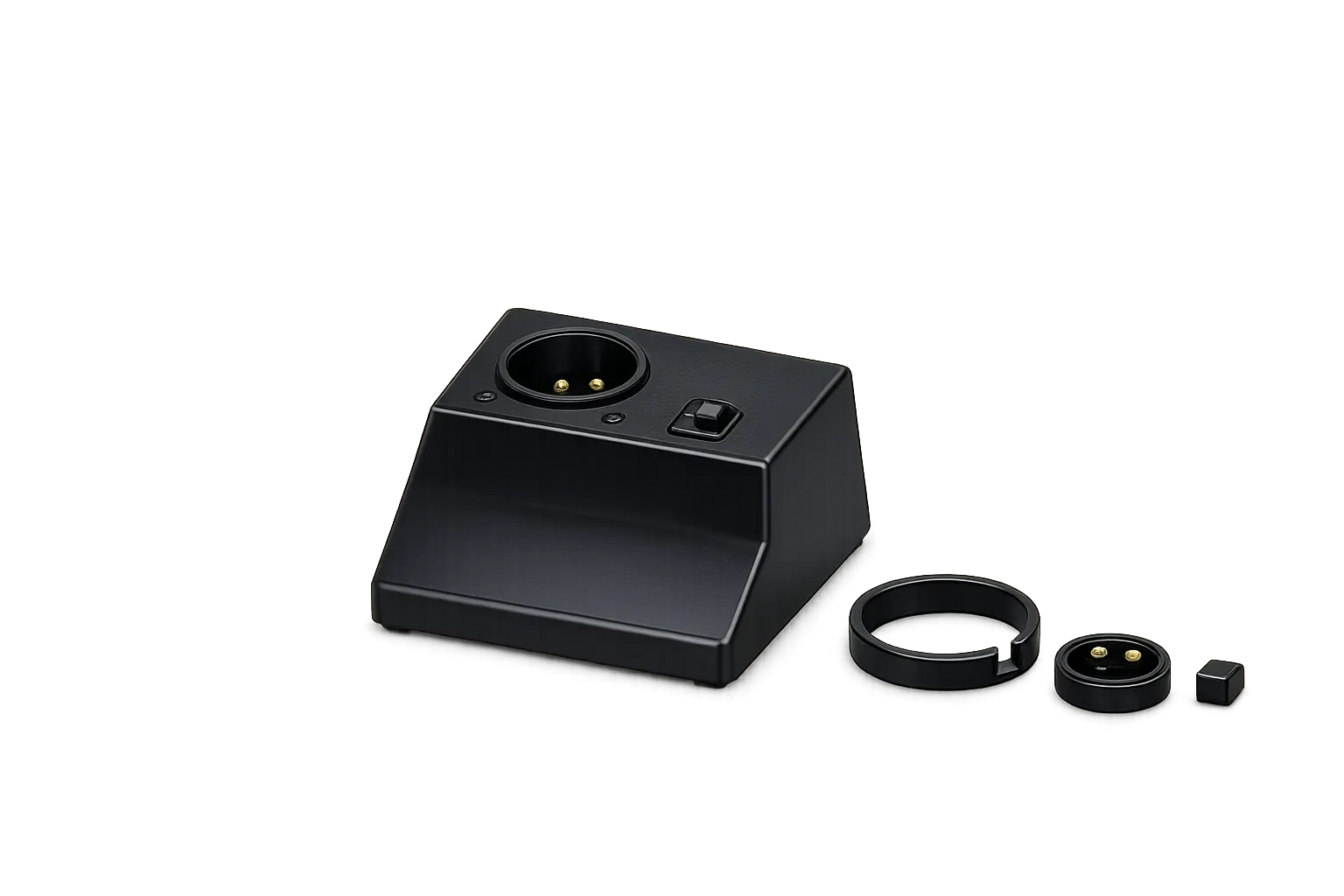
General practice is the natural setting because the eye and ear are the two examinations performed most often, and this set covers both from a single charging position. The ophthalmoscope's small-spot aperture works through an undilated pupil, which is the usual condition in a consulting room without dilating drops. At the same time, the otoscope's sealed head and insufflation interface allow assessment of tympanic membrane mobility rather than inspection of appearance alone. Medigear.uk confirms the inclusion list before order, and clinical technique and interpretation remain the practitioner's judgement throughout.
Paediatric services benefit from both instruments for the same underlying reason: children present with narrow canals and undilated pupils. Adjustable otoscope brightness prevents a strong source washing out detail in a small canal, and the small spot aperture avoids reflection off the iris. The smallest supplied speculum size determines practical suitability, and Medigear.uk confirms the available range.
Services performing fundus examination gain most from the aperture set. Slit illumination reveals elevation and contour, where a flat beam shows outline alone; grid illumination supports estimation of relative lesion size and position; and the red-free filter separates vessels, haemorrhages, and nerve fibre detail from surrounding tissue. Five apertures on one instrumentcovers a range of tasks that would otherwise need judgement about which single beam to accept.
Practices equipping several rooms should settle consumables at the point of order. Two halogen bulbs per set, plus a recurring speculum requirement, add up to a running cost that outweighs unit price differences within a few years, and settling supply once is simpler than chasing it per room.