
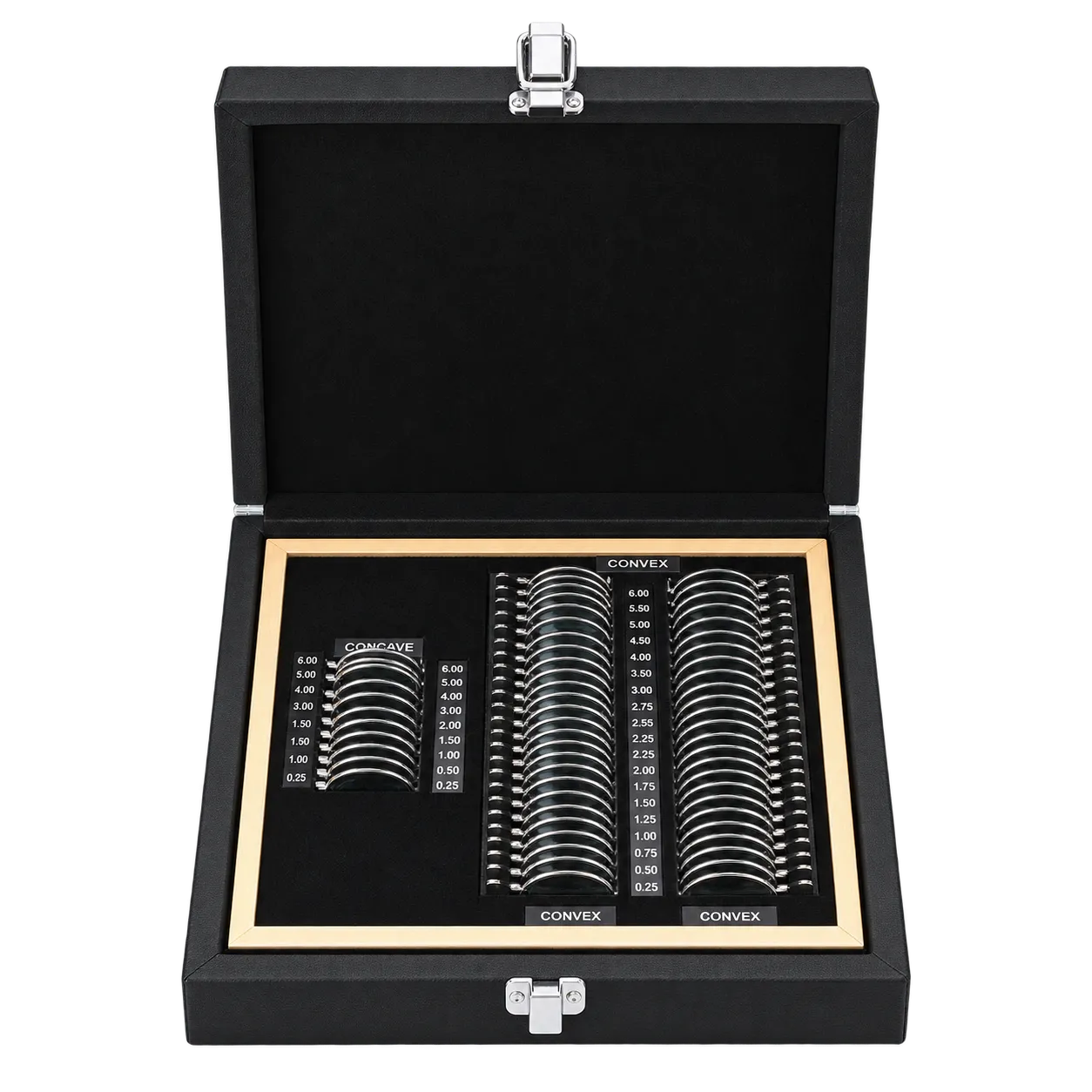

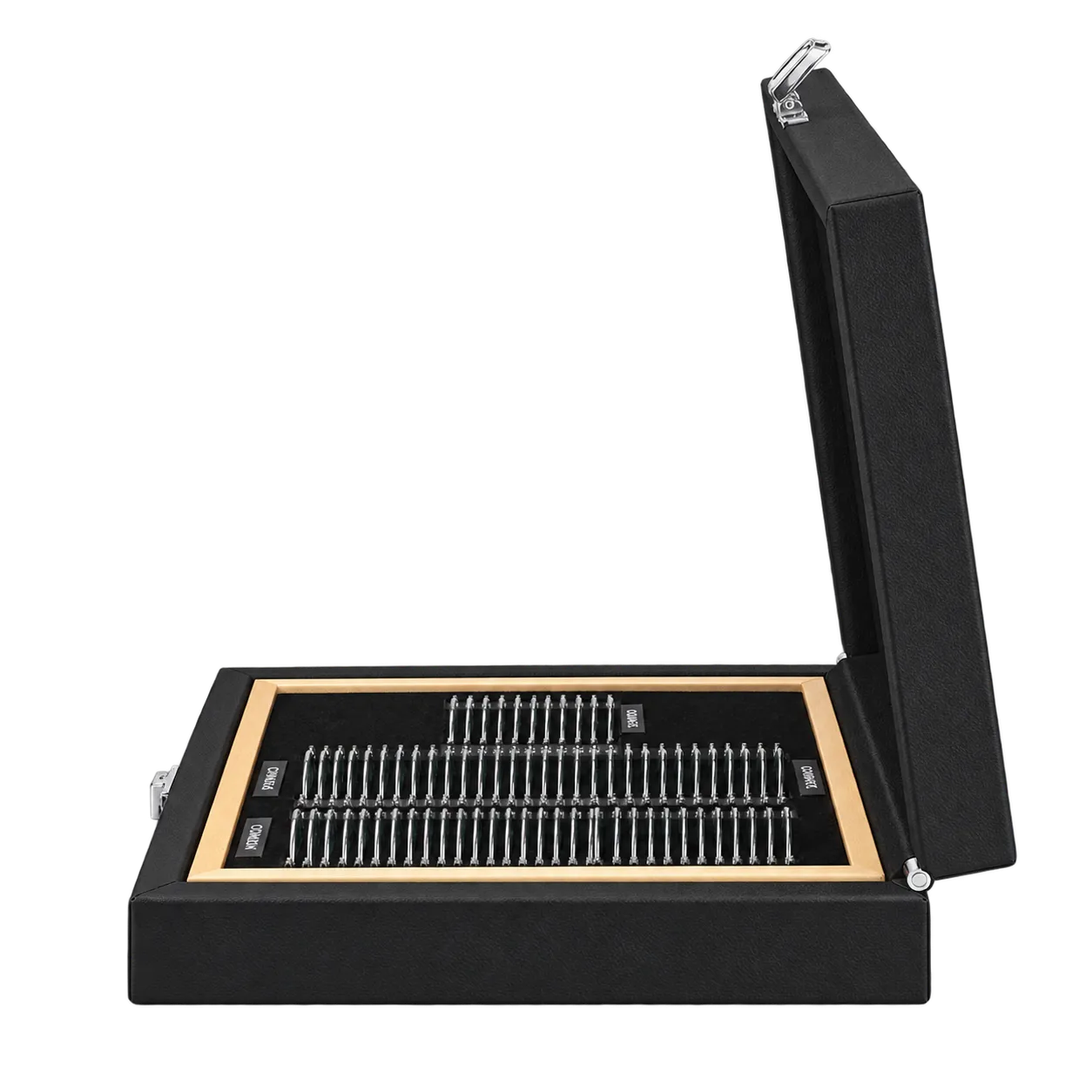
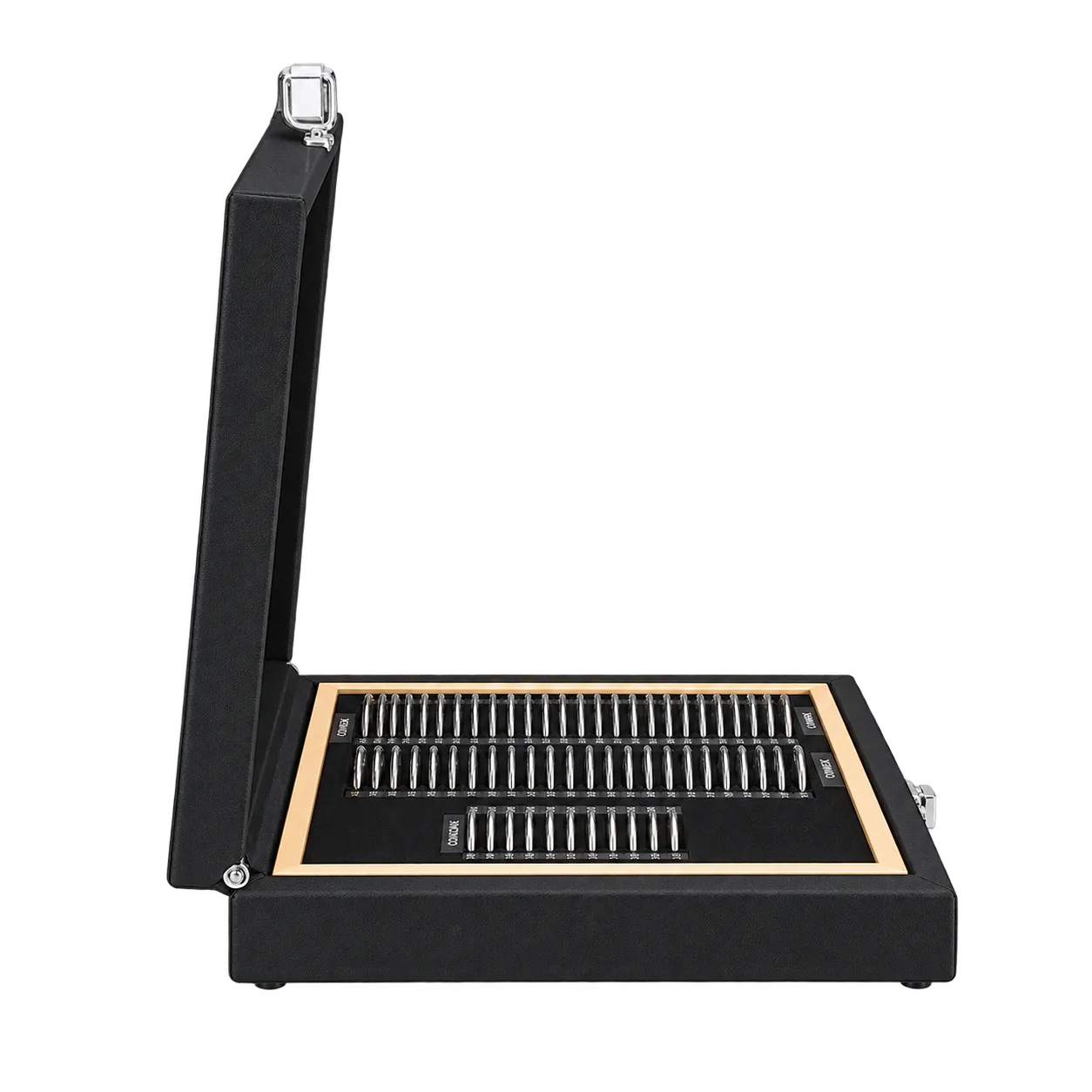
Visual field clinics are the most likely home for the JS-68. Standard automated perimetry tests the central field at a fixed distance, so patients need their refractive error corrected, with a near addition where age requires it, in the analyser's lens holder. Published data show that uncorrected error measurably lowers sensitivity, so the right lens in the holder is part of a valid test.
Glaucoma services depend on comparing fields over years. When a patient's result shifts, the service needs to know that the change is disease and not defocus. A dedicated set beside each analyser lets the operator place the correction consistently at every visit, and engraving on both faces of each rim keeps the power readable in a darkened perimetry room.
Neuro-ophthalmology and stroke services that run visual fields can use the set the same way, provided the lenses fit the holder of the analyser in use.
Satellite clinics, care homes and screening programmes can carry a 1.5 kg case for quick checks of an existing prescription where a full refraction case would be unnecessary. Those checks confirm a correction rather than derive a new one.
Hospital eye services with several analysers may keep one set per machine, so that refraction lenses stay in the refraction room.
The set is not suited to full subjective refraction. It has no cross cylinders, no pairs for binocular balancing, no prisms and no occluder. Clinics that write prescriptions in plus-cylinder form will need to transpose before use. Institutional buyers commonly ask for evidence of conformity. The conformity documentation those procurement routes require is issued by the manufacturer and provided by the seller.