
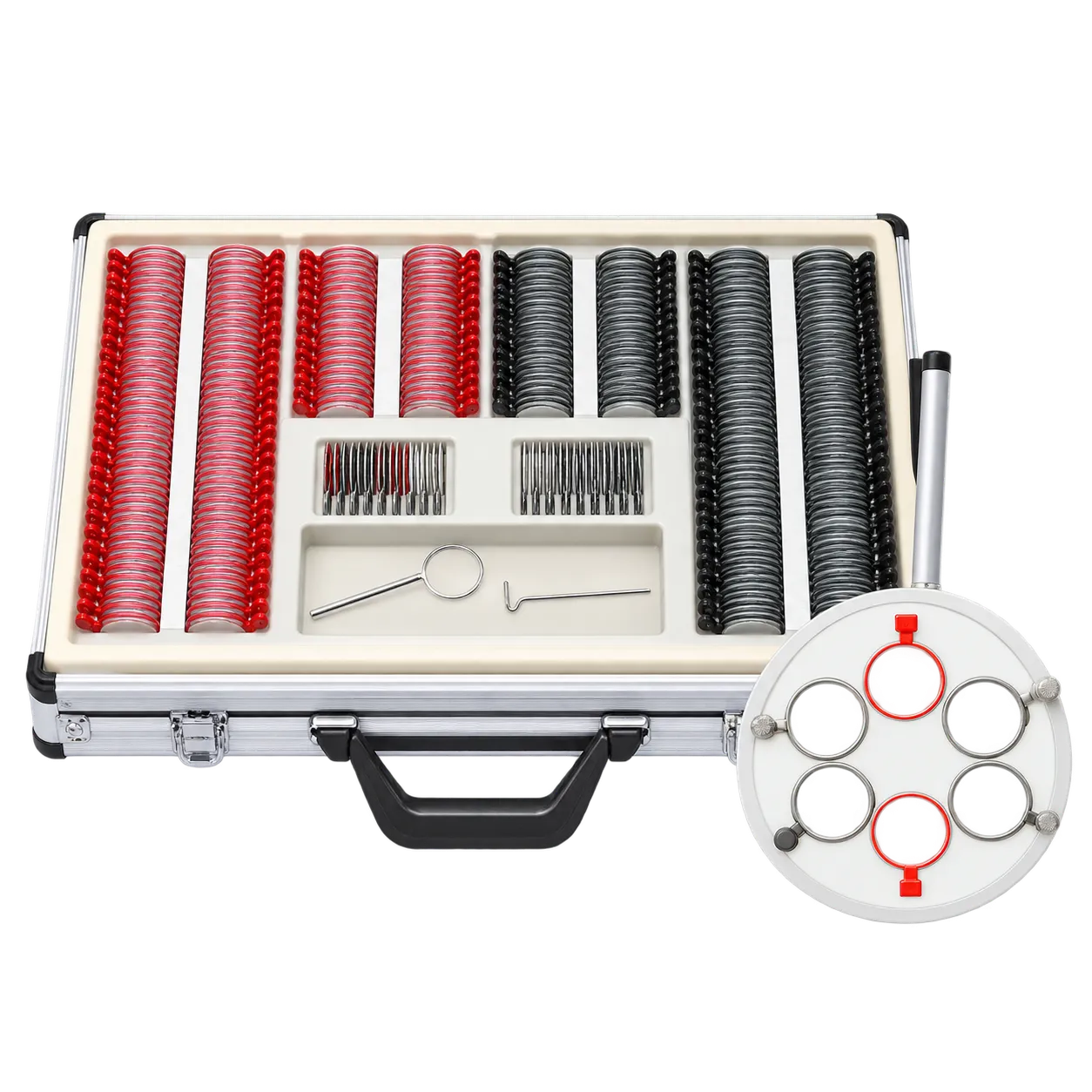
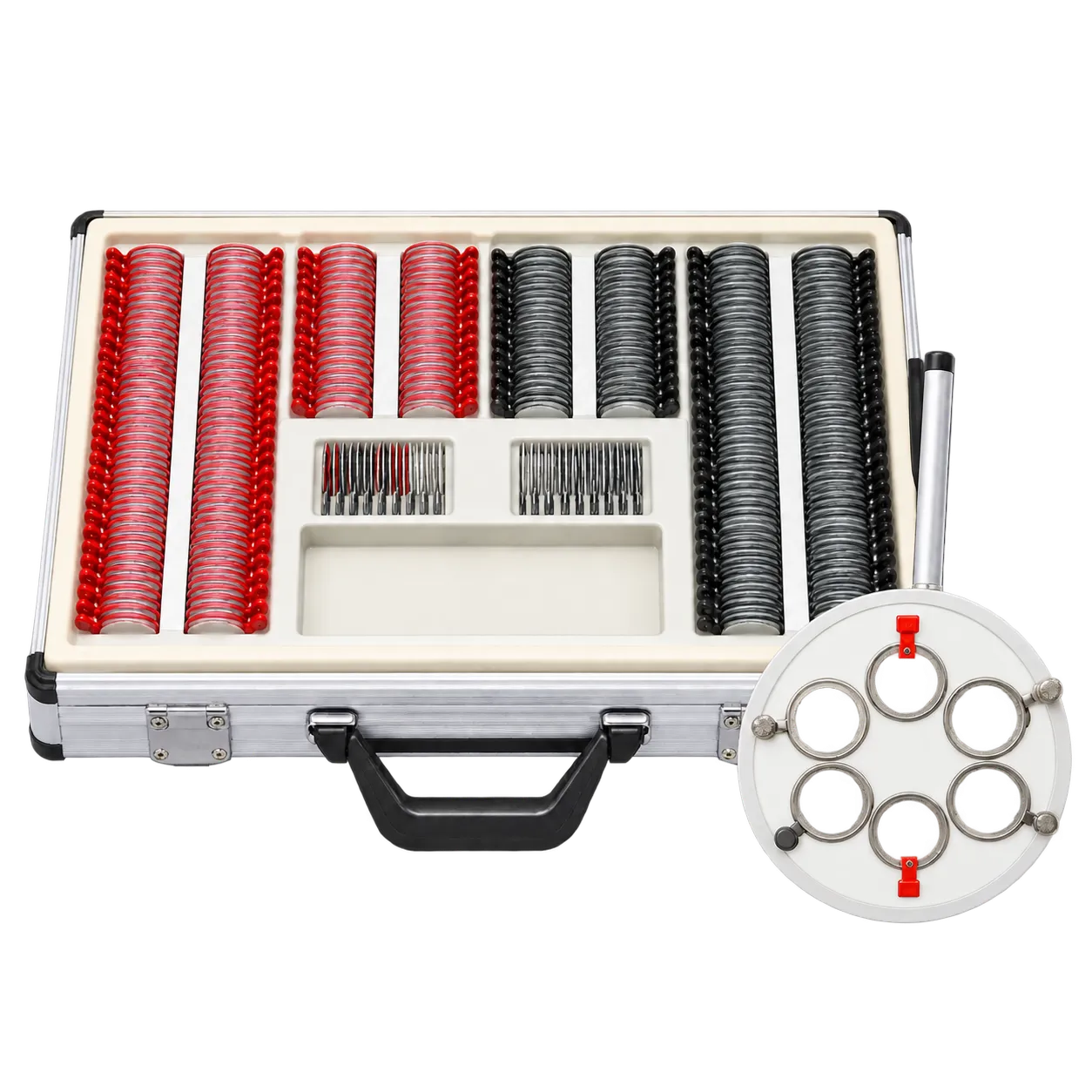
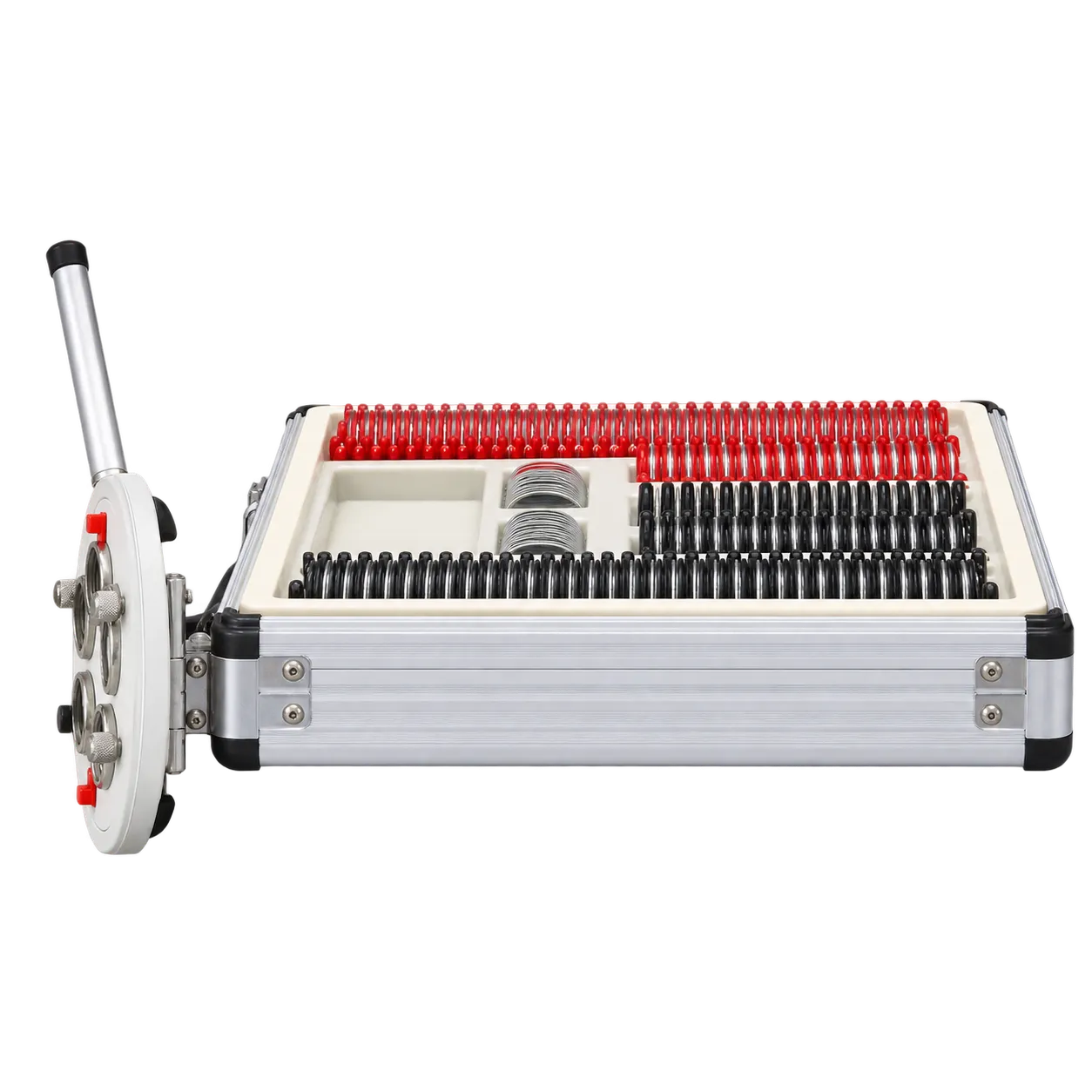

Hospital eye services buying through formal procurement are a natural fit. The set carries no electrical safety, calibration service or statutory inspection burden, so the equipment file consists of the declaration of conformity, the registration details and a focimeter log. NHS procurement routes ask for that documentation, and equivalent public procurement elsewhere asks the same.
Low vision clinics benefit from the full 36.5 mm aperture. Patients who view eccentrically because of central field loss can use an off-centre part of the lens during trial frame refraction, which is the approach low-vision practice favours because it allows a natural viewing posture.
Community optometry practices use the set for trial frame final checks and for walk-around trials of a new correction before it is dispensed. Paired sphere and cylinder powers let both eyes carry identical lenses during binocular balancing, and cylinders run without gaps in quarter steps to 4.00 D.
Orthoptic and binocular vision clinics use the whole-value prism ladder from 1 to 10 alongside the paired white Maddox rods. Engraved prism base marks keep orientation readable through repeated handling.
Universities and training centres that equip teaching clinics through tenders get a set whose compliance file is short and whose paired accessories cope with student handling.
Buyers in any country should expect to adapt the registration step to their own regulator, since the MHRA route applies to Great Britain. Two situations fit less well: tenders that require published dimensions before submission, and practitioners who rely on ±0.12 D lenses. The conformity documentation those procurement routes require is issued by the manufacturer and provided by the seller.