

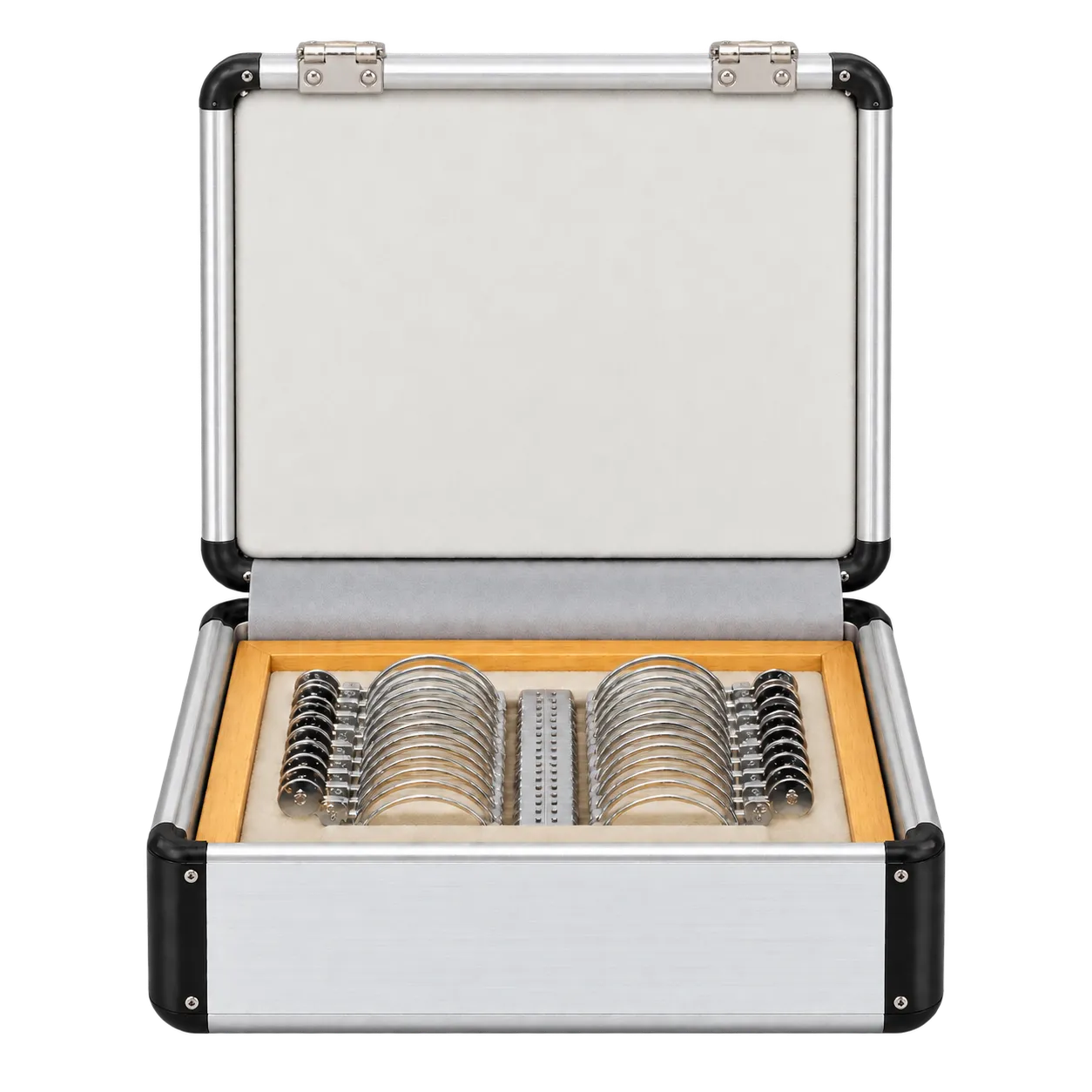
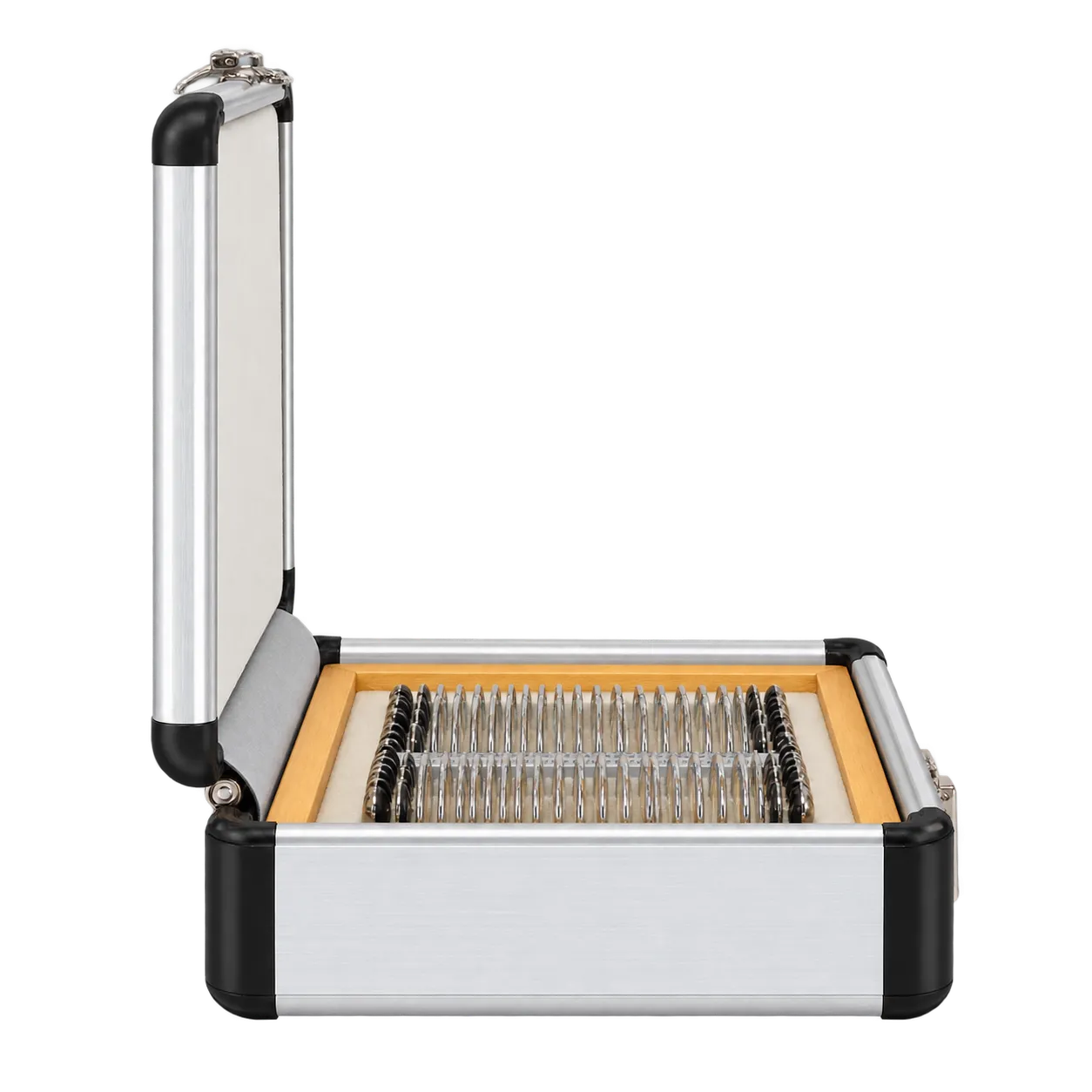
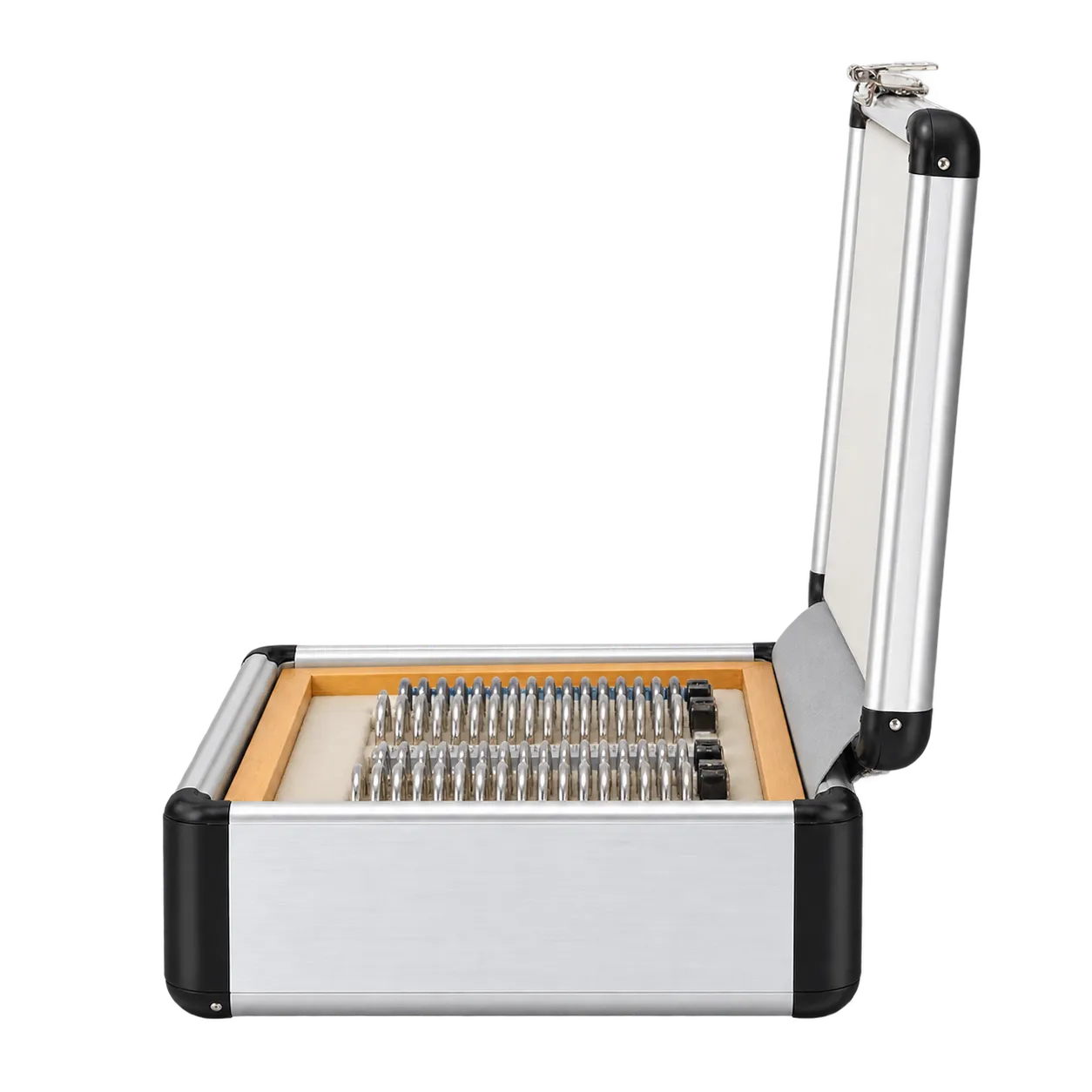
Optometry practices use progressive trial lenses at the end of the sight test, once distance refraction and a tentative addition are in hand. Placing a progressive trial lens over the distance correction lets the patient read in their natural head-down posture and look up at the room, so the addition is confirmed in the way it will be used. Published agreement studies show tentative additions can miss the final value by half a dioptre or more, which makes this refinement worthwhile.
Dispensing areas benefit from having the set within reach. A dispensing optician discussing lens options can show a patient progressive vision at the desk, including the narrowing of the intermediate zone at a screen, without borrowing lenses from a consulting room. A 22 × 18 × 9 cm case fits a dispensing desk drawer.
Practices reviewing a non-tolerant progressive wearer can use trial lenses to check whether the addition or the fitting height is the likely problem, before remaking spectacles.
Domiciliary and outreach services seeing presbyopic patients can carry the small aluminium case alongside a trial frame and refraction set.
Optometry and dispensing training uses progressive trial lenses to teach how addition, corridor and fitting point relate to the patient's head and eye posture.
The set suits a buyer who needs a published addition range less well, since the datasheet gives none, and it depends on a trial frame that accepts its rims. Institutional buyers commonly ask for evidence of conformity. The conformity documentation those procurement routes require is issued by the manufacturer and provided by the seller.