
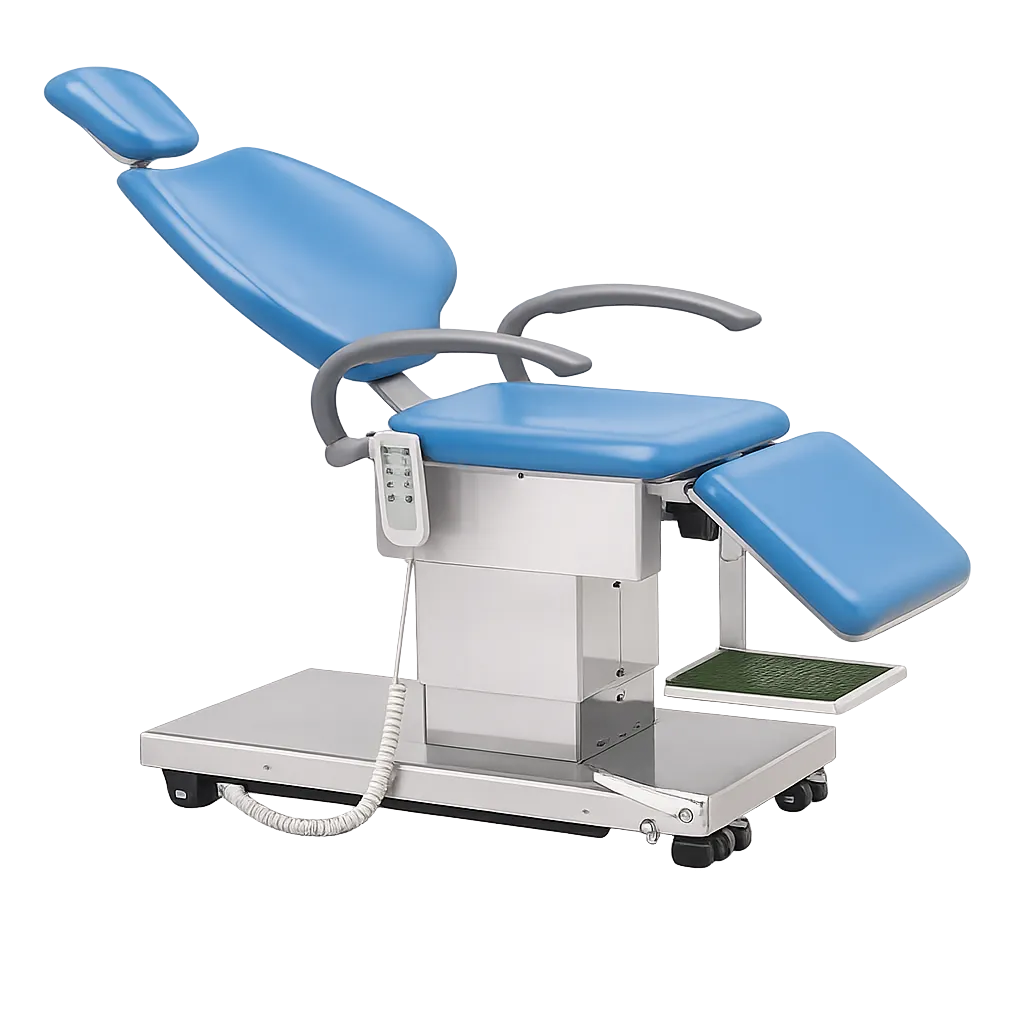
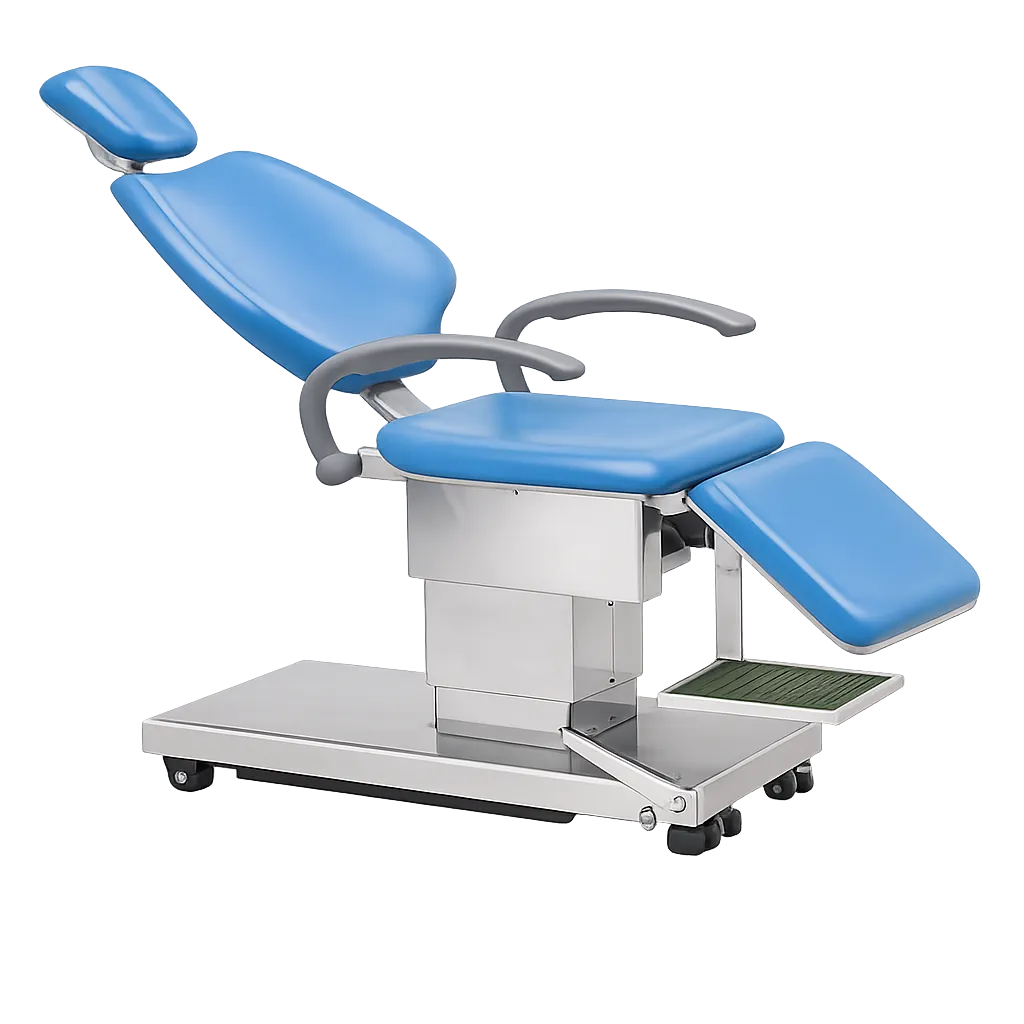
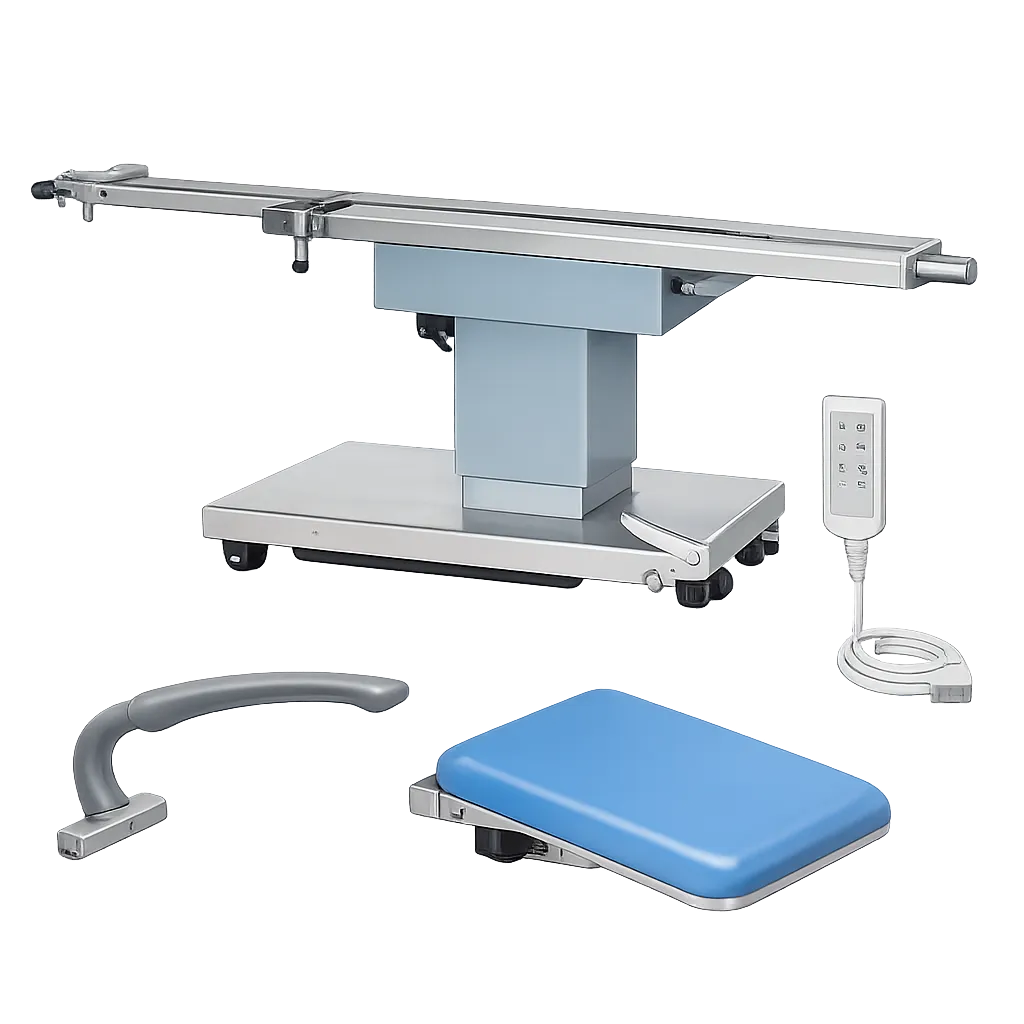
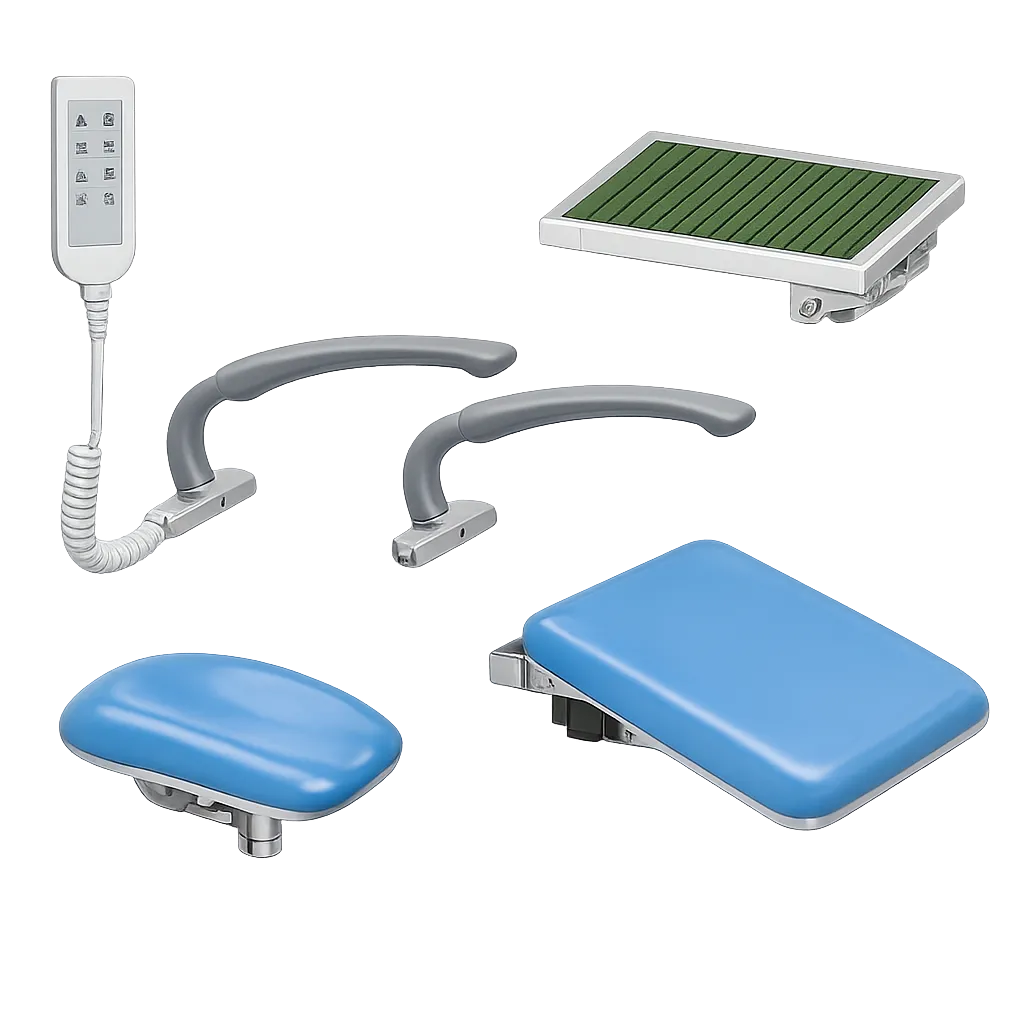
Ear, nose and throat outpatient clinics are the natural setting, because most of an appointment there is examination and conversation rather than procedure. A chair allows the patient to sit upright to be seen and spoken to, reclining under power only when the clinician is ready to work, whereas a flat table requires them to lie down throughout. The contoured headrest holds the head at the angle required for the examination without an assistant to steady it. Medigear.uk confirms recline range and headrest adjustment before any procurement decision, and all clinical technique and judgement remain with the practitioner.
Ophthalmic outpatient work benefits from the same arrangement. A seated examination suits slit lamp and instrument work, and a rotating chair lets the patient be brought to a fixed instrument rather than equipment being moved around a small consulting room. Rotation is not stated for this model, and Medigear.uk confirms whether it is provided, since in a consulting room already holding a slit lamp and a trolley the difference between turning a chair and shifting equipment is considerable.
Services that see elderly or less-mobile patients benefit from the footplate and the chair working together. Sitting into a chair from a step is easier than climbing onto a flat table, and easier transfers save time across a list while reducing risk. Whether the footplate adjusts is confirmed at quotation.
Clinics with infection control requirements should note the seamless upholstery. Seams are where fluid collects and cleaning fails, and removing them addresses the problem rather than managing it. Cleaning guidance and replacement cover availability are provided with the unit, since upholstery wears out long before the frame does, and a chair out of service for a cover is a chair not earning its room.