
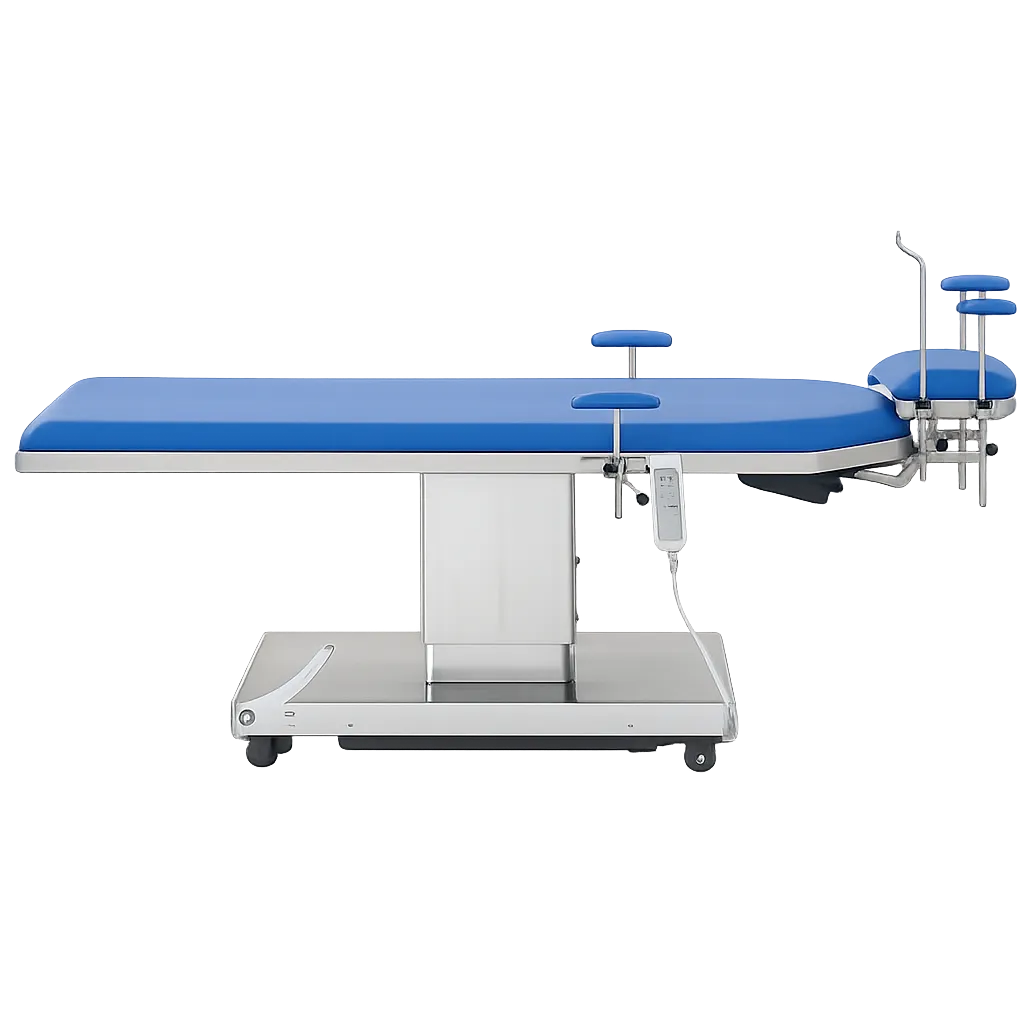
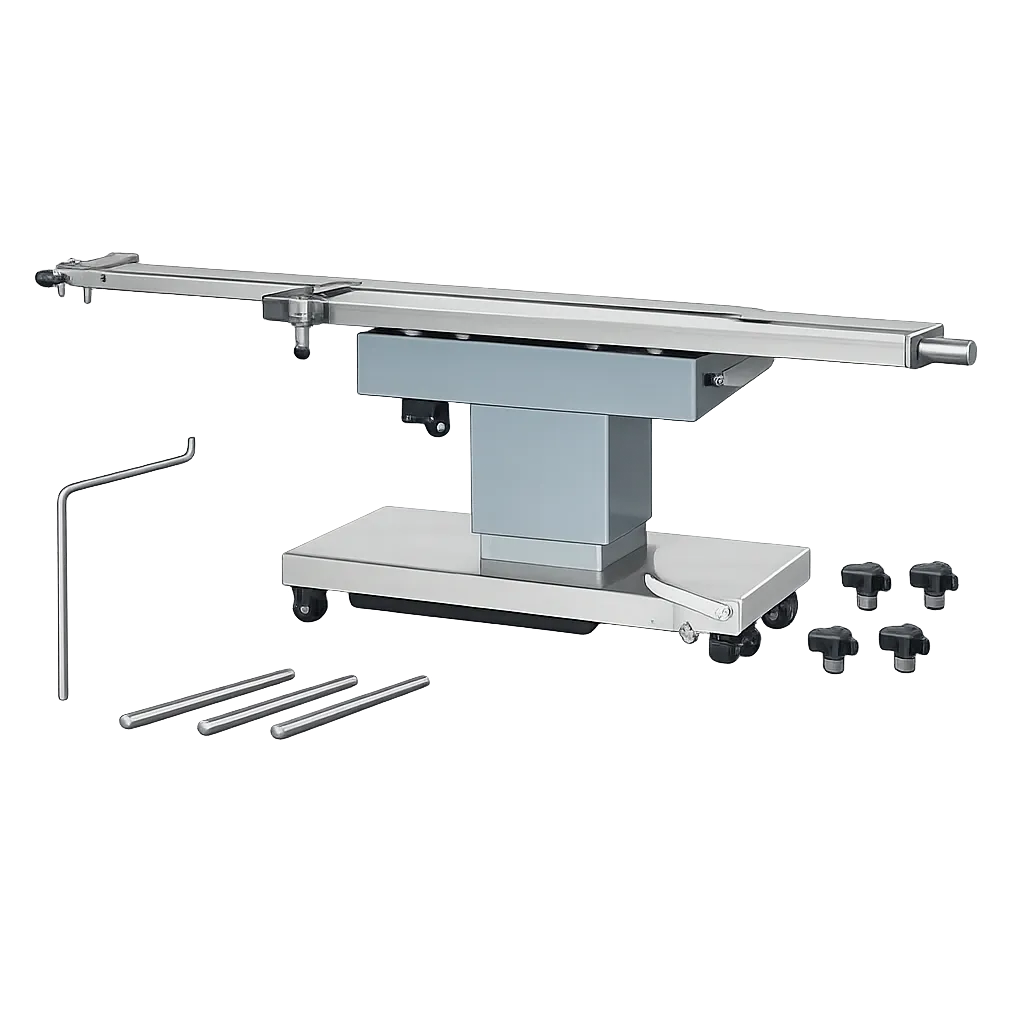
Ophthalmic services working under the microscope depend on how close the surgeon can sit, and the base determines it. Surgery is performed from a chair at the patient's head with knees beneath the table, so a base projecting upward or outward at that end takes exactly the space the surgeon needs. A low flat plate leaves it, which affects reach to the operative field and therefore posture across a full list. Medigear.uk obtains base plate height and footprint alongside the usual figures before any procurement decision, and all surgical technique and clinical judgement remain with the operating surgeon.
Services running long lists should treat that clearance as an ergonomic matter rather than a convenience. A surgeon sitting slightly further back reaches slightly further forward in every case, and posture maintained across eight or ten procedures determines how a session ends rather than how it starts.
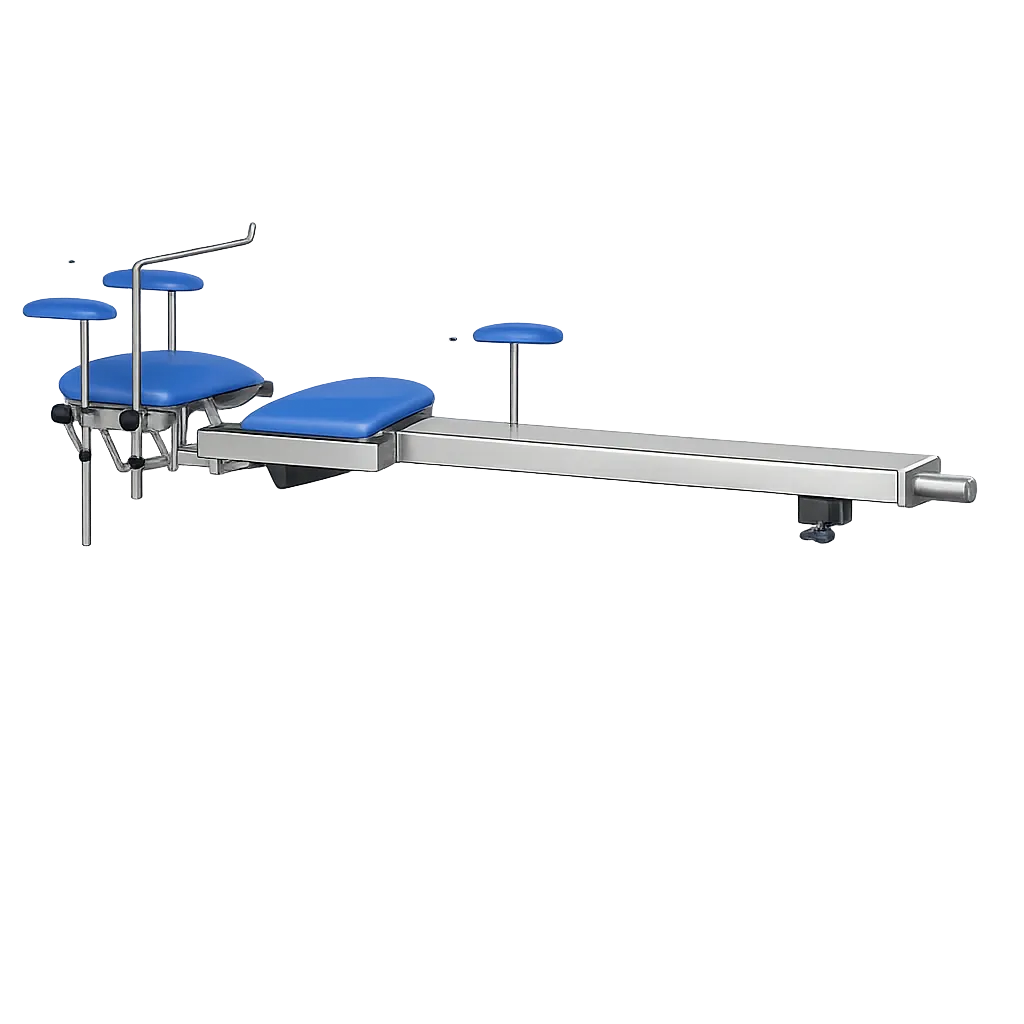
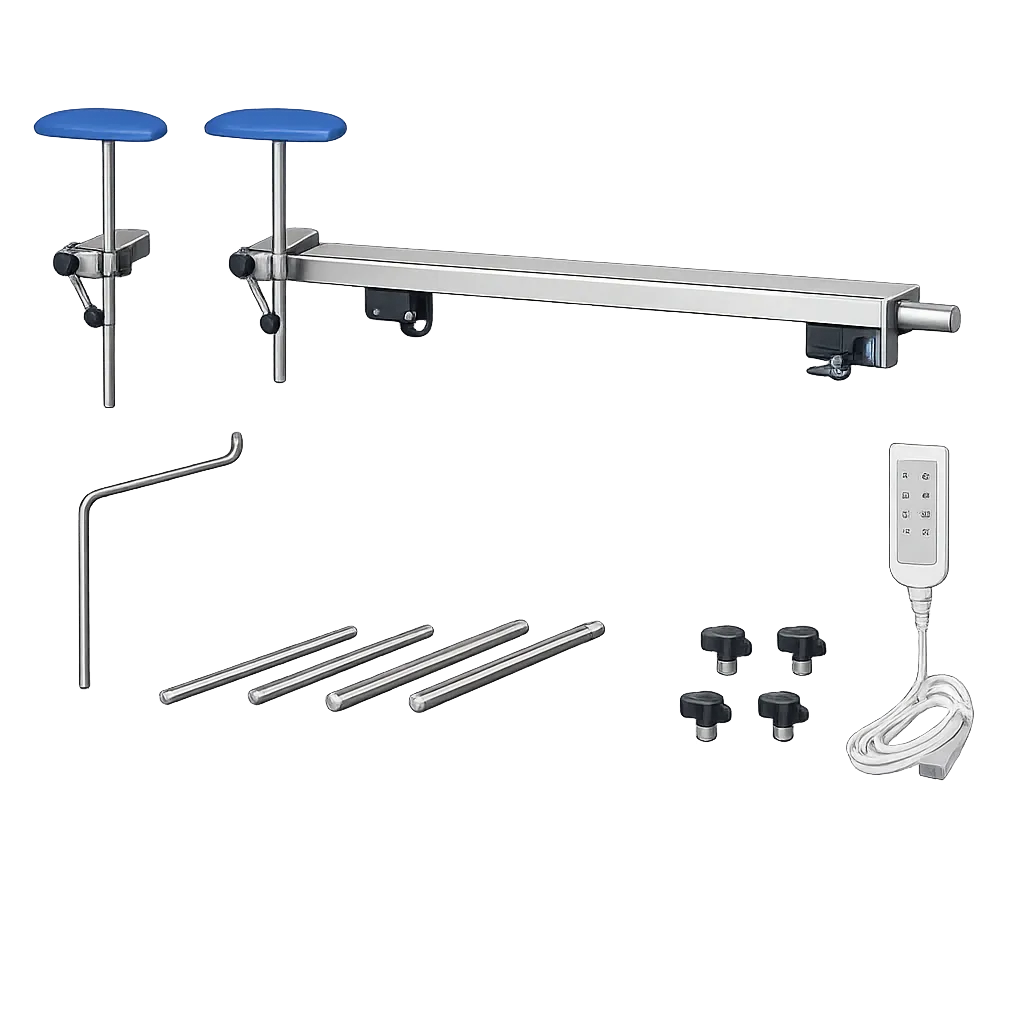
Microsurgical steadiness depends on forearm support rather than the hand alone. An armrest frame at the head end, with further supports on top, provides it, and Medigear.uk confirms the configuration, adjustment range, and whether the supports form part of the standard supply, since a support that will not reach where the surgeon works adds nothing to the steadiness it was fitted for.
Theatres should establish minimum height, patient load,d and tilt provisions simultaneously. None is published for this variant; minimum height governs whether the seated position works at all, and load capacity informs the service's own risk assessment as much as its clinical judgement. Medigear.uk obtains each from the manufacturer rather than reading figures across from a sibling reference.