
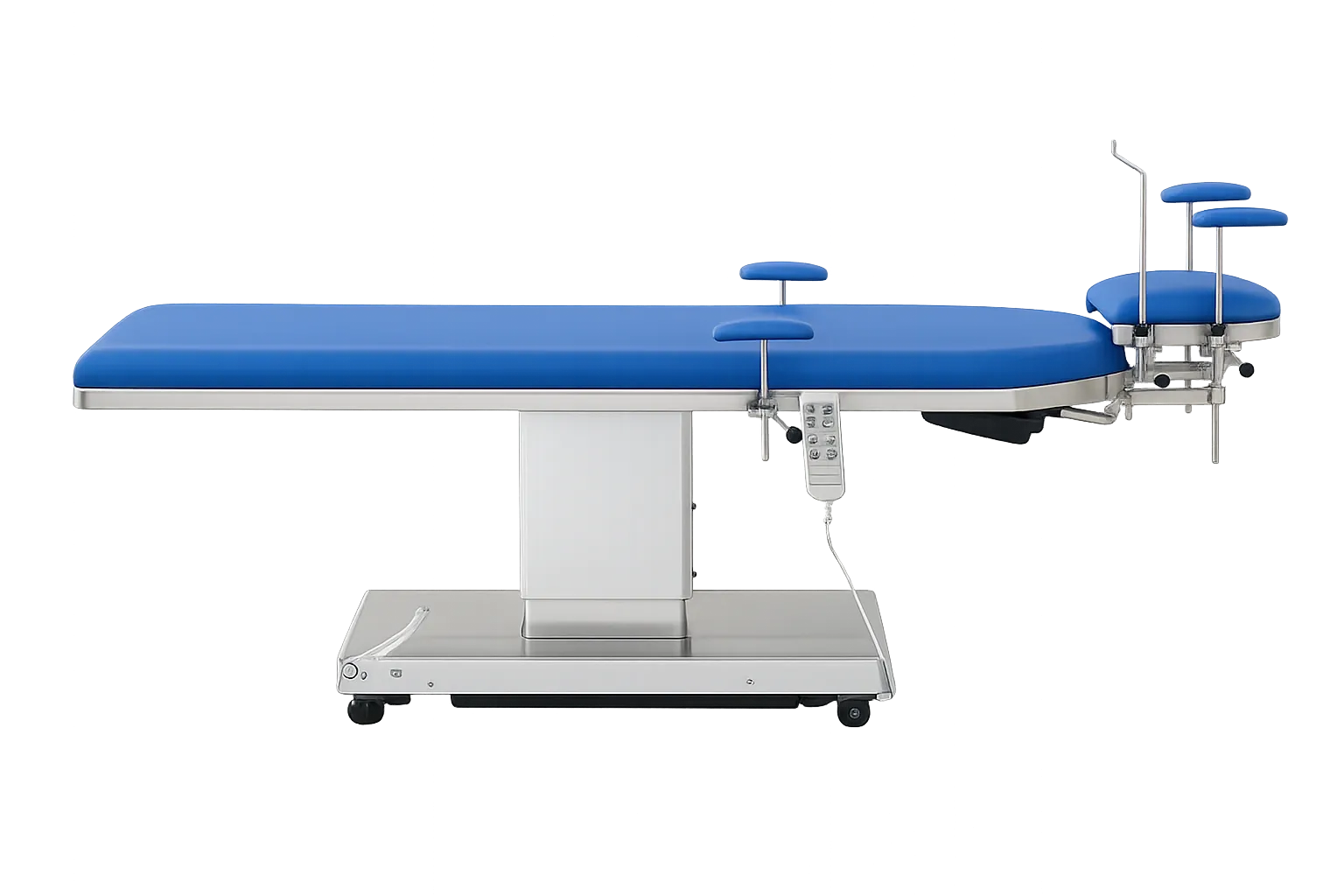

Ophthalmic services performing surgery under the microscope are the intended setting, and the seated operating position is what the table has to support. The surgeon sits at the patient's head with the microscope above, eyes at the eyepieces, forearms on the armrests, and the table's minimum height determines whether that arrangement works or is approximated. Because the published description refers to a super-low position without providing a figure for this variant, Medigear.uk obtains the confirmed minimum before any procurement decision is made. All surgical technique and clinical judgement remain with the operating surgeon.
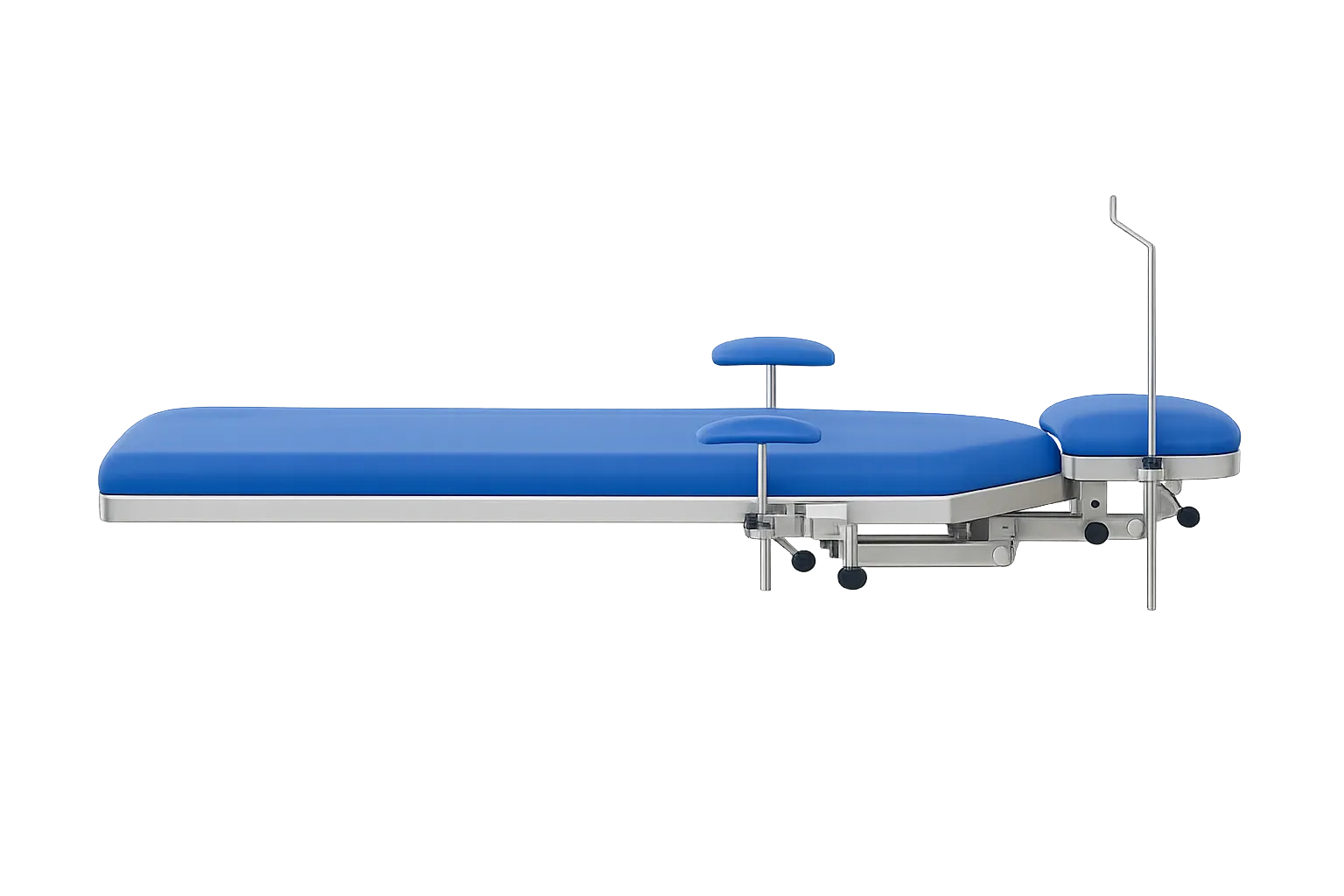
Microsurgical steadiness depends on forearm support rather than on the surgeon's hand alone, since an unsupported hand carries tremor; a supported one does not. Padded armrests on adjustable arms sit at the head end for that purpose, and Medigear.uk confirms whether they form part of standard supply along with their adjustment range.
Services running both ophthalmic and ENT lists benefit from a table specifiedd by he manufacturer for examination, ddiagnosisssand surgery alike. Whether one table can cover a mixed timetable in practice depends on the height range and the available accessories, both of which are established for this model rather than inferred. A table serving two specialities also earns its floor space across more of the week.
Theatres should settle the patient load capacity and tilt provision at the time of quotation. Neither is published for this variant; load capacity feeds a service's own risk assessment as much as its clinical judgement, and tilt determines which positioning the table supports. Medigear.uk obtains the manufacturer's stated figures rather than inferring them from a sibling model.