
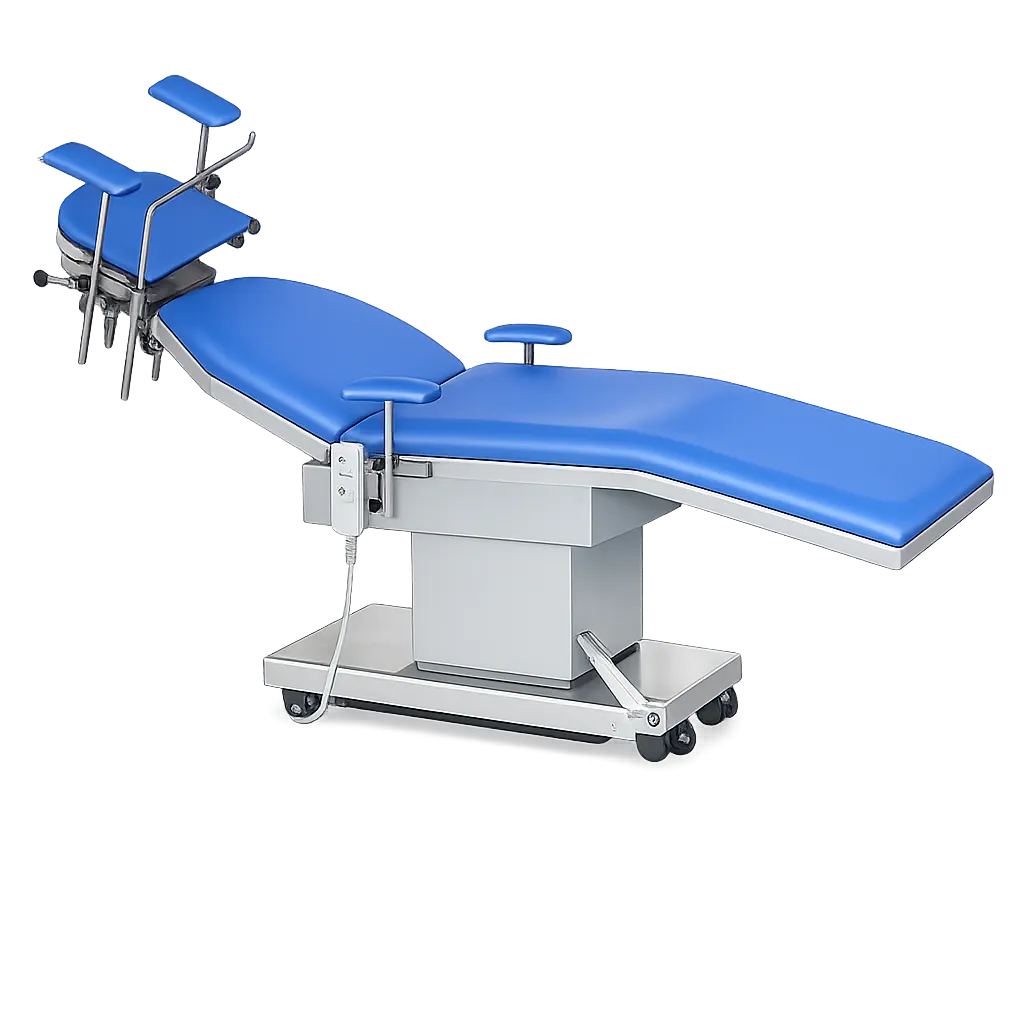

Clinics running longer examinations benefit most from the leg section dropping. A patient sitting with legs straight out in front is uncomfortable within minutes and tends to slide forward, since their weight sits behind the seat rather than over it. A proper seated posture with legs descending holds up throughout the appointment rather than just at the start, which matters when the examination and the conversation together take longer than the procedure. Medigear.uk confirms leg travel and backrest angle before any procurement decision, and all clinical technique and judgement remain with the practitioner.
Services seeing less-mobile patients gain from what the same articulation does for transfers. With the backrest raised and the leg section down, a patient can sit on the edge and swing round to stand rather than being laid flat and repositioned. Whether that works in practice depends on the height range, since the seat must reach a height from which a patient can stand, so Medigear.uk confirms both figures together.
An ear, nose, and throat examination suits the upright position on its own terms, since throat and nasal work is easier with the patient sitting than supine. The head-end armrest frame is retained alongside, which matters when the same table serves ophthalmic microsurgery, because forearm support steadies a hand working at that scale rather than being a comfort provision.
Units expecting the table to cover surgery as well should confirm that it reaches a genuinely flat position and descends far enough for seated microsurgery. Neither figure is published for this variant.