
Screening and Telemedicine
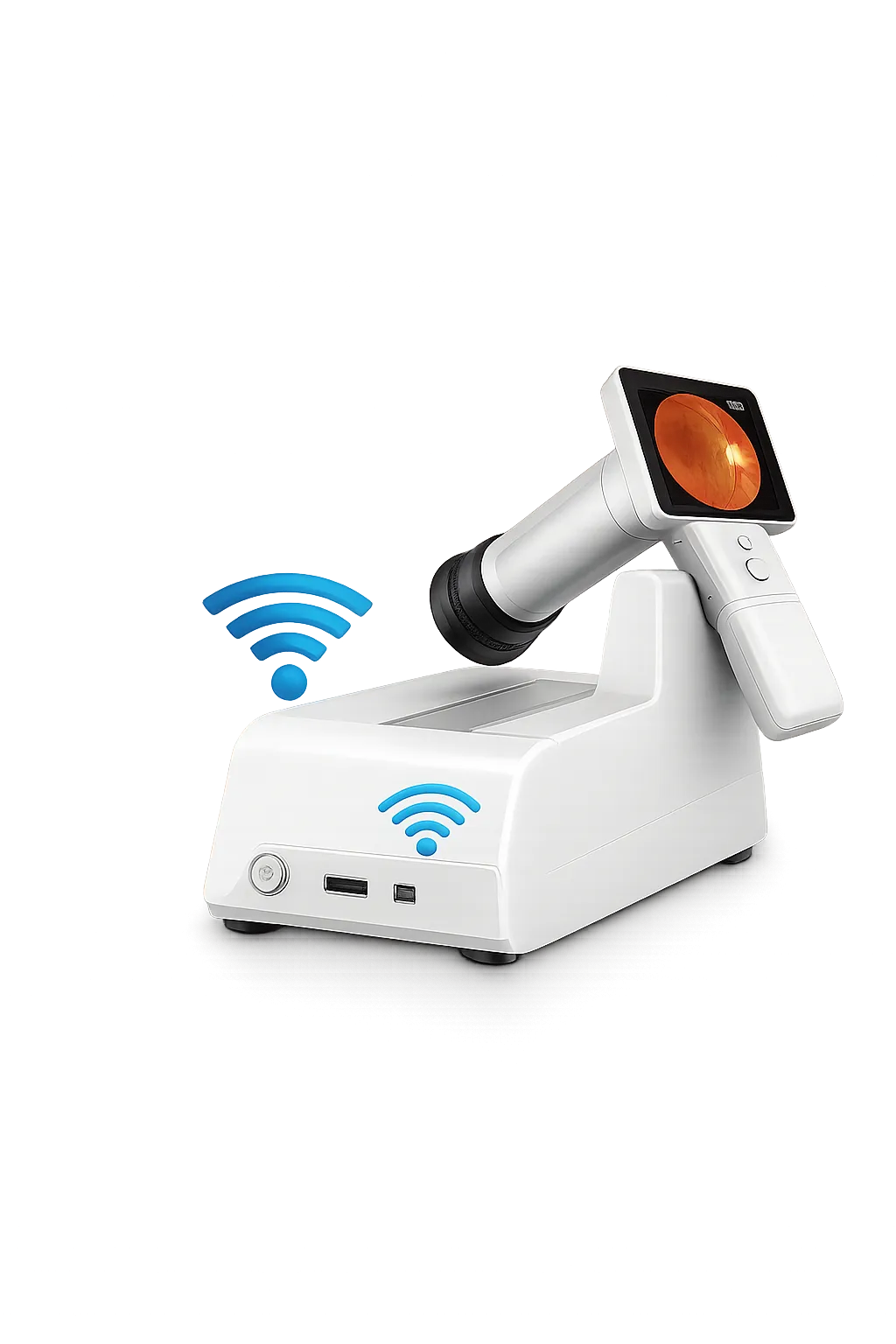
Wireless transfer as images are captured suits arrangements where a grader or specialist reviews remotely rather than on site. The instrument captures; interpretation and grading rest with the clinician receiving the images, wherever they are working from. Remote grading depends on images arriving promptly. Distance stops being an obstacle to review. Capture and interpretation happen in different places. The instrument does the first only.
Bedside and Domiciliary Imaging
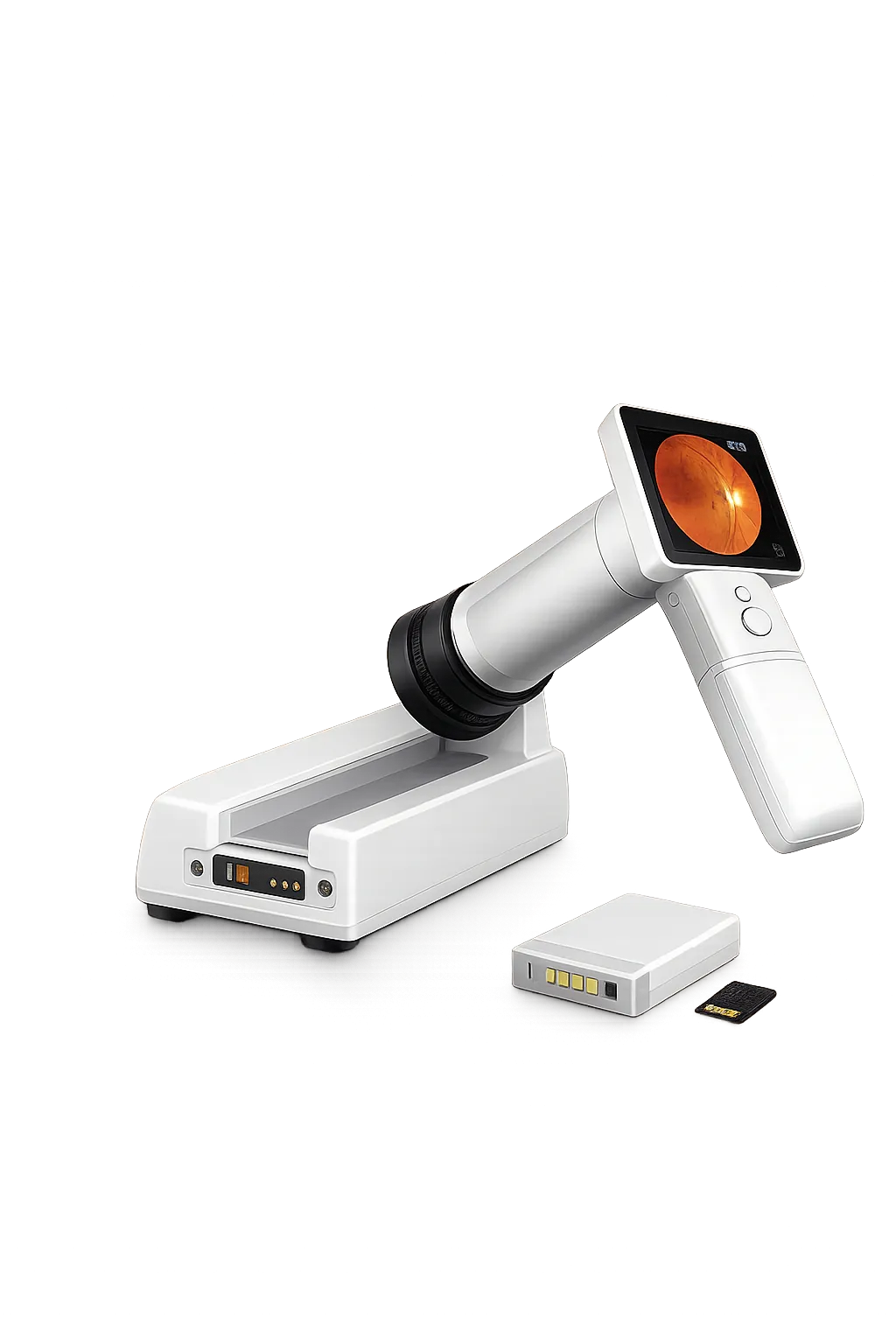
Battery operation with no mains requirement means the camera reaches patients who cannot attend a clinic. For bedridden or mobility-restricted patients, an instrument carried to them is the only practical route to a retinal image. Bedridden patients are otherwise very hard to image. Care homes and home visits both come within reach. No mains socket need be found on arrival. Battery operation removes that constraint.
Small Clinics and Consulting Rooms
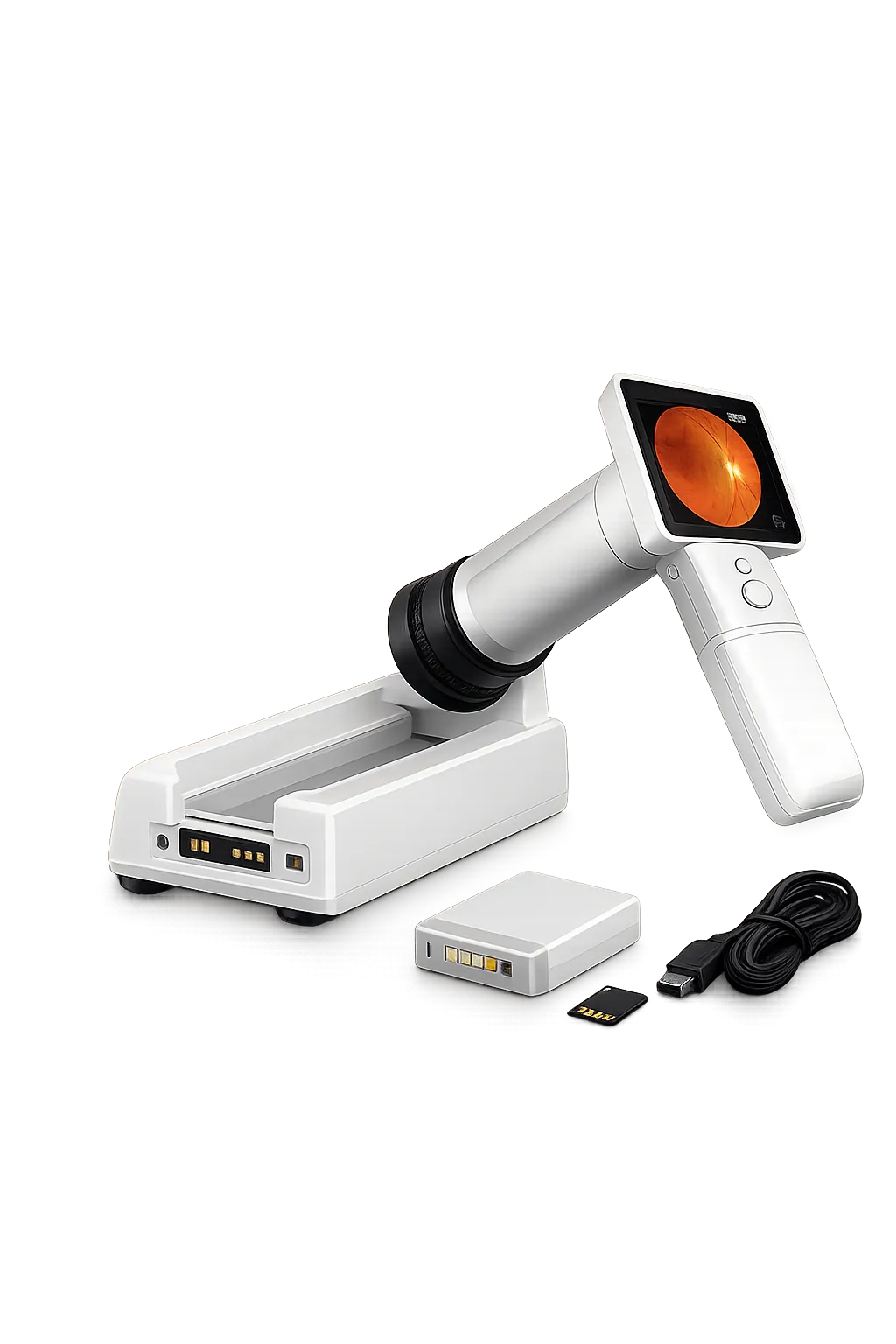
Practices without space or budget for a table-mounted instrument gain retinal imaging in a handheld form. The 2.5 millimetre minimum pupil means ordinary appointments proceed without dilation being arranged in advance. No dilation need be arranged in advance of an appointment. Space requirements stay minimal throughout. Handheld instruments suit constrained consulting rooms. Table space is not required at all.
Diabetic Retinopathy Screening Contexts
The manufacturer lists diabetic retinopathy among the applications. Where imaging forms part of a formal screening programme, the programme's own standards for image quality, grading and equipment validation govern what is acceptable, and those sit outside the specification. Programme standards govern rather than the specification. Validation requirements sit outside this card. Grading standards apply regardless of the equipment. Programmes validate their own instruments.