
Orthoptic departments are the main clinical setting. Patients with fourth nerve palsy, thyroid eye disease or childhood strabismus with a vertical element need both components measured in primary position and in the diagnostic gaze positions. With both bars in one case, the orthoptist moves from one component to the other without leaving the patient.
Neuro-ophthalmology and stroke services assess acquired diplopia, where a skew deviation or cranial nerve palsy may combine vertical and horizontal misalignment. Serial measurement of both components tracks recovery, and published limits of agreement show why the same equipment and technique should be used at every visit.
Strabismus surgery planning depends on accurate measurement of every component in several gaze positions. Confirming the calibration position of each bar before those measurements is part of accurate surgical dosing.
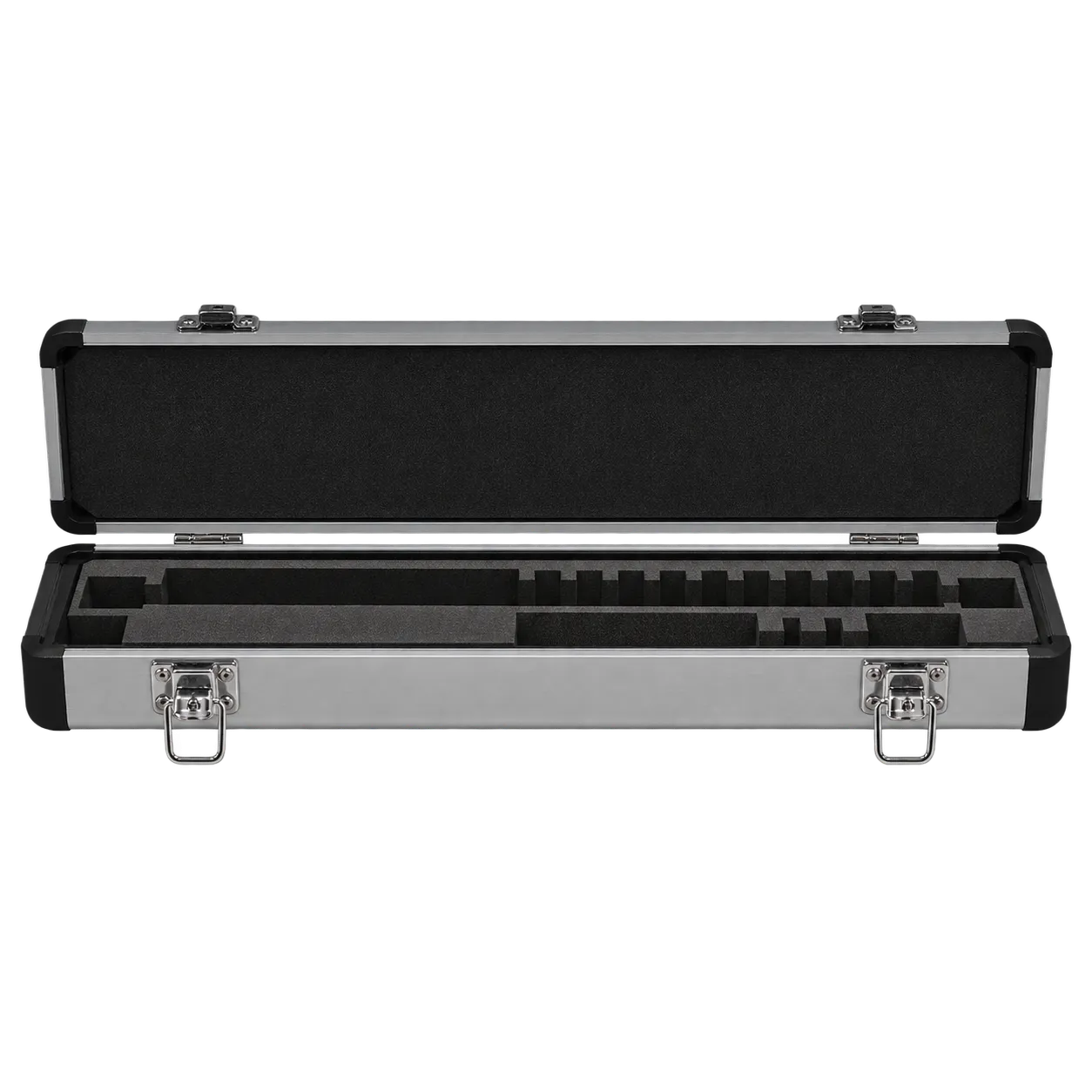
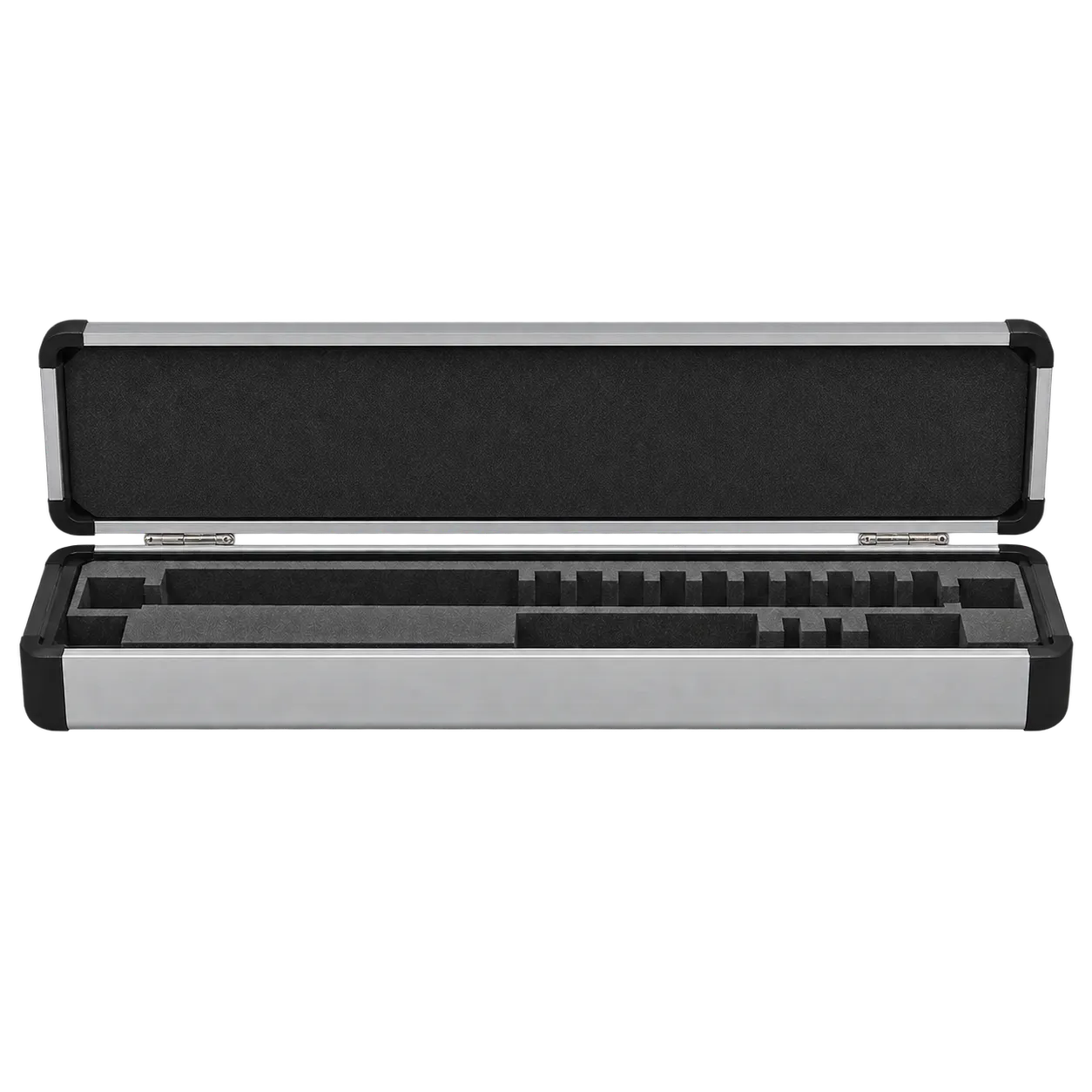
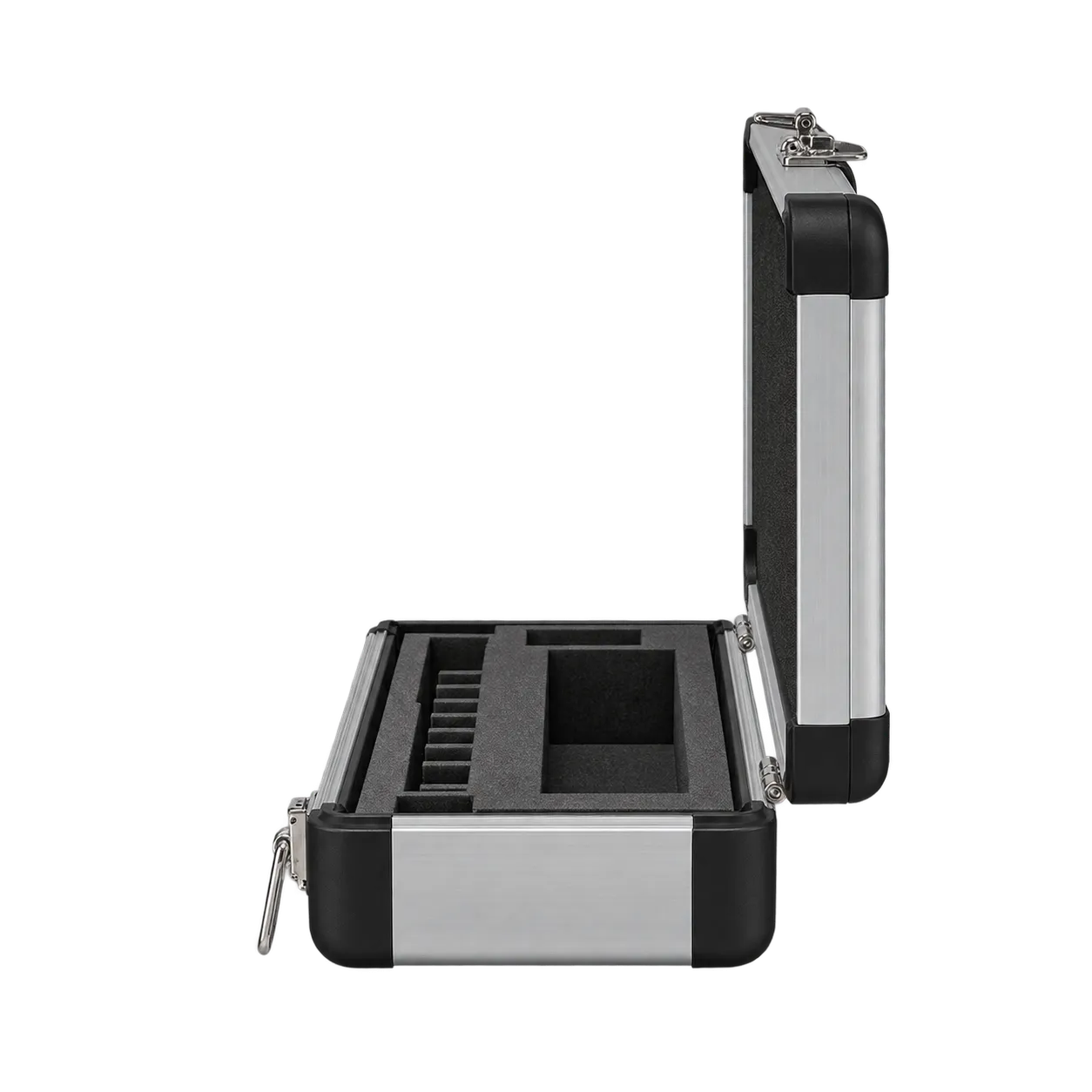
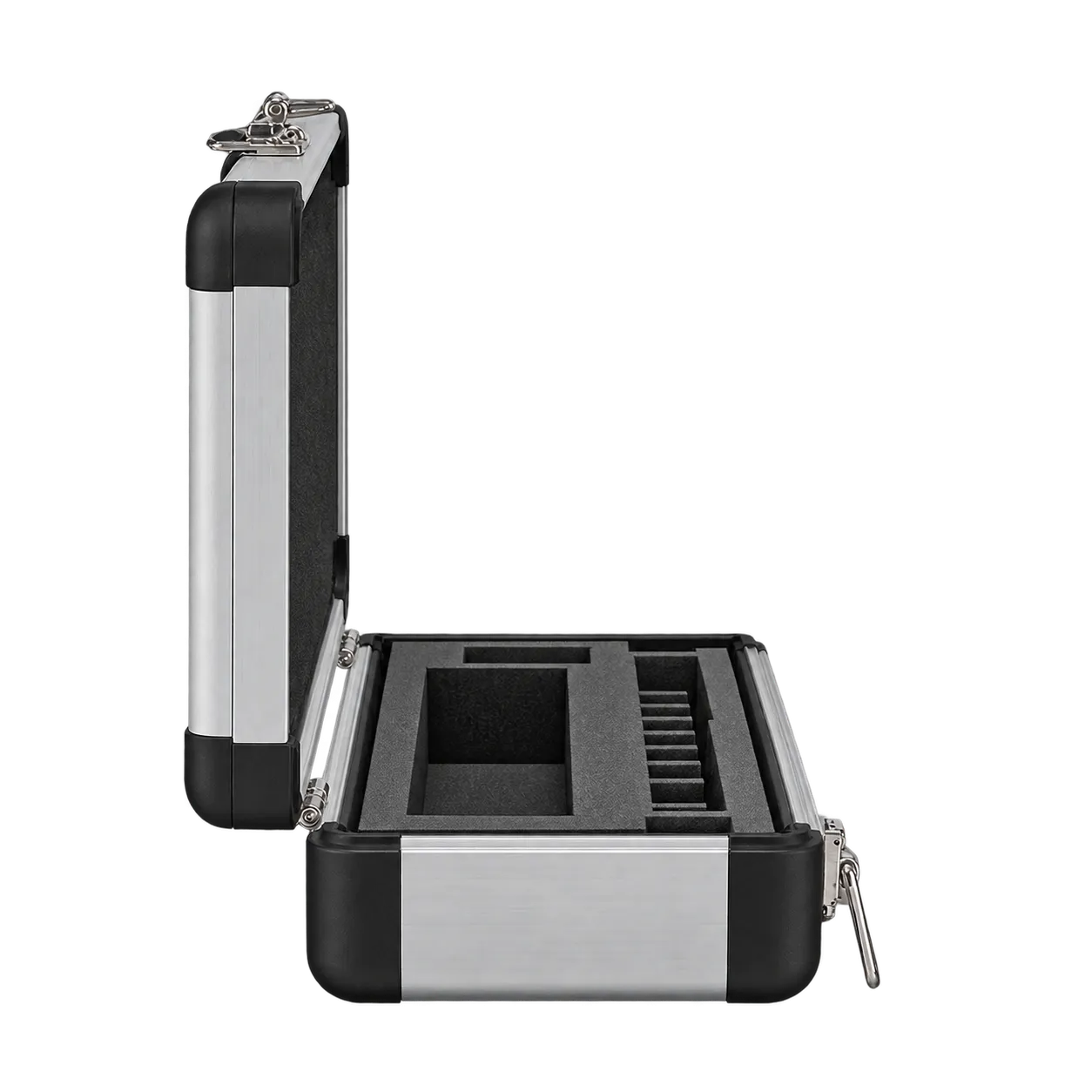
Outreach and peripatetic orthoptic services carrying their equipment between hospital sites, community clinics and schools benefit from a single aluminium case with clasps and a foam insert that keeps both bars separated in transit.
Teaching clinics can use the set to show students how horizontal and vertical components are measured together, including the reasons for holding one bar before each eye and recording each component separately in every gaze position.
The set is less suited to clinics that only measure horizontal deviations, and to services that frequently measure angles beyond the range of the bars. Institutional buyers commonly ask for evidence of conformity. The conformity documentation those procurement routes require is issued by the manufacturer and provided by the seller.