
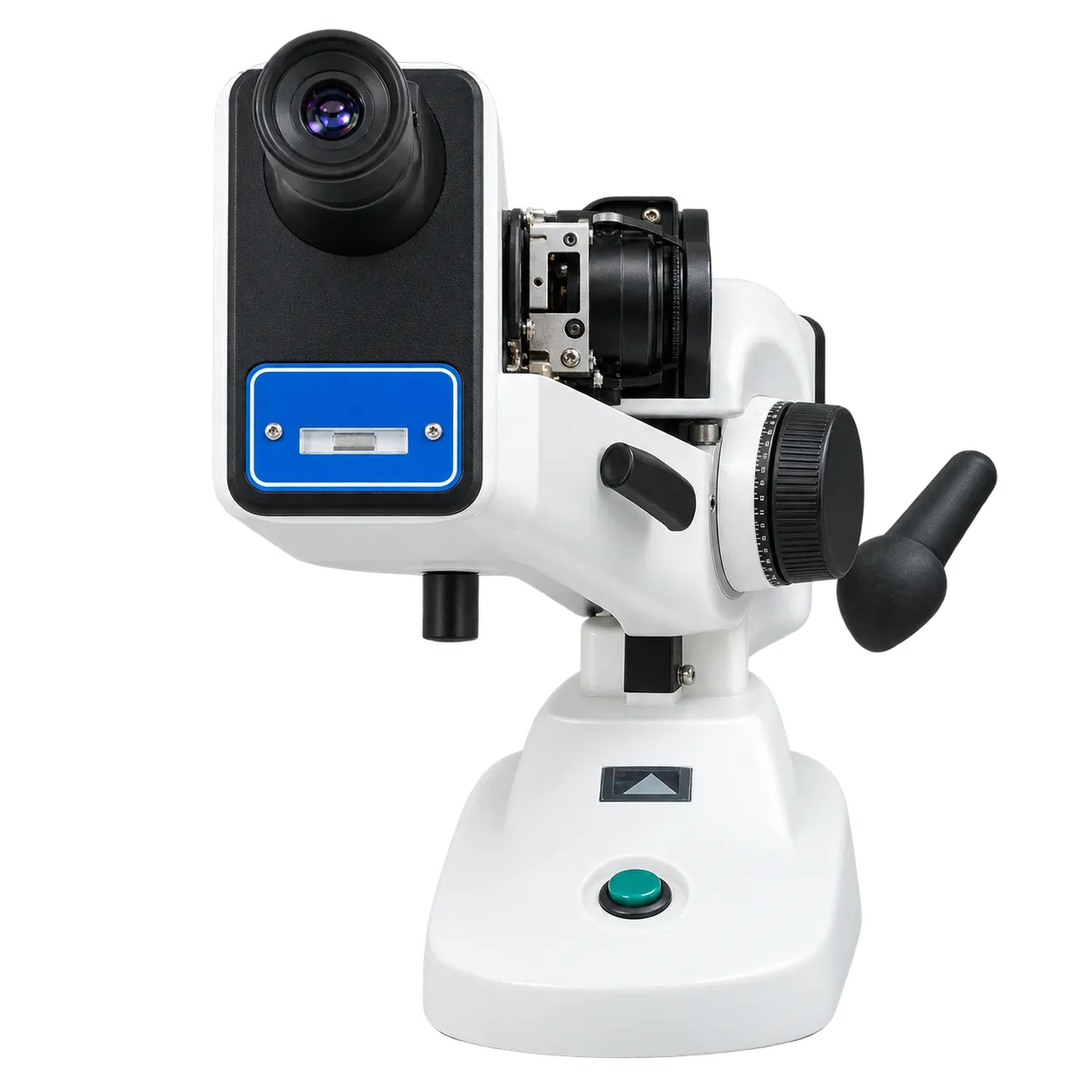
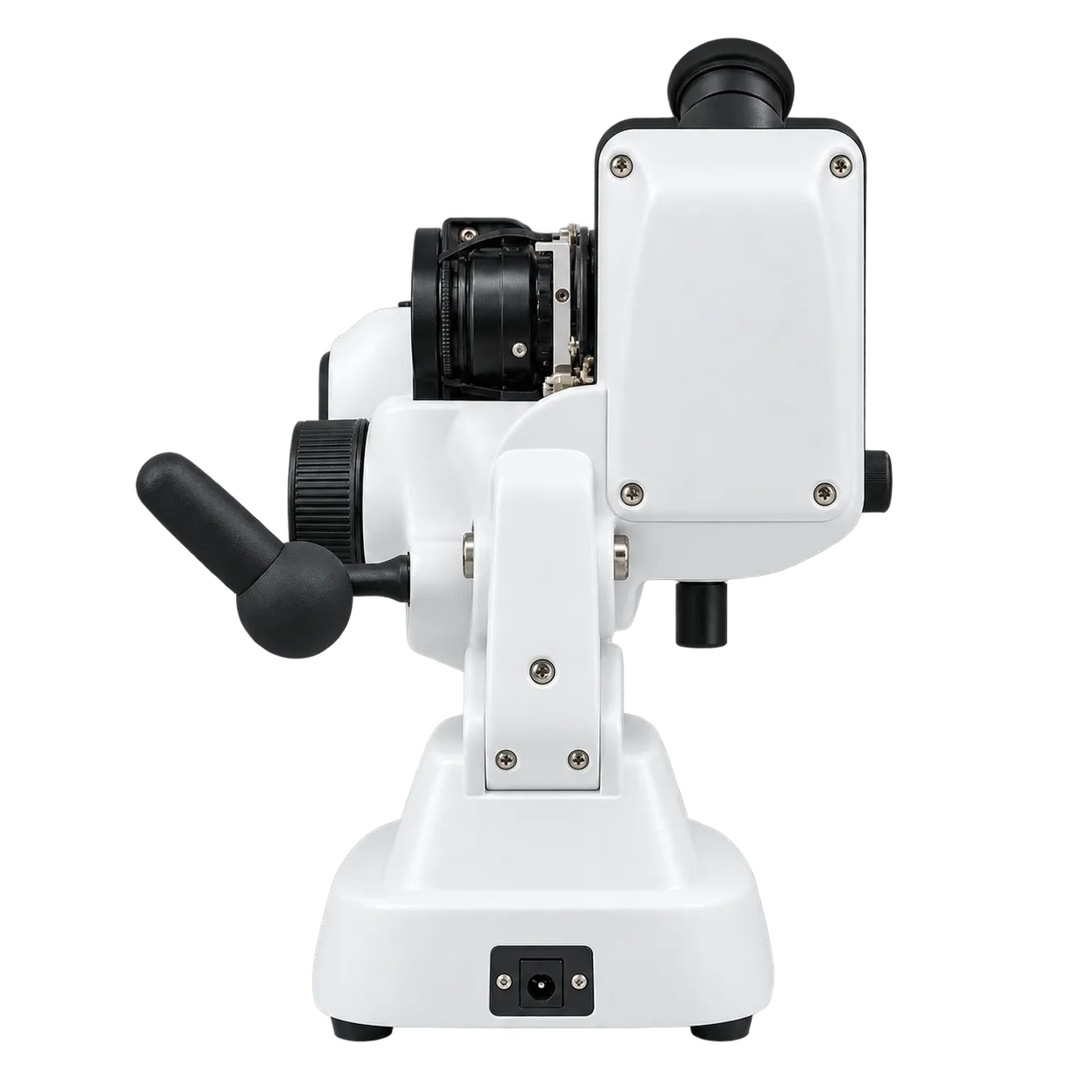
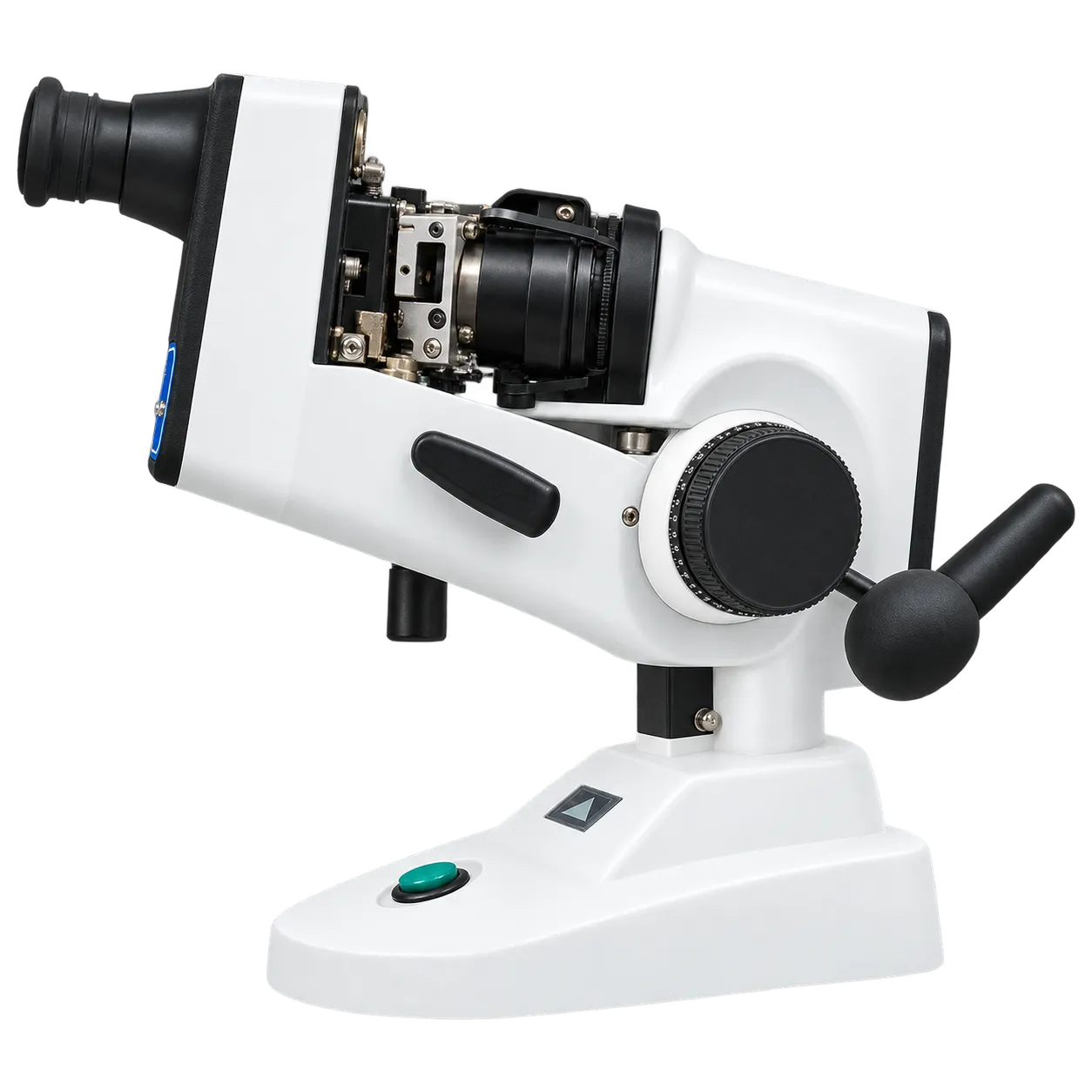
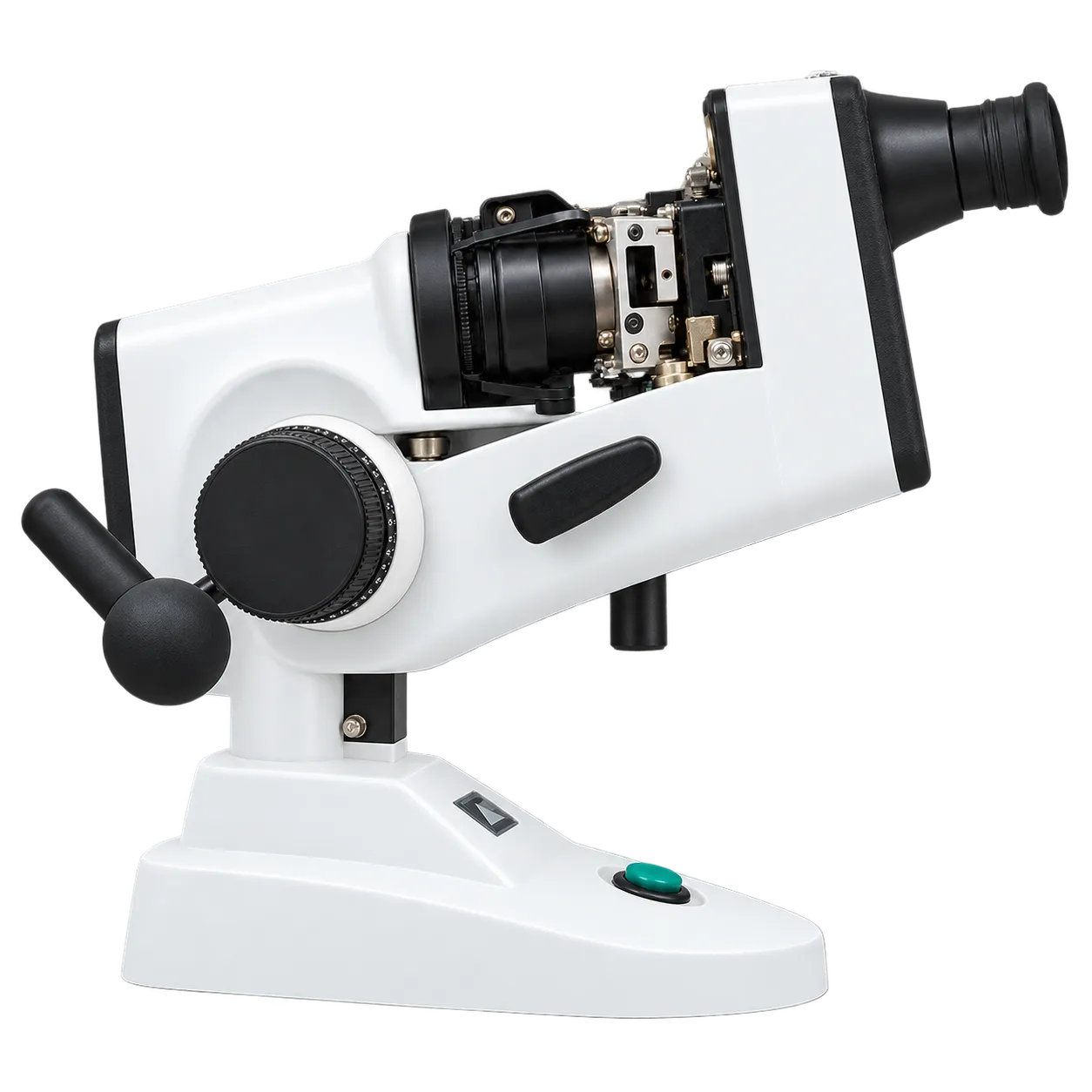
In UK community optometry the focimeter closes the loop between prescribing and dispensing, and every finished pair should be verified against the order before it reaches the patient. The GJD-6 does that across the full ±25D span, with the digital channel adding speed on the routine checks and precision on the awkward ones. General Optical Council registrants — optometrists and dispensing opticians — rely on documented verification as evidence of care standards, and the consequences of releasing an incorrectly powered pair are serious, particularly in paediatric dispensing where the patient may not be able to report the error.
Within NHS General Ophthalmic Services, practices dispensing against voucher entitlement carry the same verification obligation as private work, and this instrument adds no consumable cost per check. Hospital eye service dispensing departments use manual focimetry alongside automated instruments for tinted, polarised and high-prism lenses that defeat automatic detection, and for aphakic and low vision prescriptions where lens geometry is unusual — the 20Δ compensation device matters in that setting.
Training is where the dual readout earns its place most clearly. Pre-registration optometrists, ABDO dispensing optician students and optical assistants working towards competence in prescription checking learn neutralisation on manual instruments, because the technique teaches the optics rather than a button sequence. A digital figure available beside the optical reading lets a trainee self-check immediately, without occupying a supervisor for every lens. Practices hosting placements or running internal competence assessments get real value from that.
In-house glazing benches use the marking function to stamp optical centres and axis before edging and to confirm the finished mount. Specialist contact lens practices use the instrument for single vision rigid lens vertex power checks, noting that varifocal rigid designs fall outside what any standard focimeter can reliably verify.