
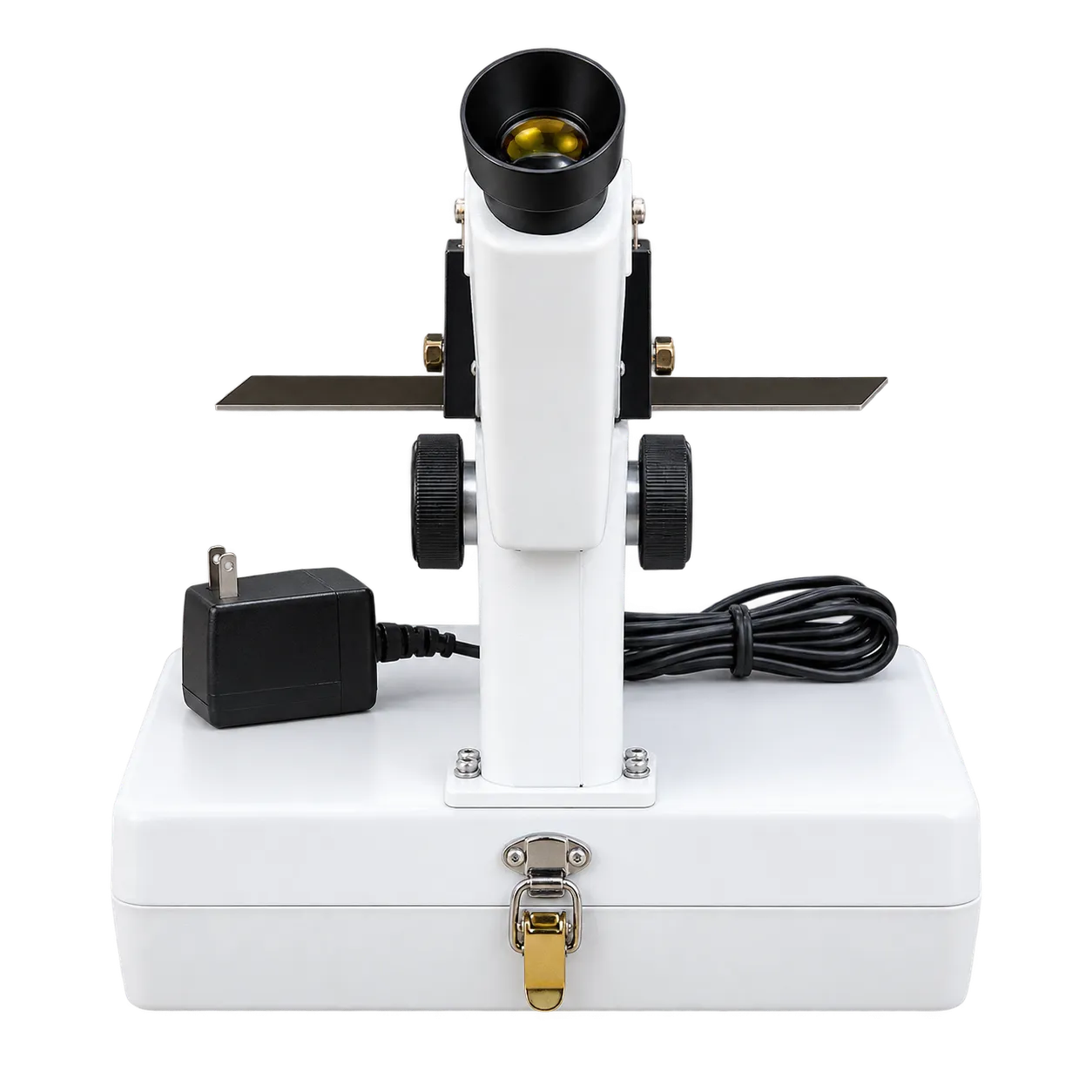
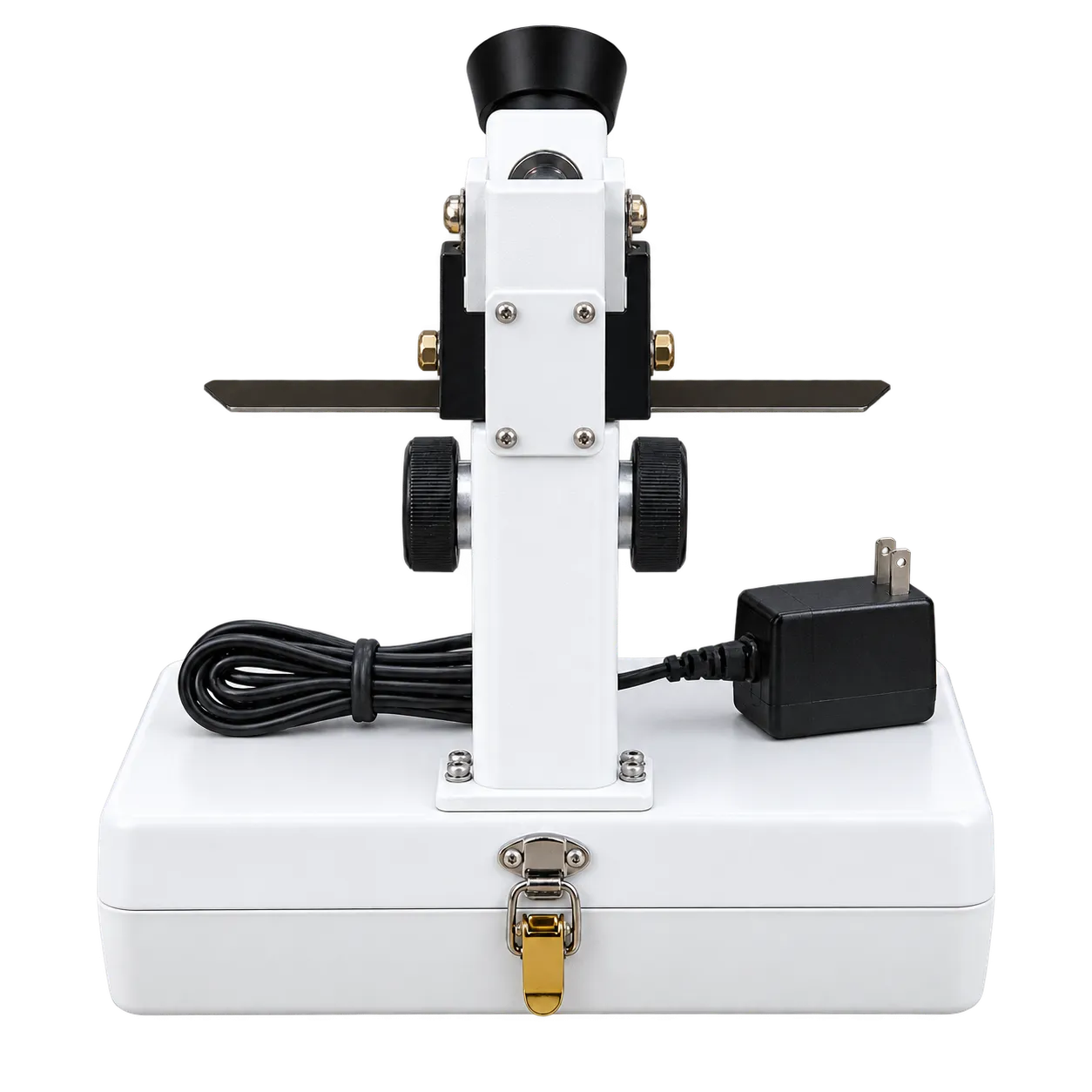
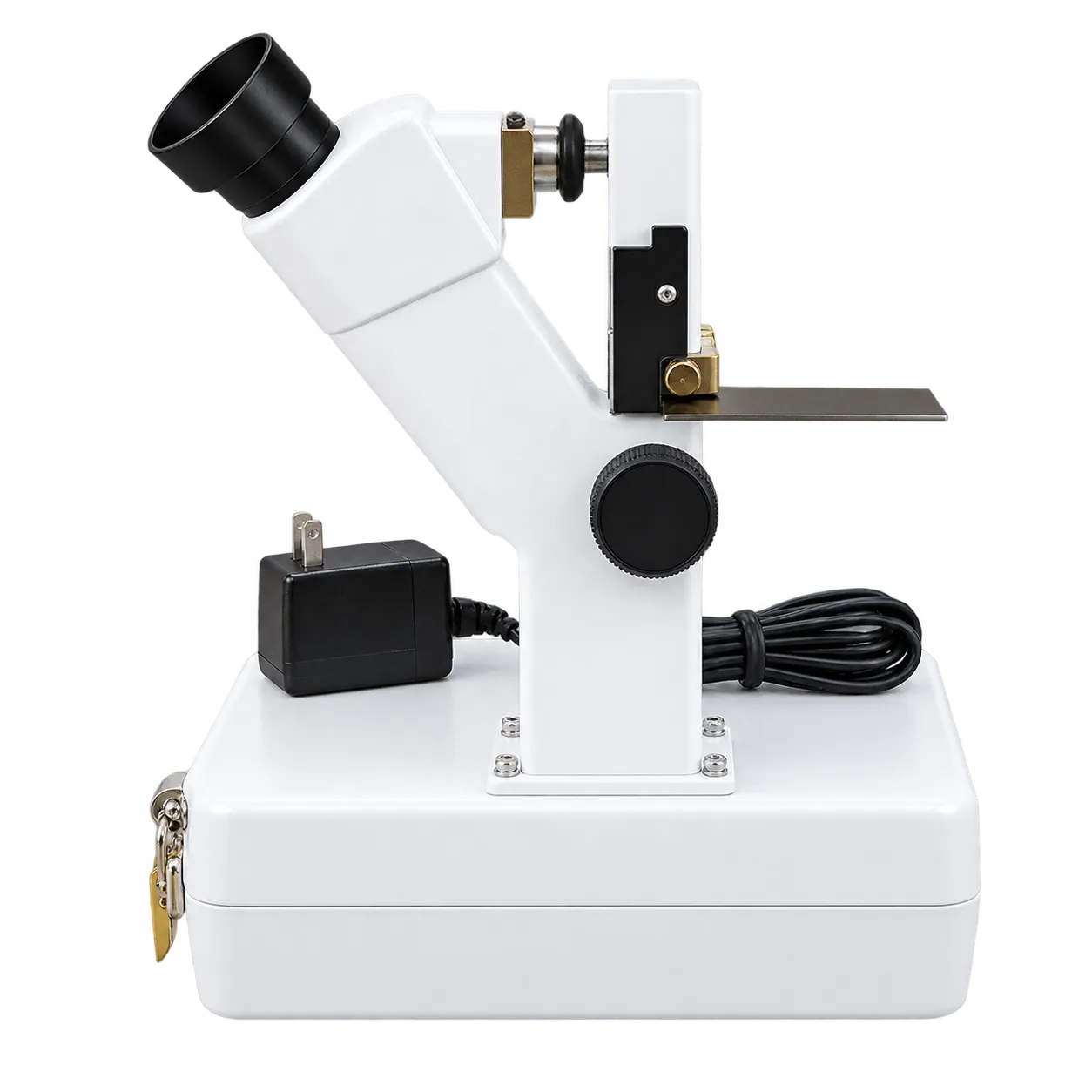
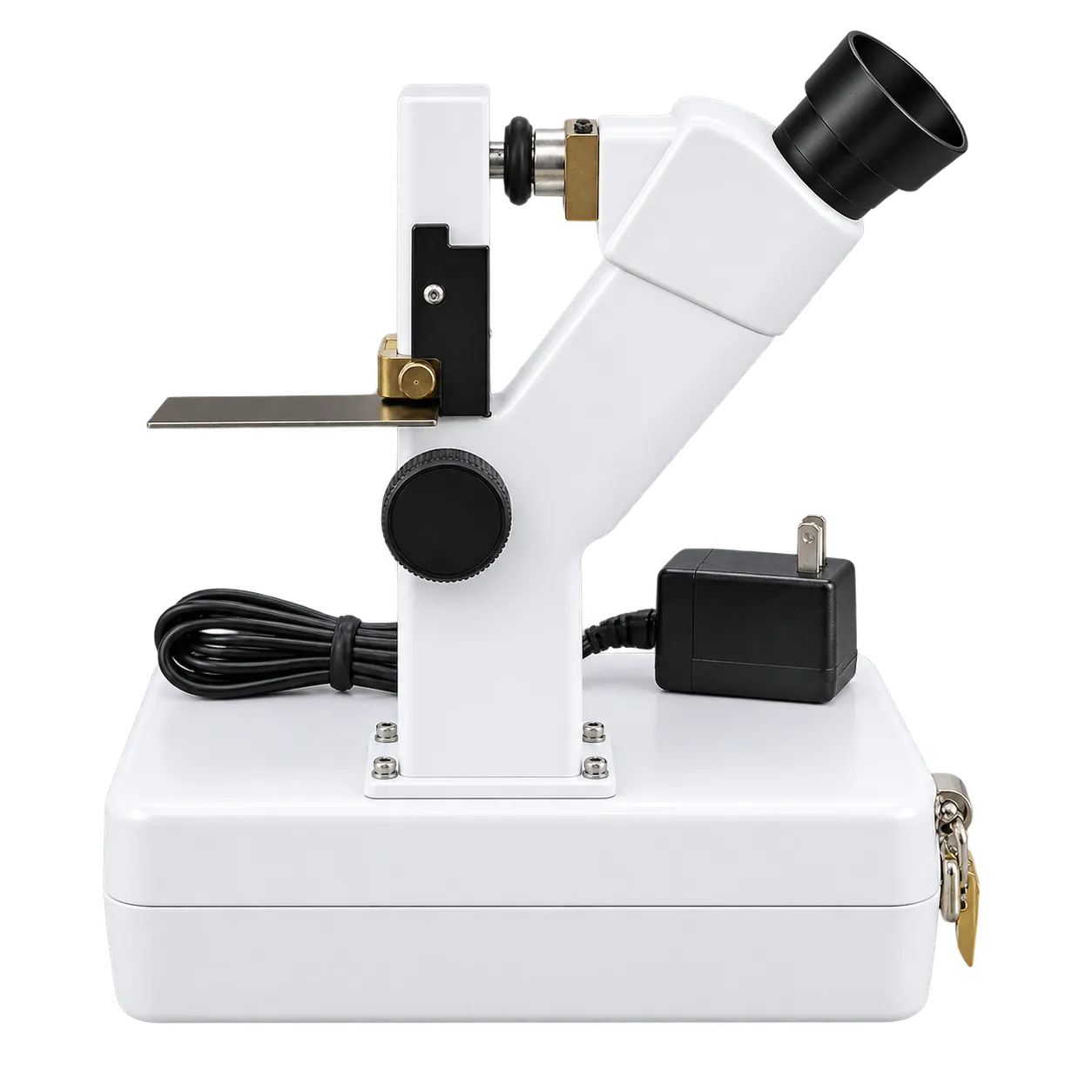
The GJD-3's dual power supply places it in a segment of UK optical practice that fixed bench instruments cannot serve. NHS General Ophthalmic Services domiciliary provision is substantial — sight testing and dispensing delivered to housebound patients and care home residents by providers operating entirely away from high-street premises — and the verification obligation on that work is identical to the obligation in a shop. A battery-capable focimeter lets a delivery visit include a proper check of the finished pair, rather than sending an unverified spectacle out or building a second journey into the round.
Care home rounds are the clearest case. A single visit may involve fitting and adjusting for a dozen residents, many of whom cannot report a power error themselves, which raises the importance of objective verification at the point of delivery. Community optometry practices running an occasional domiciliary list use the same instrument on the consulting room bench between visits, so it earns its cost twice.
School and special educational needs screening services are a second application. Recent NHS commissioning of in-school sight testing for children in special educational settings has expanded the volume of dispensing carried out away from fixed premises, and paediatric verification carries the same weight as adult work with less patient feedback available.
Within general practice, the instrument covers routine neutralisation of unknown lenses, verification of finished spectacles against the prescription order, and optical centre and axis marking before edging. General Optical Council registrants — optometrists and dispensing opticians alike — depend on documented verification as evidence of care standards, and ABDO training programmes teach neutralisation on manual instruments because the technique teaches optics rather than a button sequence. It also serves as redundancy when an automatic focimeter is away for service, and handles tinted, polarised and awkward lenses that defeat automatic detection.