
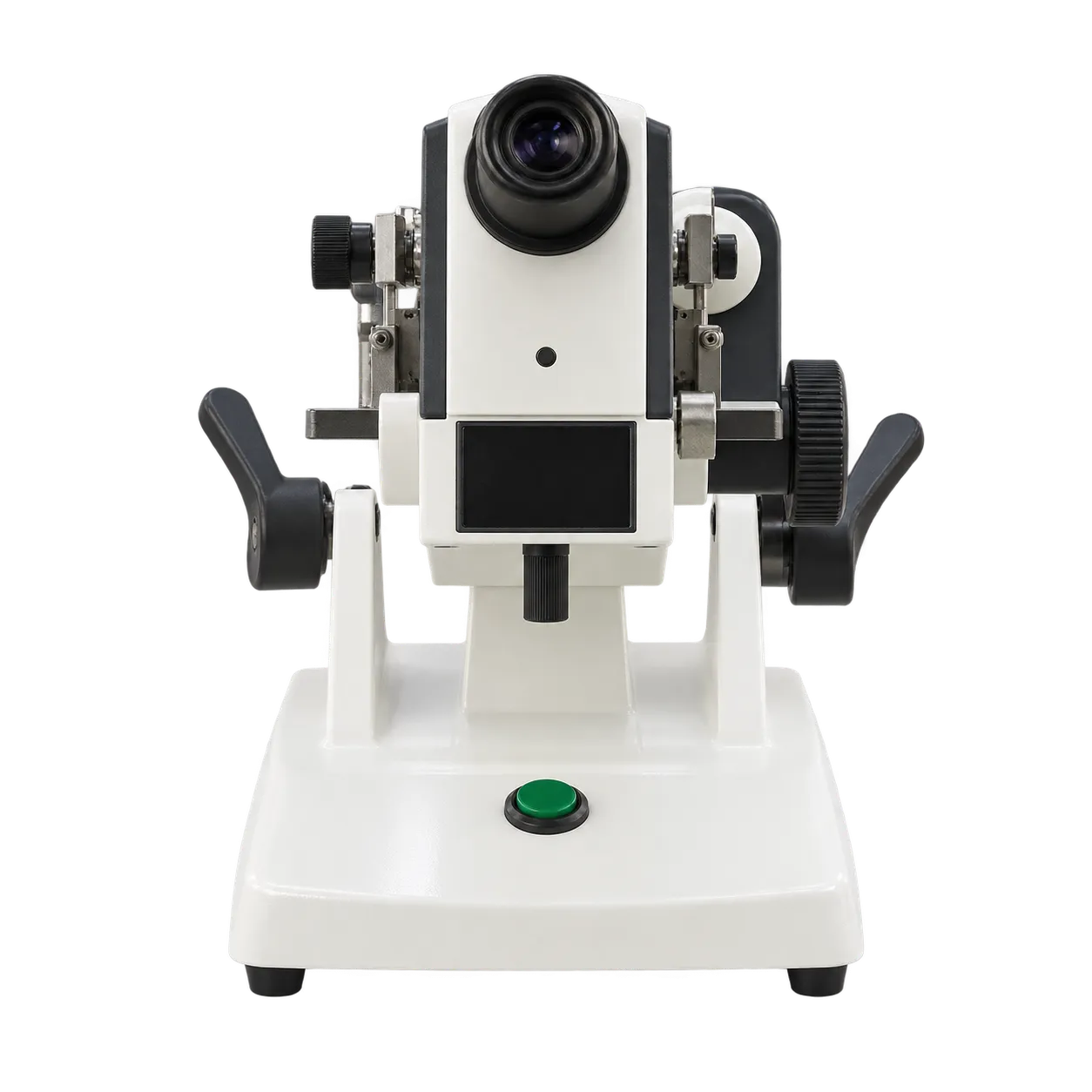
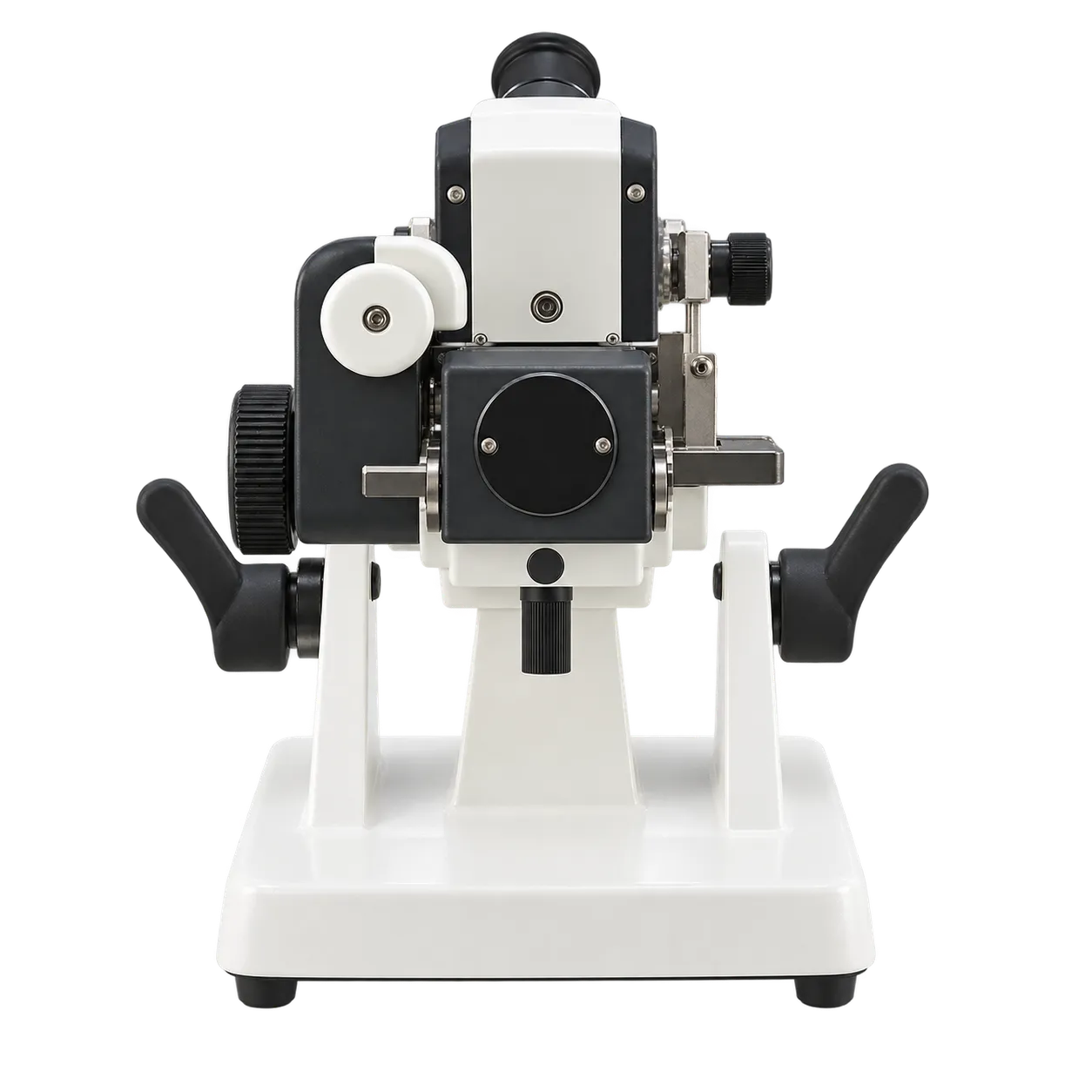
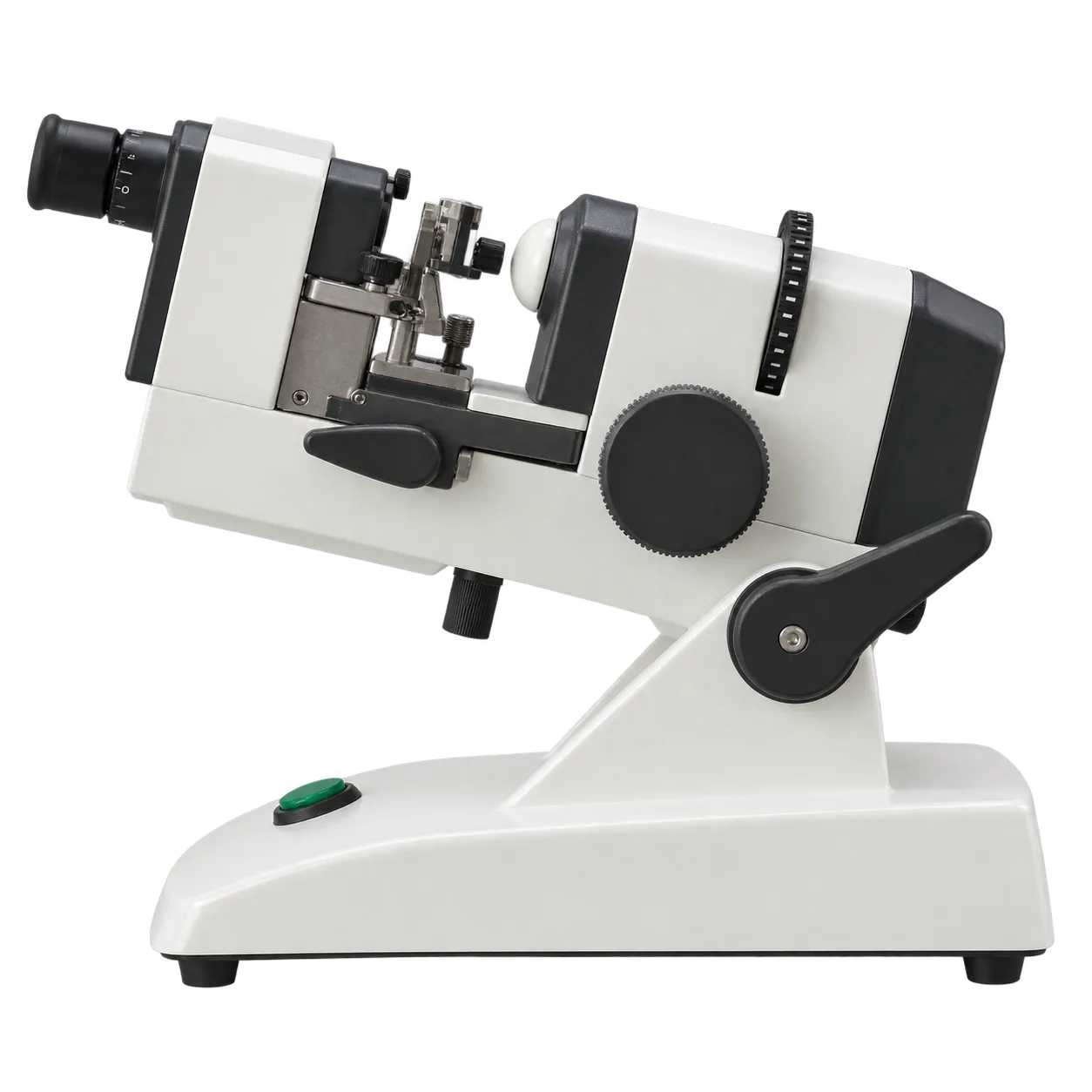
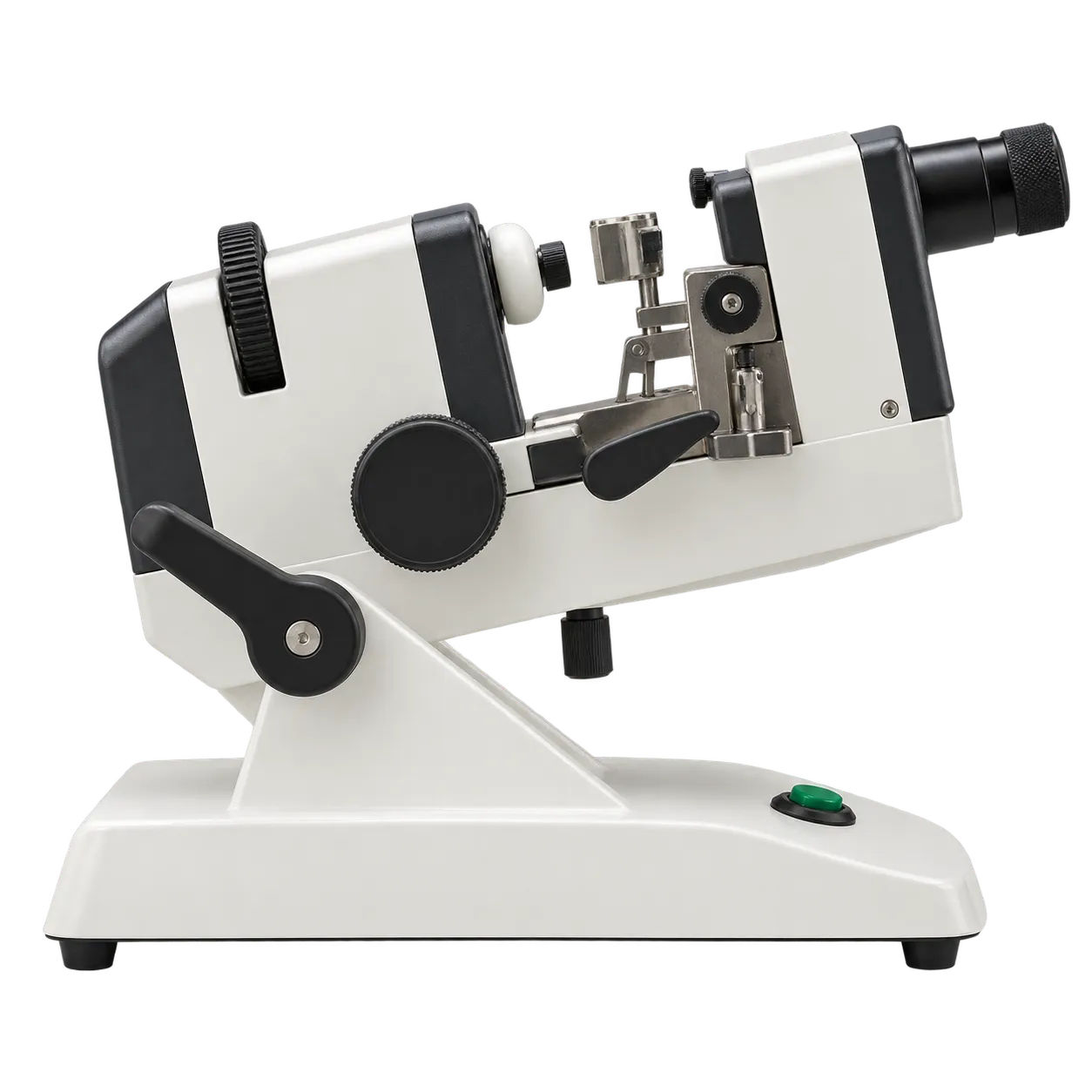
In UK community optometry the focimeter is the instrument that closes the loop between prescribing and dispensing. Every finished pair should be verified against the order before it reaches the patient, and the GJD-2 performs that check across the full range of powers a high-street practice encounters. Registrants of the General Optical Council — both optometrists and dispensing opticians — rely on documented verification as evidence of the standard of care they provide, and the professional consequences of dispensing an incorrectly powered pair are significant, particularly in paediatric work where the patient may not be able to report the error.
Within NHS General Ophthalmic Services, practices dispensing against voucher entitlement carry the same verification obligation as private work, and the instrument supports that routine without adding consumable cost per check. Hospital eye service dispensing departments use manual focimetry alongside automated instruments for tinted, polarised and high-prism lenses that defeat automatic detection, and for aphakic and low vision prescriptions where lens geometry is unusual.
Training is a second major application. Pre-registration optometrists, dispensing optician students on ABDO programmes and optical assistants working towards competence in prescription checking all learn neutralisation on manual instruments first, because the technique teaches the optics rather than the button sequence. Practices operating an in-house glazing bench use the marking function to stamp optical centres and axis before edging, and to confirm the finished mount.
Domiciliary providers and mobile services keep a manual unit at base for verification of work returned from the laboratory, since it needs nothing but a socket. Specialist contact lens practices use the instrument for single vision rigid lens vertex power checks, noting that varifocal rigid designs fall outside what a standard focimeter can reliably verify.