
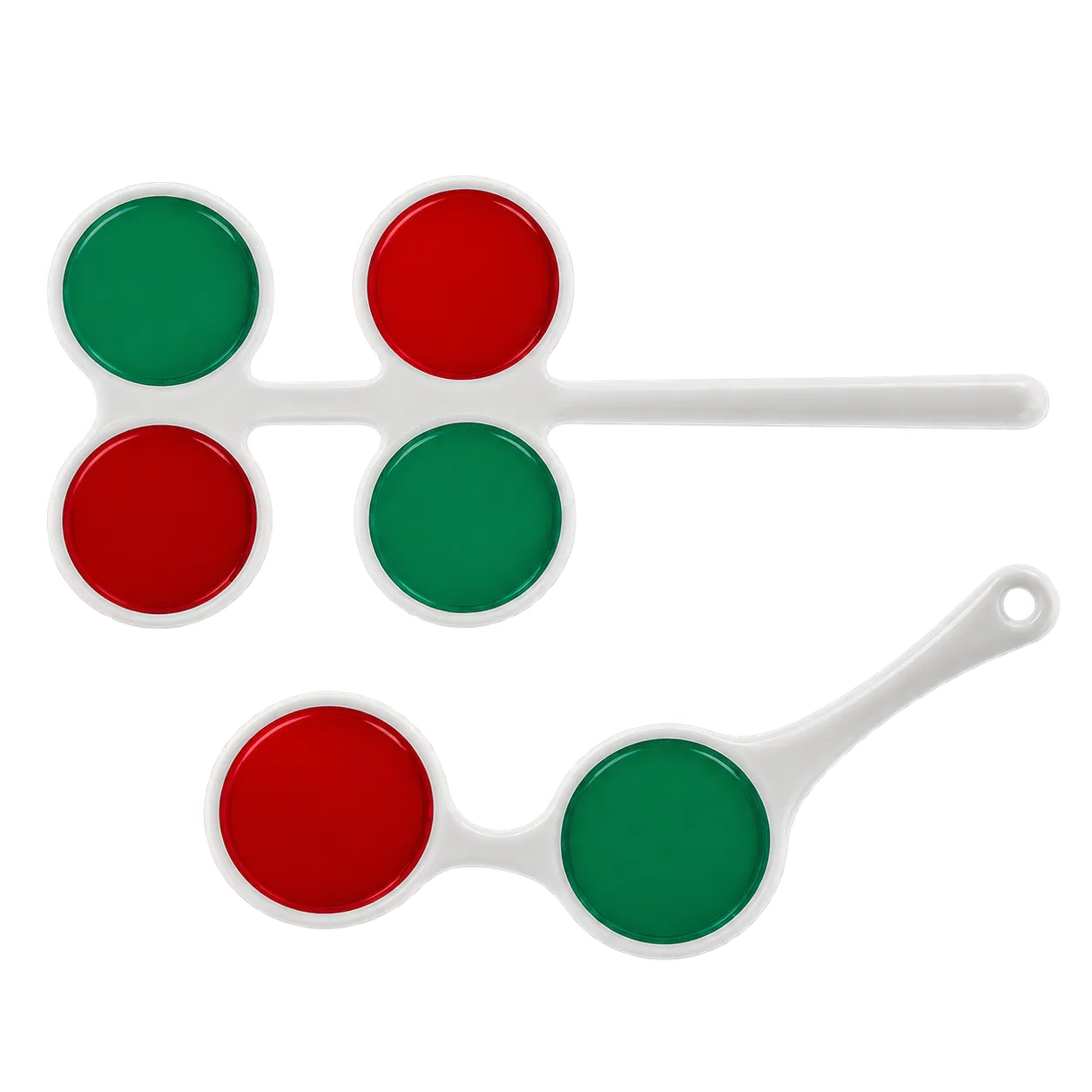
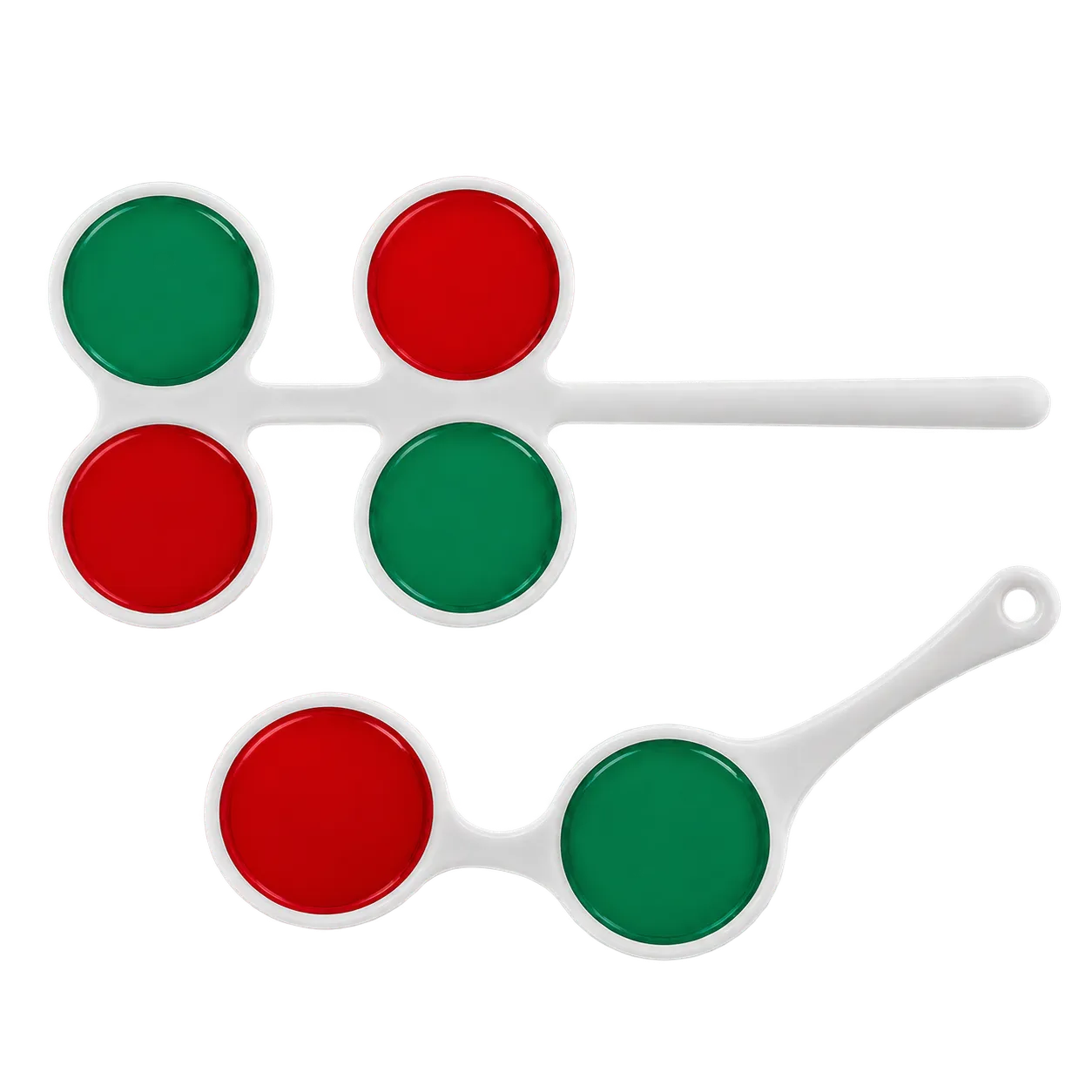


Paediatric orthoptic clinics are the clearest fit. Young children often resist goggles, and a filter held briefly in front of the eyes can let the clinician check for suppression with a Worth four-dot target or other anaglyph test.
Binocular vision clinics use red and green filters to check whether both eyes contribute to what the patient sees. Reversing the filters with the flipper lets the clinician confirm a response with the colours on each side.
Primary care optometry can use the holder for a quick suppression check during a routine examination, particularly for patients with a history of squint or amblyopia.
Vision therapy programmes use anaglyph exercises, in which each eye sees its own part of a target, to encourage both eyes to work together. Handheld filters suit short exercises in the practice.
Patients with limited cooperation, including some adults with learning disabilities or dementia, may accept a brief handheld check when goggles are not tolerated. Clinicians can adapt the test to the patient's tolerance.
Hospital eye services and teaching clinics can hang the looped holder at the testing station, so it is always within reach.
Arrival checks matter for any filter set. The filters should be viewed against the clinic's own targets to confirm that each colour cancels the other as expected.
The FP-04 is less suited to clinics that need transmission data matched to a particular target before purchase. Any declaration of conformity is issued by the manufacturer and provided by the seller.