
Practices Wanting Modes Separately
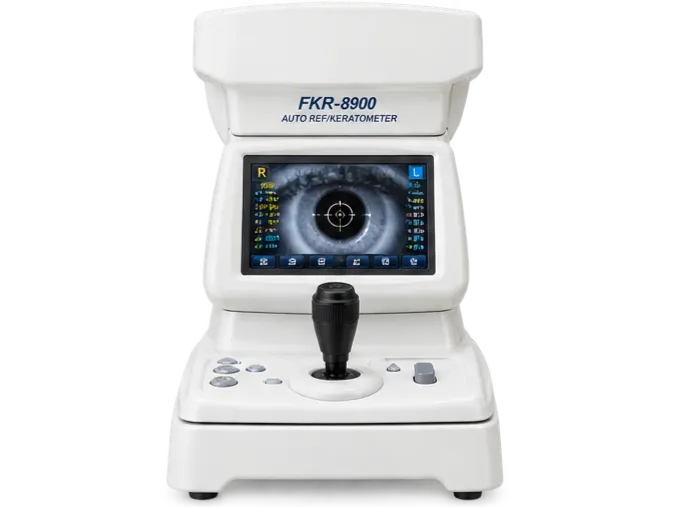
Running keratometry alone or refraction alone saves time where only one measurement is needed, which a combined-only instrument cannot offer. Which measurement a patient needs remains a clinical decision rather than an instrument setting. Mixed lists benefit particularly here. Time is saved on every single measurement. Only one measurement may be needed. Selection returns the time saved. Combined instruments cannot offer that. Time saved accumulates across a list.
Contact Lens Fitting
Corneal radius in 0.01 millimetre steps, corneal dioptre, astigmatism and diameter together cover what a fitting requires, and the KER mode reaches them without a refraction being taken first. Fitting decisions rest with the practitioner. Corneal figures arrive without a refraction. Radius resolution reaches one hundredth. Fitting depends upon those four figures. Practitioners weigh them together. Corneal work runs without a refraction. Radius reaches one hundredth resolution.
Services Checking Specifications
Four points on this card need settling before purchase: two ranges printed without minus signs, a mislabelled vertex distance row and a corrupted pupil diameter symbol. None should be assumed. Assumption would be unwise throughout. Four points deserve resolving first. Two ranges and two labels need settling. Confirmation precedes commitment. Nothing here should simply be assumed. Four separate points want answering.
Busy Refraction Lists
An automatic fogging method and a monitor that sleeps after five minutes suit an instrument in constant use. Fogging removes accommodative error from the figure produced rather than leaving it to the operator. Constant use suits automatic fogging. Operator variability disappears accordingly. Monitors sleep after five idle minutes. Accommodating eyes mislead otherwise. Constant use suits the automation well. Fogging removes a real error source.