
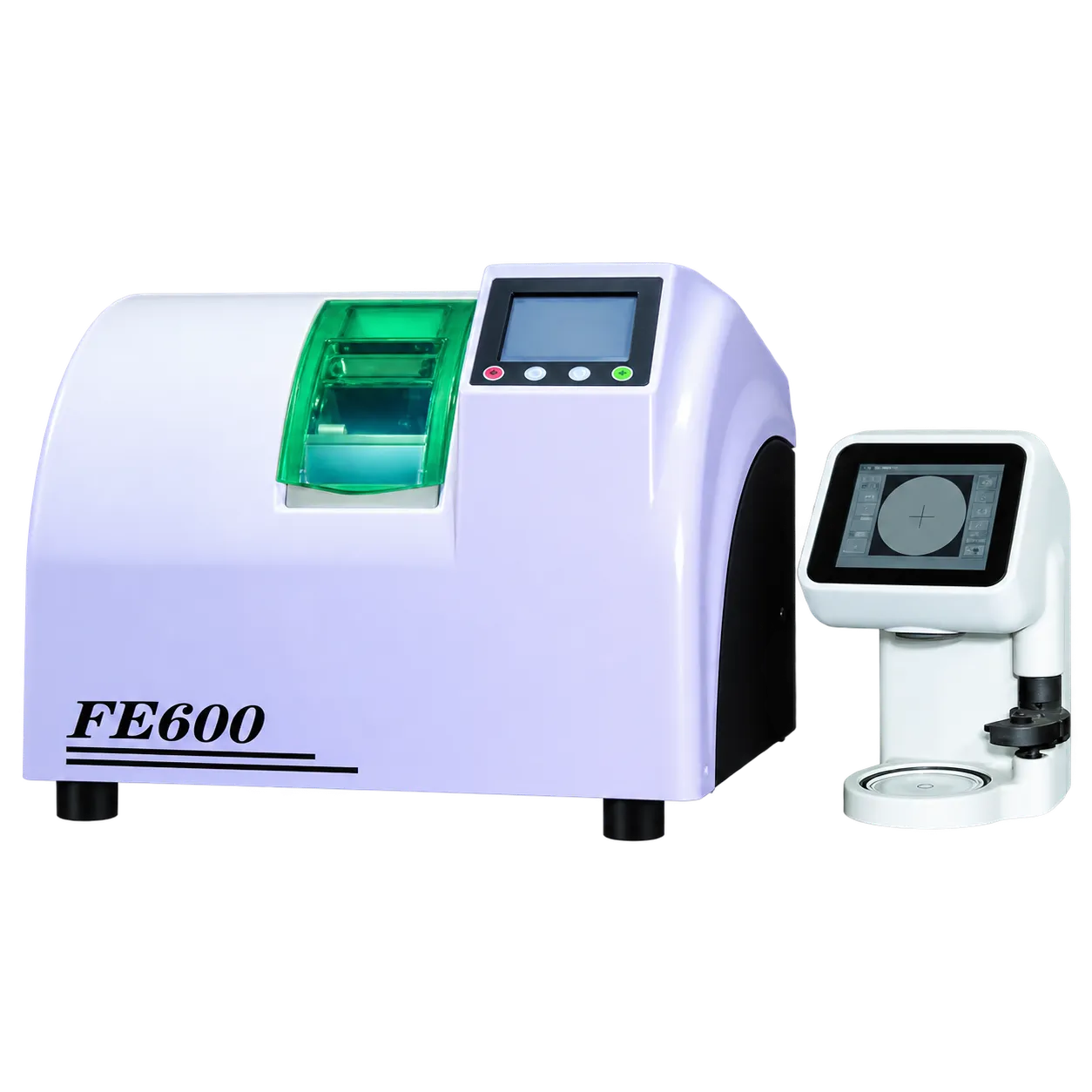
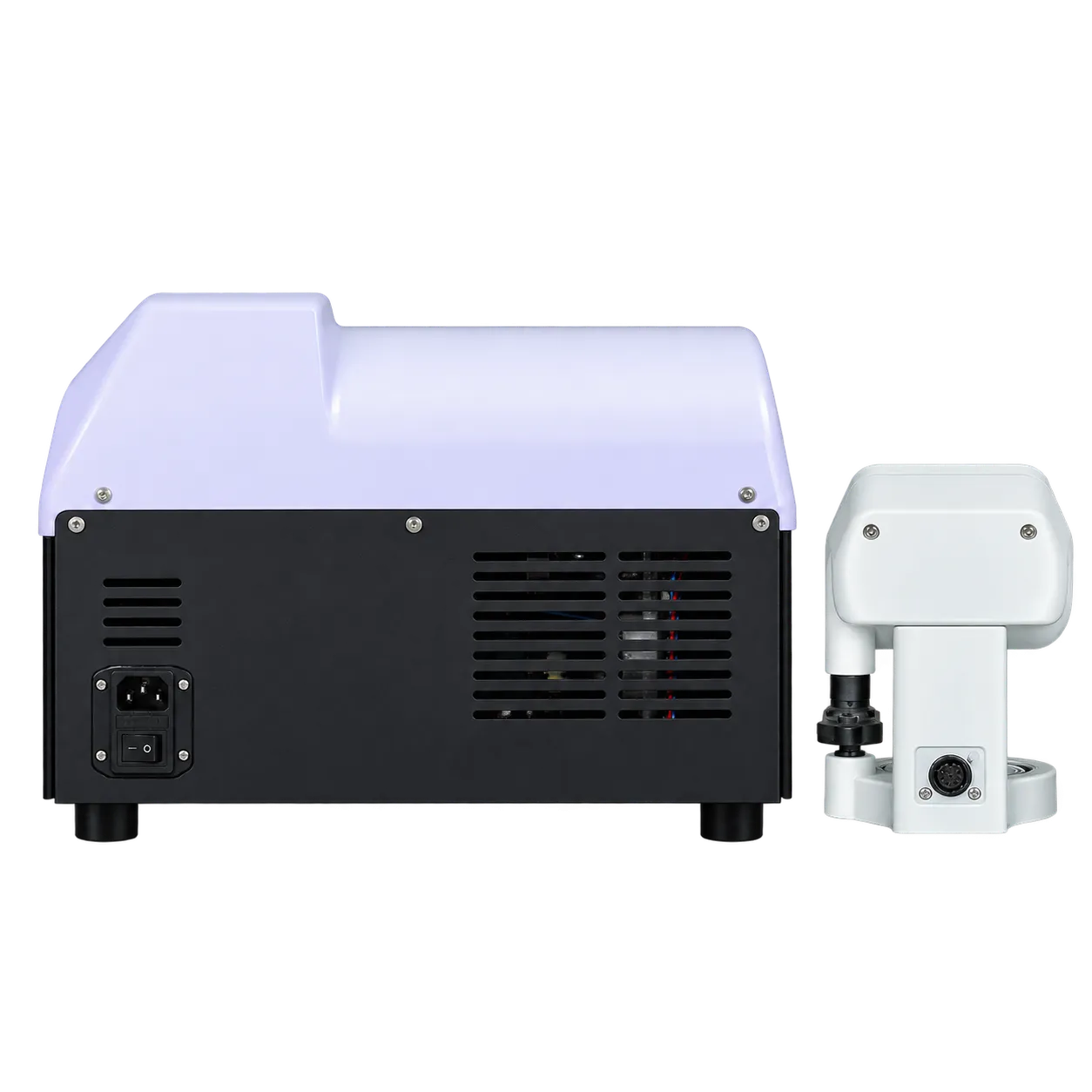
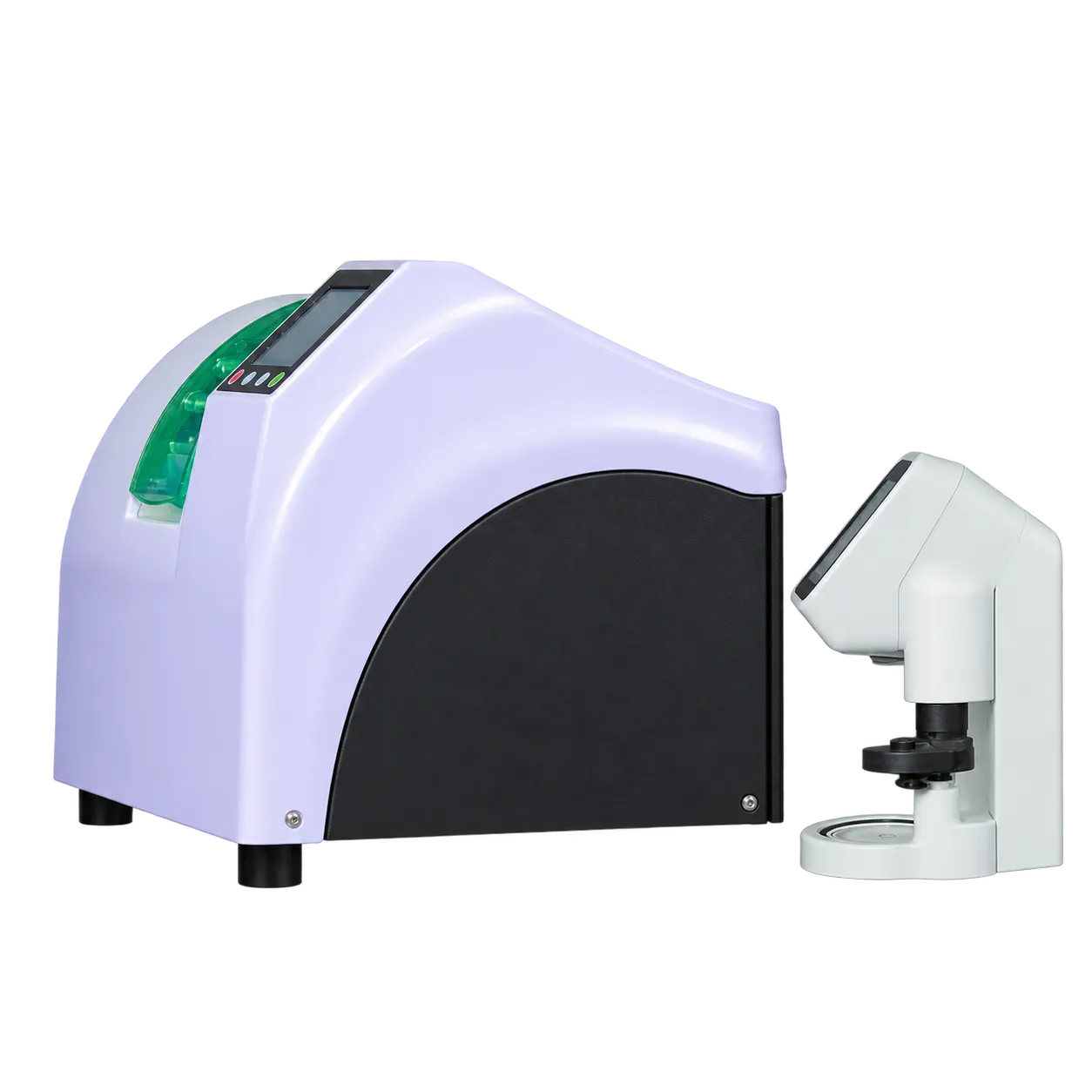
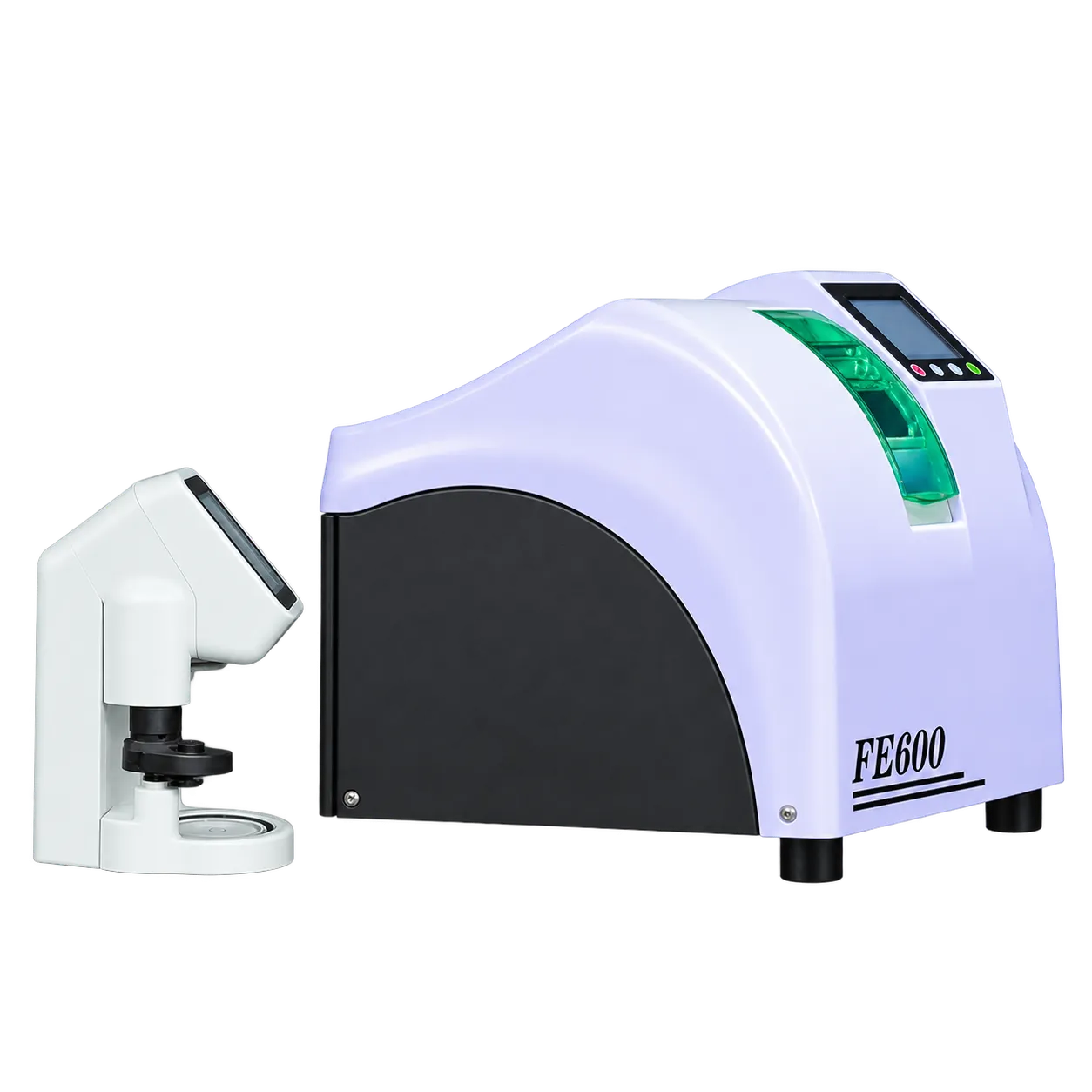
The FE-600 is aimed at optical practices and laboratories that expect their glazing volume to outgrow a single edger. An independent optical practice can start with one FE-600 and the FC-600 tracer centre, then add a second edger later and run both from the same tracer as a small machining centre.
Optical laboratories handling a steady stream of orders gain the most from that two-edger layout. One operator can trace at the FC-600 while both edgers are in use. The online function supports networked working across the set-up. Because the FC-600 weighs 7.7 kg and measures 300 × 250 × 350 mm, it can stand on a separate desk between the two edgers or close to the order intake point.
Dispensing opticians and optical technicians benefit from the tracer's guided centring. A real-time image shows when the lens has reached its centric position, and the tracer avoids the effect of lens power, prism and artificial parallax automatically. A sample lens is measured in 3 seconds.
Glazing staff can polish a bevel for full-rim frames or a flat edge for rimless and semi-rimless styles, and vary grinding pressure to suit the lens being worked. The tinted cover over the chamber leaves the job in view.
Hospital eye departments and eye clinics with an on-site glazing room can use the FE-600 to complete spectacles for patients within the building, with the lighter FC-600 placed nearer the clinic.
Eyewear retailers running a central workshop can scale from one edger to two around a single tracer, keeping the tracing step in one place as output grows.