
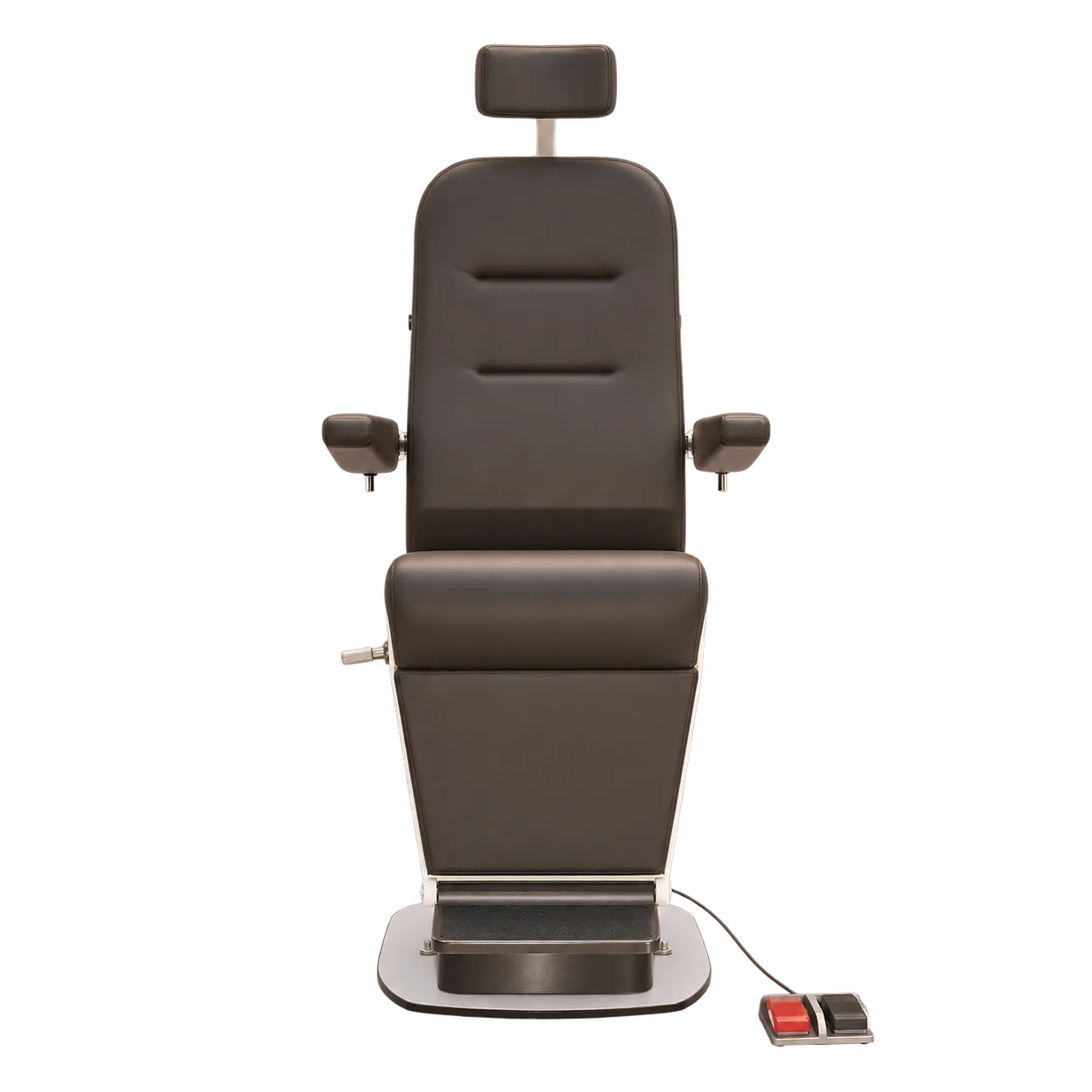
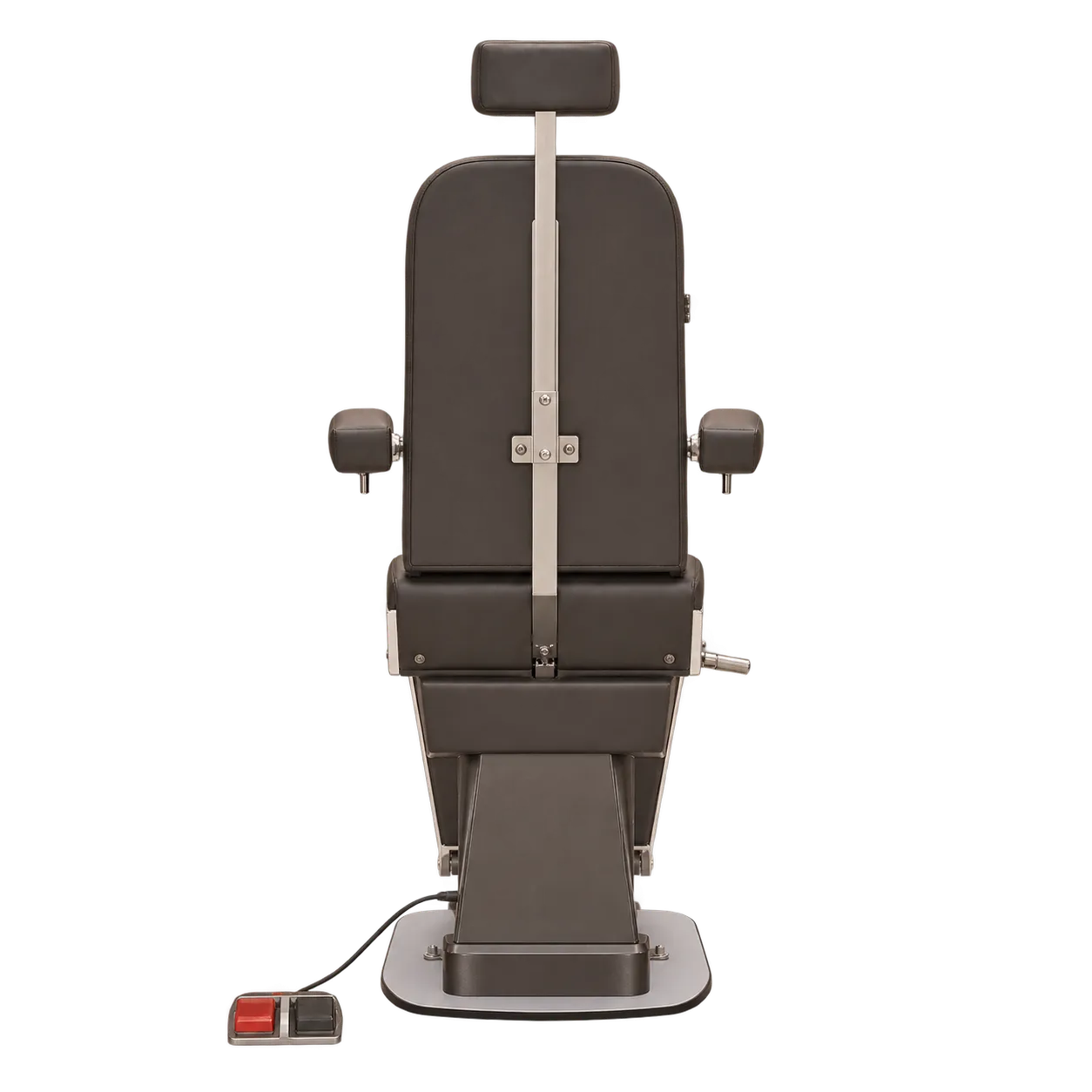
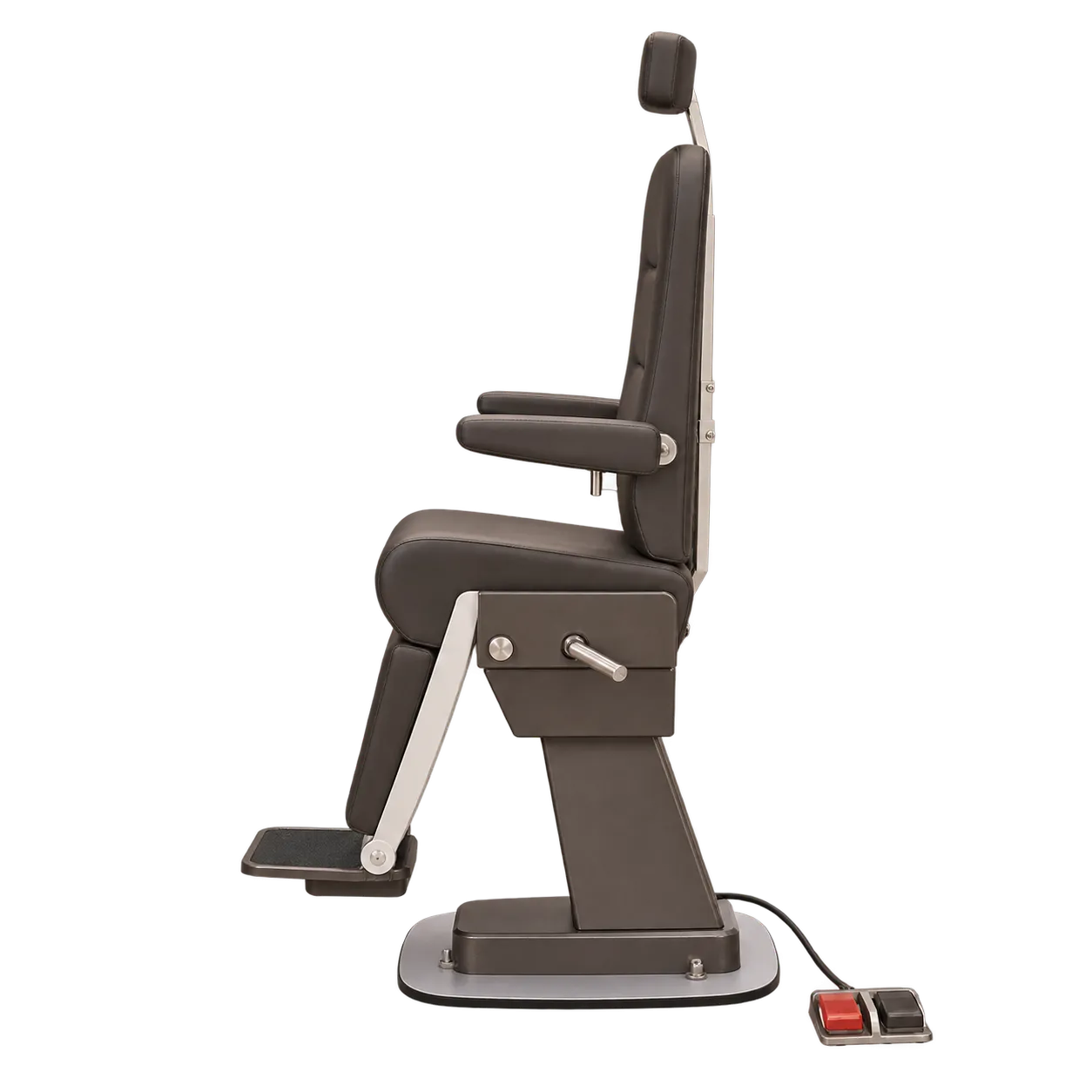
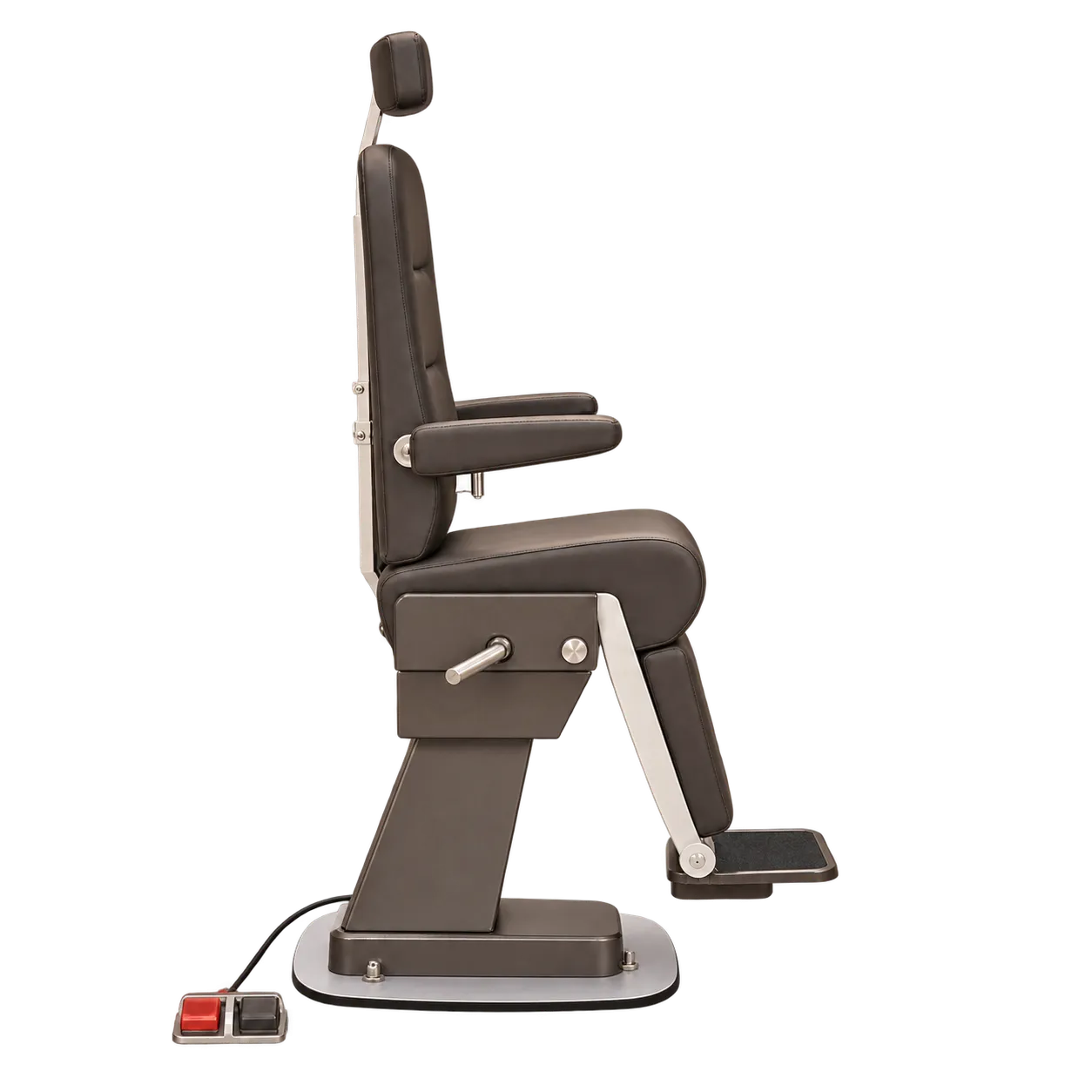
Patients who become unwell mid-appointment are served most directly, and the argument is about what happens next. Someone who feels faint needs laying down, and on a chair reclining to 135° the practical answer is walking them to a couch elsewhere — which is exactly what a faint patient should not be asked to do. A backrest reaching 180° handles it where they already are, without anybody moving.
Minor procedures follow from the same capability. Lid and lash work, anything requiring a supine position, and any intervention where the clinician needs the patient level rather than propped are all possible on a chair that goes flat and impossible on one that does not.
Patients who cannot sit upright for a full appointment gain the obvious benefit, whether from respiratory, spinal or general frailty reasons.
The headrest envelope supports all of it. An adjustable range within a semicircle of 250 mm radius sets head position for angle as well as height, and that matters considerably more with a reclined patient than an upright one — a supine head that is not properly supported is uncomfortable within minutes.
Multi-instrument rooms benefit from 0–270° rotation, more than double the other chair here.
Two things need settling. The published figure size appears to be in error — 1884 × 1316 × 1663 mm is identical to a complete four-arm unit elsewhere in this catalogue and implausible for a chair, so the correct dimension must be obtained before planning a room. And the input voltage is dual, 110–115V or 240V, so the shipped variant needs confirming — unlike the single-voltage chair in this range, this one does raise that question.