
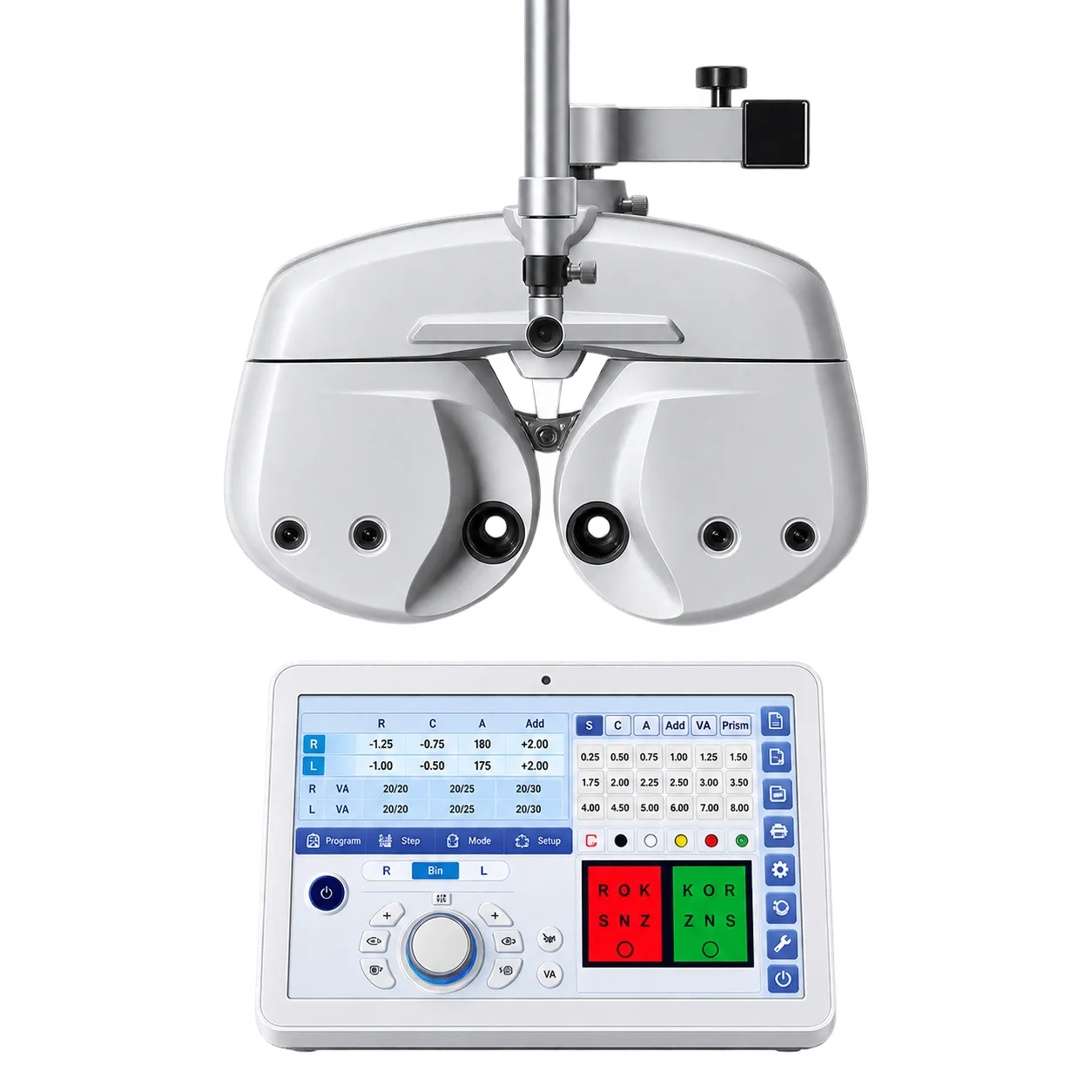
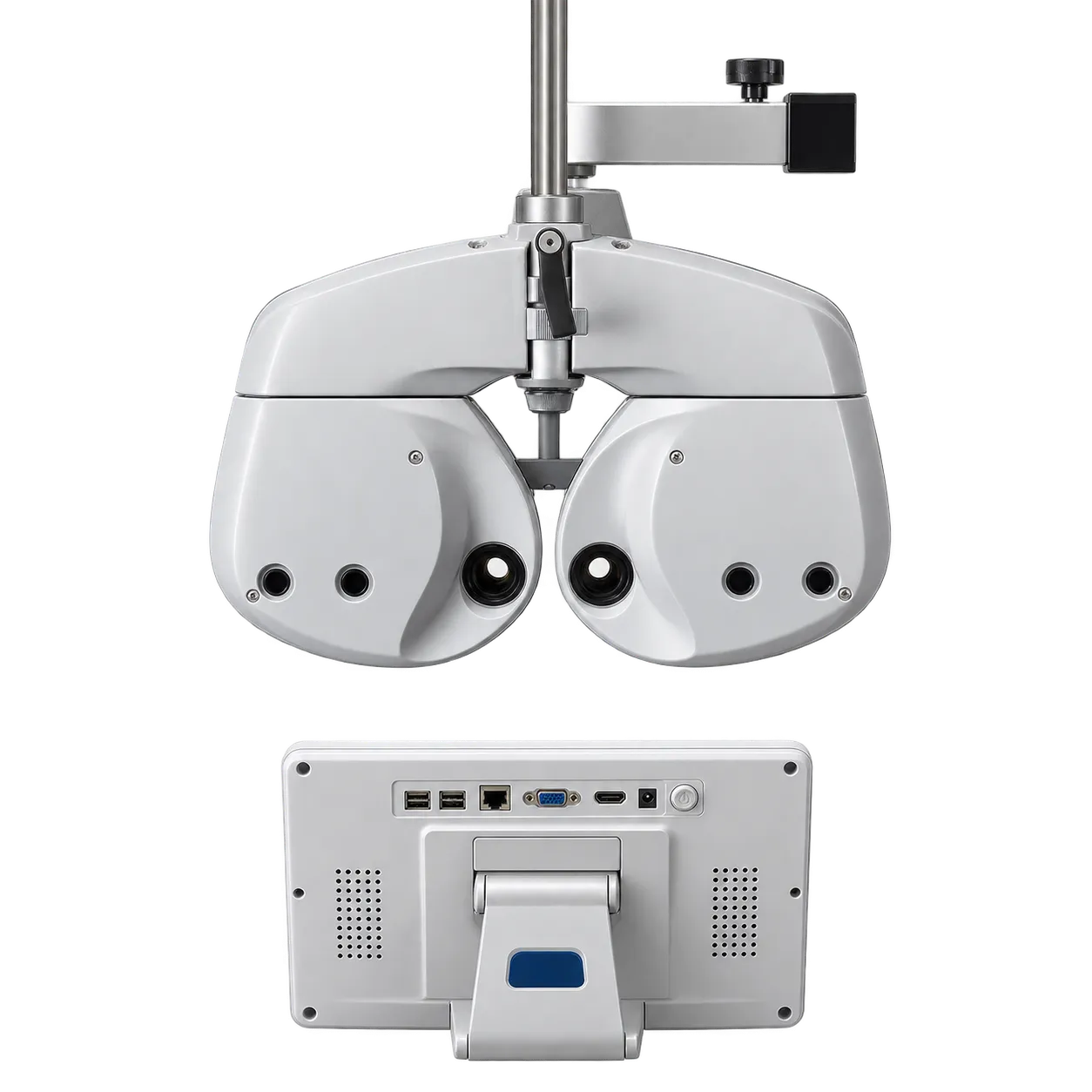

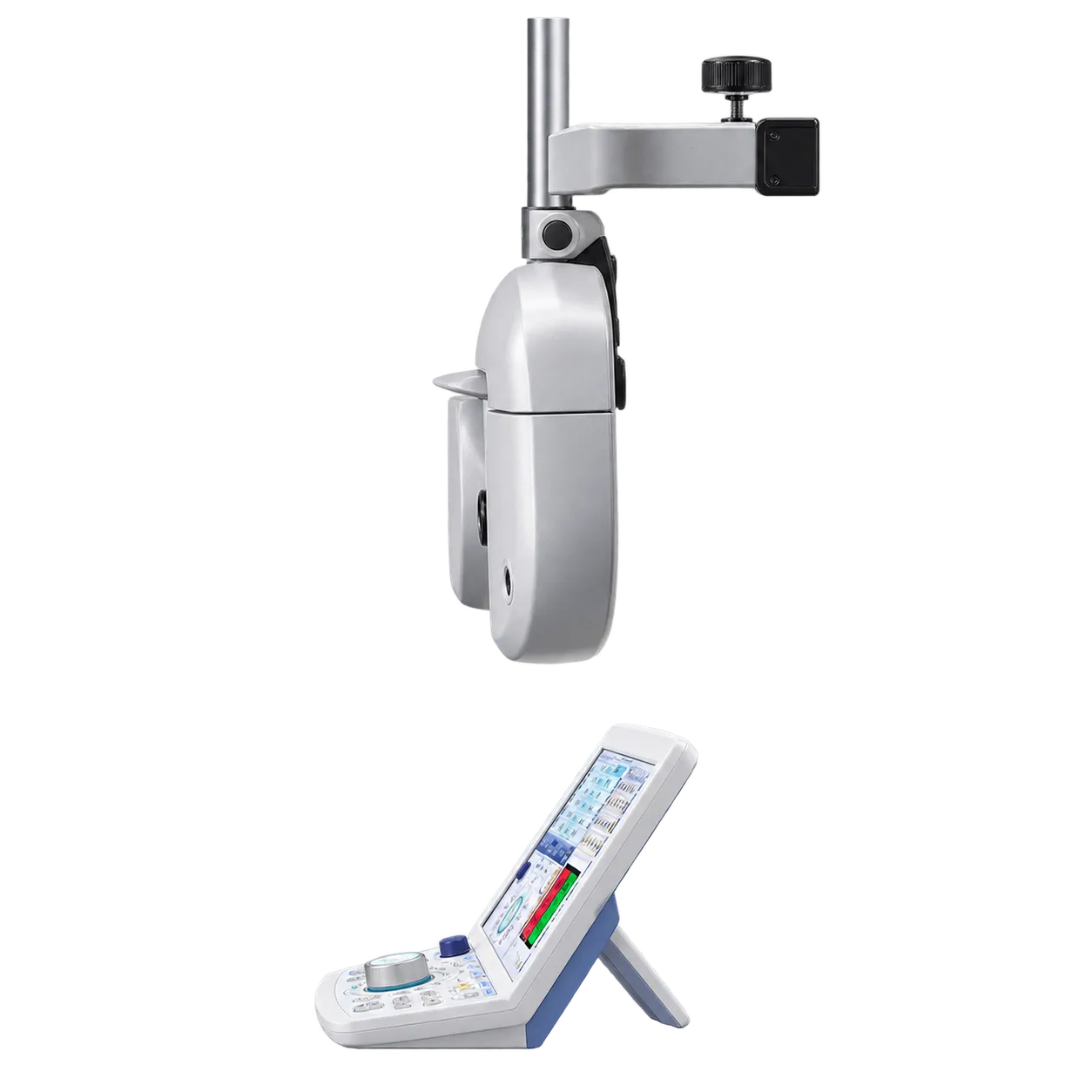
The core setting is the community optometry refraction lane, where the instrument's design decisions all point at the same problem: making a familiar examination less physically constrained and more hygienic. UK sight testing volume is substantial, with NHS General Ophthalmic Services funding examinations for under-16s, students aged 16 to 18, over-60s, people with diabetes or glaucoma and other eligible groups alongside private testing. Practices deliver that volume in rooms that are frequently smaller and more awkward than the equipment was designed around, and a wireless console with a slim head is a practical answer to that reality.
Infection control is the second setting-level driver. UK optometry tightened patient-contact procedures substantially and much of that practice has persisted, with contact surfaces cleaned between every patient. A phoropter presents the difficulty that its face shield and forehead rest sit directly against the patient and are, on most instruments, fixed. Dismountable surfaces allow proper cleaning rather than a wipe around fixed geometry, which matters for practices with immunosuppressed patients, care home clinics or simply a rigorous protocol.
Shared and multi-clinician lanes benefit from the wireless console specifically. Optometrists differ in preferred working position, and locums arrive with their own habits; a console that is not tethered removes the need to adapt to the previous user's cable routing. Practices running delegated pre-testing gain from objective autorefractor data transferring in rather than being read from one screen and typed into another.
Binocular vision work benefits from the automatic near-point convergence and PD adjustment, which corrects for the narrowing of effective pupillary distance when the patient looks from distance to near. Practices should note the standing access limitation: any phoropter head requires the patient to sit upright and bring their face to it, so young children, patients unable to maintain position and some wheelchair users still need trial frame refraction, and that capability should be retained alongside.