
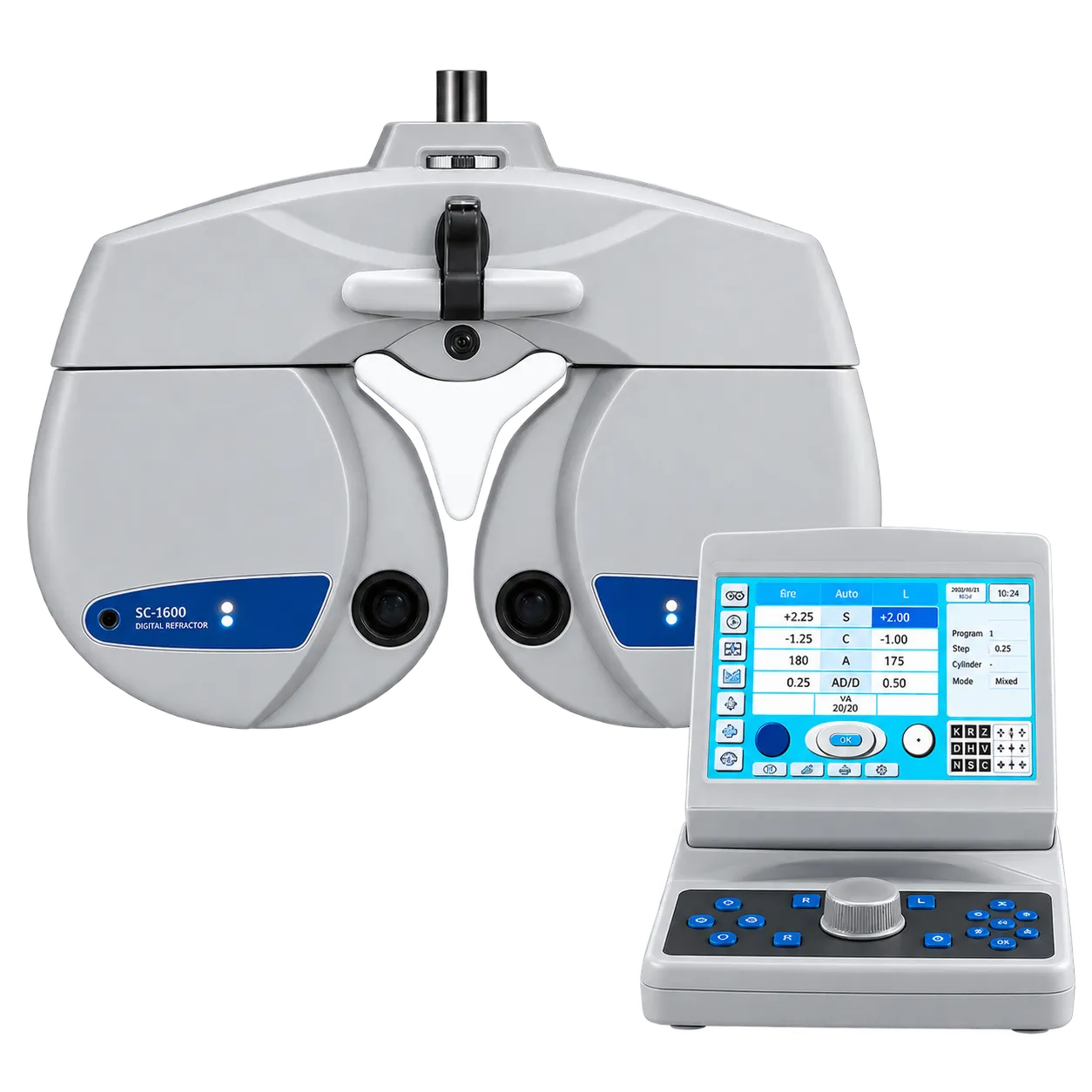
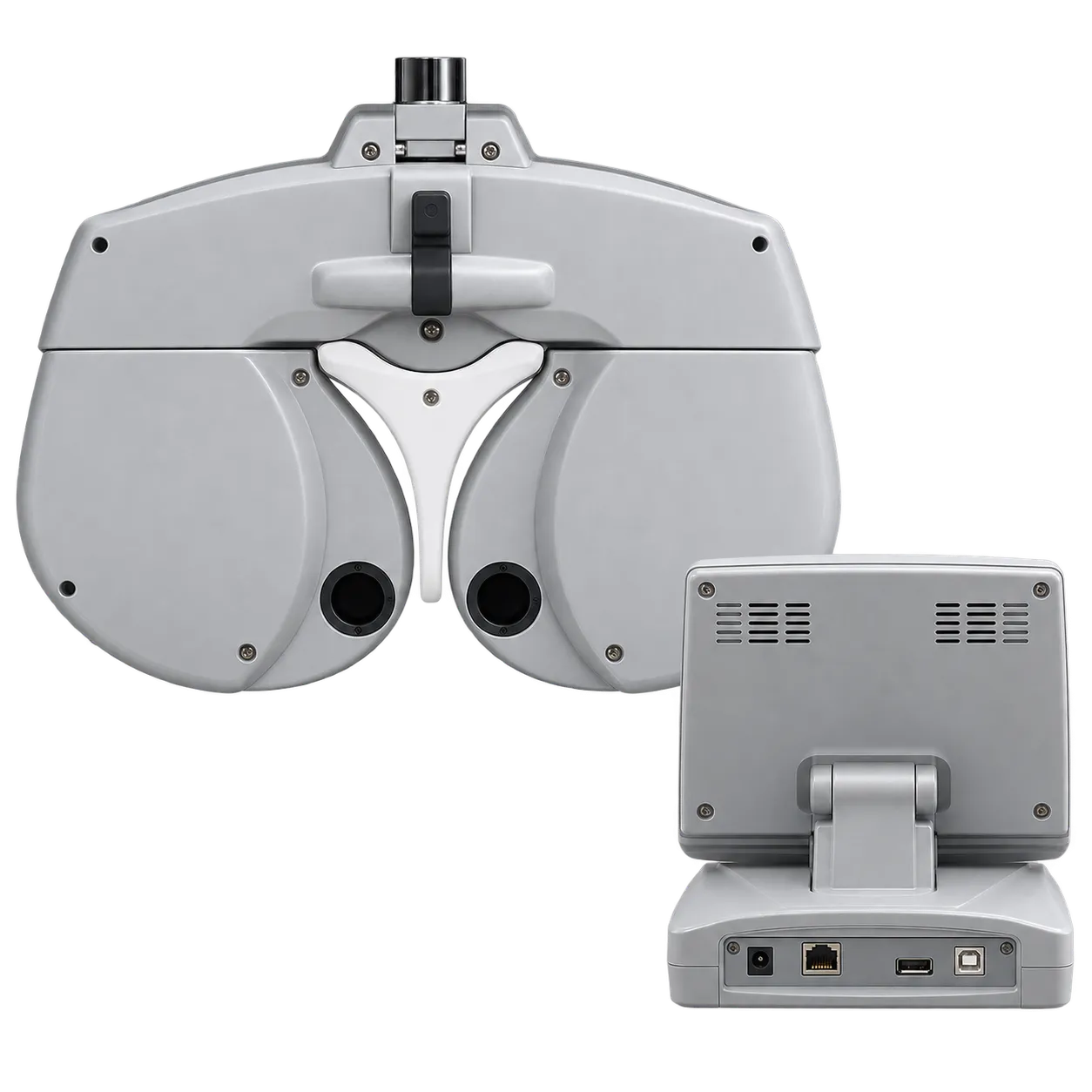
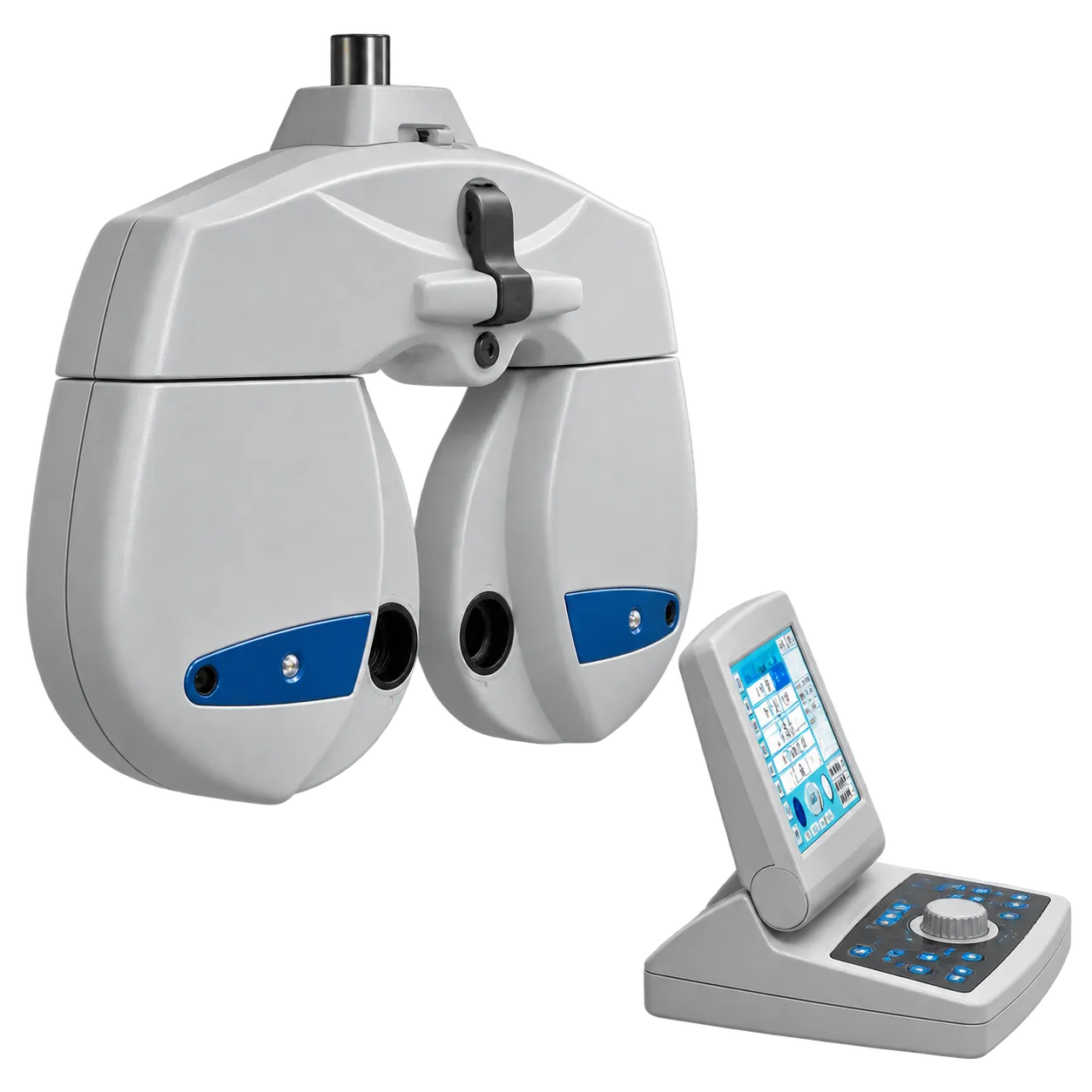
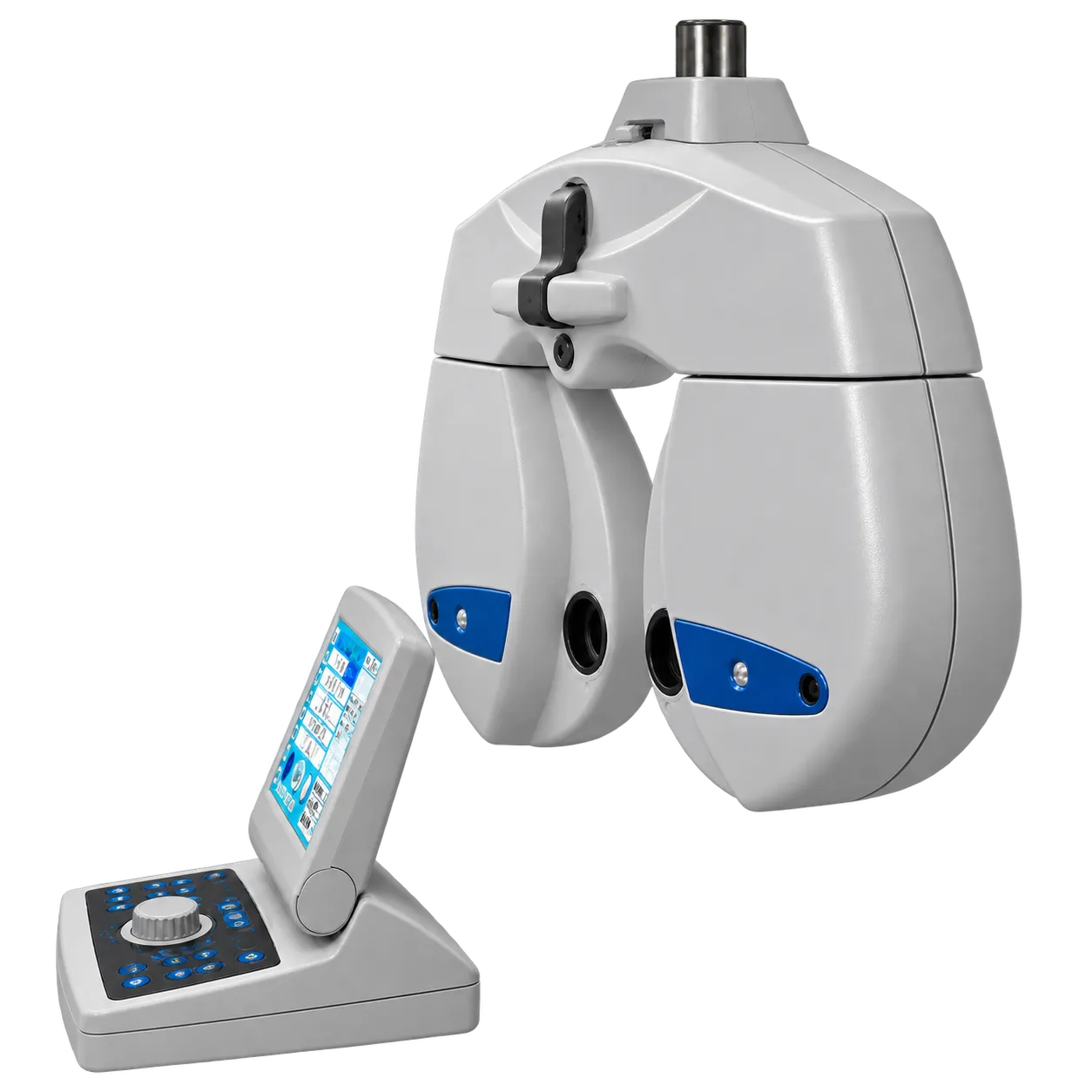
The primary setting is the community optometry refraction lane, where subjective refraction is performed dozens of times a day at appointment intervals that continue to compress. UK sight testing volume is substantial — NHS General Ophthalmic Services funds free examinations for under-16s, 16-to-18s in full-time education, over-60s, people with diabetes or glaucoma and several other groups, alongside private testing — and practices are judged commercially on throughput as well as clinically on accuracy. An automated refractor head shortens the mechanical portion of the examination without shortening the clinical conversation.
Multi-site groups and larger independents gain a second benefit from consistency. When several optometrists and locums share a lane, an instrument with fixed step sizes and an on-screen record of the sequence reduces variation between clinicians, and the printed output gives a consistent artefact for the patient record. Practices running delegated pre-testing benefit from objective autorefractor data transferring in directly rather than being read off one screen and typed into another.
Hospital eye service and refractive surgery pathways use phoropter refraction as an input to surgical planning and post-operative assessment, where the extended sphere range to -19D and +16.75D covers most pre- and post-surgical prescriptions encountered outside specialist aphakia work.
Training environments are a further application. Pre-registration optometrists learn refraction technique on phoropters, and an instrument with clearly displayed step sizes and auxiliary lens states makes the sequence more legible to a supervisor observing. Practices should note the honest access limitation: a phoropter head requires the patient to sit upright and bring their face to the instrument, so young children, patients unable to hold position and some wheelchair users still need trial frame and loose lens refraction, and practices serving those groups should retain that capability alongside.