
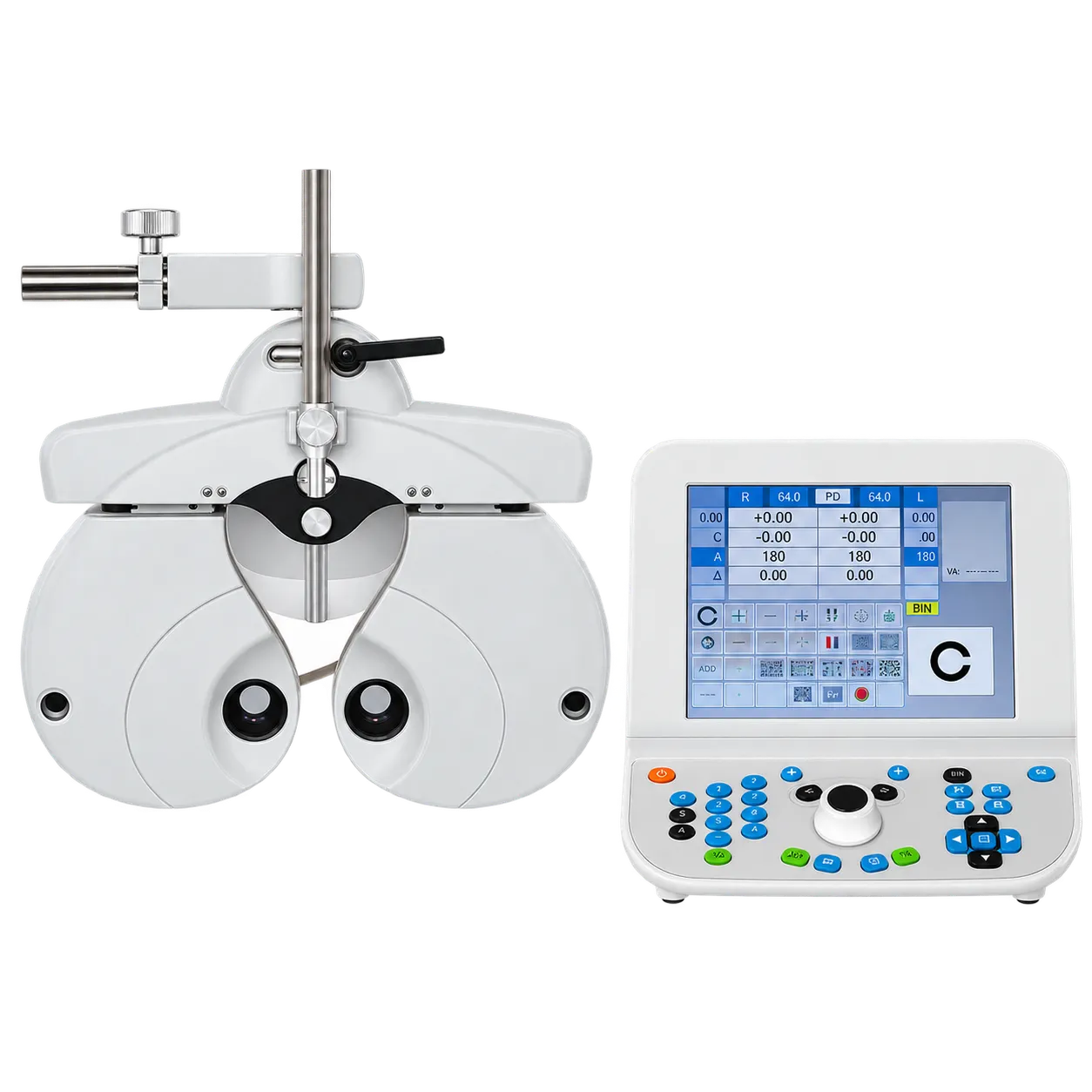
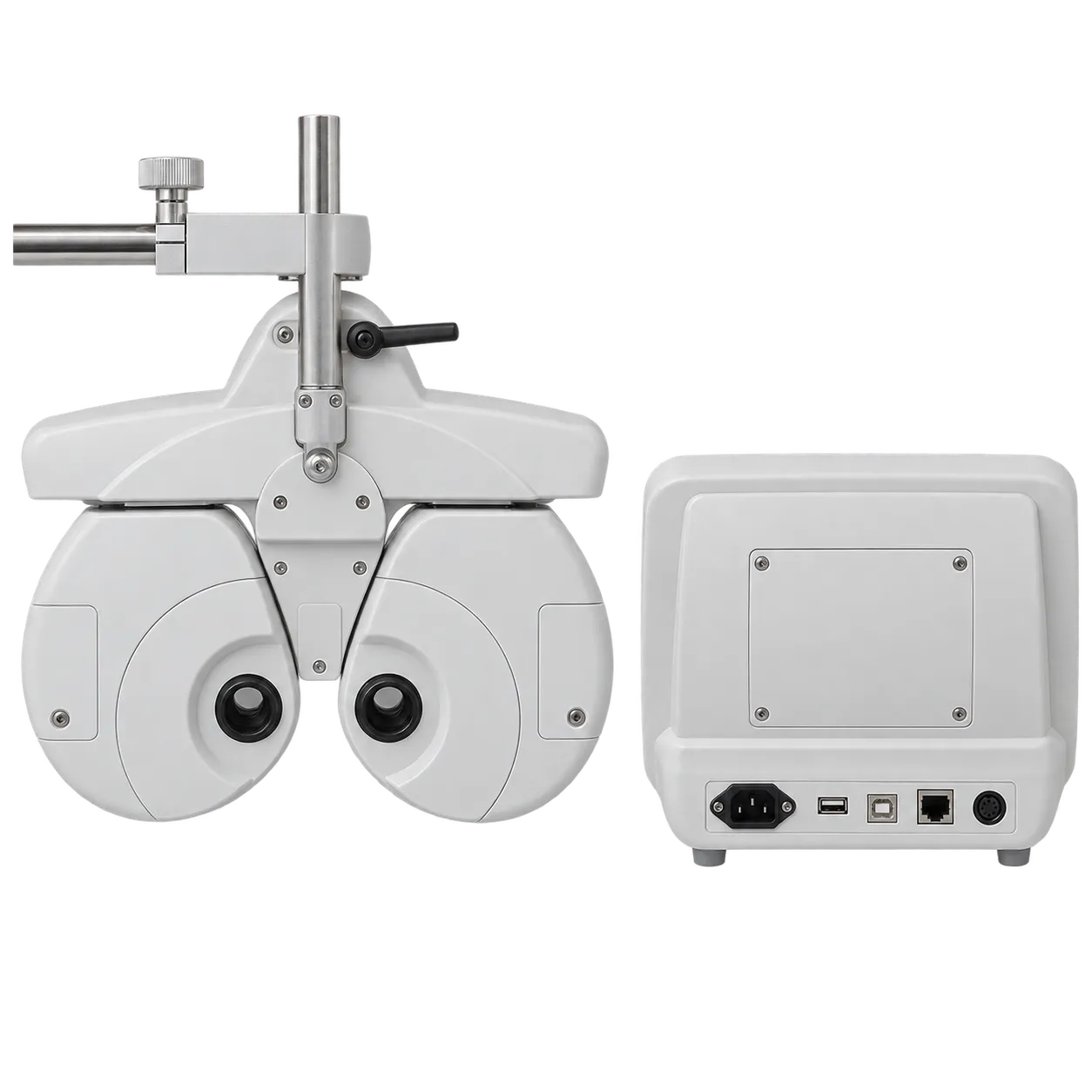
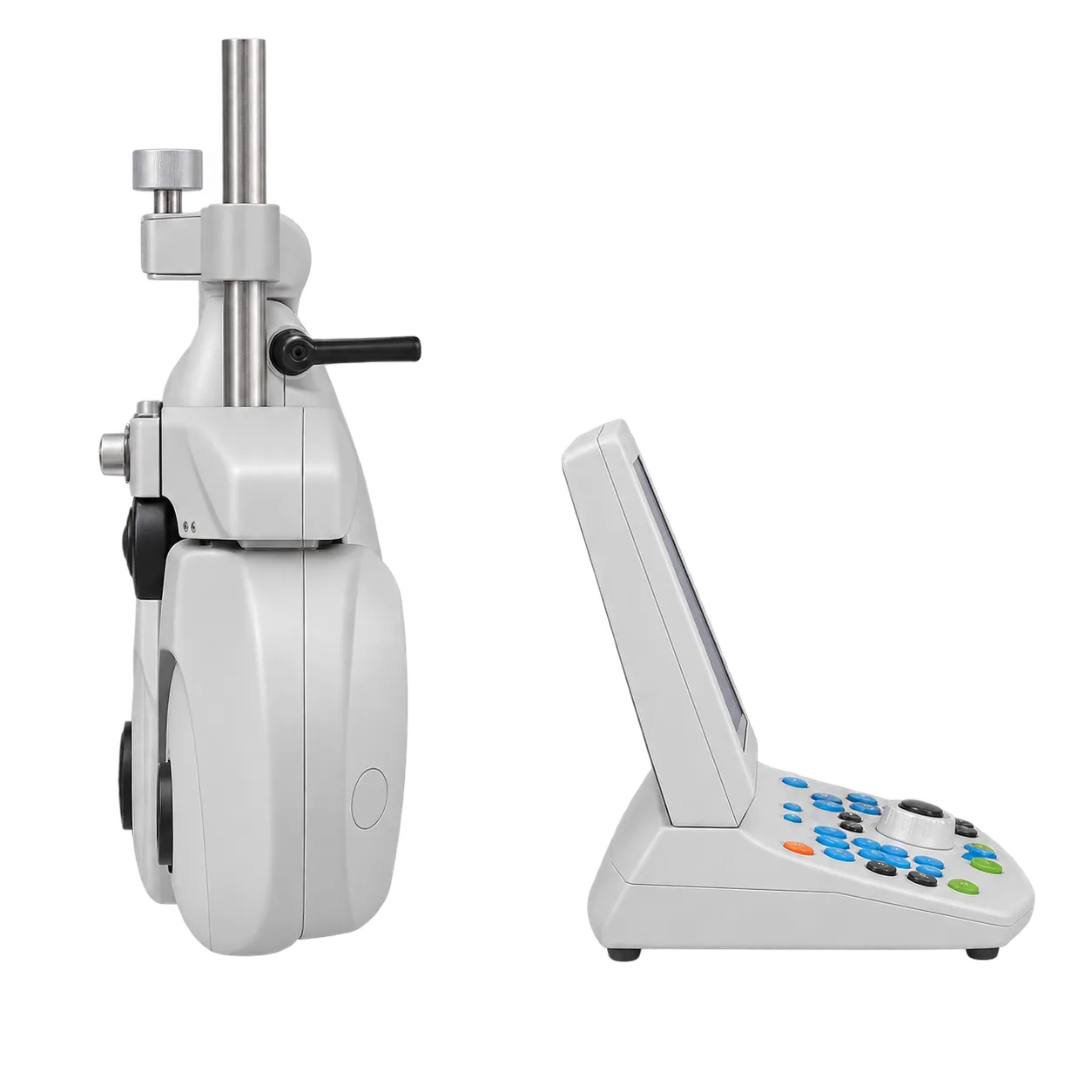
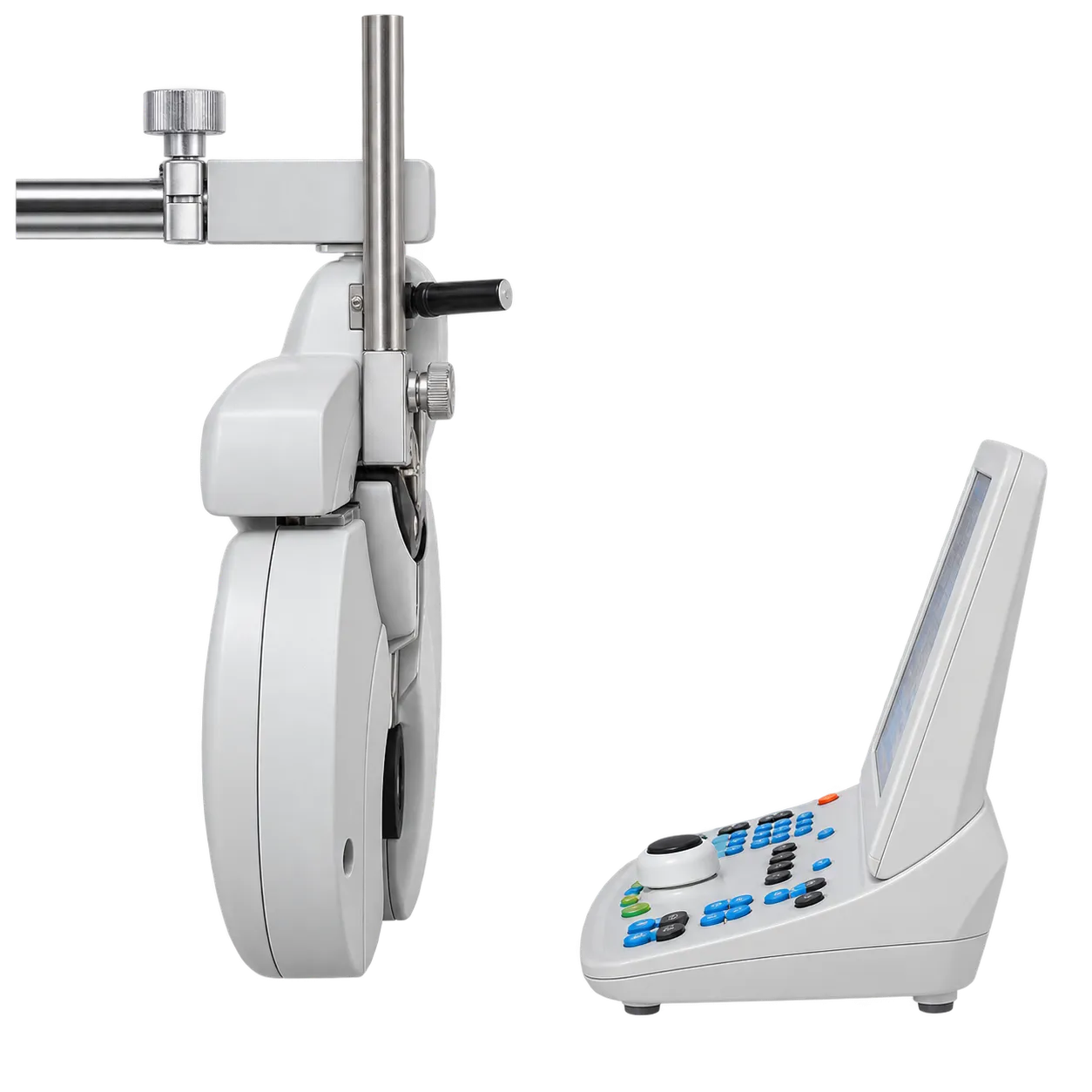
The wide measurement range points this instrument at practices whose caseload runs past the ordinary. Aphakic refraction — patients without a crystalline lens and without an intraocular implant — routinely requires corrections well above +10.00D, and high myopia beyond -20.00D occurs in every substantial patient base. Practices currently reaching for a trial frame in these cases can keep the refraction in the lane, which is faster, more repeatable and considerably more comfortable for a patient who is already having a longer appointment than most.
High astigmatism is the parallel case. Corneal astigmatism above 6.00D occurs in keratoconus under correction, following corneal grafts and after some cataract surgery, and a ±8.00D astigmatic range keeps those refractions on the instrument. Hospital eye service departments, corneal clinics and specialist contact lens practices see this population disproportionately.
Vertex distance control connects directly to that population. Effective lens power varies with distance from the cornea, and the discrepancy becomes clinically obvious in high prescriptions — a refraction taken at one vertex distance and dispensed at another simply will not deliver what was measured. Five settings from 12 mm to 20 mm let the refraction be matched to the intended frame fit, which is precisely what a high-power practice needs and what makes the ±27.00D range usable rather than nominal.
General community optometry gets the everyday benefits alongside: the auto Jackson cross cylinder standardises the refinement step across clinicians and locums, the 10.4-inch touchscreen consolidates the sequence, and face-to-face testing preserves the conversation that subjective refraction depends on. Practices should note the standing access limitation — a phoropter head needs an upright seated patient, and the 53 mm minimum pupillary distance at 40 cm convergence is a further constraint on narrow-PD and paediatric patients — so trial frame capability should be retained alongside.