
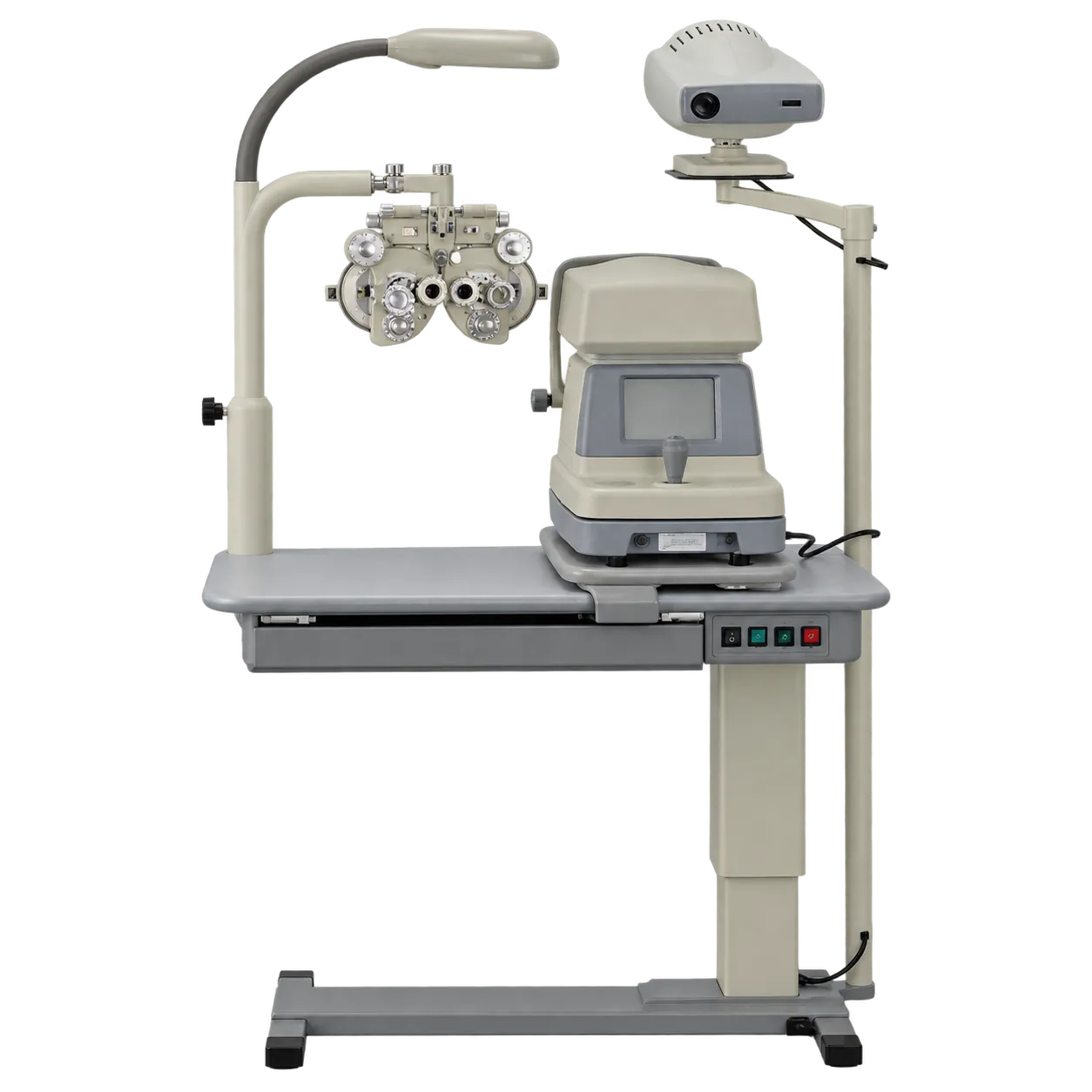
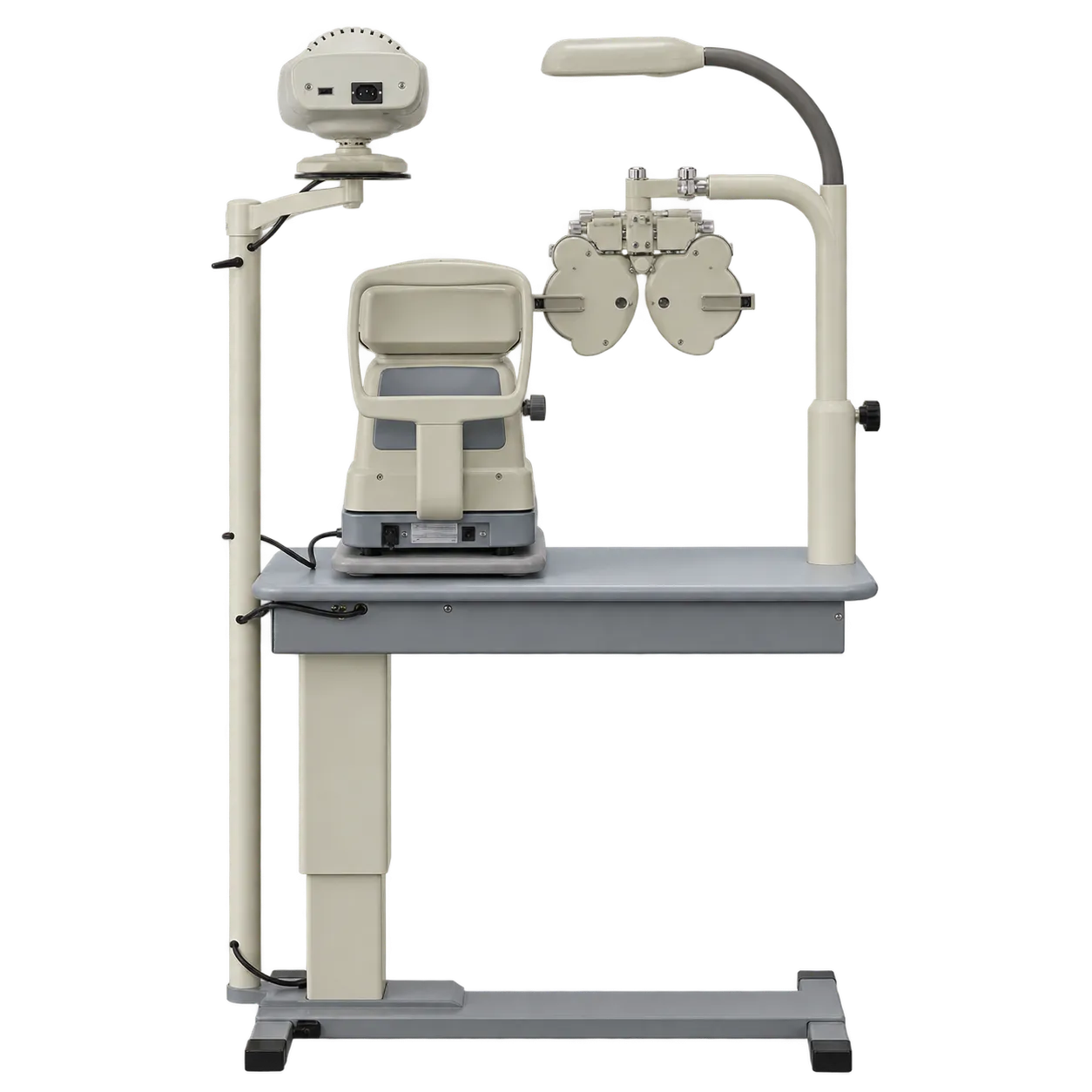
Small internal rooms benefit most, and the mechanism is heat rather than cost. Everything electrical in a consulting room becomes a heater — the unit, the lamp, the instruments, the computer and the two people in it. Rooms of this kind are frequently small, often internal and regularly without opening windows, so by mid-afternoon they are warm. That is uncomfortable for a patient sitting still through a long refraction, and worse for a clinician working in it all day. Forty watts less is modest, but it is forty watts that never has to be removed again.
Practices watching running costs gain the same third proportionally. A unit powered through a working week at 80 W rather than 120 W is a third cheaper to run, which across a decade or more of service is worth counting even if it is not decisive.
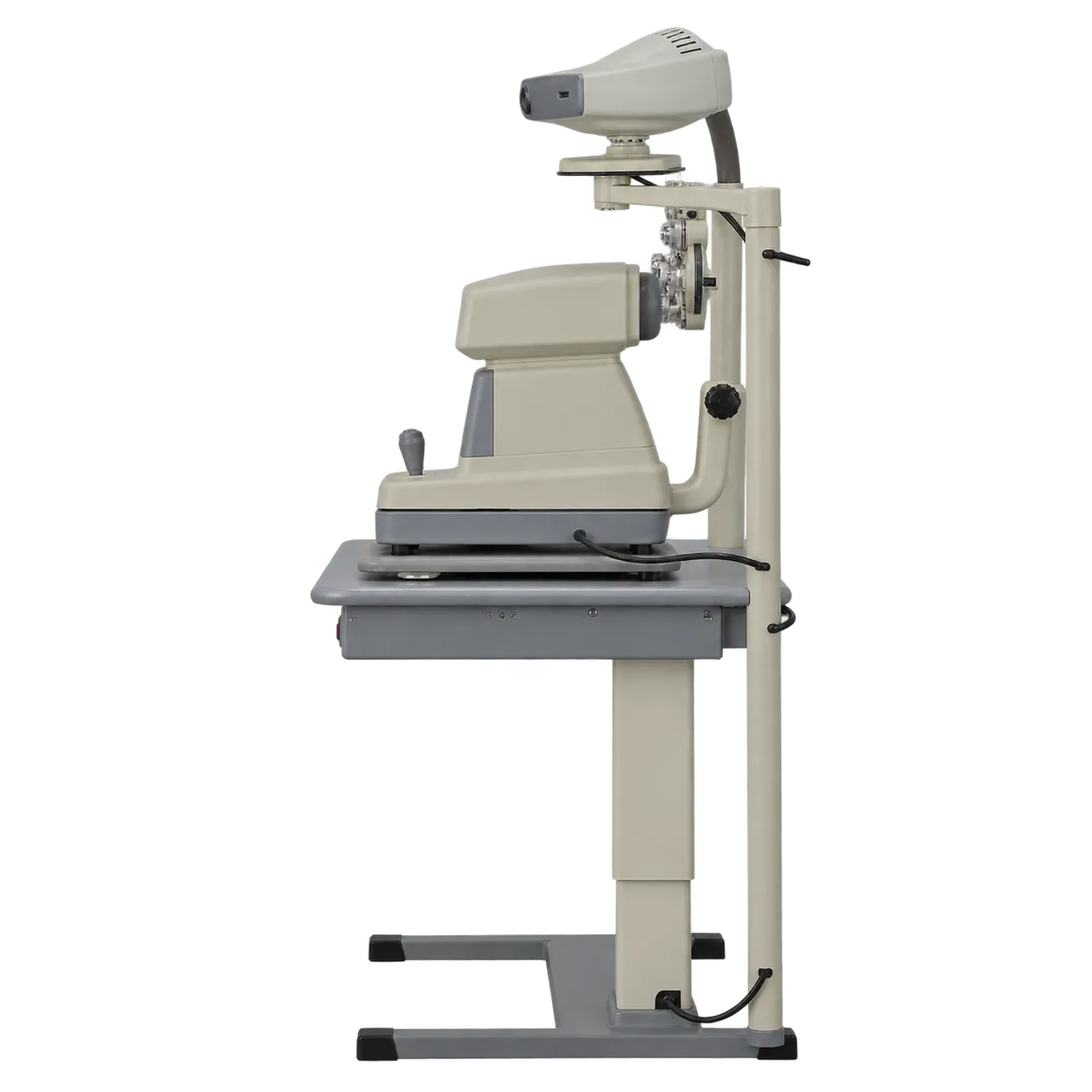
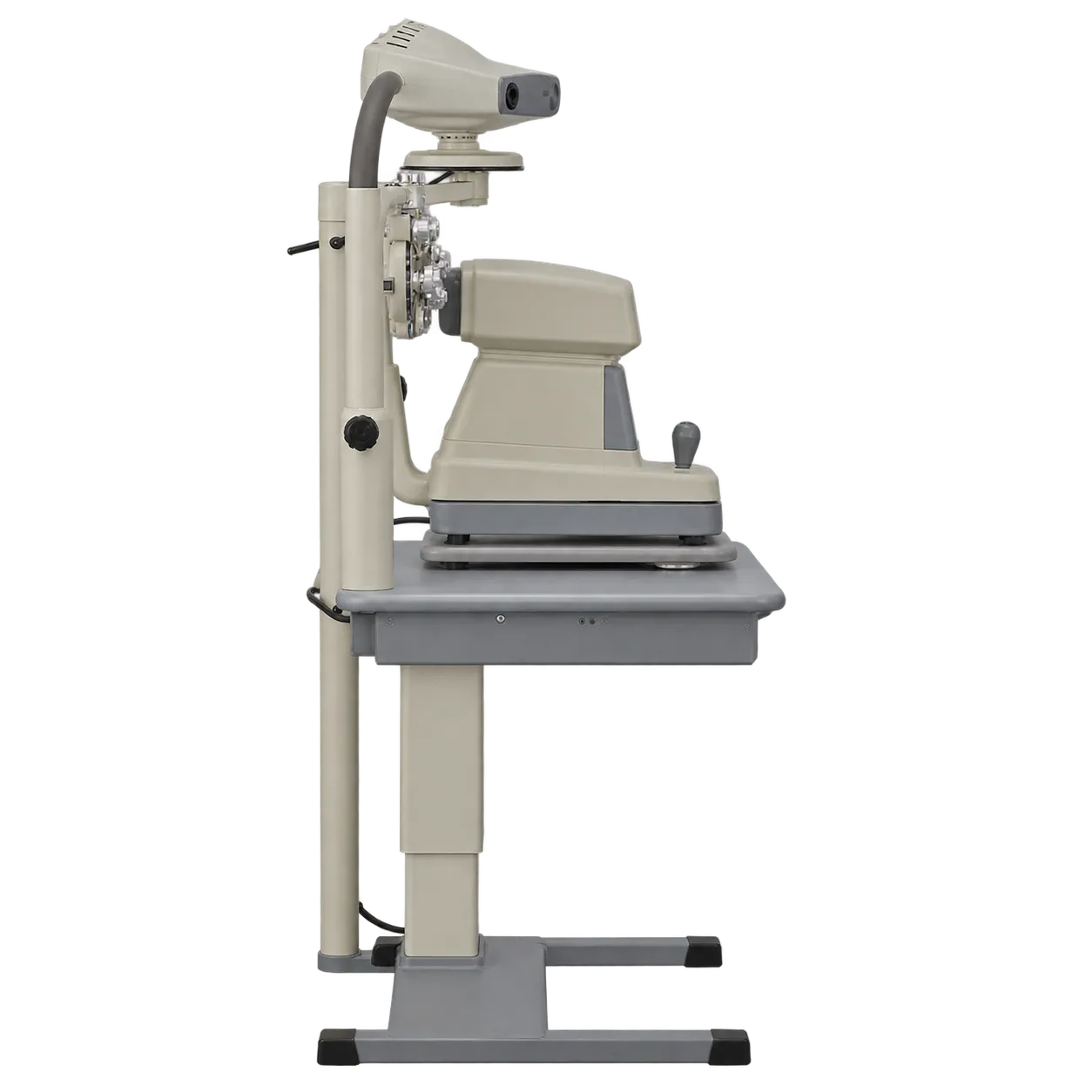
Laterally constrained rooms suit the 520 mm depth, among the shallowest in this catalogue. Depth is taken from the floor a patient walks across; width runs along a wall. A shallow unit gives back the more contested dimension.
Room planning is helped by how the ranges are published. Small tabletop 105 to 435 mm, phoropter arm 1510 to 1700 mm, projector stand 1510 mm — all given as heights above the floor rather than travel distances, so a room can be checked against them directly rather than by inference.
Three things need establishing. No weight is published, which matters for floor loading and delivery. No seating is supplied, so a chair must be provided separately or already be in place. And the drawer is 50 mm internally, shallower than several units here, so a trial lens case should be measured against it.