
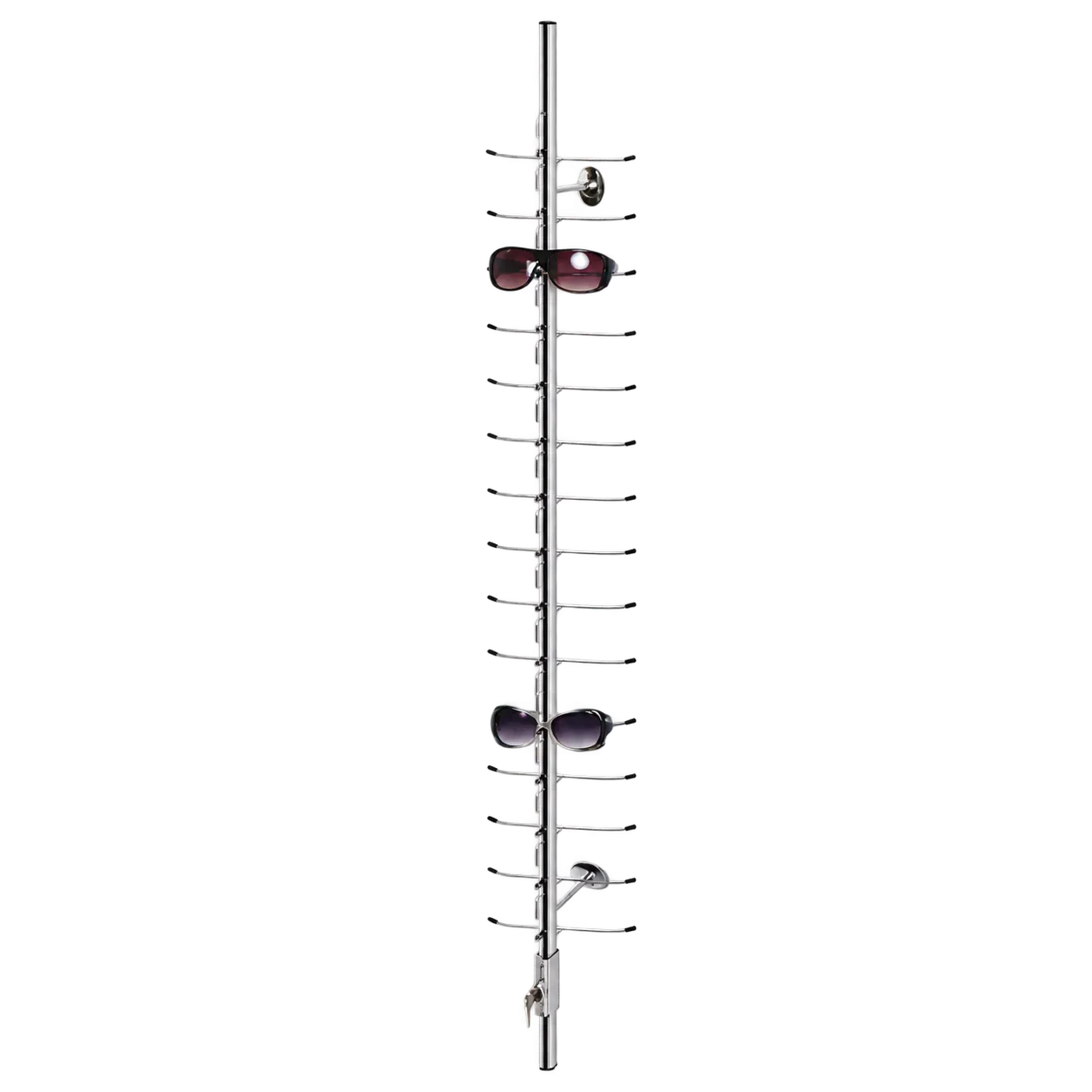
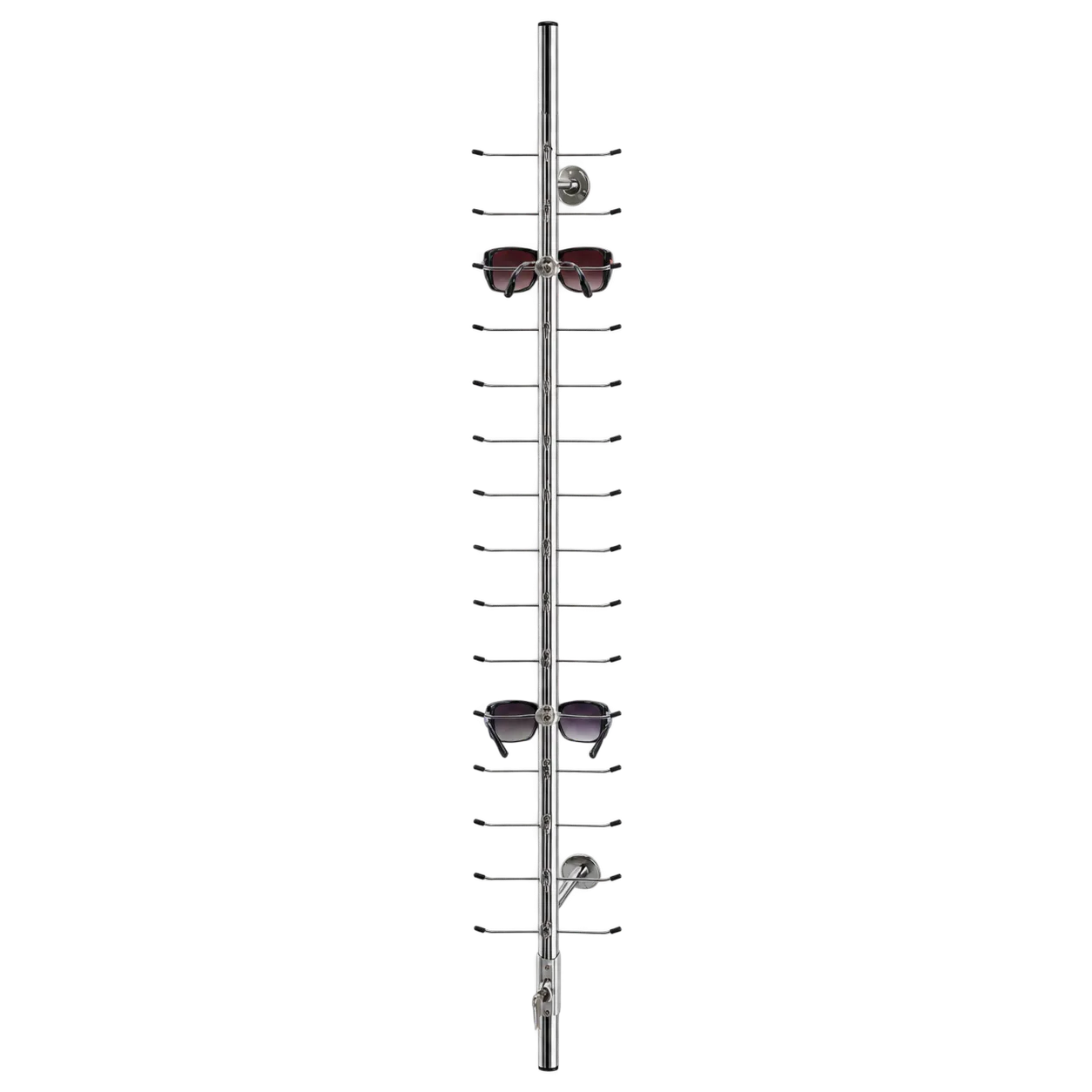
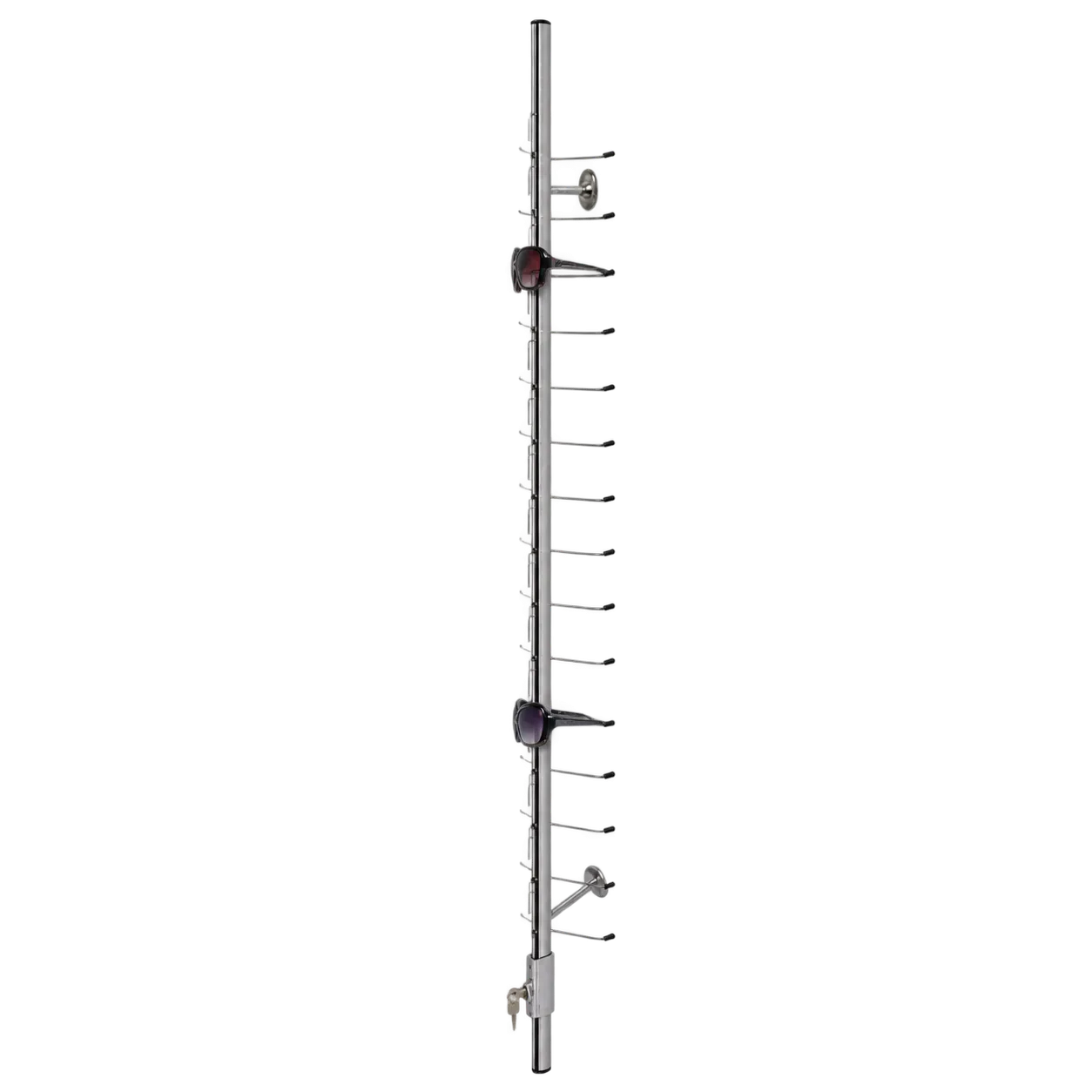
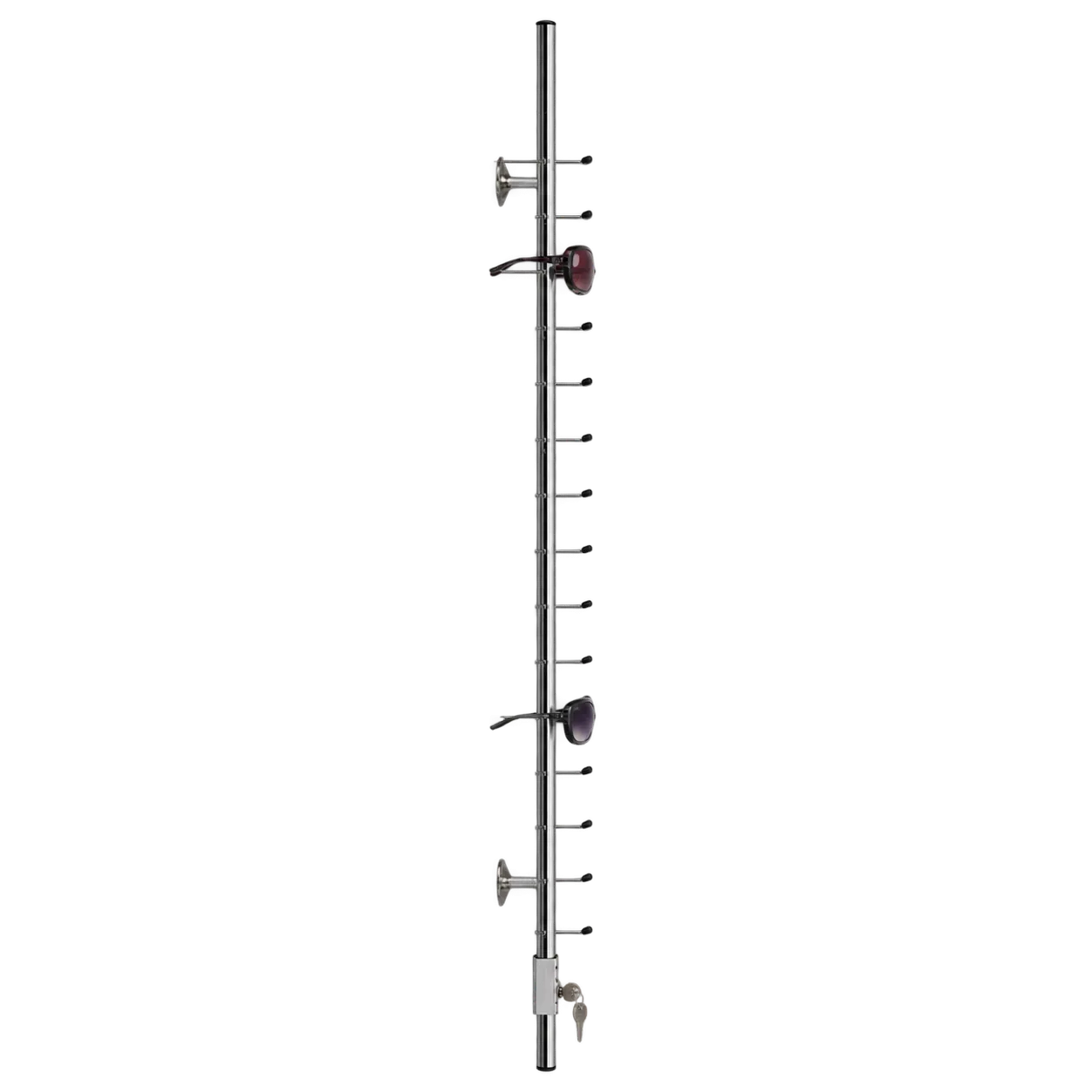
The CA-12 is a rod for a planned wall. Optical practices laying out a frame wall by brand, sunglass retailers arranging polarised and fashion ranges by price band, and shopfitters working to a drawing can all treat each rod as one column in a grid. Customers scanning the wall move along a tier to compare like with like, or down a column to stay within one brand. Staff find a requested frame quickly, because every style has a fixed place.
Order on the wall supports security as well as selling. The British Retail Consortium's 2025 crime survey counted around 20 million thefts from UK retailers in a year, and an ordered display makes a missing frame obvious. The lock on each rod does the rest. Its cost is the wait for a key: 27% of more than 5,000 US shoppers surveyed by Numerator in 2024 said locked products would make them leave or switch retailer. A wall planned so staff can reach any rod quickly keeps that wait short.
The building sets the terms. In the UK, employers are responsible for secure fixtures under the Health and Safety at Work etc. Act 1974, so wall type and fixings should be recorded for each centre line. Circulation and reach follow the Equality Act 2010 and the guidance in BS 8300-2, which argues for keeping the lowest tier within seated reach. Shopfitters and group property teams normally work from a fit-out specification. The conformity documentation those procurement routes require is issued by the manufacturer and shared by the enquiry team.