
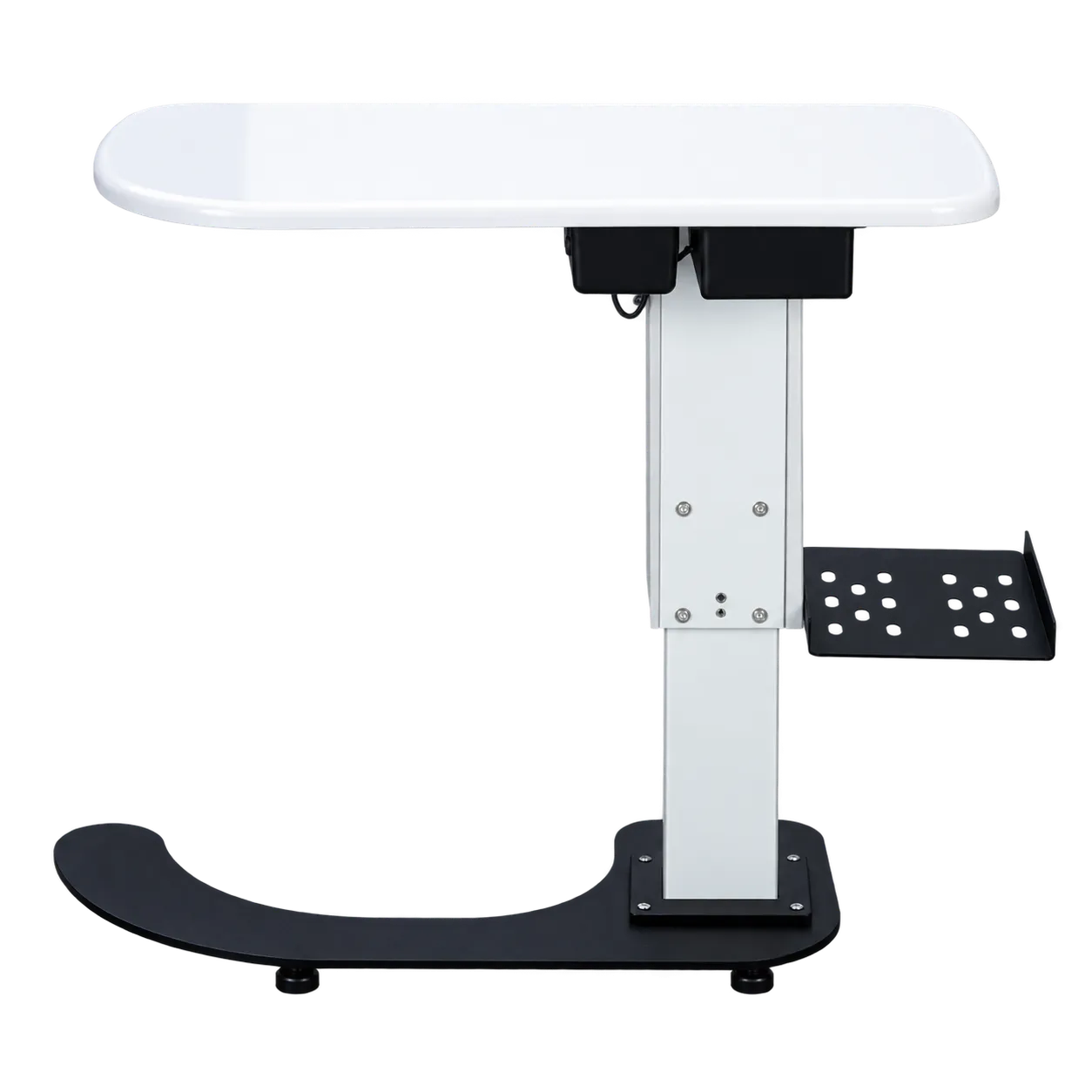
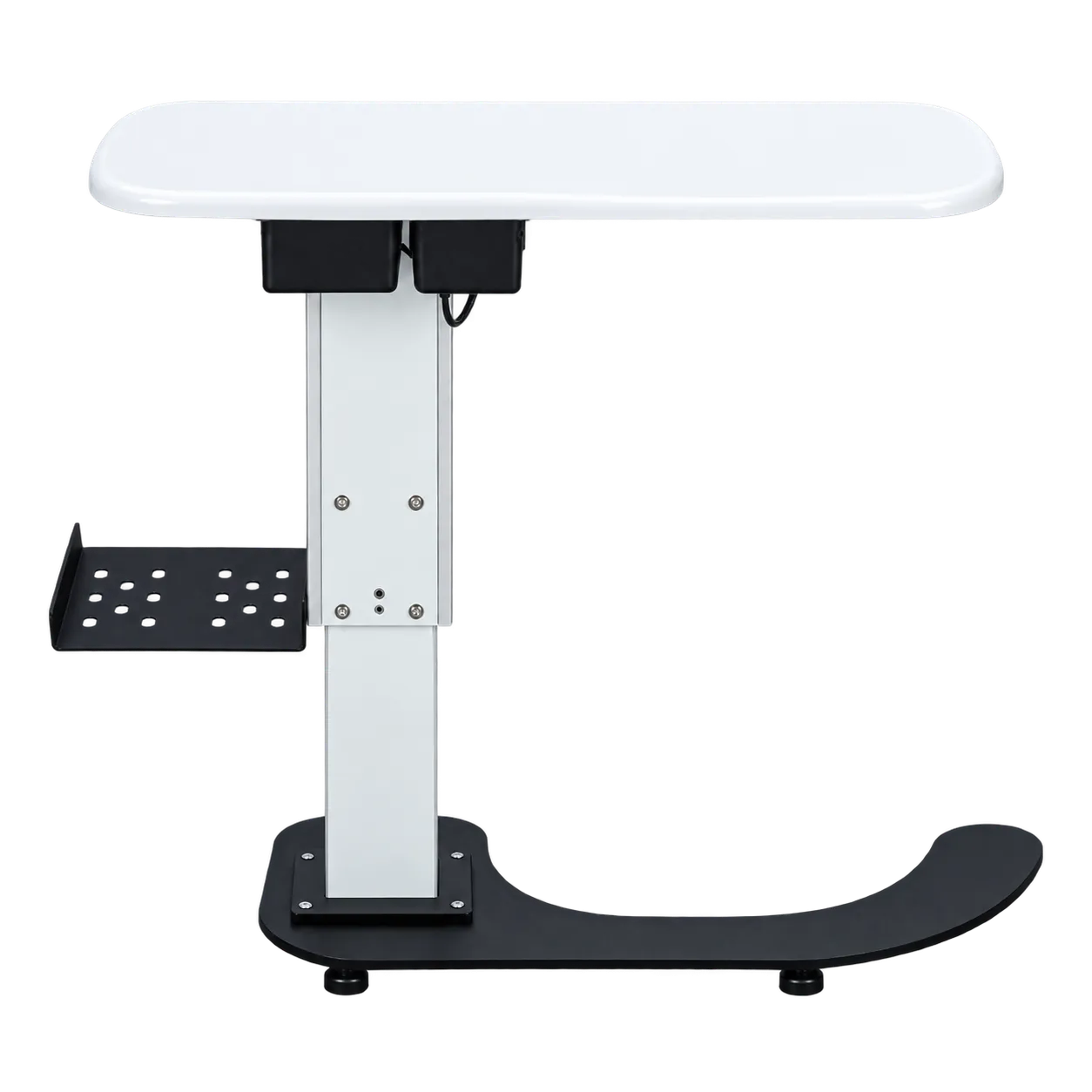
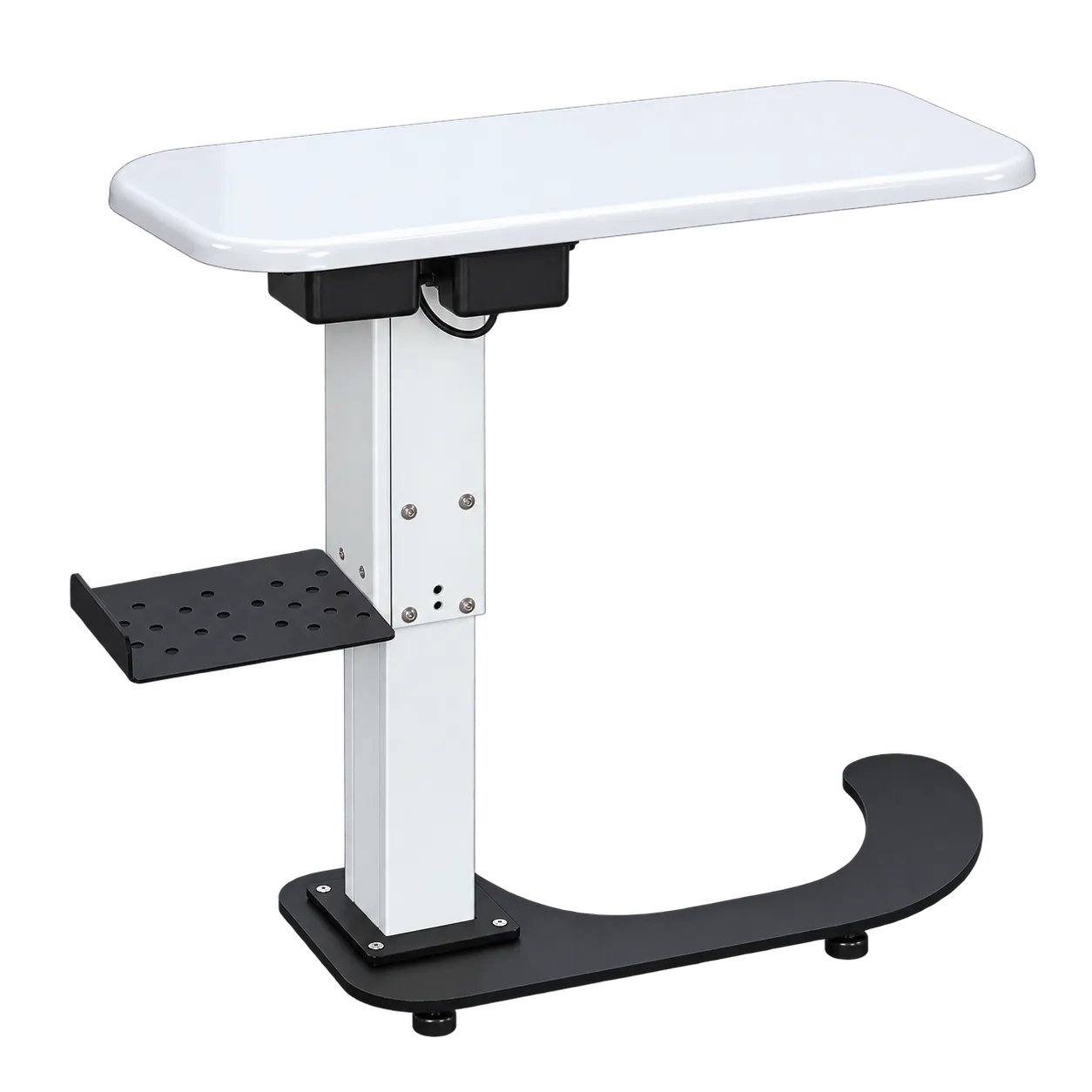
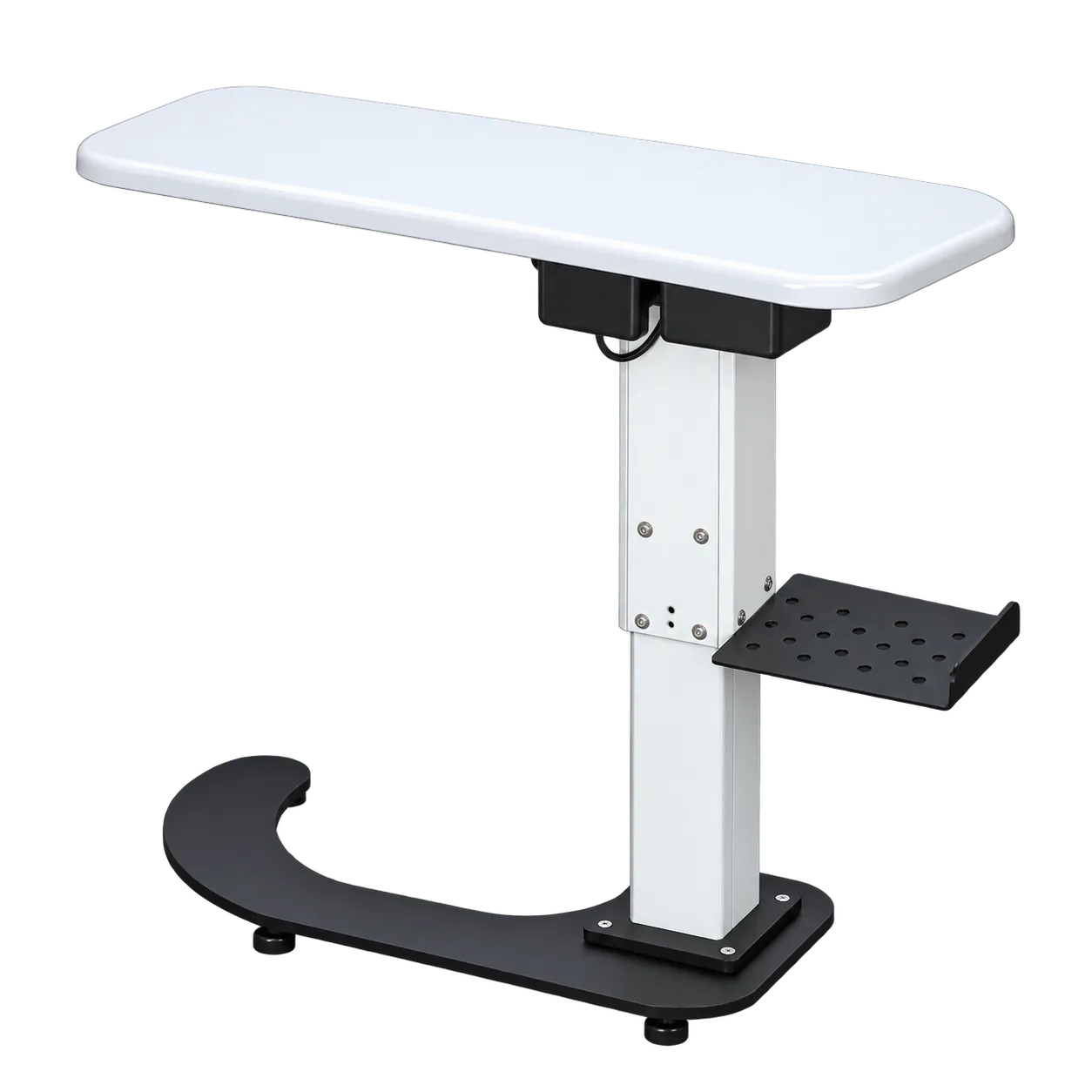
Children's sight testing is the natural home. Under-16s are eligible for NHS-funded sight tests across the UK, so community practices see many children, and each one has to be brought to the right height at the autorefractor, tonometer or slit lamp. A table that comes down to 510 mm meets many of them on an ordinary chair, avoiding booster seats that wobble and distract.
Paediatric ophthalmology and orthoptic clinics in hospital eye services benefit similarly. Young patients who are anxious or restless settle more easily on a familiar, stable chair, and a steady child gives better measurements and a quicker appointment.
Family-focused practices can set up a dedicated children's position, with the C-270 and a suitable instrument in a room decorated for younger patients. The crescent base leaves space inside its curve for a parent's chair pulled close.
Adults of short stature, and patients who find standard chairs too high, benefit from the same low range. Offering a position that fits them without improvised seating is a practical reasonable adjustment and supports the respectful, individual care the GOC expects.
Special educational needs and learning disability clinics, where patients may be more comfortable in low or supportive seating, can use it to bring the instrument to the patient.
Compact camera and tonometer positions for children's screening sessions in practice suit the small 800 × 450 mm footprint.
It is not suited to general adult use, since the 680 mm top setting may be too low for an average adult on a standard chair. Practices should plan it as an addition to their main instrument positions.
Wheelchair users are generally better served by a standard or accessible table, since their eye height usually sits above the range this table targets.