
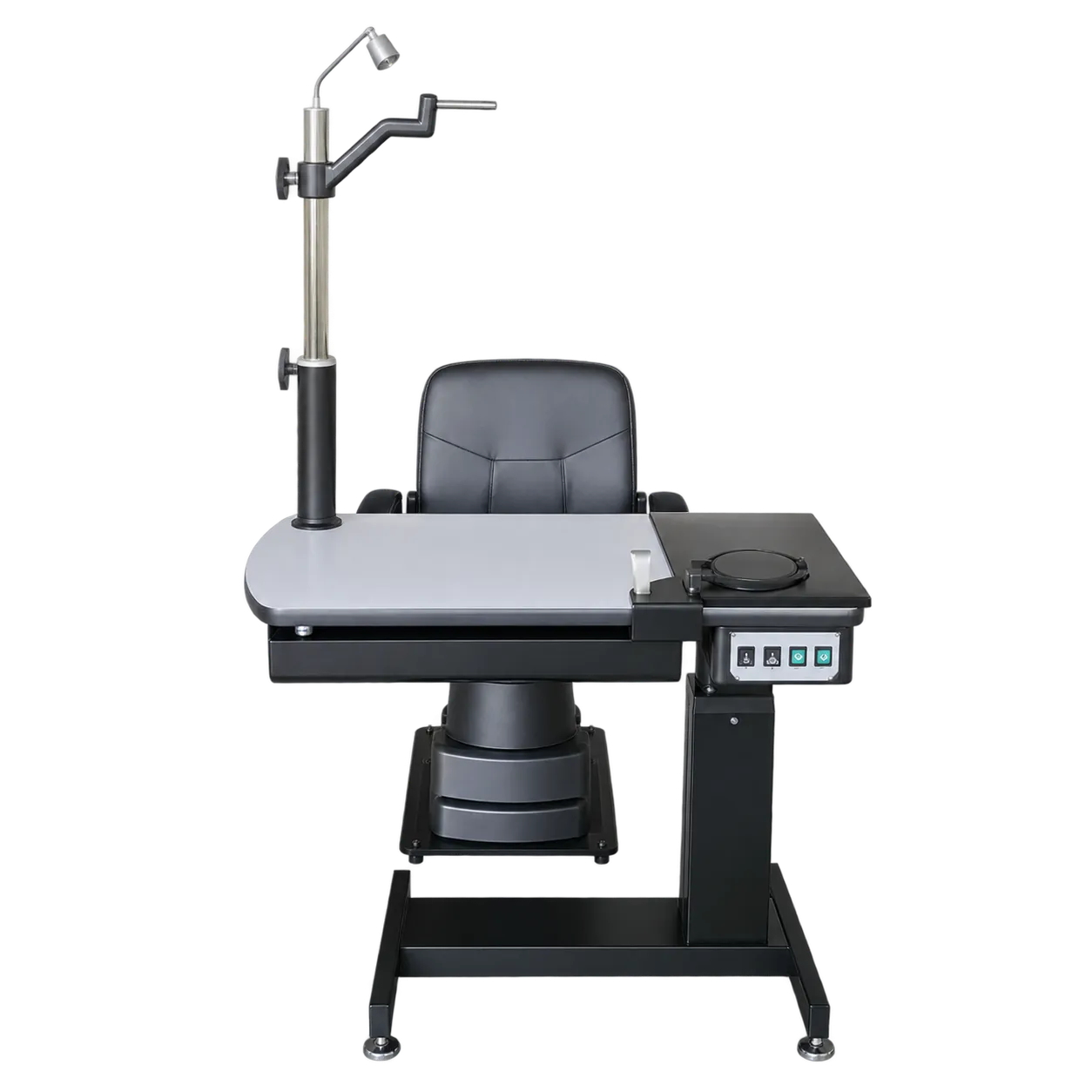
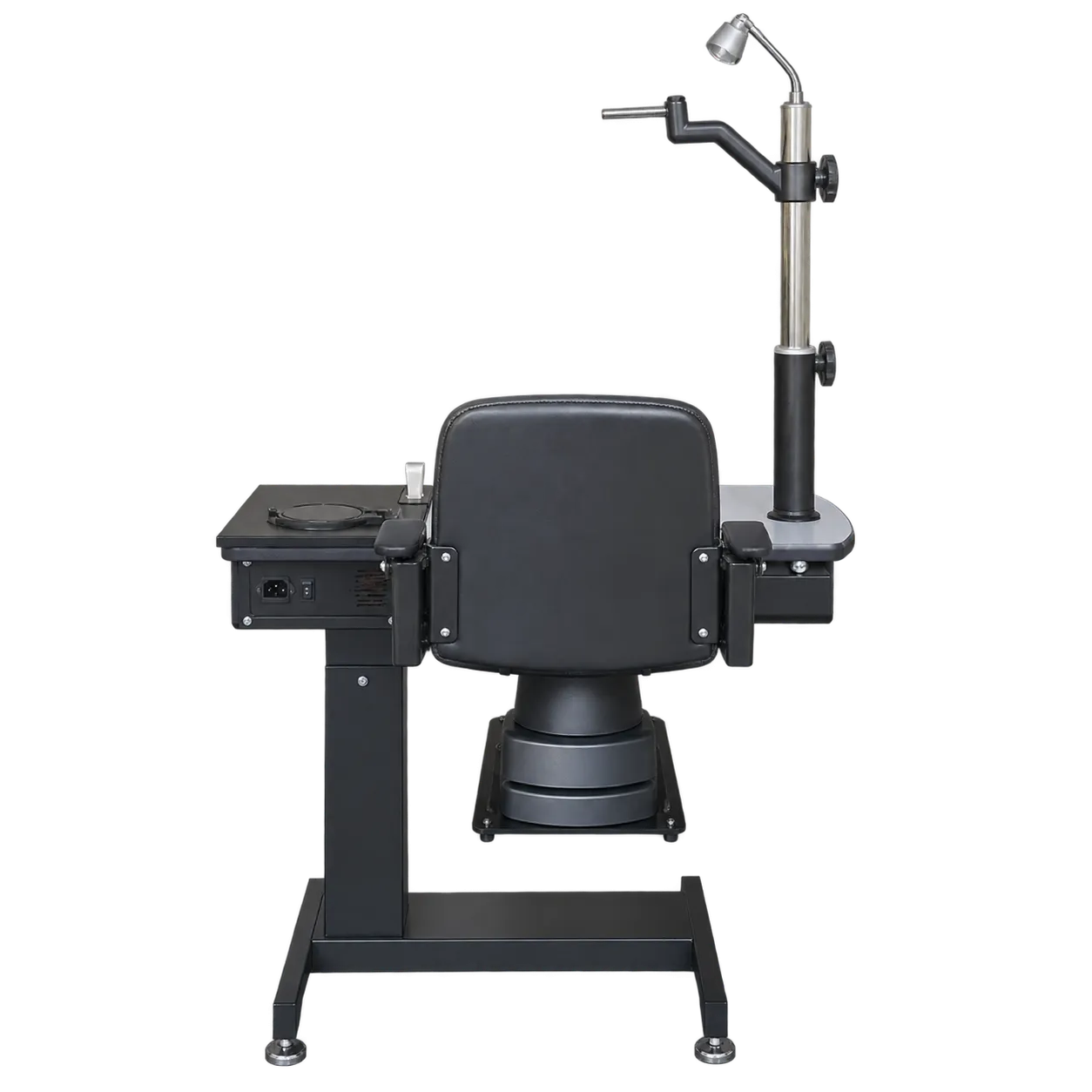
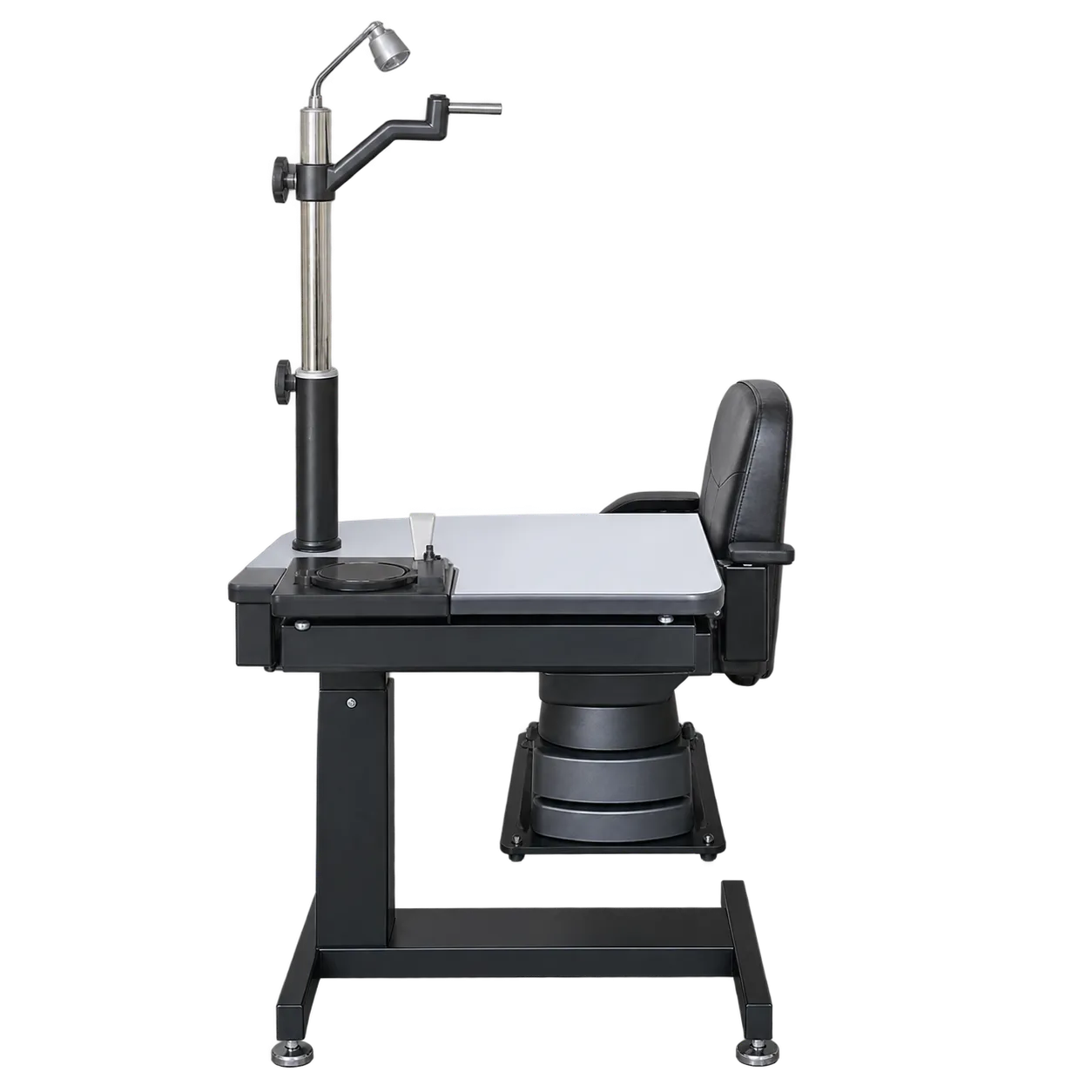
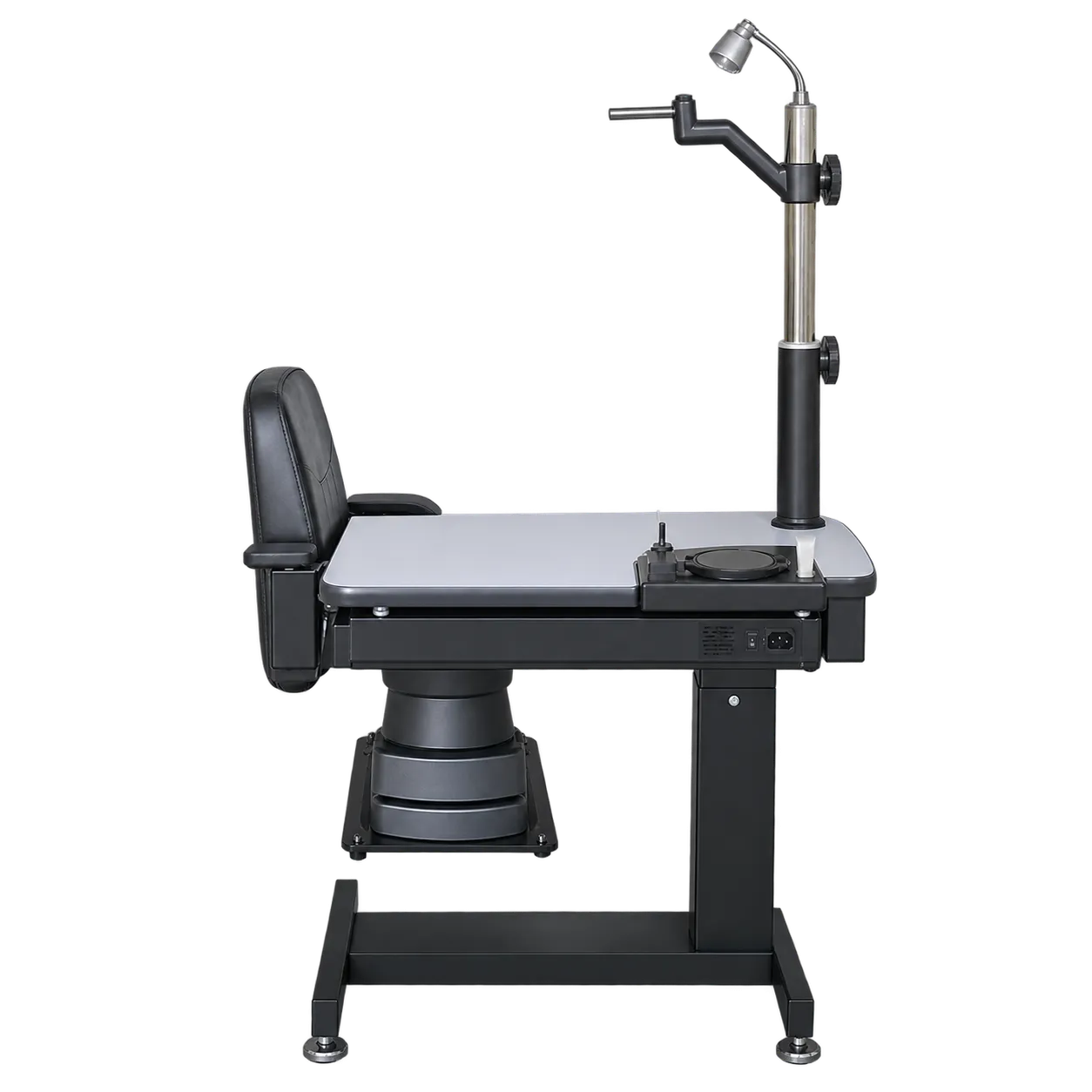
Appointments that continue after the refraction are where an arc-hinged arm earns its place. A refractor head is finished with well before the patient is, and what follows — slit lamp examination, a face-to-face discussion of findings, helping someone out of the chair — all happens in the space the head occupies. An arm that travels up a column is at a different height but the same place; one that folds through 180° is genuinely gone.
Paediatric and anxious patients benefit from the same property. Equipment in front of a patient's face is a source of apprehension in itself, and being able to remove it entirely rather than raise it slightly changes the character of the conversation that follows.
Rooms doing more than refraction suit the pairing of arm and table. The tabletop rotates 45° to angle instruments toward the clinician while the arm handles clearance, so each movement does one job rather than both partially.
Difficult premises remain accessible: at 72 kg this matches the lightest unit in this range and at 1600 mm the lowest, so upper floors, period buildings and rooms with sloping ceilings are all viable.
Three things belong in the decision. The manufacturer gives the angular range but not its start and end positions, so where the arm actually sits when stowed is unstated and should be confirmed if it affects the layout. The arm's linear reach is likewise unpublished, and the angle alone does not determine where the head sits. And clearance for a 180° arc is a different swept volume from a linear column — plan it rather than assume it.