
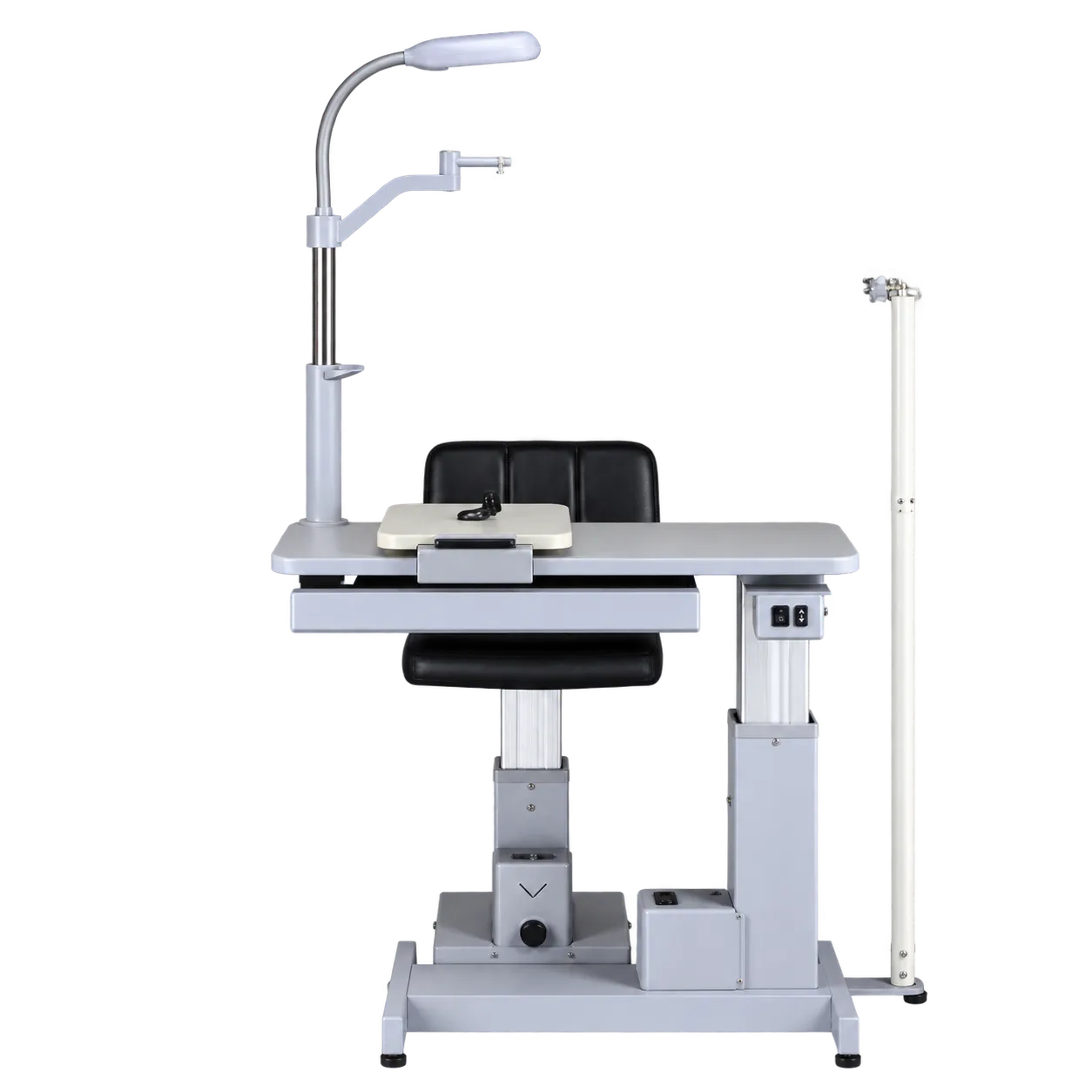
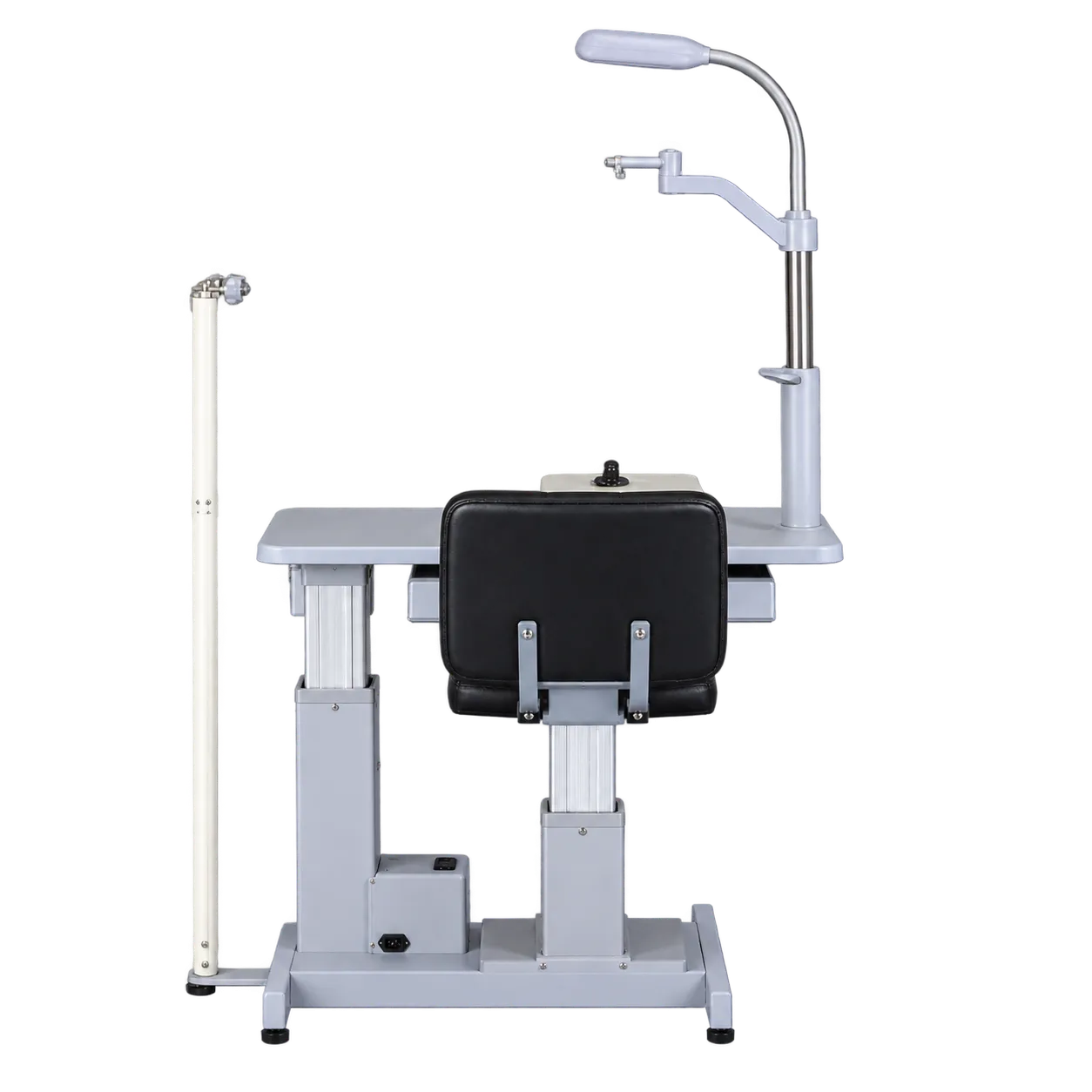
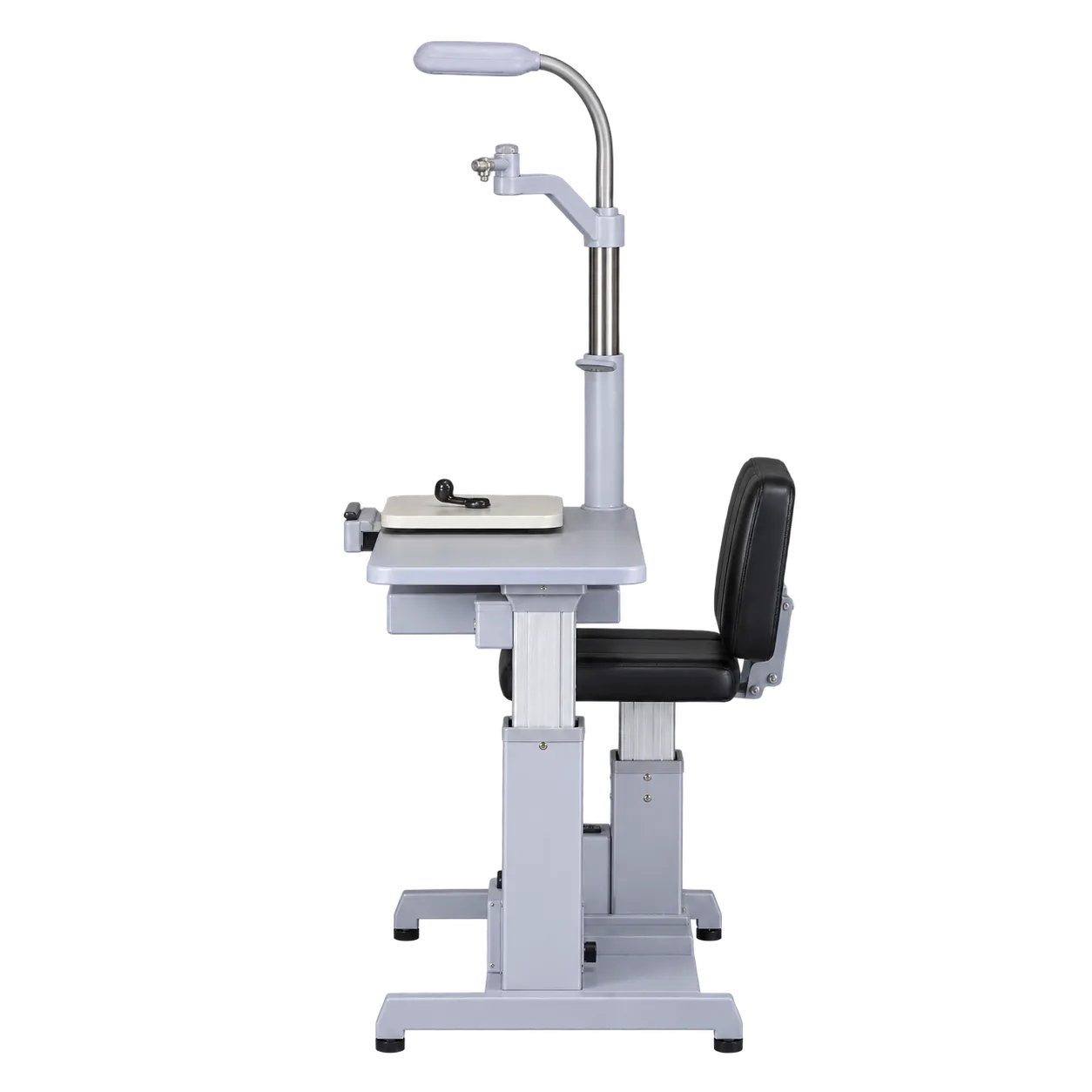
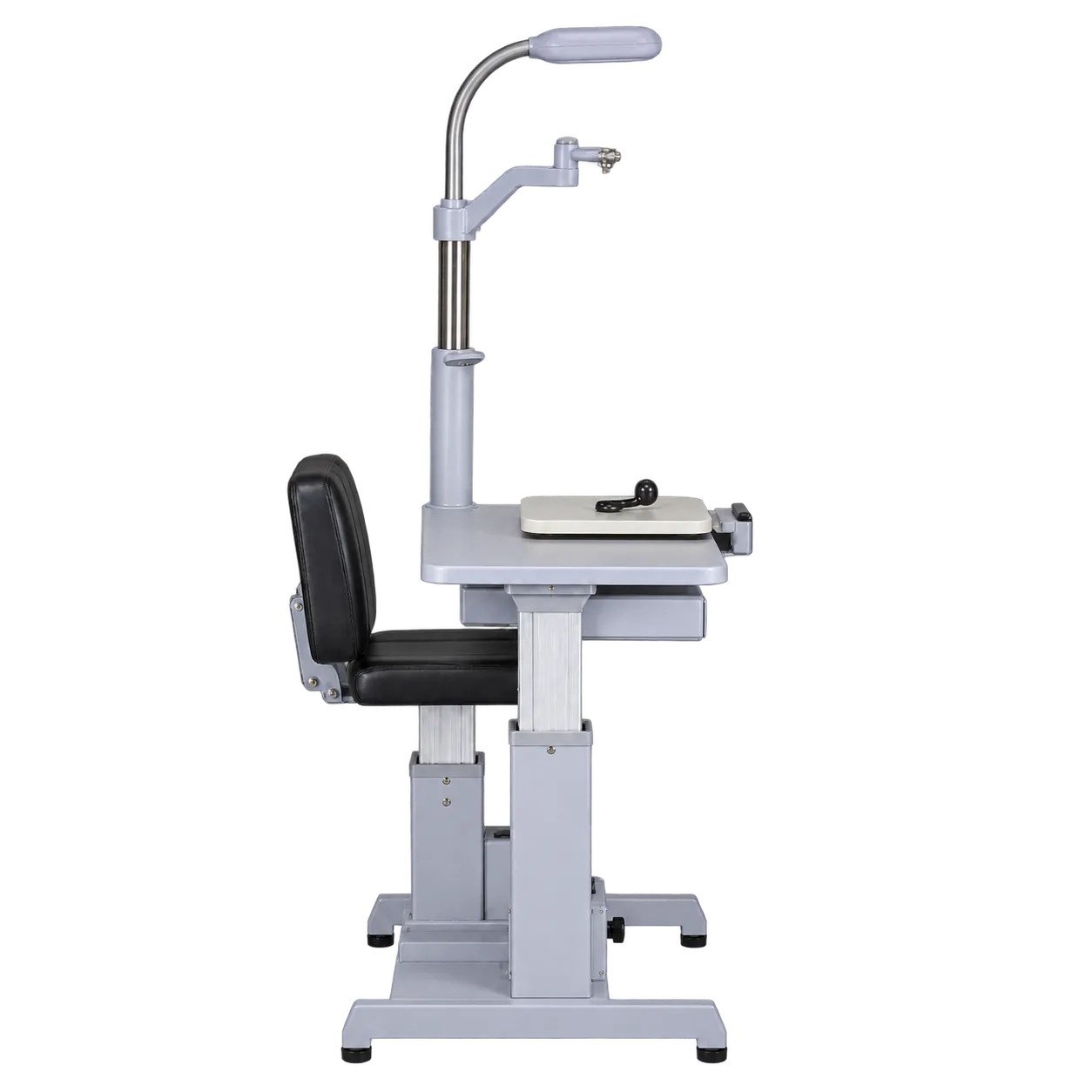
Refraction-focused rooms are the fit, and the reasoning is about what the seating is asked to do. A refraction is performed with the patient sitting upright throughout, so the recline mechanism on a full examination chair goes entirely unused while contributing height, depth and mass to the room. A 440 × 440 mm seat with a 330 mm backrest provides the lumbar support that upright sitting requires and nothing beyond it.
Small consulting rooms gain twice over. The seat itself occupies considerably less floor than a wide-armed reclining chair, and its 780 to 930 mm envelope leaves the volume above the patient's shoulders clear — which is precisely where a phoropter arm, a slit lamp head or the clinician's hands need to be.
Practices at the light end of a fit-out are served by the whole package: 65 kg, joint lightest in this range, at 1600 mm overall, with a projector upright carrying the chart position without a wall fixing.
The limitation belongs in the decision rather than a footnote. Patients who cannot sit unsupported, who need to recline during any part of the appointment, or who feel faint and need laying back are not accommodated by this seating. A practice whose caseload regularly includes them should specify a unit with a full examination chair, and this page would be the wrong recommendation.
Two further gaps: chair loading is unpublished, which cannot be inferred from a compact seat, and the upholstery material is unstated, which bears on both cleaning agents and durability under repeated use.