
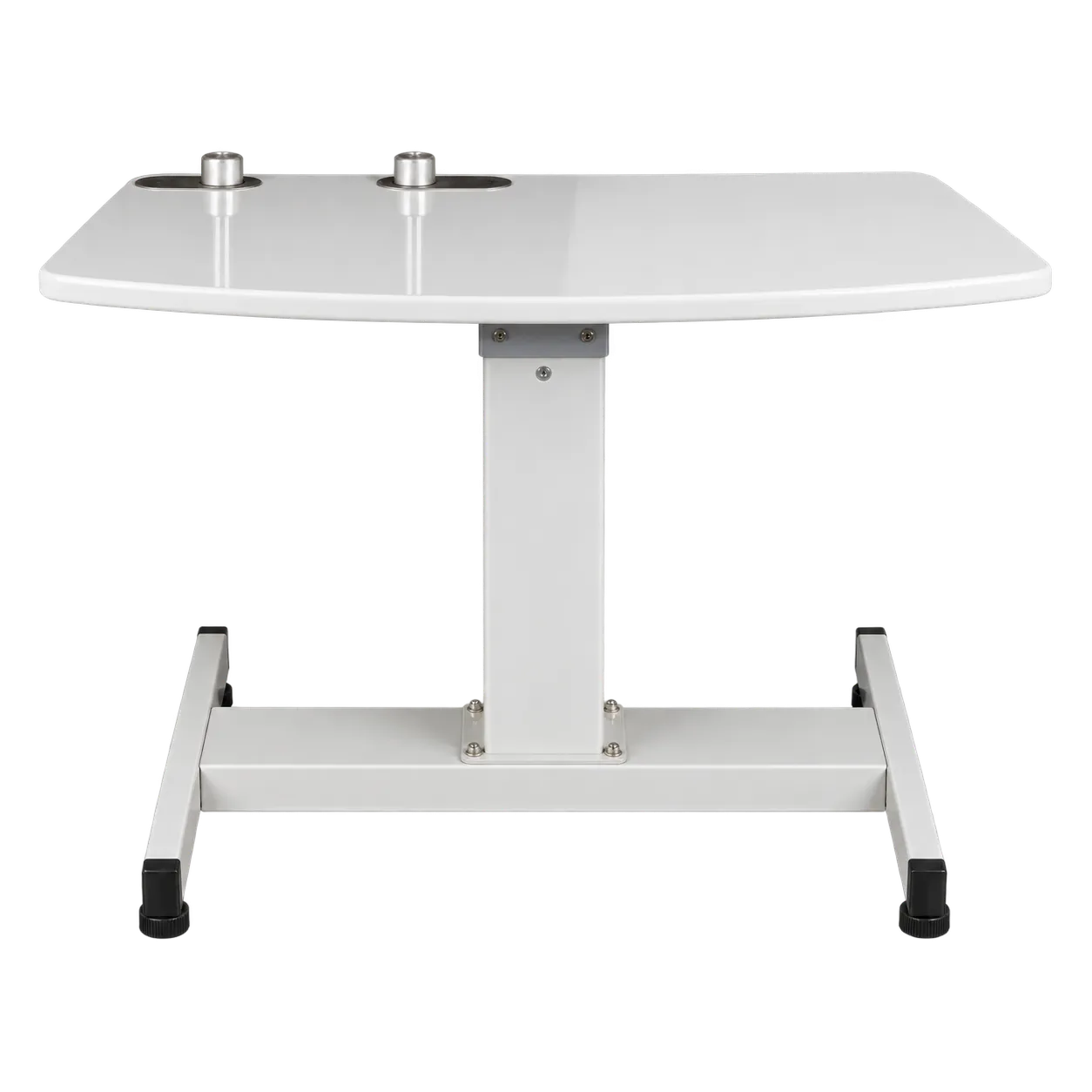
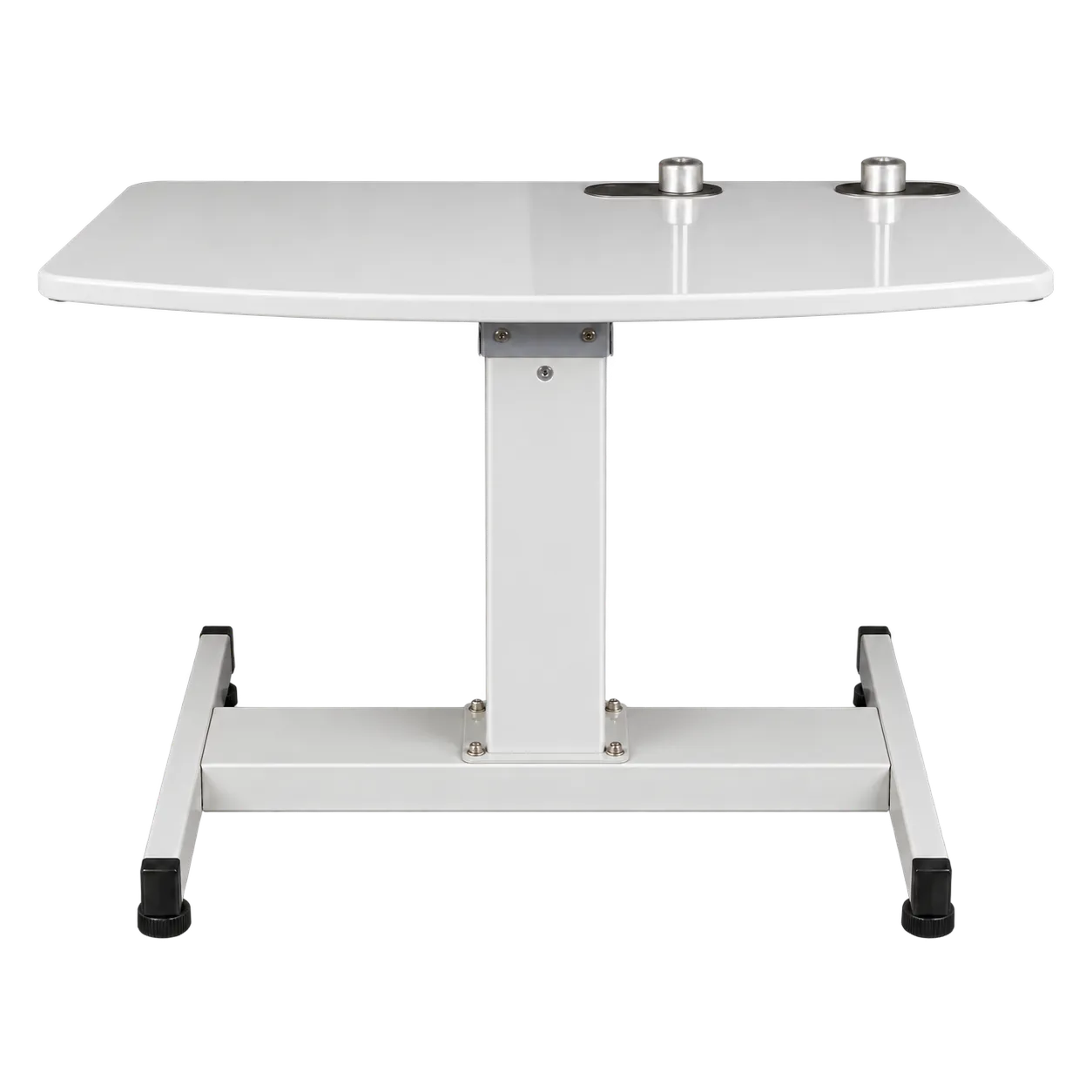
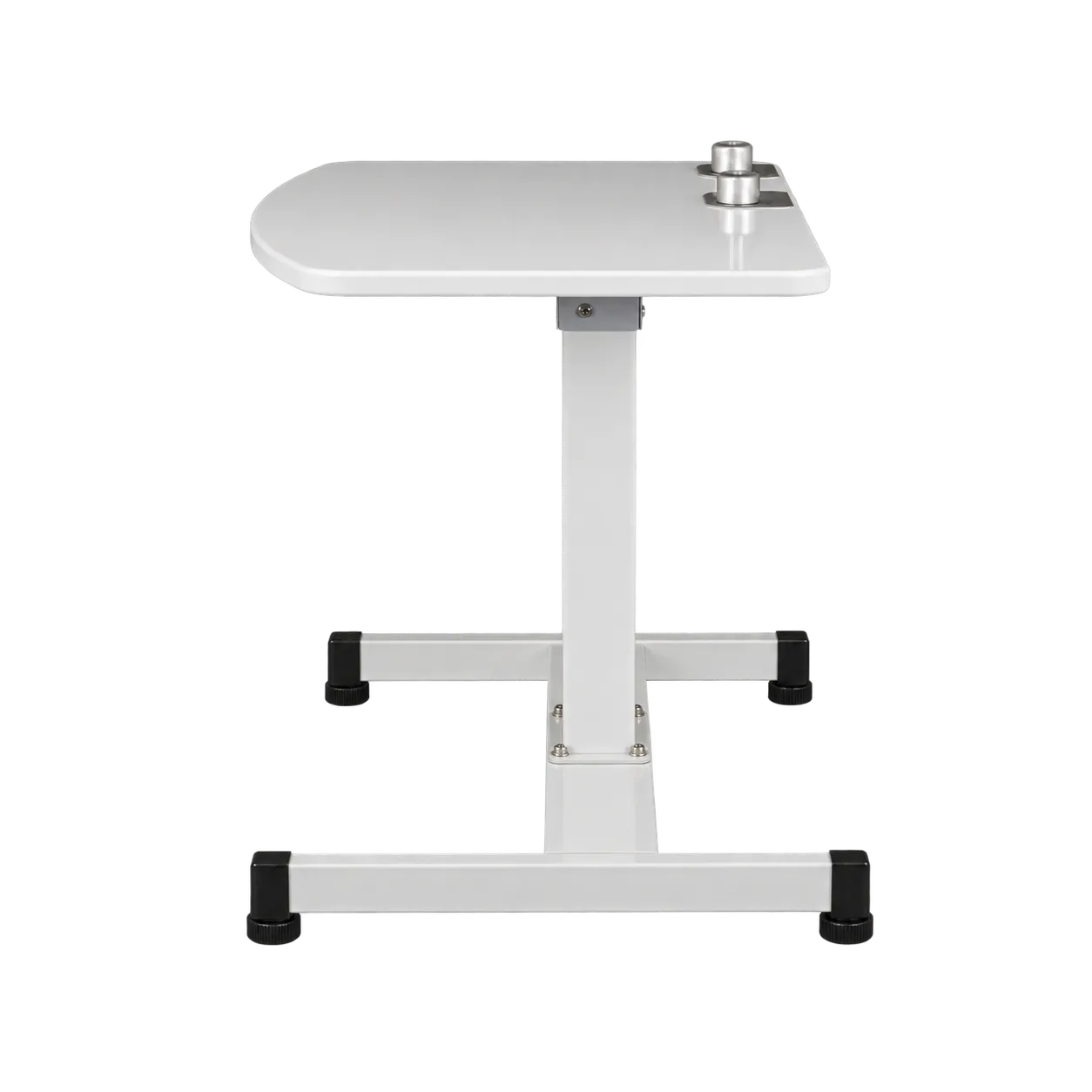
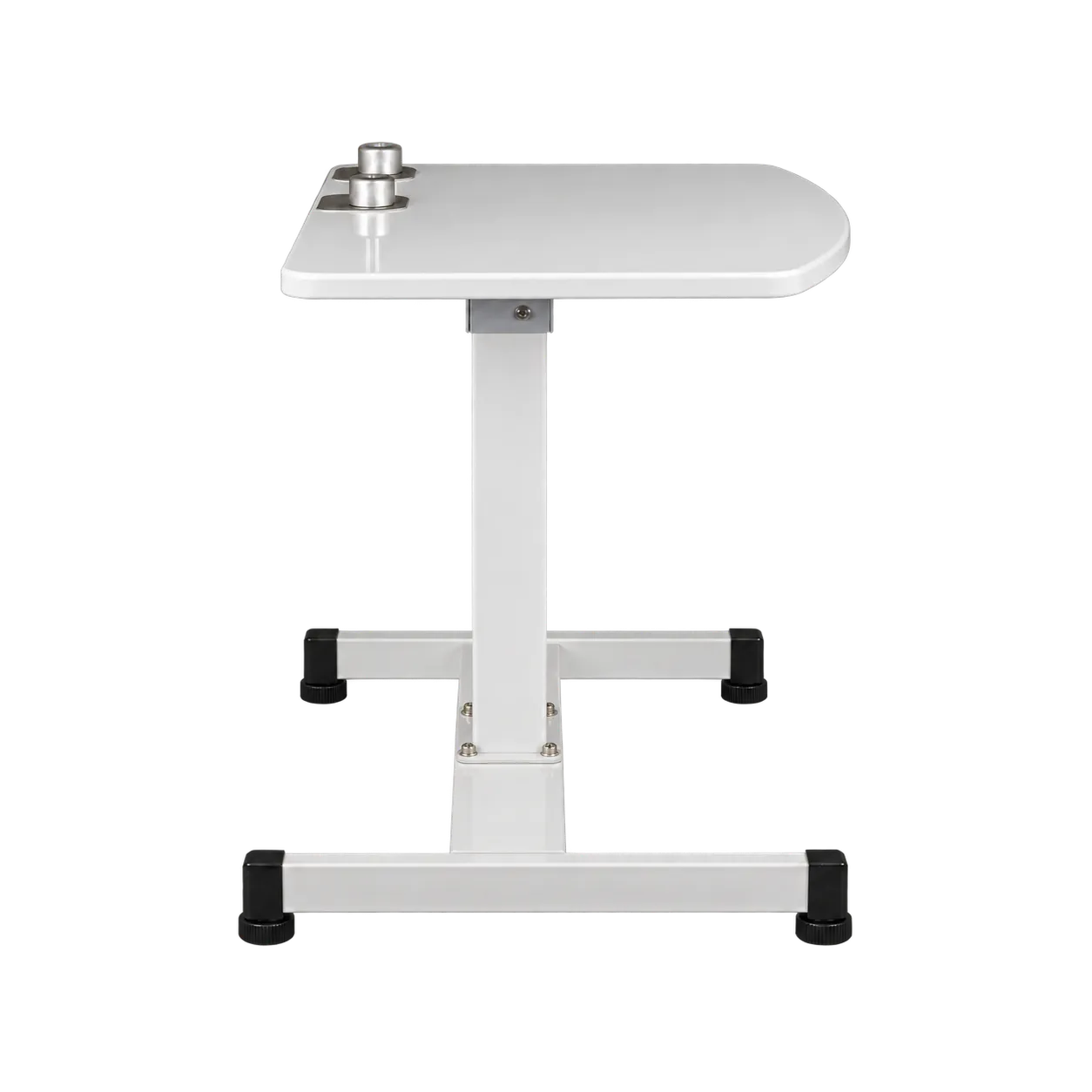
Pre-test rooms running two instruments are the natural home. The typical sequence of autorefraction followed by non-contact tonometry involves two positions. On separate tables, each patient stands, walks and sits again, which takes time and can unsettle older or less mobile patients. On the C-160, the patient swivels between instruments on one chair, and the assistant stays in one place.
High-street practices with compact pre-test rooms benefit from one curved table replacing two single-instrument tables along the same wall, freeing floor space and simplifying cabling.
Contact lens and dispensing work can pair a keratometer with a lensmeter, keeping corneal and spectacle measurements in one position during fittings and collections.
Imaging and screening sessions can combine an autorefractor with a compact camera, letting a patient complete both measurements without moving between rooms or tables. That keeps sessions running to time and supports the complete, accurate records the GOC expects.
Hospital eye service pre-assessment and outpatient areas can use it where patients pass through a standard set of measurements, keeping the route short for patients who find walking difficult.
University optometry clinics can use it to teach the pre-test sequence as one workflow.
Practices using a combined autorefractor and tonometer in a single instrument may need only a single-instrument table, and should weigh that before choosing a double top.
Movement-sensitive instruments such as slit lamps are better placed on a stiffer table unless a lean test on the 25 mm top proves satisfactory.
Wheelchair users are partly served. One instrument may be reachable, but the column and base limit clearance, and swivelling is harder from a wheelchair, so a dedicated accessible position remains advisable.