
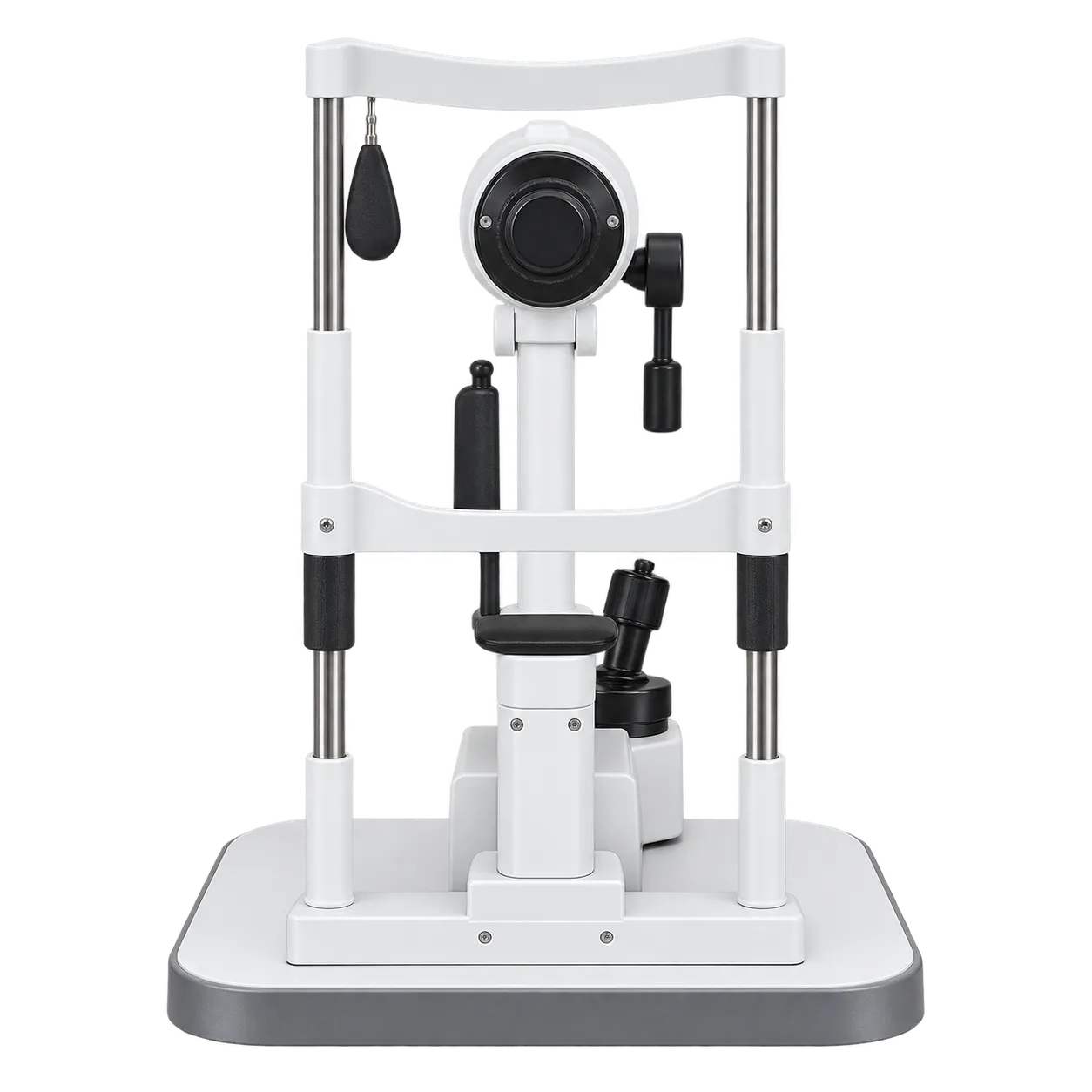
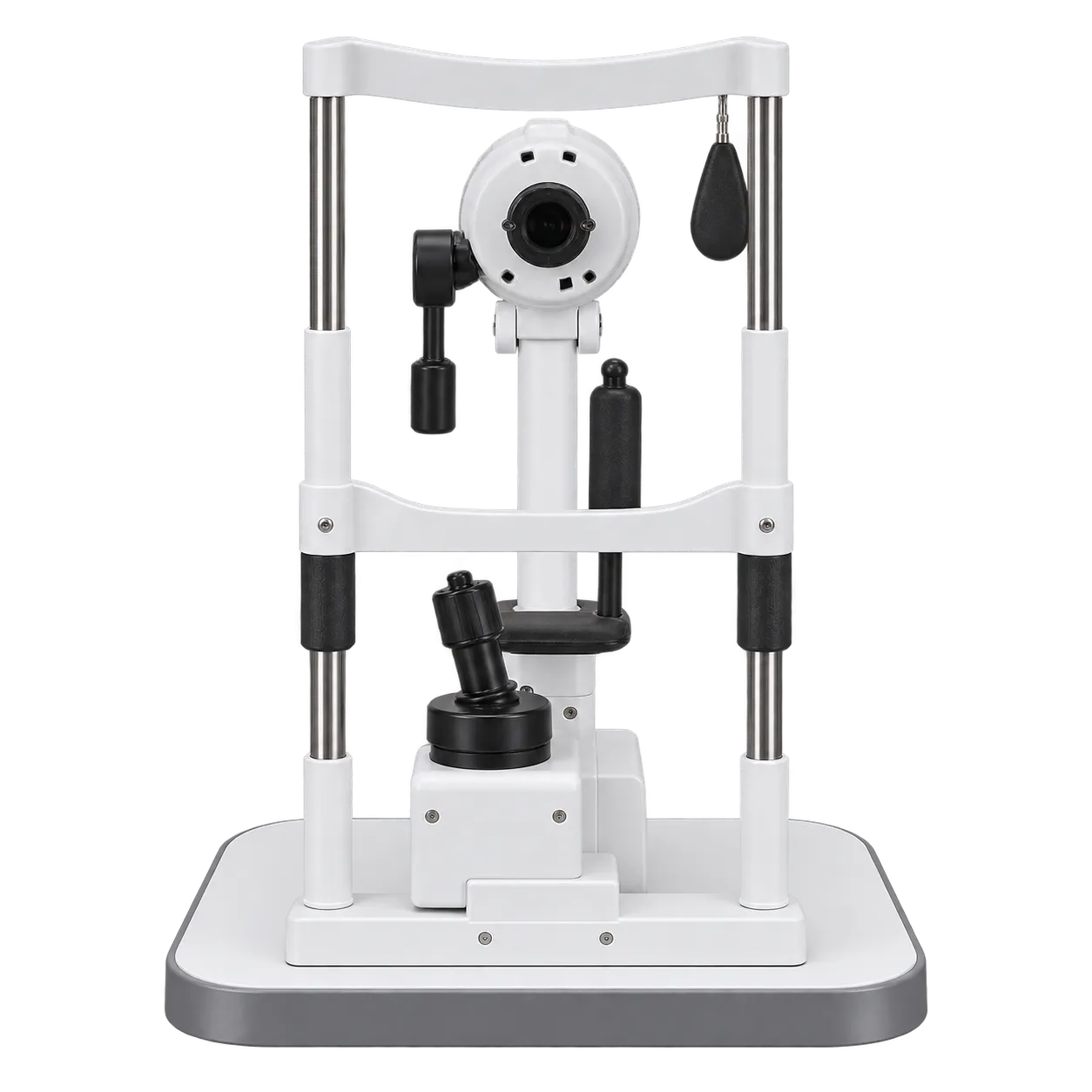
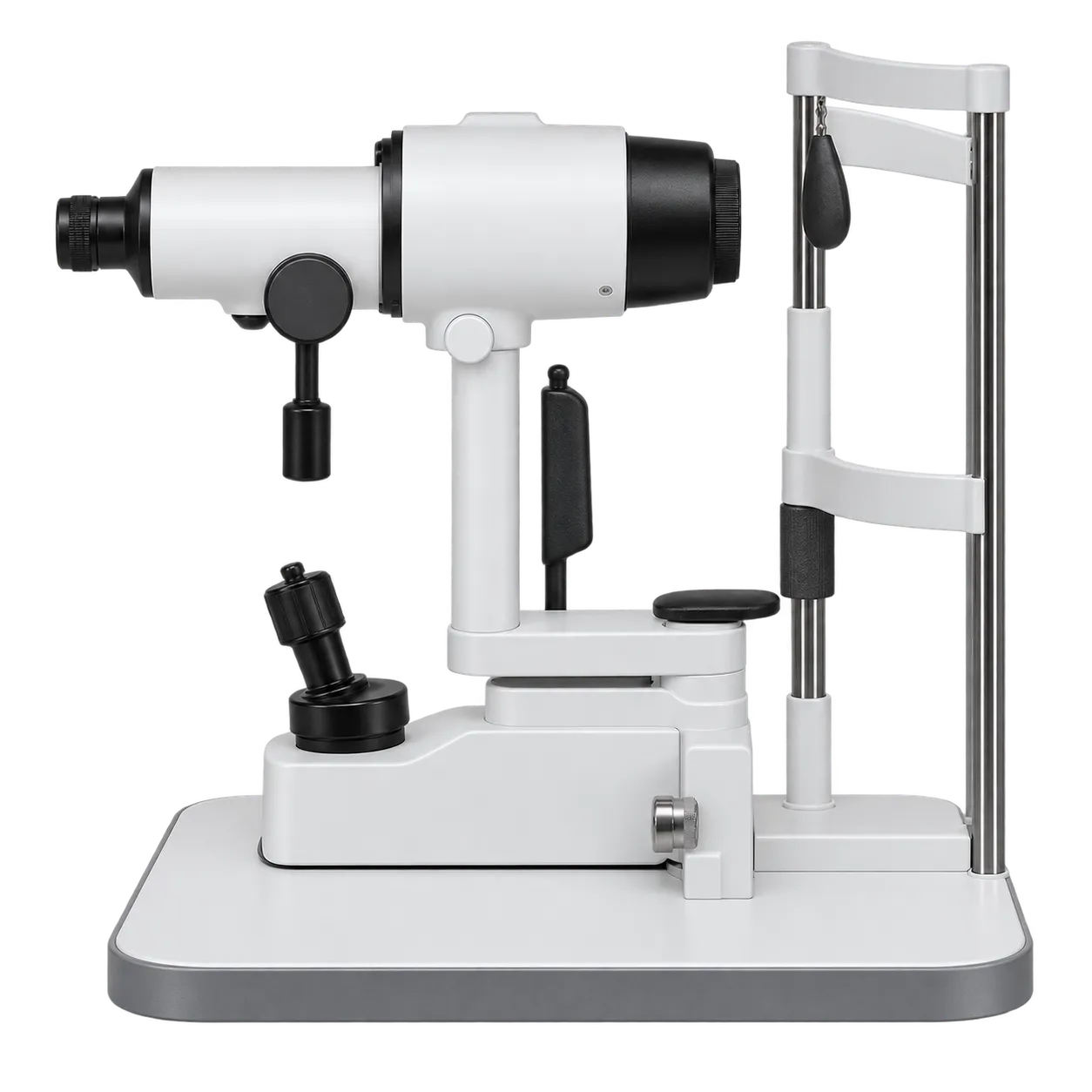
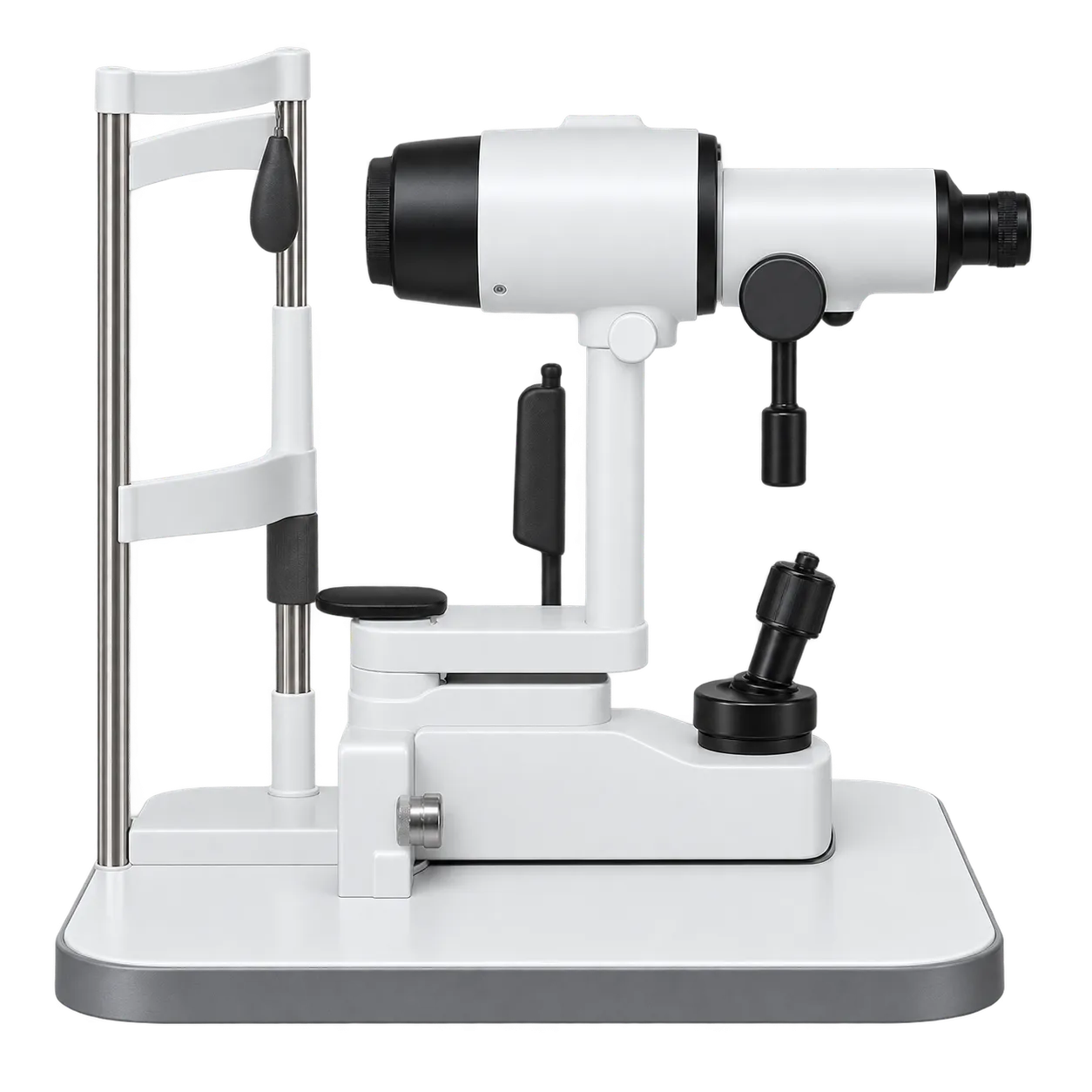
Contact lens practice is the principal setting for keratometry in UK optometry, and the BL-8002's range makes it particularly relevant to specialist fitting. Corneal curvature readings inform back optic radius selection at the initial fit, and repeat readings across aftercare visits can reveal lens-induced corneal change — distorted mires indicating unwanted mechanical action, progressive steepening suggesting oedema. General Optical Council registrants fitting lenses rely on that objective baseline being recorded at every stage.
Keratoconus practice is where the 30–60D range earns its place. Specialist contact lens practices and hospital corneal clinics see corneas that sit above the ceiling of ordinary keratometers, and an instrument that reads them directly removes a source of approximation from an already difficult fit. It remains true that topography is the more sensitive tool for detecting and monitoring the condition, so this instrument complements a topographer in that setting rather than substituting for one; practices dealing with keratoconus seriously will hold both.
Cataract and refractive surgical pathways use keratometry in intraocular lens power calculation, where corneal power is one of the principal biometric inputs. Pre-assessment clinics and hospital eye service departments use bench keratometers routinely for that purpose, and Royal College of Ophthalmologists guidance on cataract pathways assumes reliable biometric measurement as a matter of course.
Training is a further application. Pre-registration optometrists and dispensing optician students learn keratometry on optical bench instruments, because aligning and superimposing mires by hand teaches the underlying optics in a way an automated readout does not. Practices should note the access limitation honestly: table-mounted keratometry requires the patient to reach a fixed chin rest, so infants, patients with significant tremor and some wheelchair users are better served by a handheld instrument held alongside.