

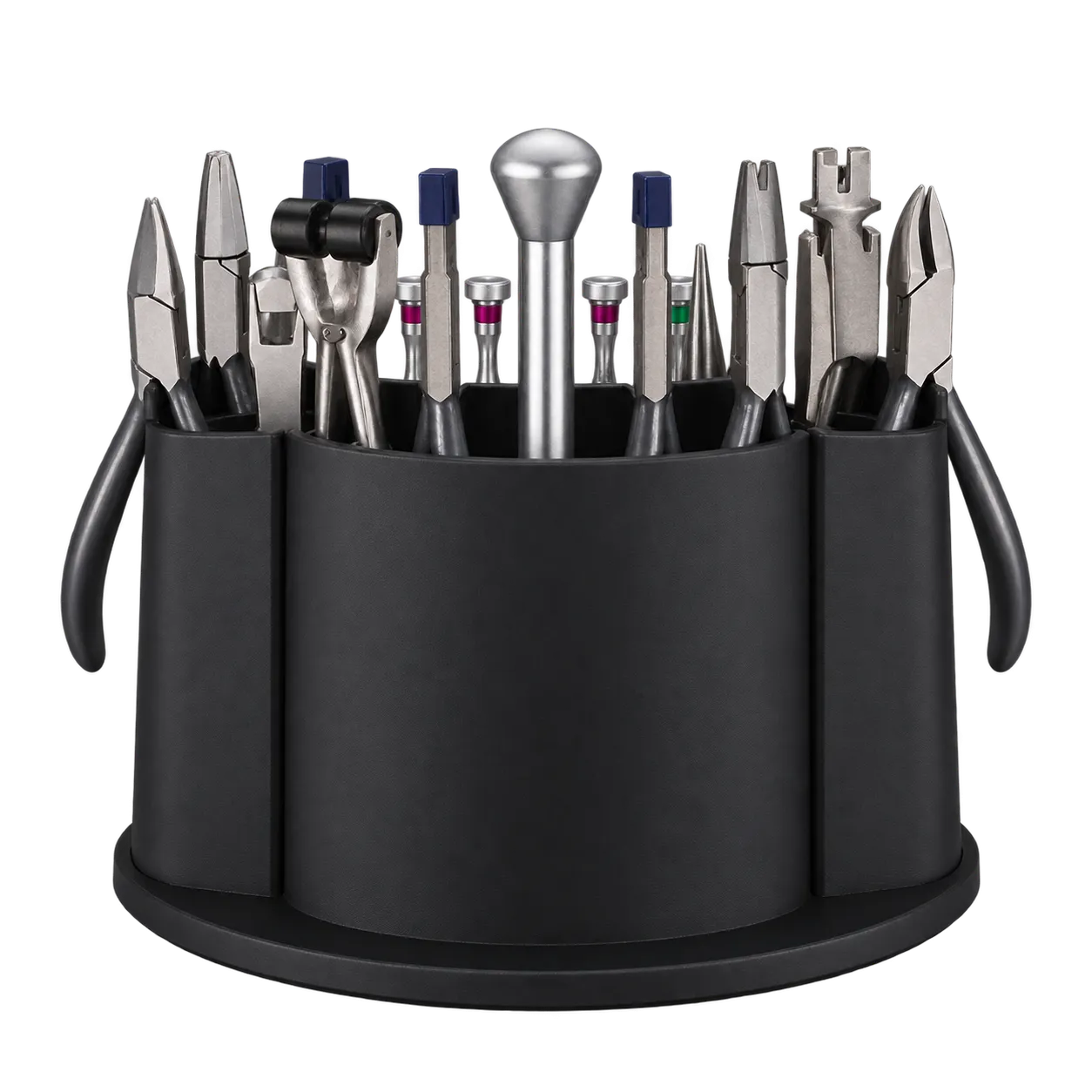
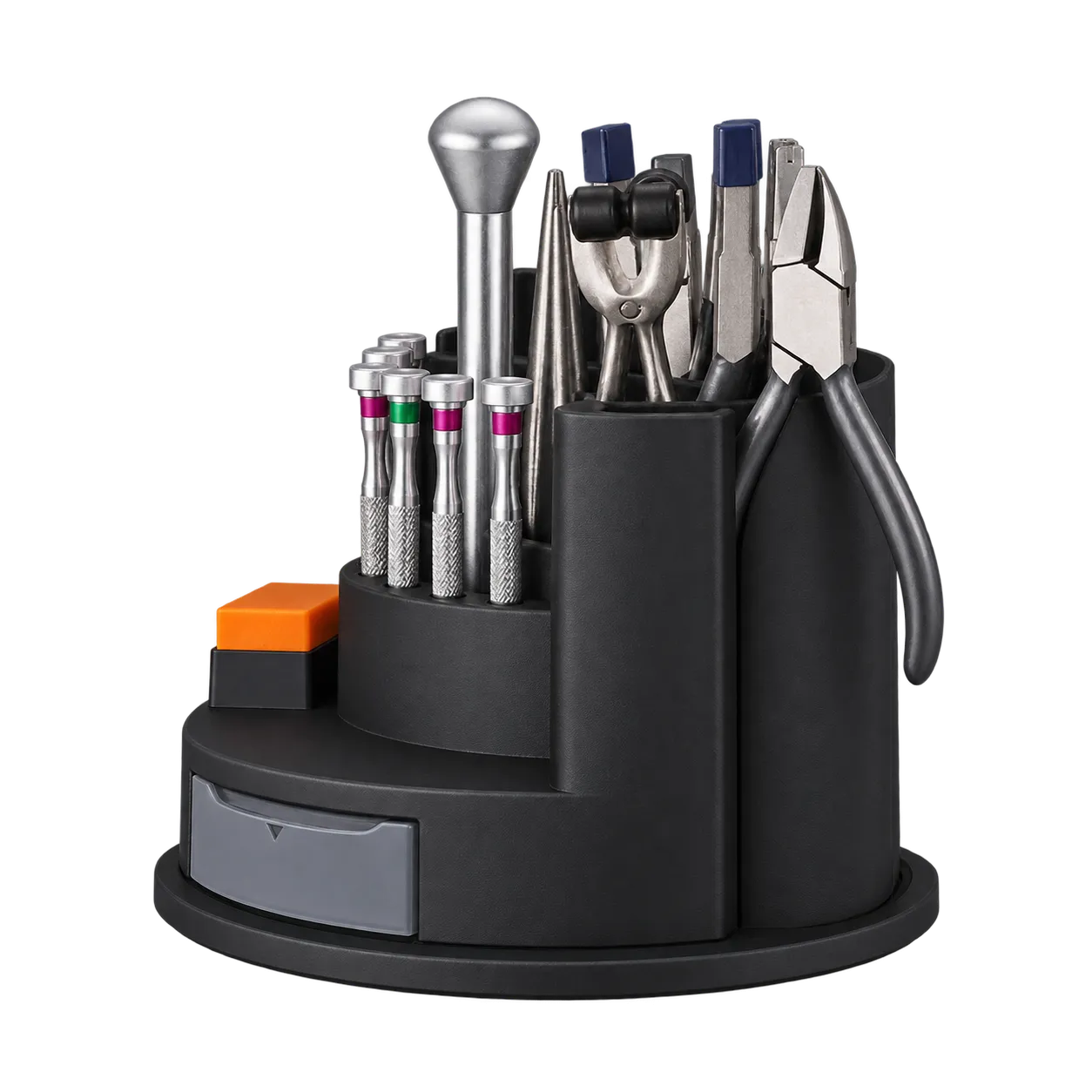

Dispensing desks are the main setting. Customers often return with a loose hinge, a bent temple or a pad that has slipped, and a stand of pliers and drivers at the desk lets staff make the repair while the customer waits, with the work visible and the spectacles back on the same visit.
Collection appointments also benefit. Final adjustments to fit are made with pliers, and small screws may need tightening, so having both kinds of tool in one place keeps the fitting moving while the customer waits.
Repair and glazing workshops can use the stand as a bench station, with pliers in the rear ring, drivers at the front and small parts kept in the drawers.
Busy practices with several dispensers can share one stand at a central point, since the round layout may let tools be reached from several sides, subject to the seller confirming whether it rotates.
Training optical assistants is easier when every tool has a fixed place. Trainees learn which plier or driver suits each task and return it to the same slot.
Practices that present repairs as part of their service can use a tidy, organised stand to show customers that care is taken with their spectacles.
The set is less suited to buyers who need an itemised list before ordering, since none has been published. Buyers needing documentation should request it, because any declaration of conformity or test report is issued by the manufacturer and provided by the seller.