
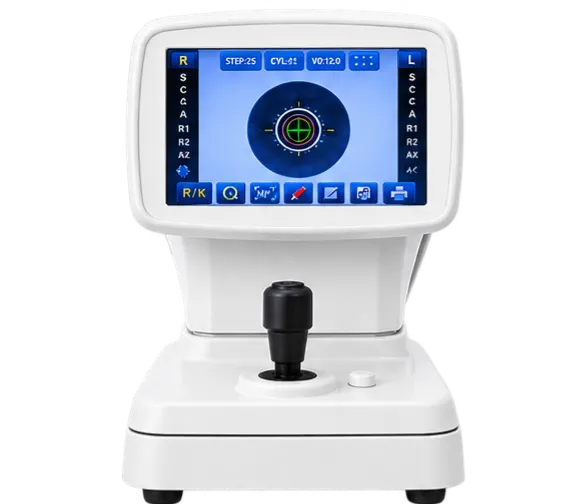
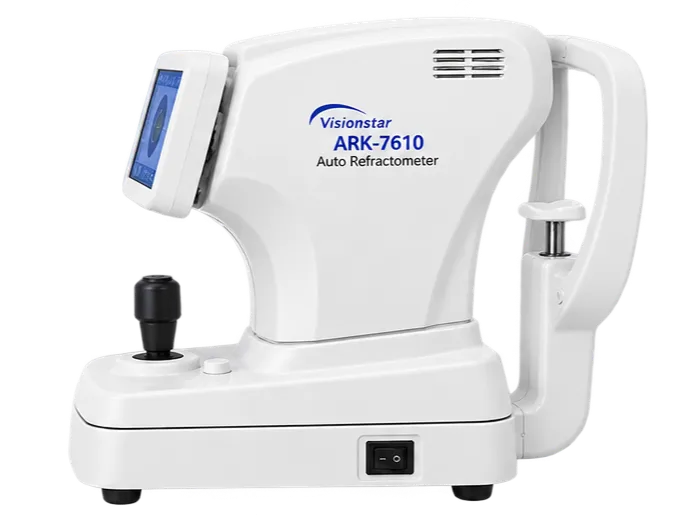
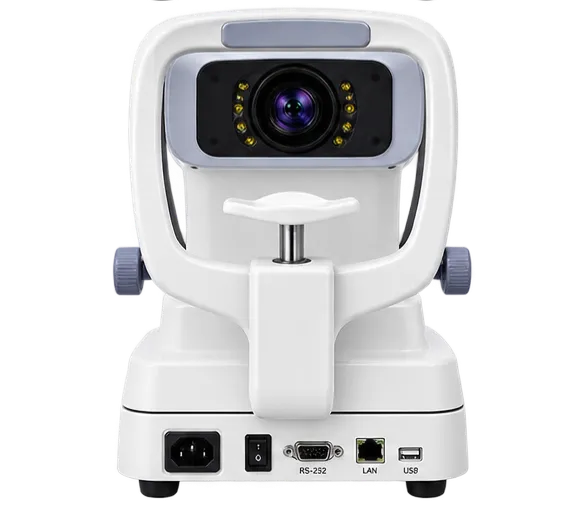
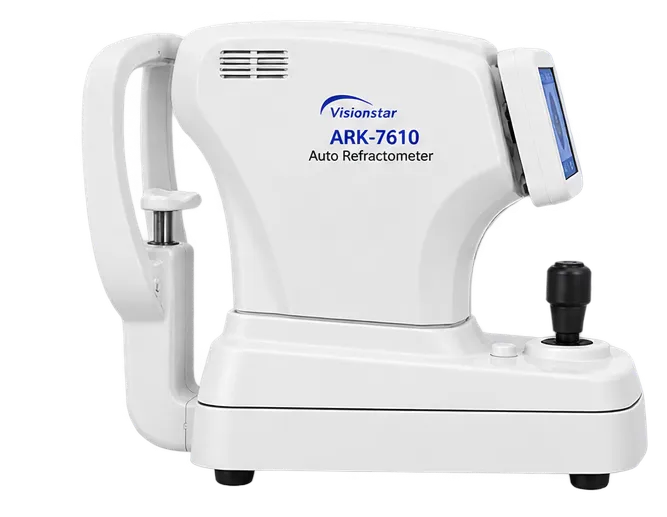
Contact Lens Fitting
Corneal radius to 0.01 millimetres, power, astigmatism and axis together cover what a fitting needs centrally, with the index stated so the figures are comparable. Fitting decisions rest with the practitioner rather than the instrument. Central corneal figures are fully tabulated. Comparison depends upon the index. Radius and axis accompany the power. Index publication enables comparison. Practitioners weigh those figures together. Central data is fully tabulated.
Practices Considering Peripheral Work
Corneal shape beyond the central zone matters for rigid and larger diameter lenses, and the card illustrates measurement there. The absence of tabulated ranges means the capability should be established before it is relied upon. Rigid and larger lenses need that data. Ranges should be obtained beforehand. Peripheral shape governs larger lenses. Diagrams alone cannot be relied upon. Larger diameters sit upon peripheral cornea. Written specification is what settles it.
High Ametropia With Corneal Data
The refraction side carries the same wide sphere range as the companion model, so markedly ametropic eyes are reached while corneal figures arrive from the same sitting. One sitting covers both measurements. Wide sphere reaches difficult eyes. Markedly ametropic eyes are reached. Corneal figures arrive alongside them. Both arrive from a single sitting. Nothing is traded between them.
Services Checking Documentation
The same three points apply as on the companion card: a sphere range without its minus sign, a corrupted cylinder symbol and two disagreeing axis rows. None should be assumed as printed. Three separate points want resolving. Confirmation precedes any commitment. Nothing here should simply be assumed. Documentation rather than capability is at issue. Three points appear upon this card. Assumption would be unwise throughout.