
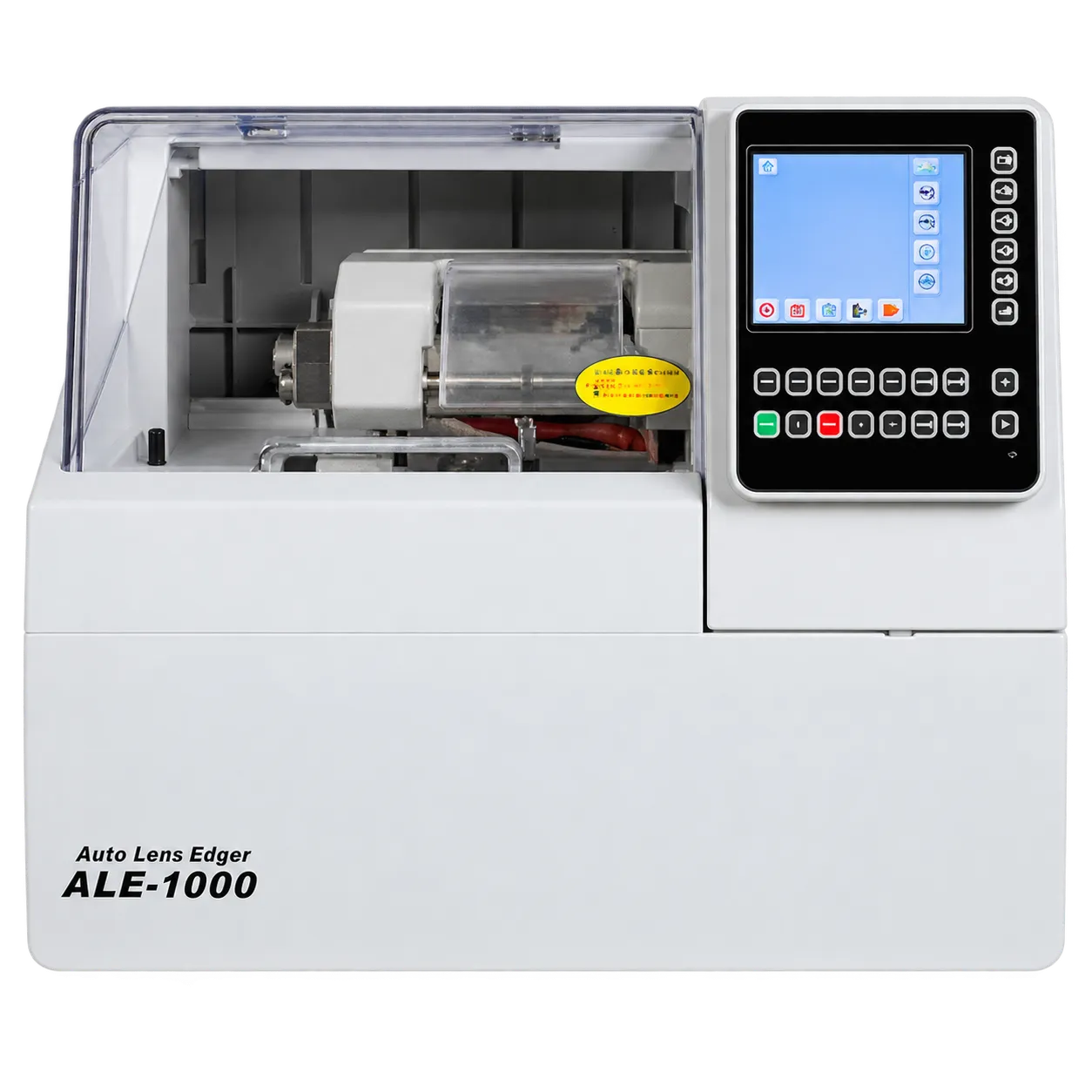
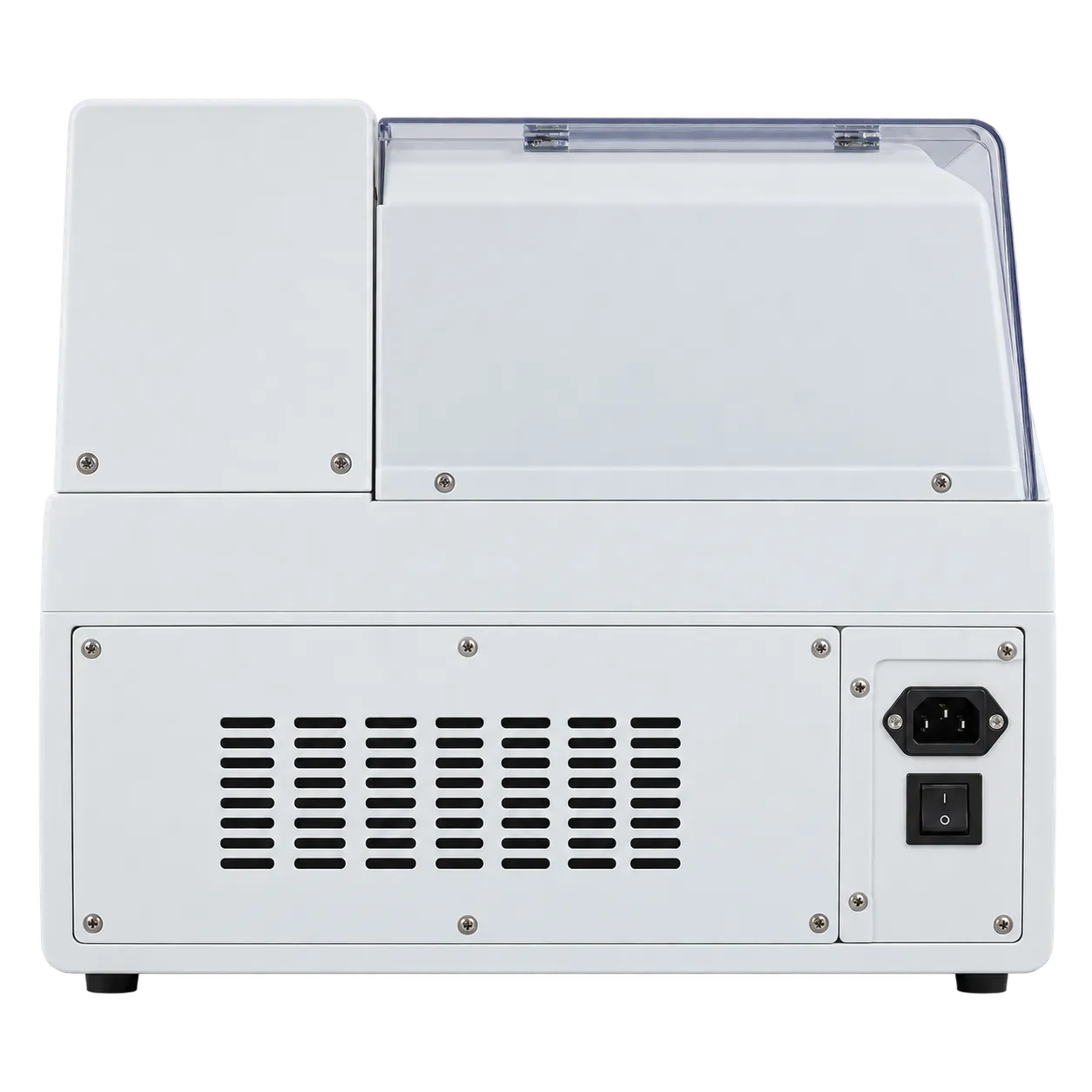
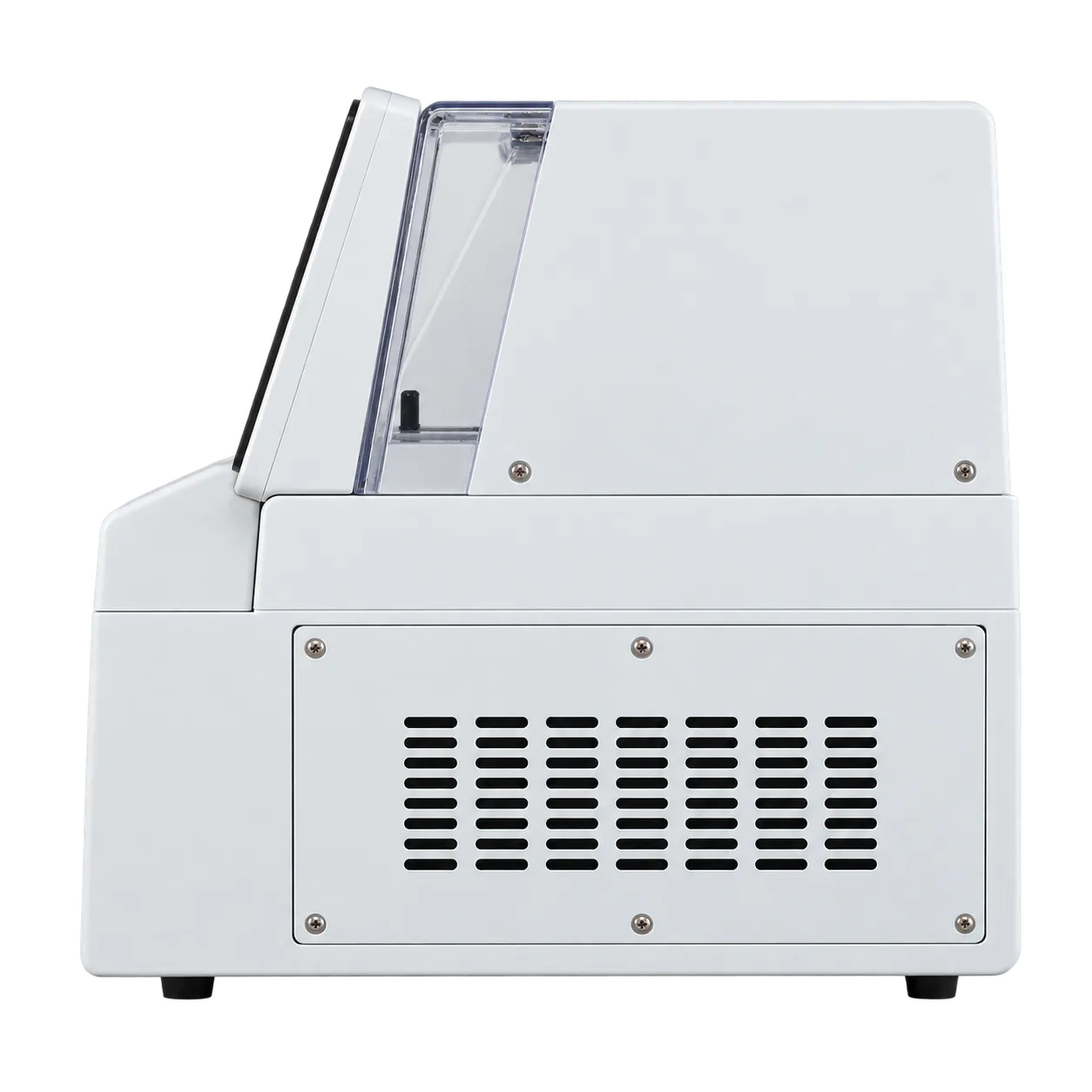
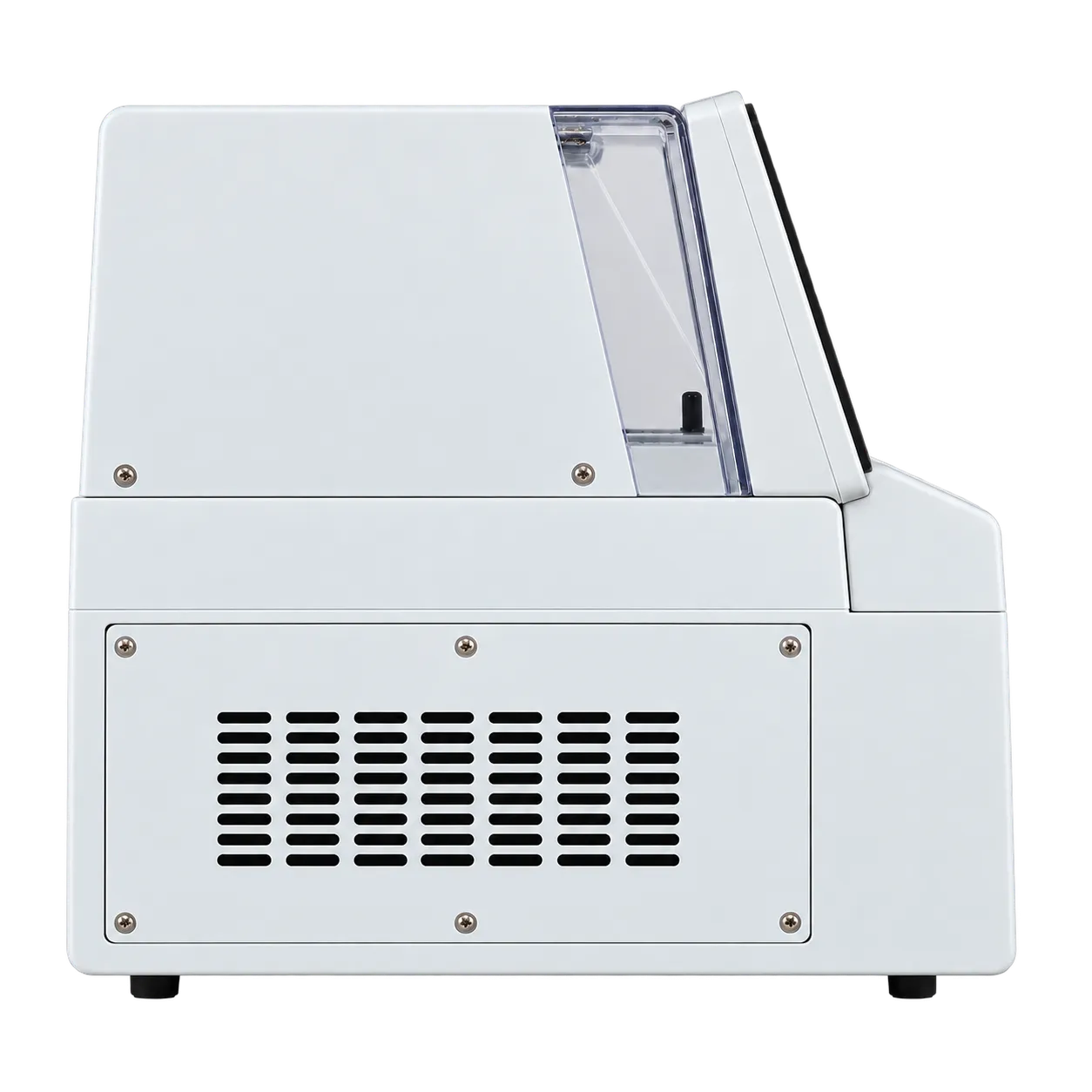
The ALE-1000 is built for optical practices and laboratories that glaze lenses on site. In an independent optical practice, in-house edging means spectacles can be completed on the premises, and the split design fits the way a practice works. The ST-1200 scanner can sit at the dispensing desk, where the dispensing optician traces the customer's chosen frame in 3D during the appointment, while the edger stays in the workshop.
Optical technicians and glazing staff run the edger from its 5.7-inch display, which shows the lens shape at full scale. They choose optical-centre or geometric-centre mode to suit the prescription and frame, and the edger corrects axis and bridge data from the scan before grinding. The 100 mm wheels handle highly curved lenses, and bevel polishing prepares the edge for mounting.
Optical laboratories serving several practices can use the ALE-1000 for a steady flow of standard jobs across CR-39 resin, high-index, super hard coated, glass, PC and Trivex lenses. The scanner's slower mode helps with delicate or unusual frames, and automatic clamping and frame recognition keep tracing consistent between operators.
Hospital eye departments and eye clinics with an on-site glazing workshop can use the set to complete spectacles for patients on site, particularly where frames are dispensed in the same building.
Eyewear retailers and chains with a central workshop can place scanners in branch dispensing areas and edging in a back room or hub, using the separate units to suit their layout. Each unit has its own screen, a touch screen on the scanner and an LCD on the edger.