
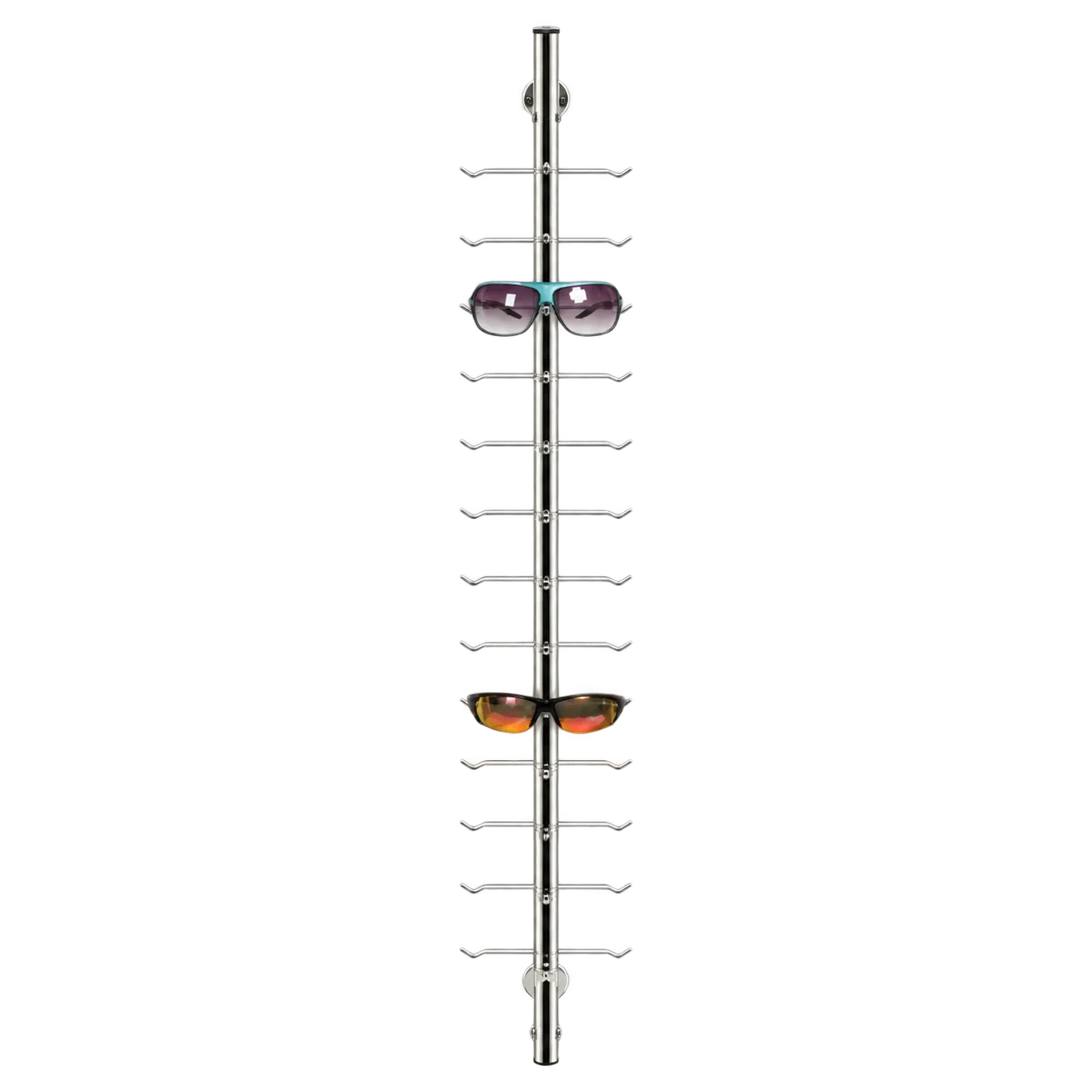
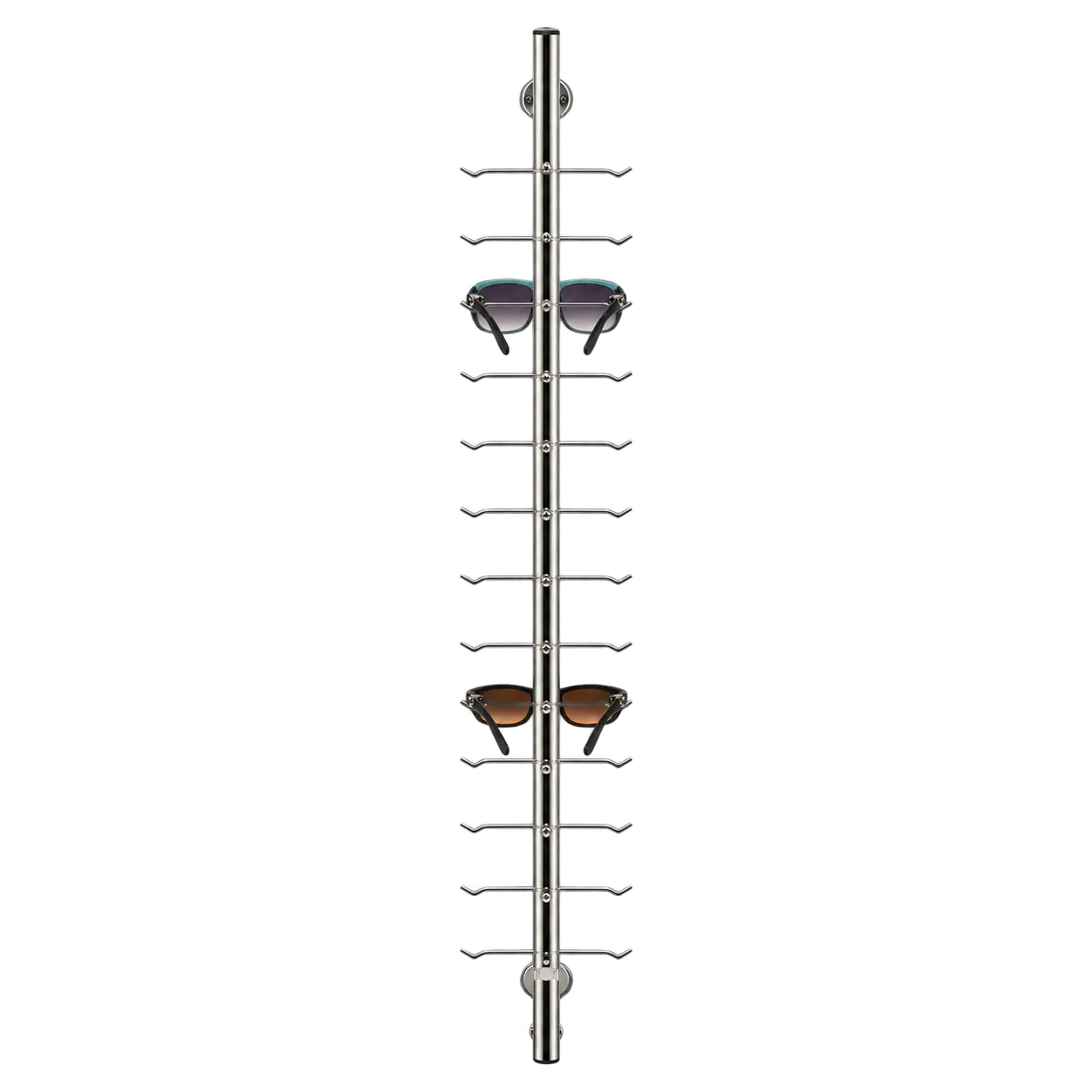
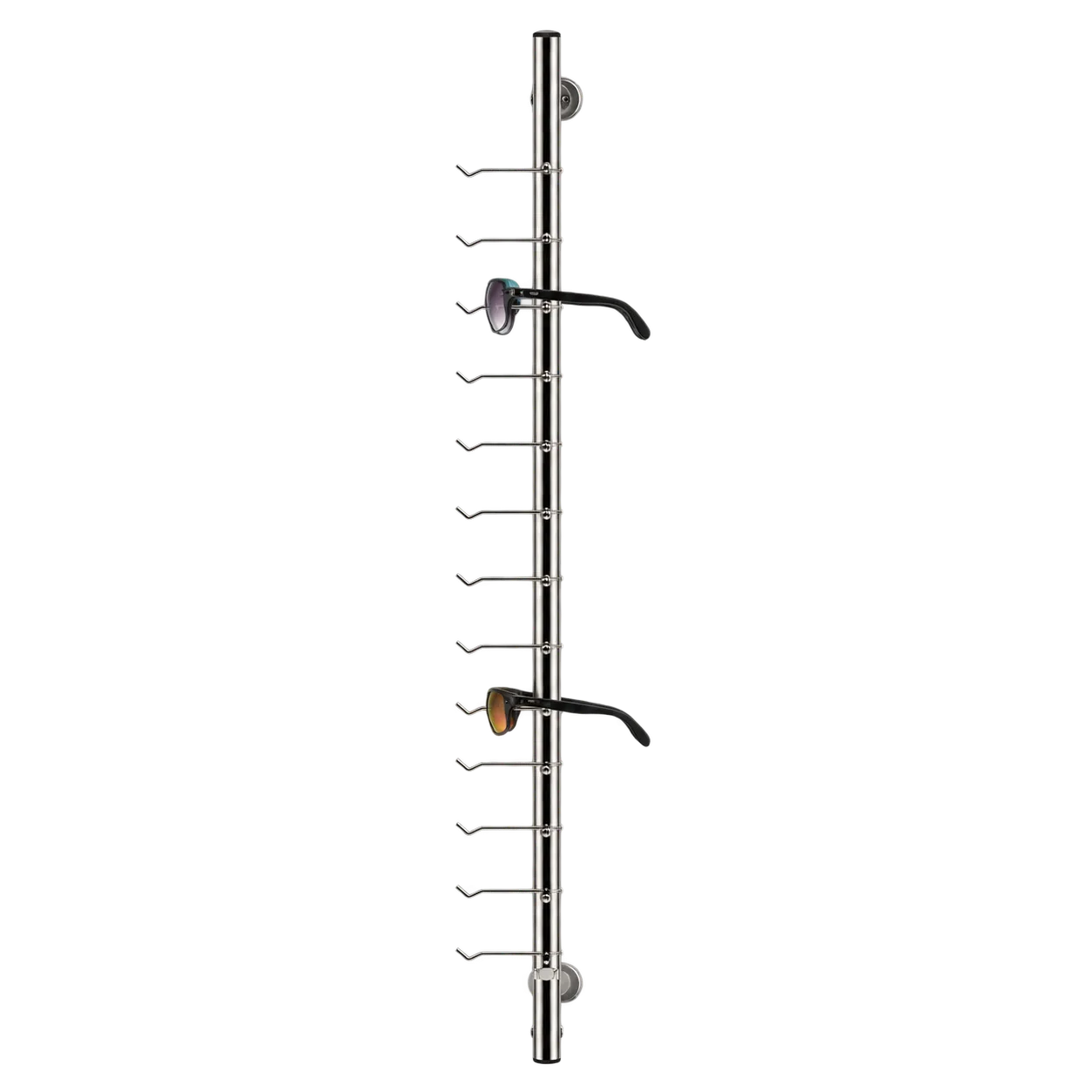
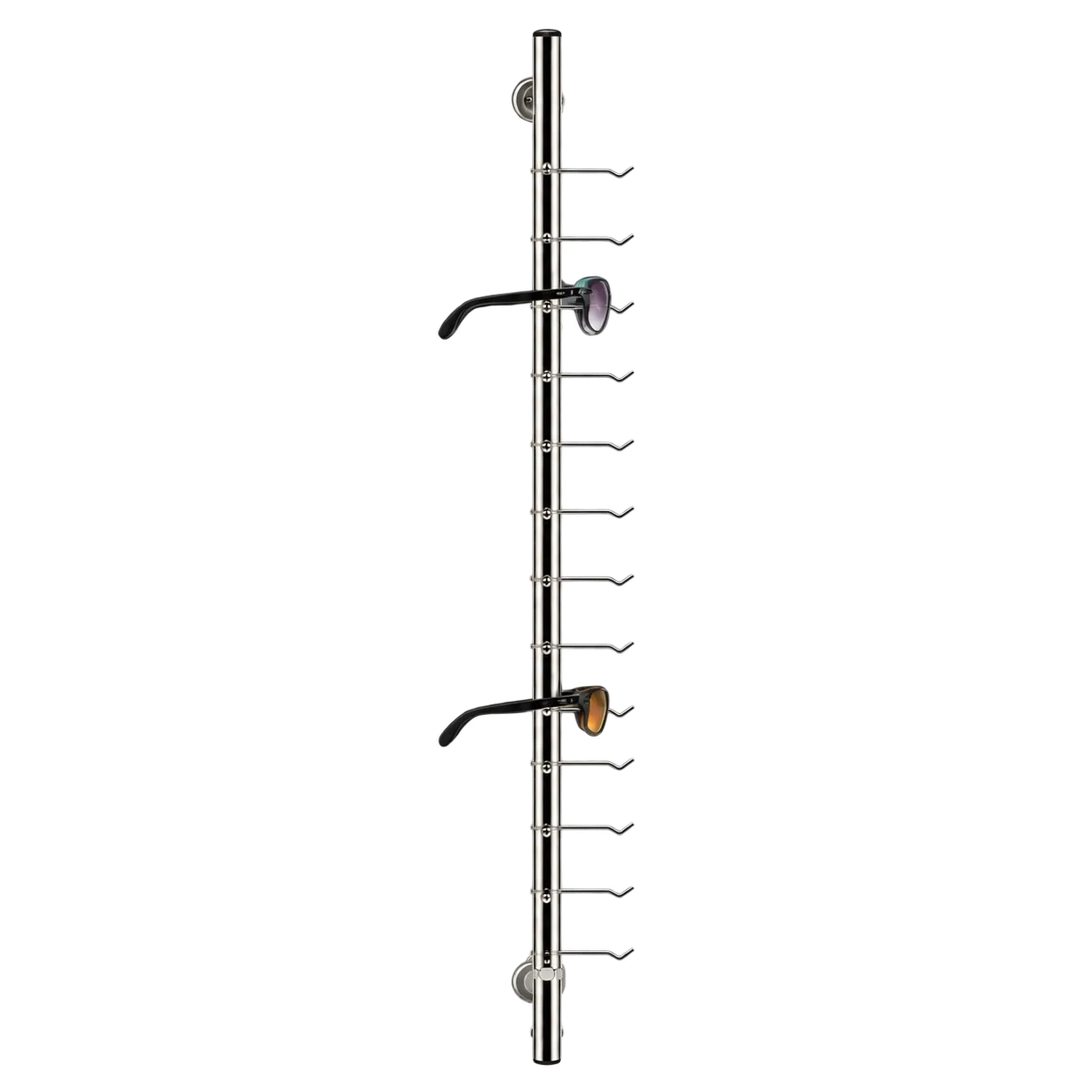
The AC-16 is a rod for stretched budgets and large numbers. A new optical practice furnishing its first frame wall, a pharmacy group adding a sunglass section to many branches and a retailer rolling out a seasonal range can all dress a wall from a carton or two. Open hooks suit the ranges those buyers usually start with: value optical frames, ready readers and sunglasses at accessible prices. Customers handle the stock themselves, and staff time goes to dispensing.
The saving on fixtures has to be read alongside losses from the wall. The British Retail Consortium's 2025 crime survey put customer theft from UK retailers at £2.2bn for the year, and stock on open hooks is exposed to it. Against that, locking stock costs sales: 27% of more than 5,000 US shoppers surveyed by Numerator in 2024 said they would leave or switch store when products were locked. For low-value ranges the arithmetic often favours open hooks. For expensive frames it rarely does.
A rollout benefits from one standard. A single rod, one fixing detail and one counting routine reduce training and make losses comparable between sites. Counting sheets that use the same hook numbering at every branch keep that comparison simple. In the UK, secure fixing falls to the employer under the Health and Safety at Work etc. Act 1974, and layouts should follow the Equality Act 2010 and BS 8300-2. Groups normally set these points in a store-format manual. The conformity documentation those procurement routes require is issued by the manufacturer and shared by the enquiry team.