
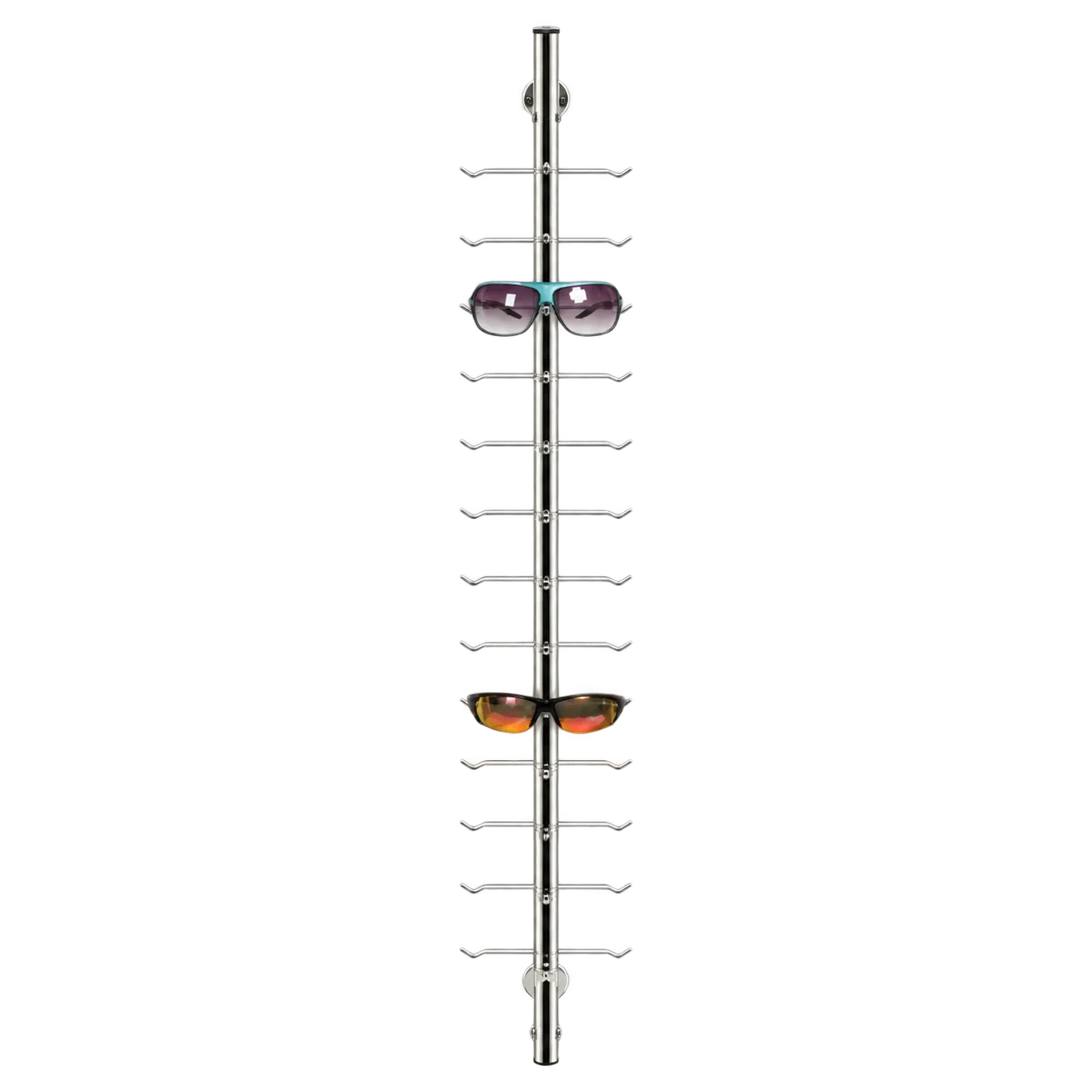
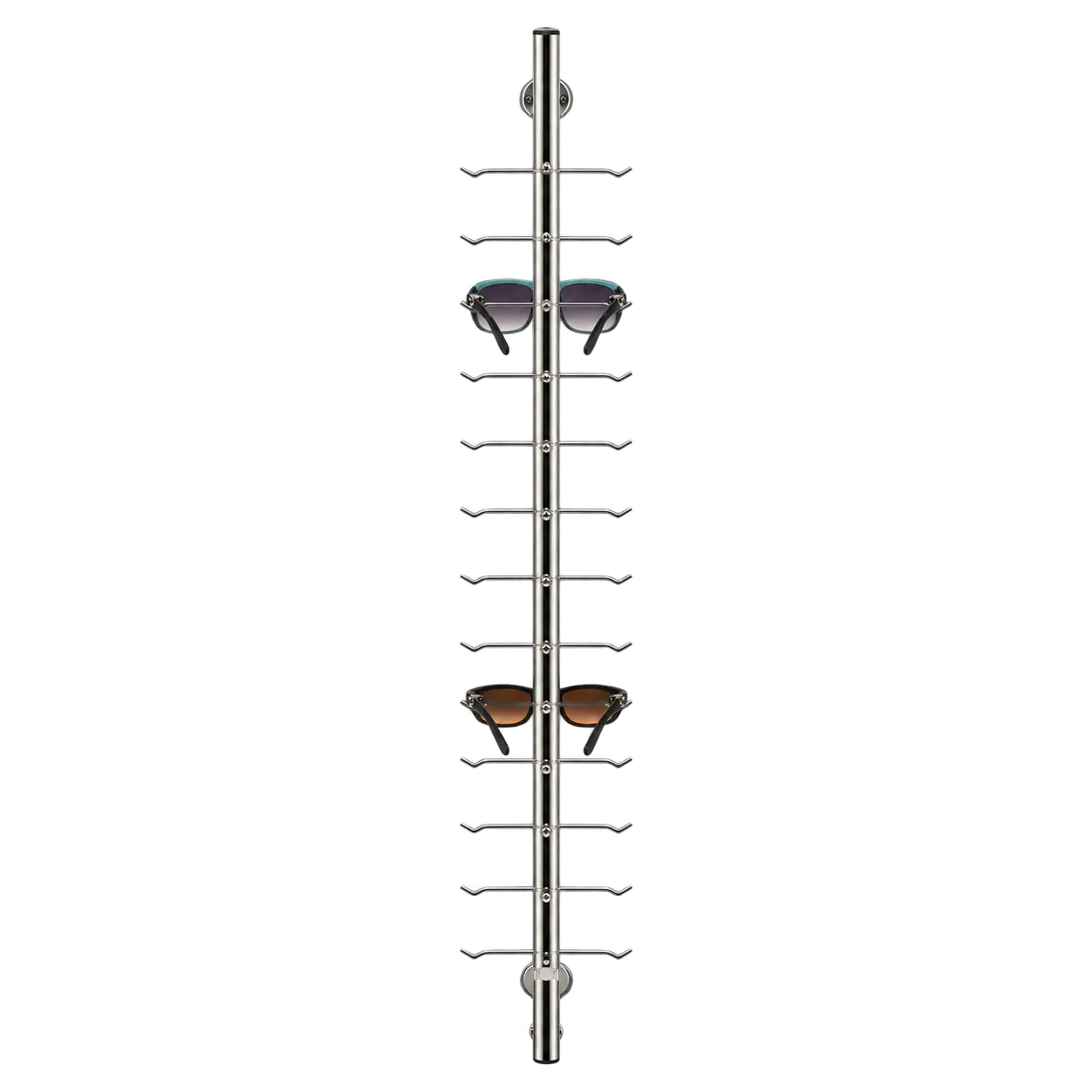
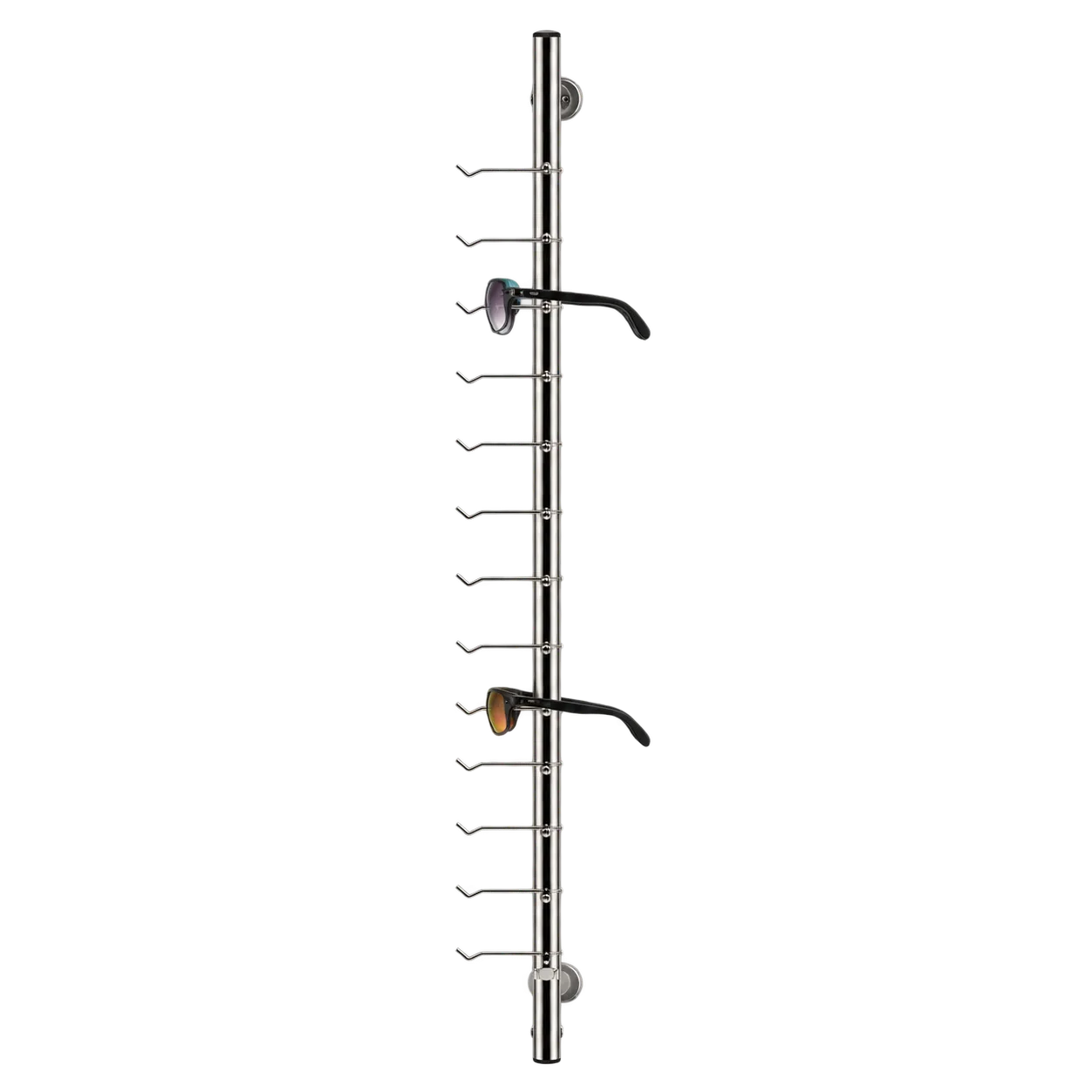
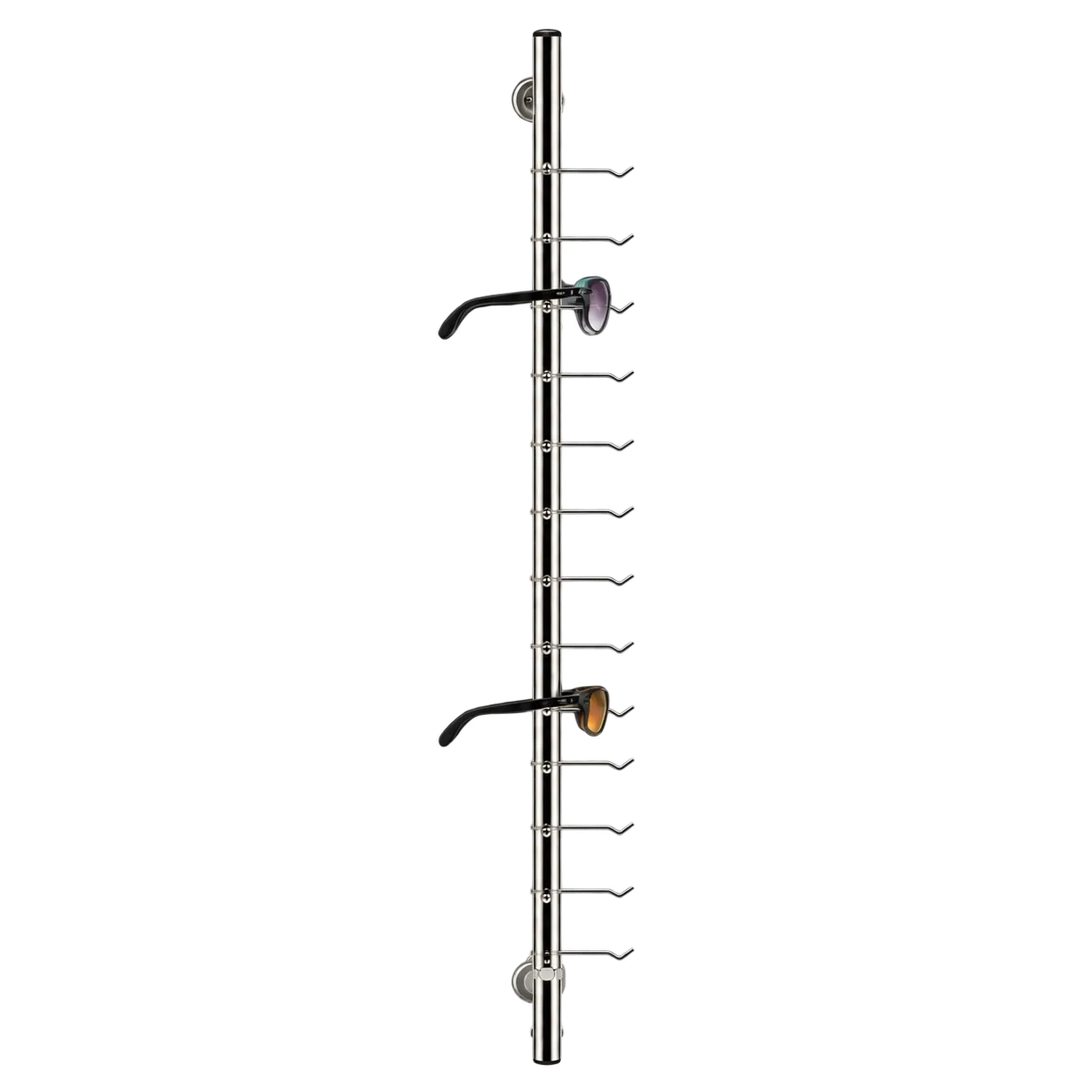
The AC-14 suits shops that have decided to manage theft by layout and attention. A sunglass range near the dispensing desk in summer, a value frame section beside reception and a concession with staff always on the floor are typical places for it. Customers handle fourteen levels of stock freely, as photographed, and nothing waits on a key holder. The shop accepts a known exposure in return and plans around it.
Both sides of that exchange can be measured. The British Retail Consortium's survey published in March 2025 found that 24% of the UK public had witnessed shoplifting in the previous year, and it put retailers' theft losses at £2.2bn. Open stock is part of that exposure. Locking it has a price as well: in Numerator's 2024 survey of more than 5,000 US shoppers, 27% said locked products would make them abandon a purchase or change store. An open rod is a reasoned choice where the frames on it cost less to lose than the sales a lock would deter.
Duties follow the risks. UK employers answer for secure fixtures under the Health and Safety at Work etc. Act 1974 and assess the carton lift under the Manual Handling Operations Regulations 1992. Reach comes under the Equality Act 2010 and BS 8300-2. Retail groups usually record decisions like these in a loss prevention policy, and they set the approved fittings in a fixture standard that property teams apply at every site. The conformity documentation those procurement routes require is issued by the manufacturer and shared by the enquiry team.