

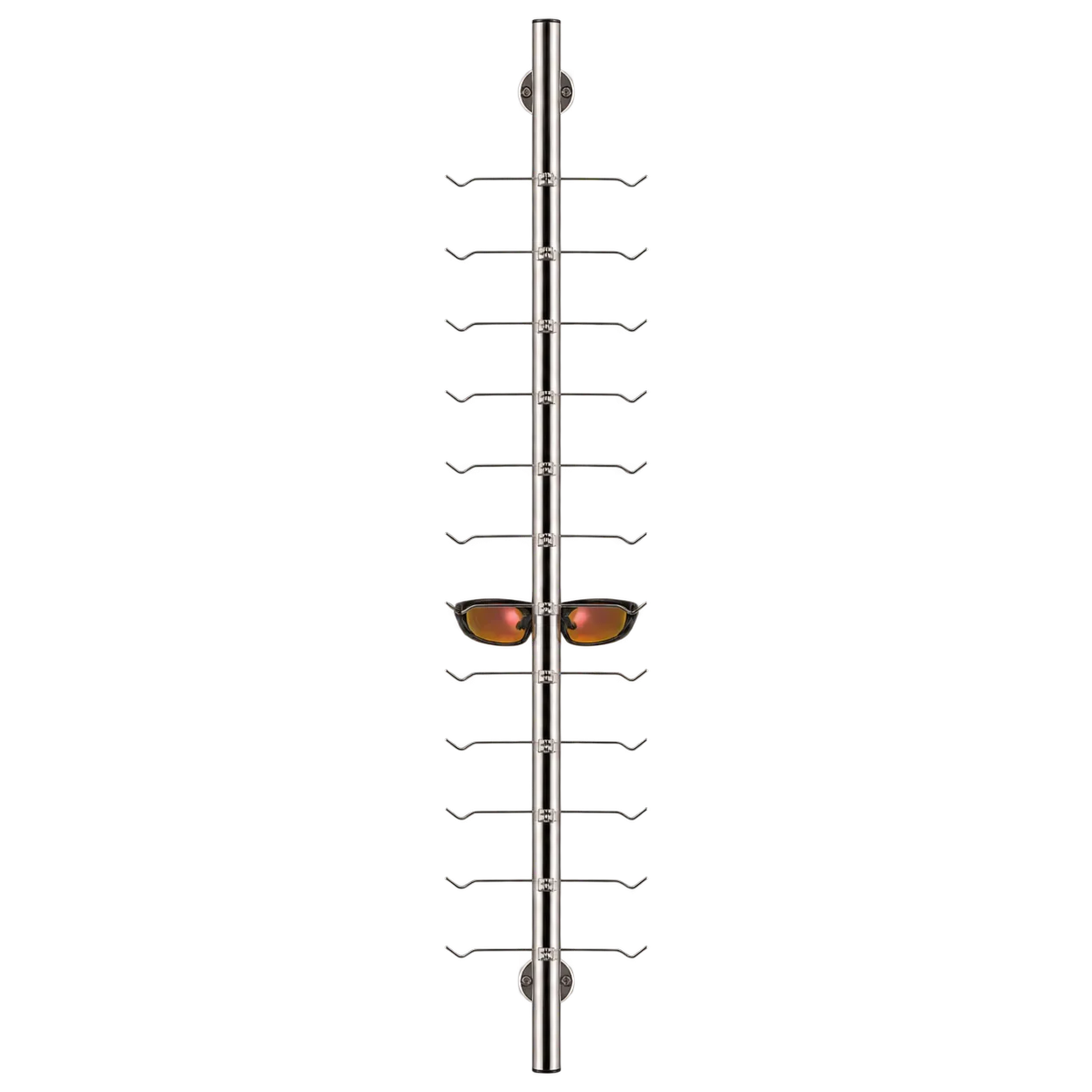
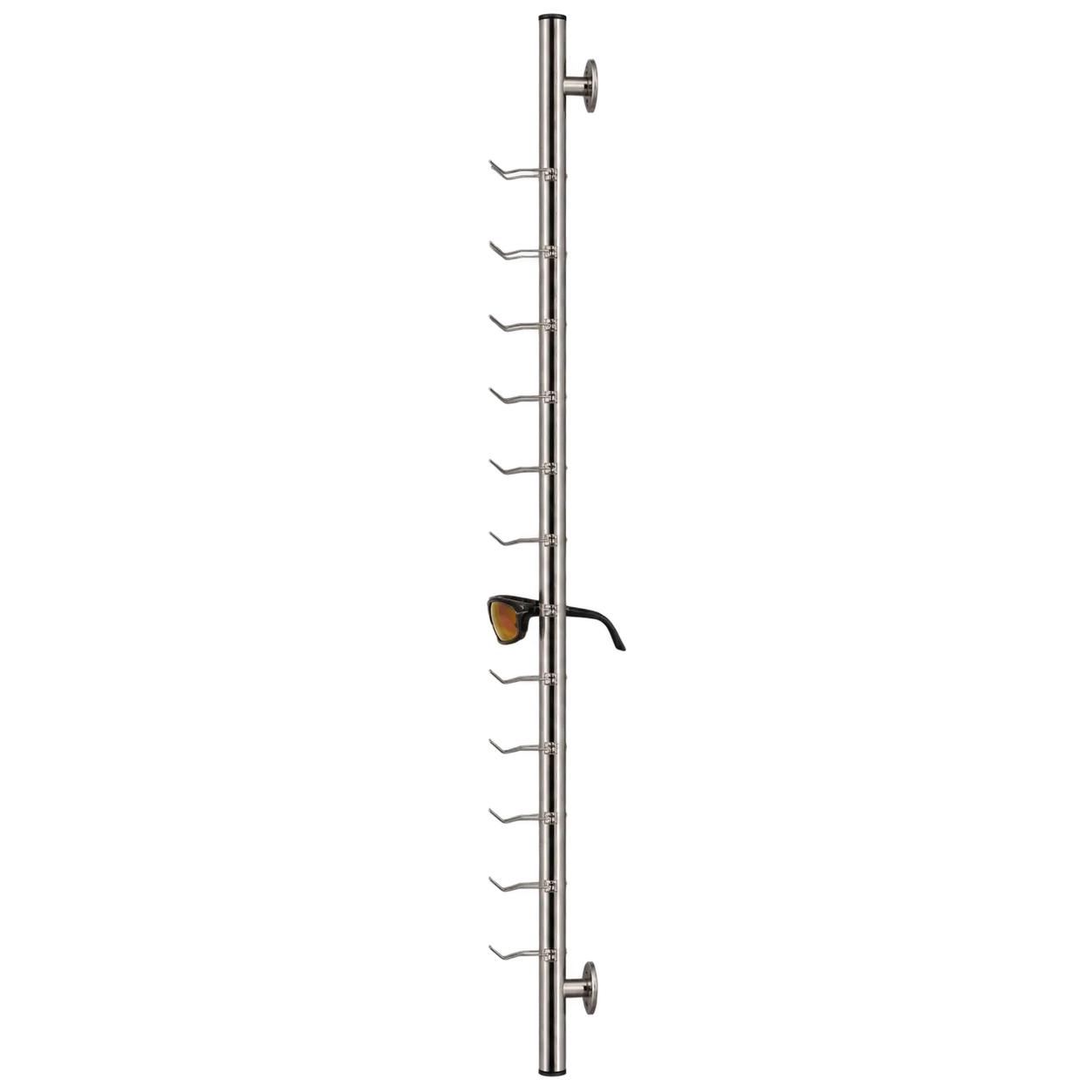
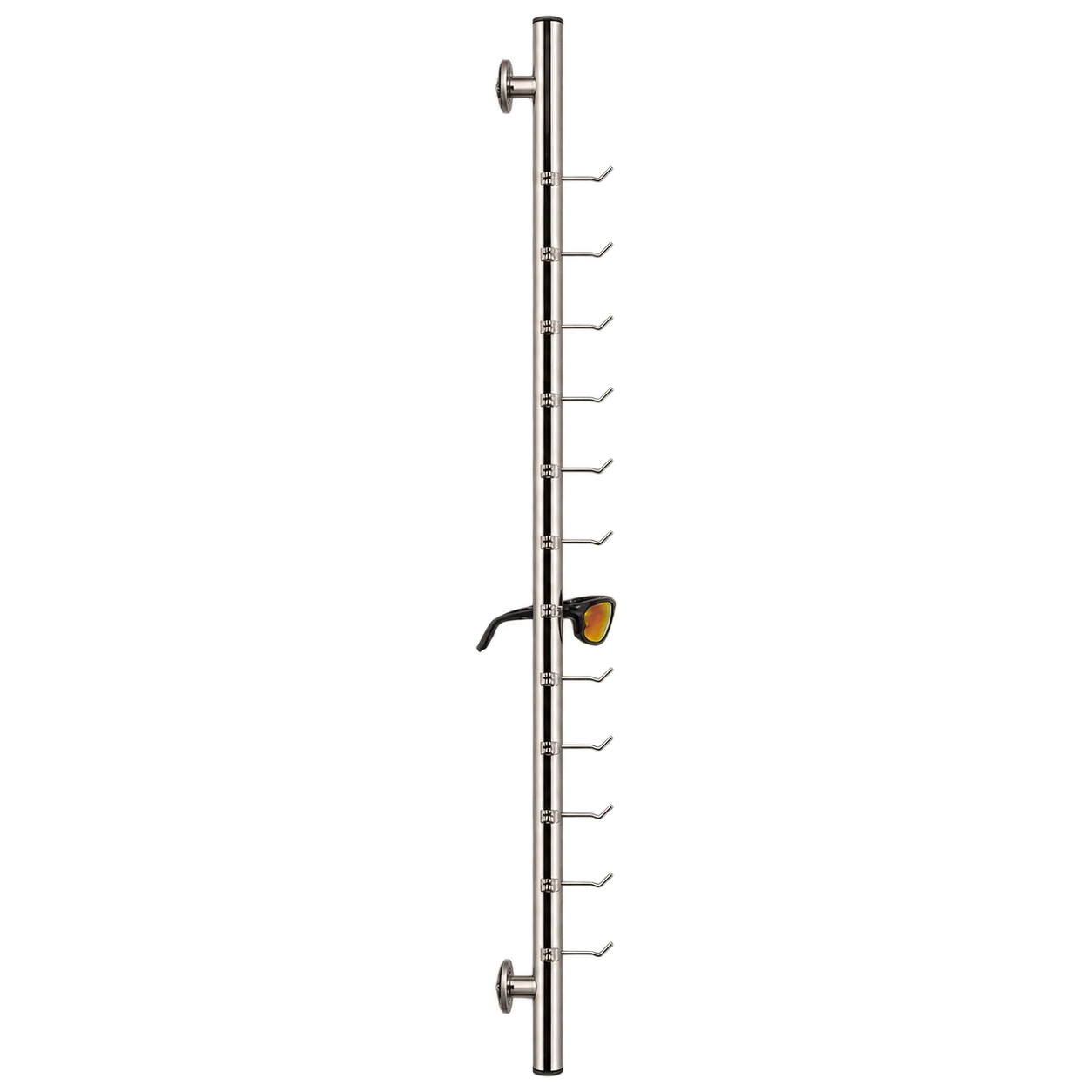
The AC-12 fits the parts of eyewear retail where customers expect to help themselves. Ready readers in a pharmacy or practice waiting area, everyday sunglasses near the door in summer, children's frames and value optical ranges are all sold by handling. A customer waiting for an appointment can try several pairs unprompted, and a dispensing optician is freed to work with the person in the chair. Twelve hook levels, as photographed, hold a small range in one column.
The evidence favours open display for sales and counts against it for security. In Numerator's 2024 survey of more than 5,000 US shoppers, 27% said they would switch retailer or abandon the purchase when products were locked up, which is the friction an open rod avoids. The cost appears on the other side of the ledger. The British Retail Consortium's 2025 crime survey recorded about 20 million incidents of customer theft in the UK in a year, at a cost of £2.2bn. An open rod is the sensible choice where the stock on it is cheap to lose and the wall is watched.
Open access has an inclusive side. Customers who find it awkward to ask for help, or who need time to decide, can browse on their own terms. The Equality Act 2010 duty on reasonable adjustments and the reach guidance in BS 8300-2 point to keeping part of the range within seated reach. Pharmacy groups and optical multiples generally set fixture choices in a store-format standard. The conformity documentation those procurement routes require is issued by the manufacturer and shared by the enquiry team.