

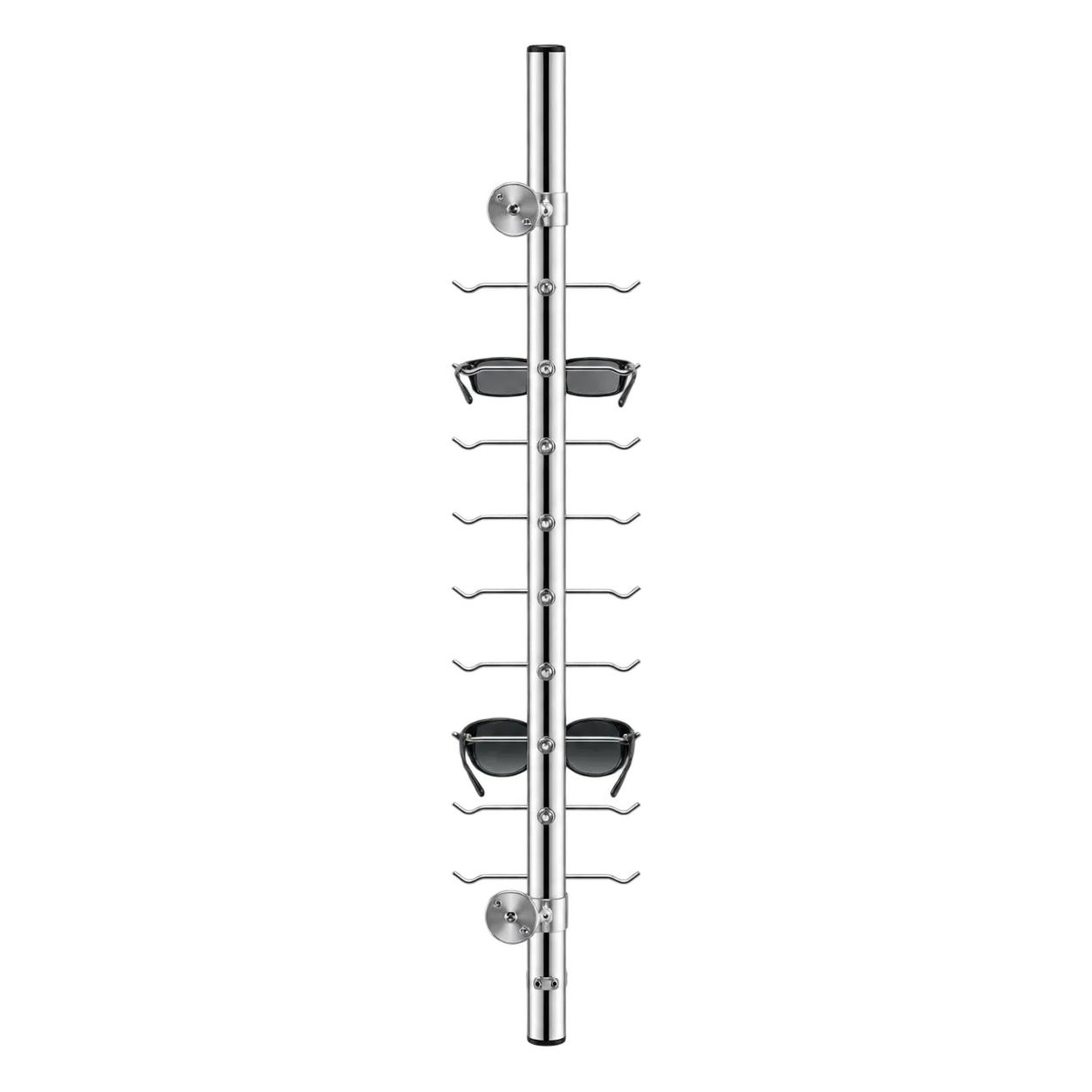
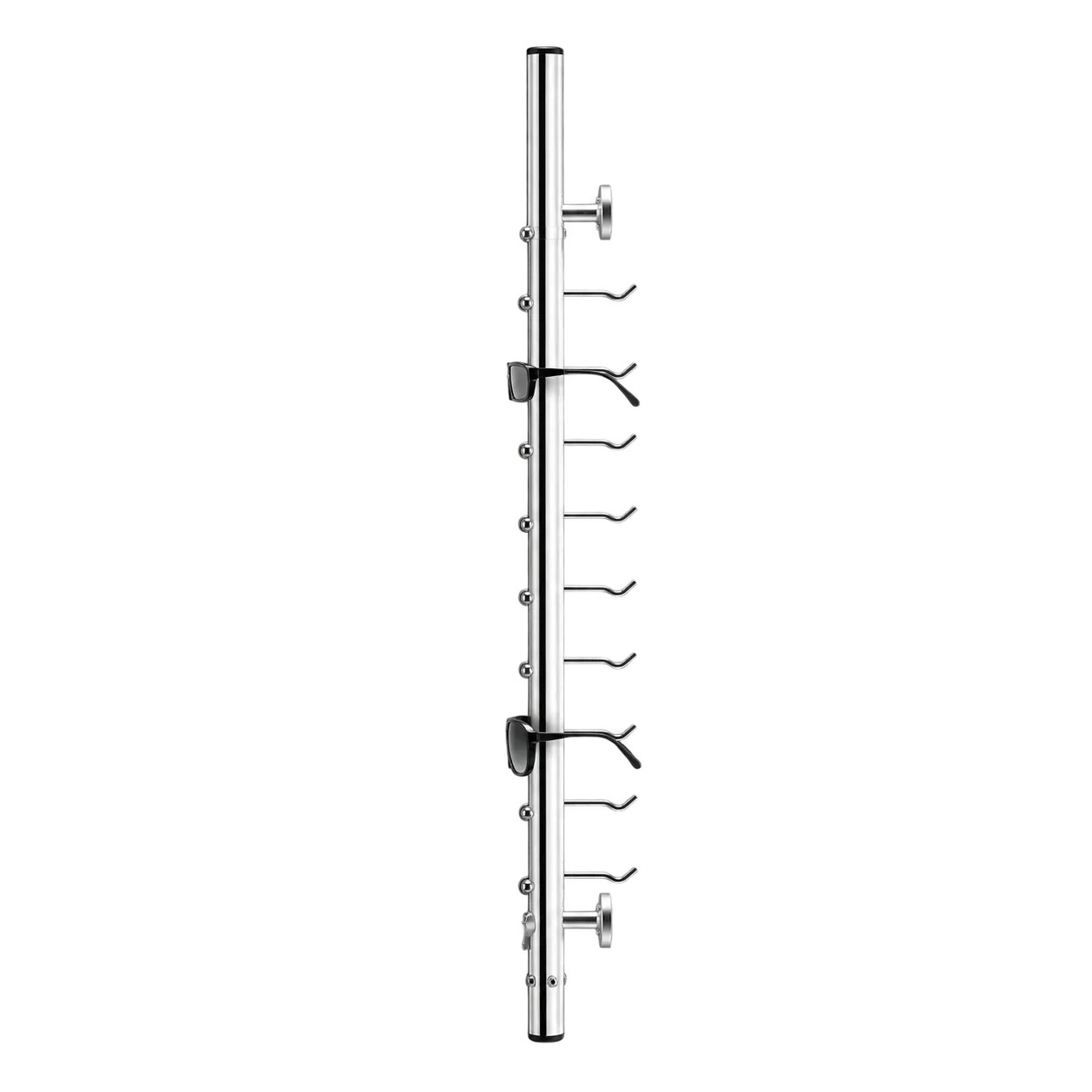
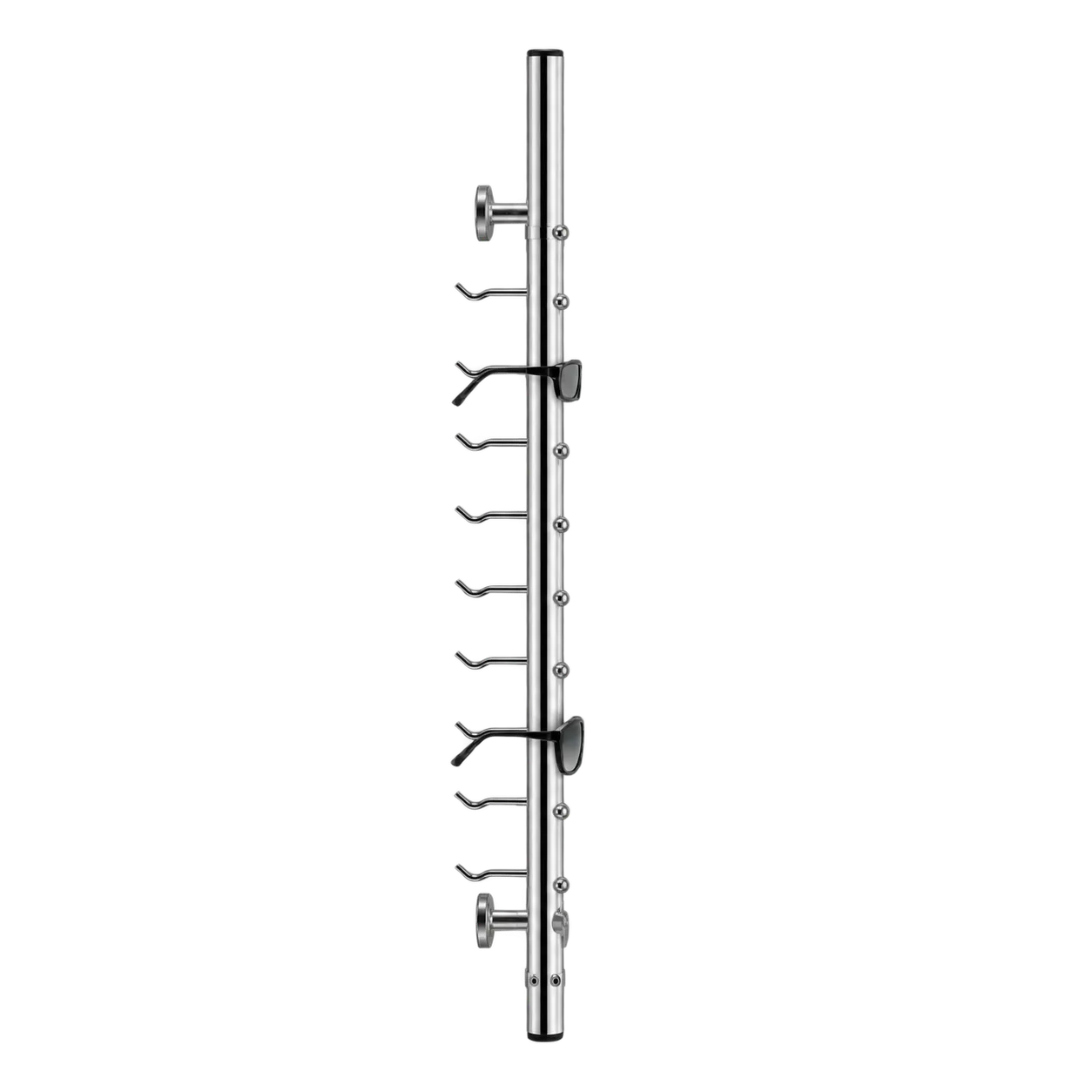
Optical practices with a wall of frames on open display are the main setting. A locked tube keeps frames in view while staff control when they come off the wall, which suits displays near the entrance or away from the dispensing desk.
Sunglasses displays often carry higher-value frames that customers want to try without help. A lock lets the practice show them openly, with a team member unlocking the tube for each try-on.
Designer and premium frame collections can be grouped on locked tubes, keeping the same staff-controlled routine across a range.
Practices in shopping centres and high-footfall locations, where theft from open shelving is a concern, can use locking tubes for the frames most at risk.
Multi-branch groups can standardise on one display tube, so keys, fixings and layouts are the same at every site. Ask whether keys can be matched across a group.
Shop refits and new branches can plan wall layouts around the tubes once the seller confirms the length, capacity and fixing points.
Pop-up and seasonal displays, such as summer sunglasses areas, may use locking tubes where fixed shelving is not available, provided the wall can take the fixings.
Insurance and loss-prevention reviews may ask how displayed stock is secured, and a locked tube with a written key policy gives a clear answer to record.
The AA-9 is less suited to practices that need capacity, length and fixing details before planning a layout. Any declaration of conformity or test report is issued by the manufacturer and provided by the seller.