
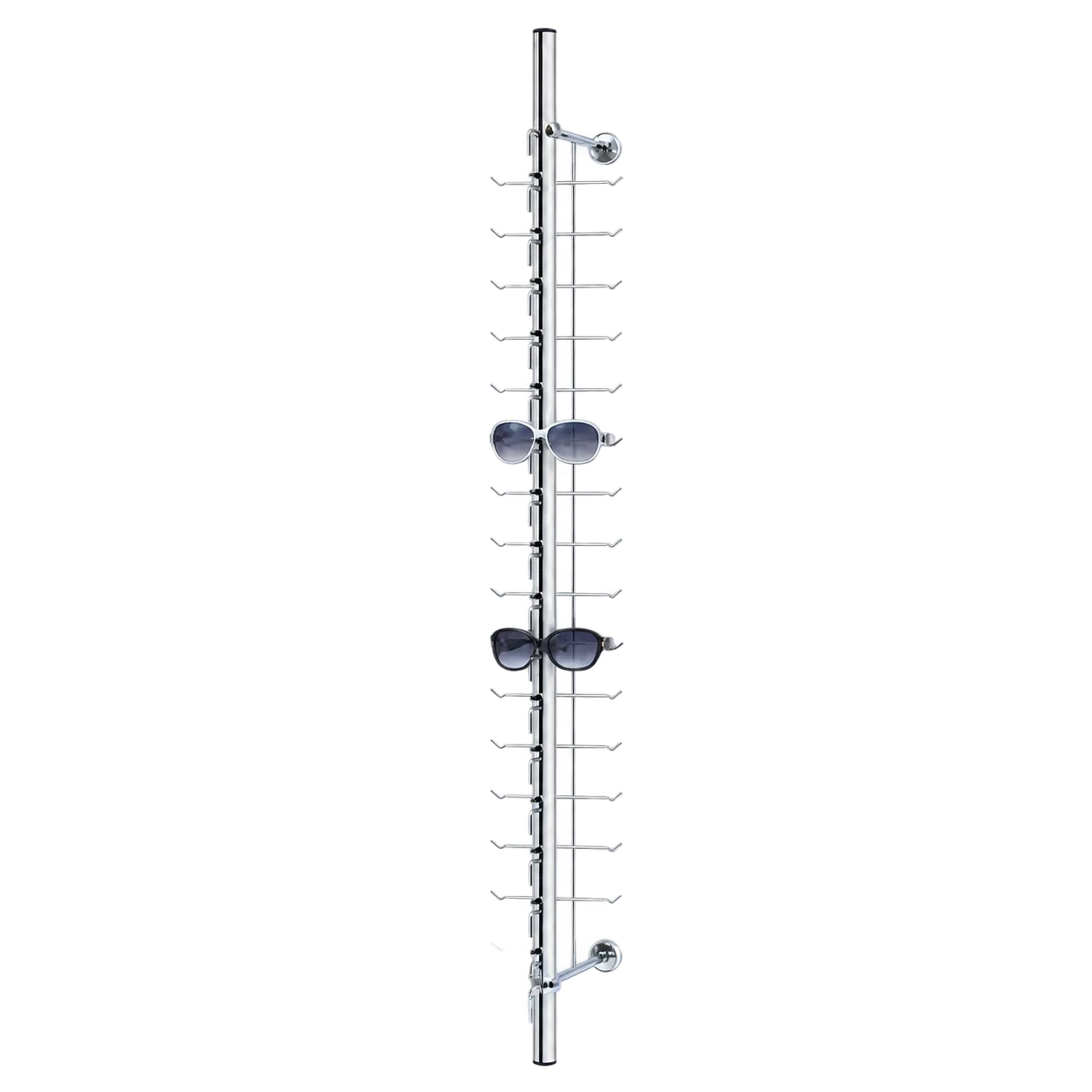
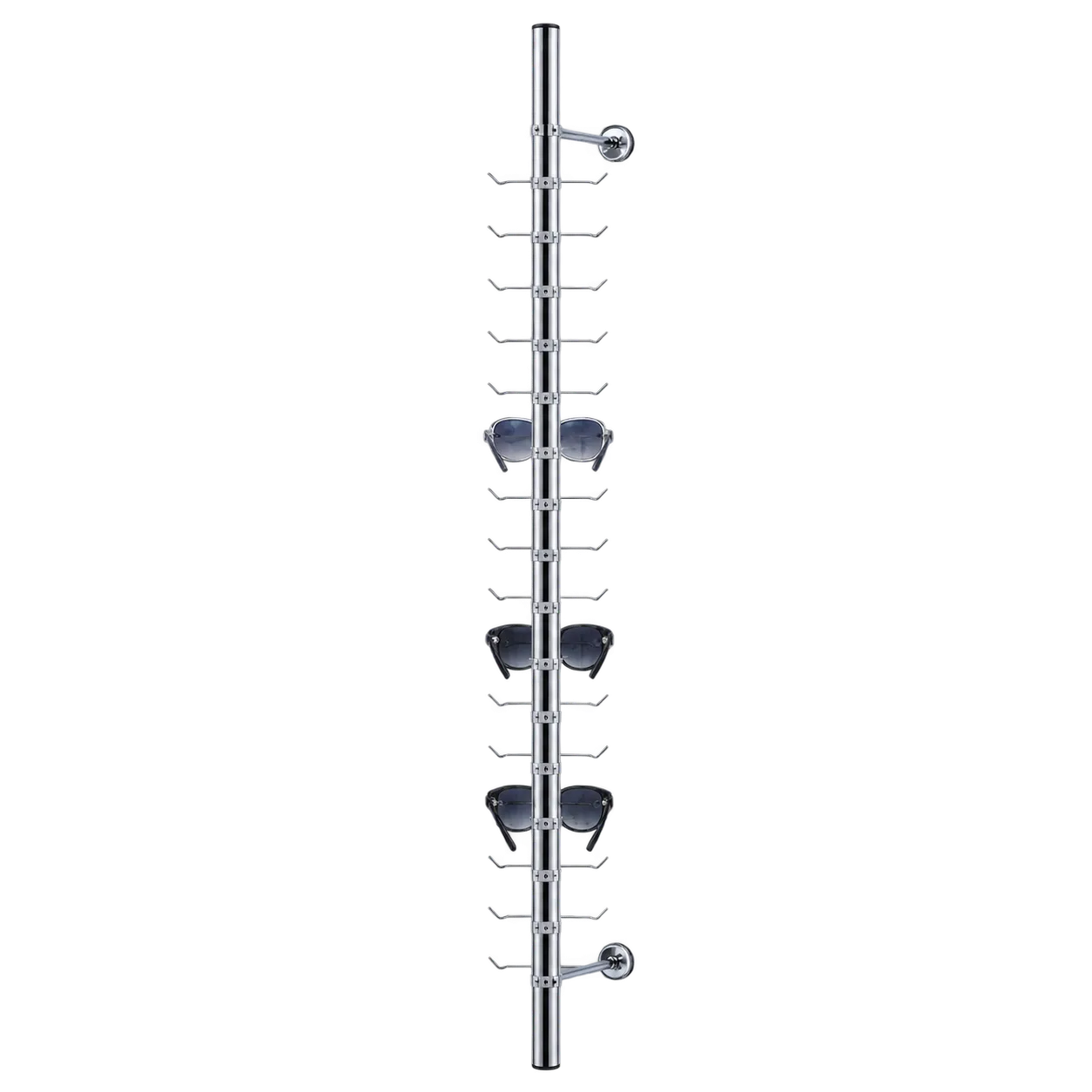

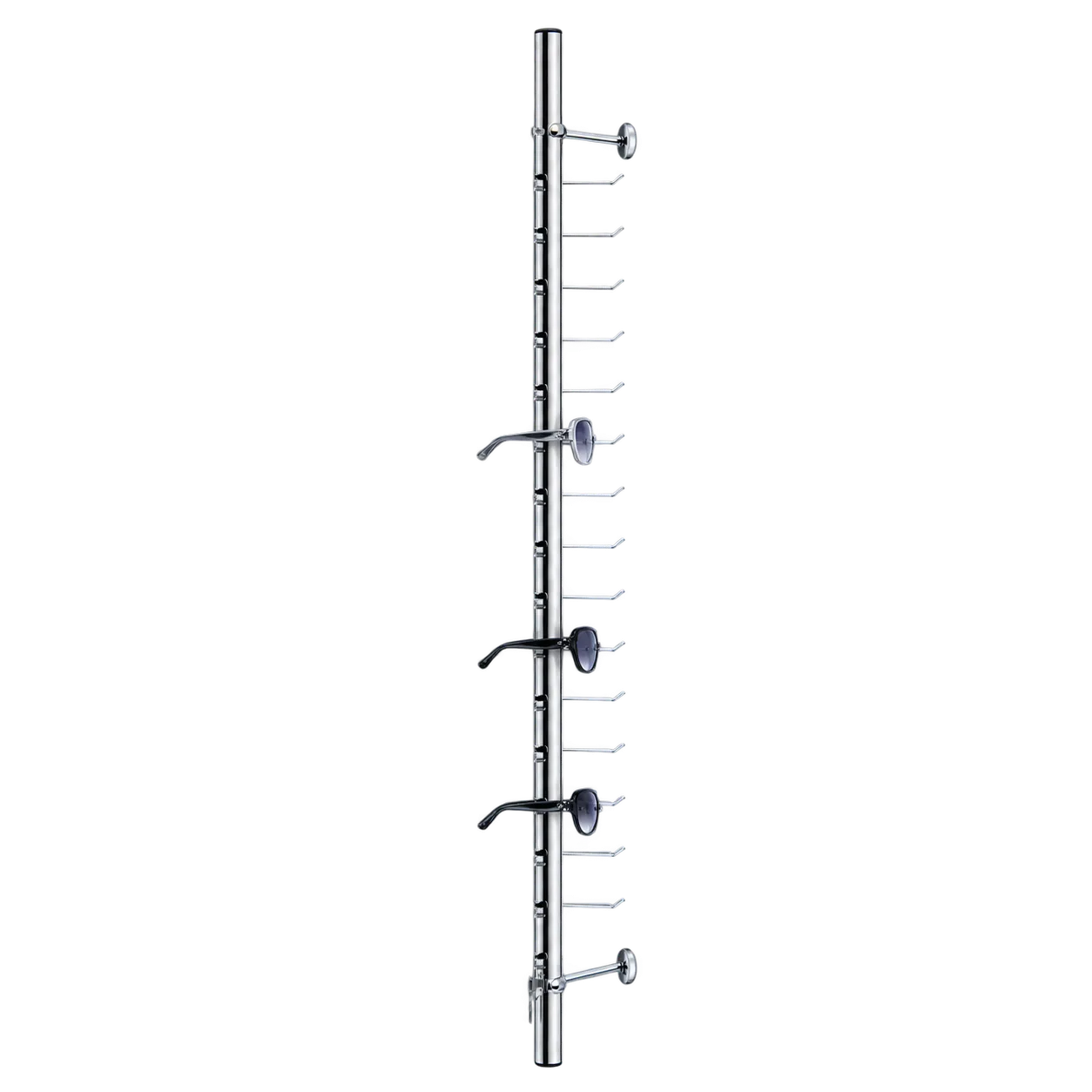
The AA-20 is a fit-out purchase. New optical practices, refits of established ones, multi-site groups rolling out a standard wall and eyewear outlets in shopping centres all buy fixtures by the run, and a carton of ten long rods dresses a wall in one order. Each rod then holds a column of frames in view of the customer while staff keep the key. Ownership after opening day involves little beyond that key.
Shops lock eyewear because theft and its prevention are both expensive. The British Retail Consortium's 2025 crime survey put the annual cost of customer theft to UK retailers at £2.2bn, with £1.8bn more spent on prevention such as security staff and technology. A mechanical lock adds to that spending once, at purchase, since it has no running cost. It still has a commercial cost. Numerator's 2024 survey of more than 5,000 US shoppers found that 27% would go elsewhere or drop the purchase when products were locked. The saving on theft has to be weighed against sales lost at lines where customers will not wait.
Standardising on one rod helps a group. A single key pattern, one set of fixings and one fitting method reduce training and spares across sites, and a shared specification simplifies reorders. Layouts still have to meet the Equality Act 2010 duty on reasonable adjustments, with BS 8300-2 as the reach reference. Groups and franchises normally buy through a fit-out specification or a central procurement route. The conformity documentation those procurement routes require is issued by the manufacturer and shared by the enquiry team.