
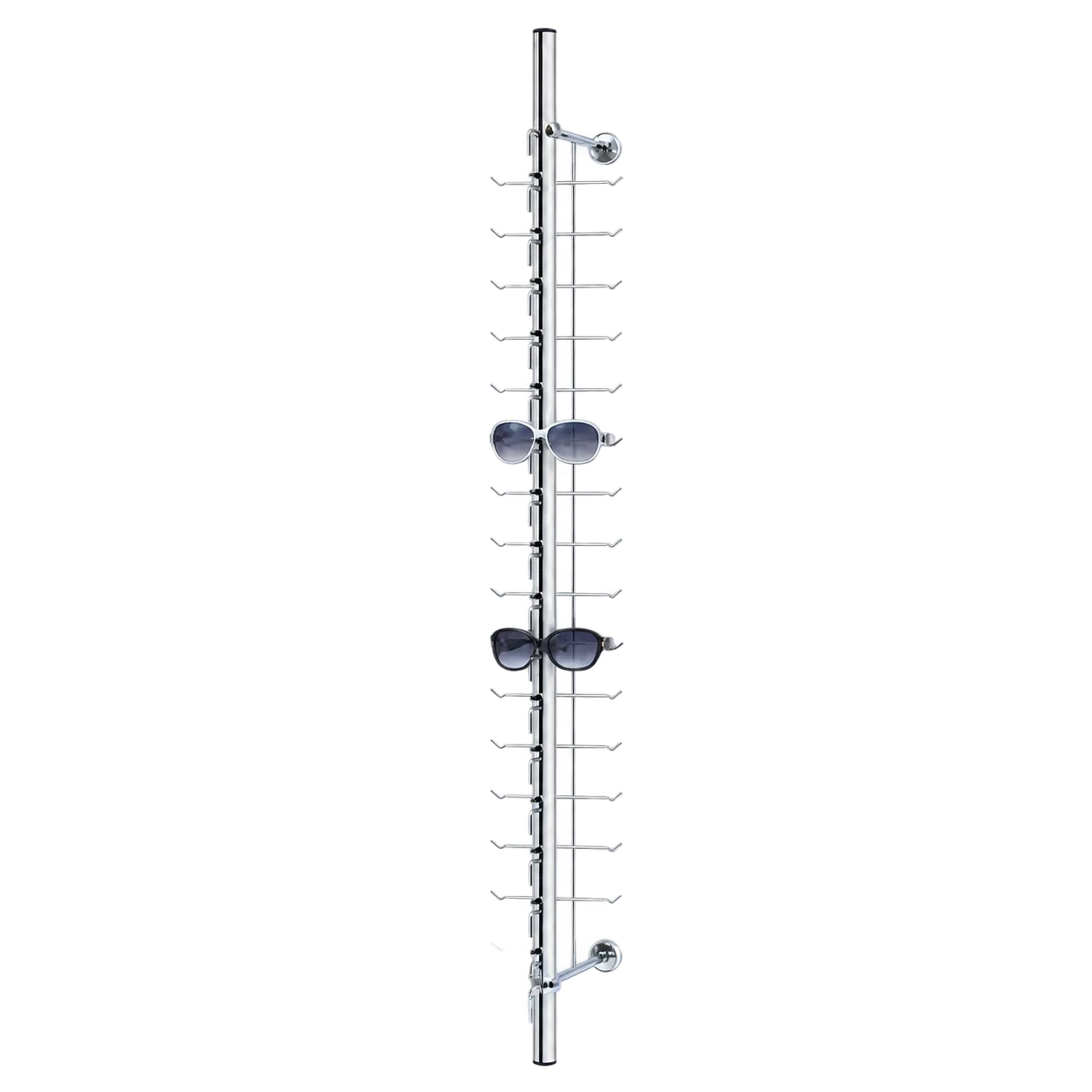
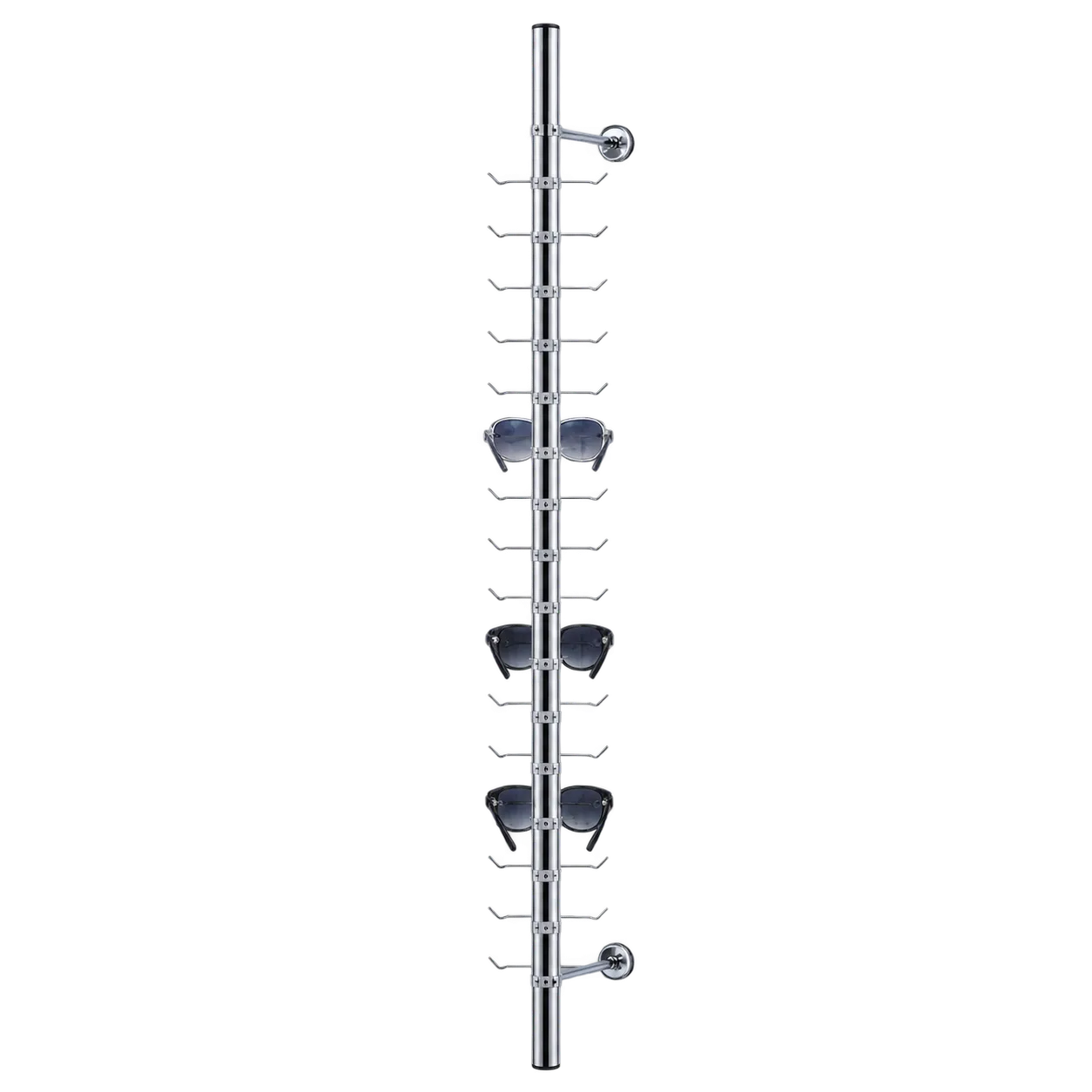
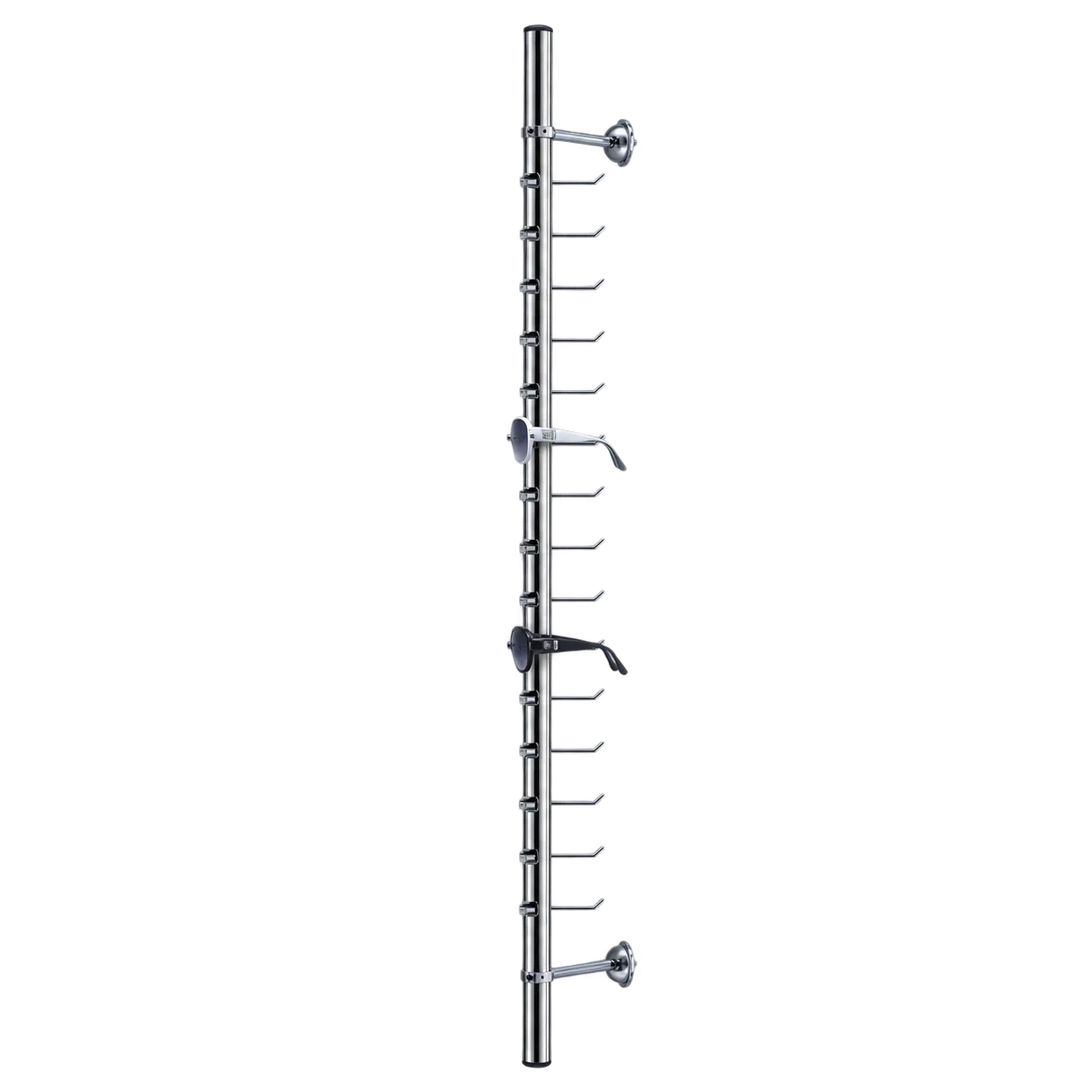
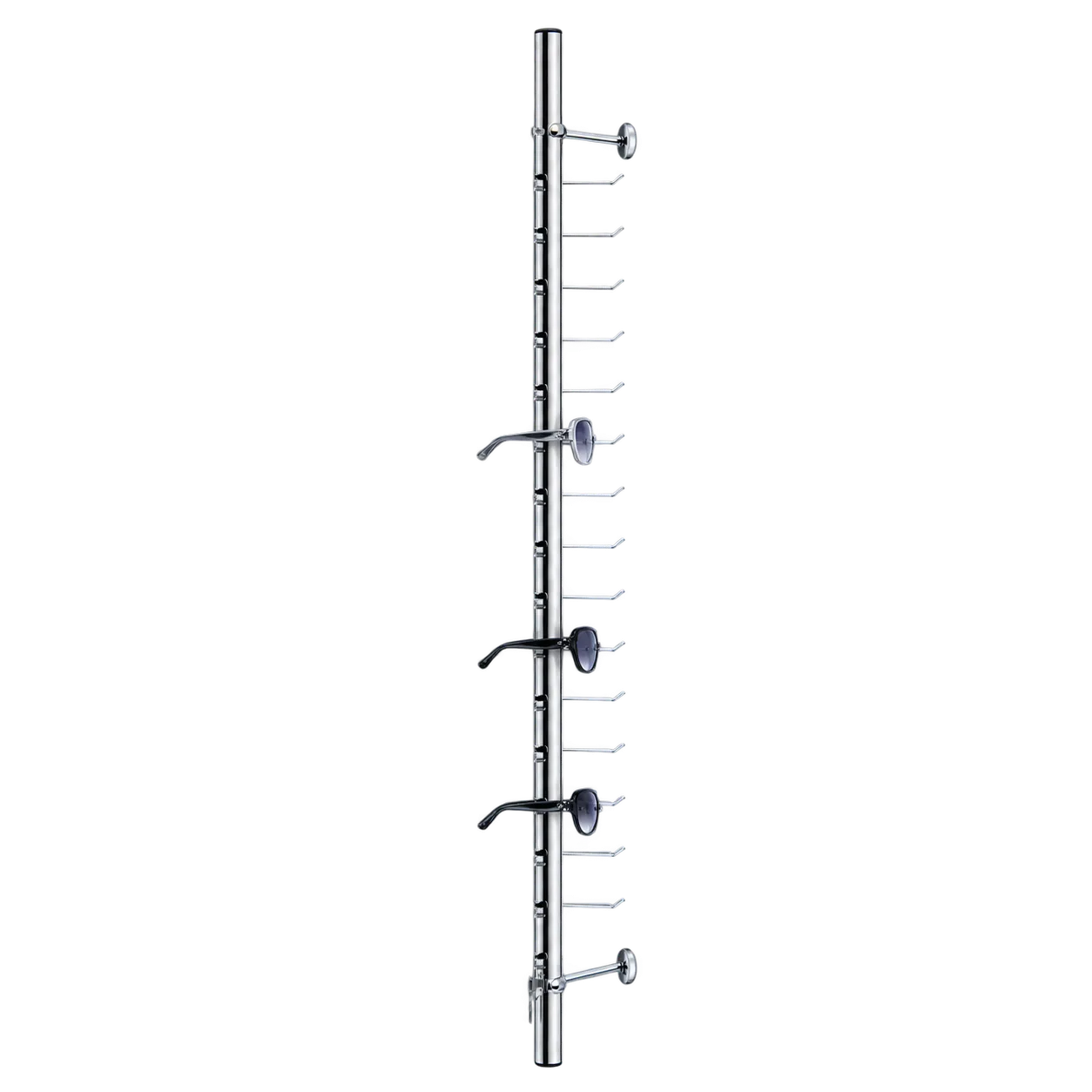
The AA-16 is aimed at the premium end of eyewear retail. Sunglass specialists, designer frame boutiques, optical practices with a fashion wall, and eyewear concessions in department stores and airport shops all sell frames that customers choose by eye before they ask to hold them. A column of sixteen hooks, as photographed, lets a brand story run down one strip of wall, and the locked guard keeps that story intact through a busy day.
Fit matters more than features with a fixture like this. In the UK, the British Retail Consortium's March 2025 crime survey put shoplifting losses at £2.2bn across a year with roughly 20 million incidents, and small, valuable goods such as designer sunglasses fit that pattern. The cost of locking falls hardest on low-value lines. Numerator's 2024 study of over 5,000 US shoppers found 27% would leave or switch store on meeting locked goods, so a lock pays where each pair is worth the wait and the advice that comes with it. Readers and basic frames sit better on open displays.
Placement completes the fit. Staff need to reach the lock at the lower bracket without stooping past customers. The Equality Act 2010 duty to make reasonable adjustments, with the reach guidance in BS 8300-2, argues for keeping some of the range within seated reach. Retail groups often buy fixtures through a store design specification or a framework agreement. The conformity documentation those procurement routes require is issued by the manufacturer and shared by the enquiry team.