

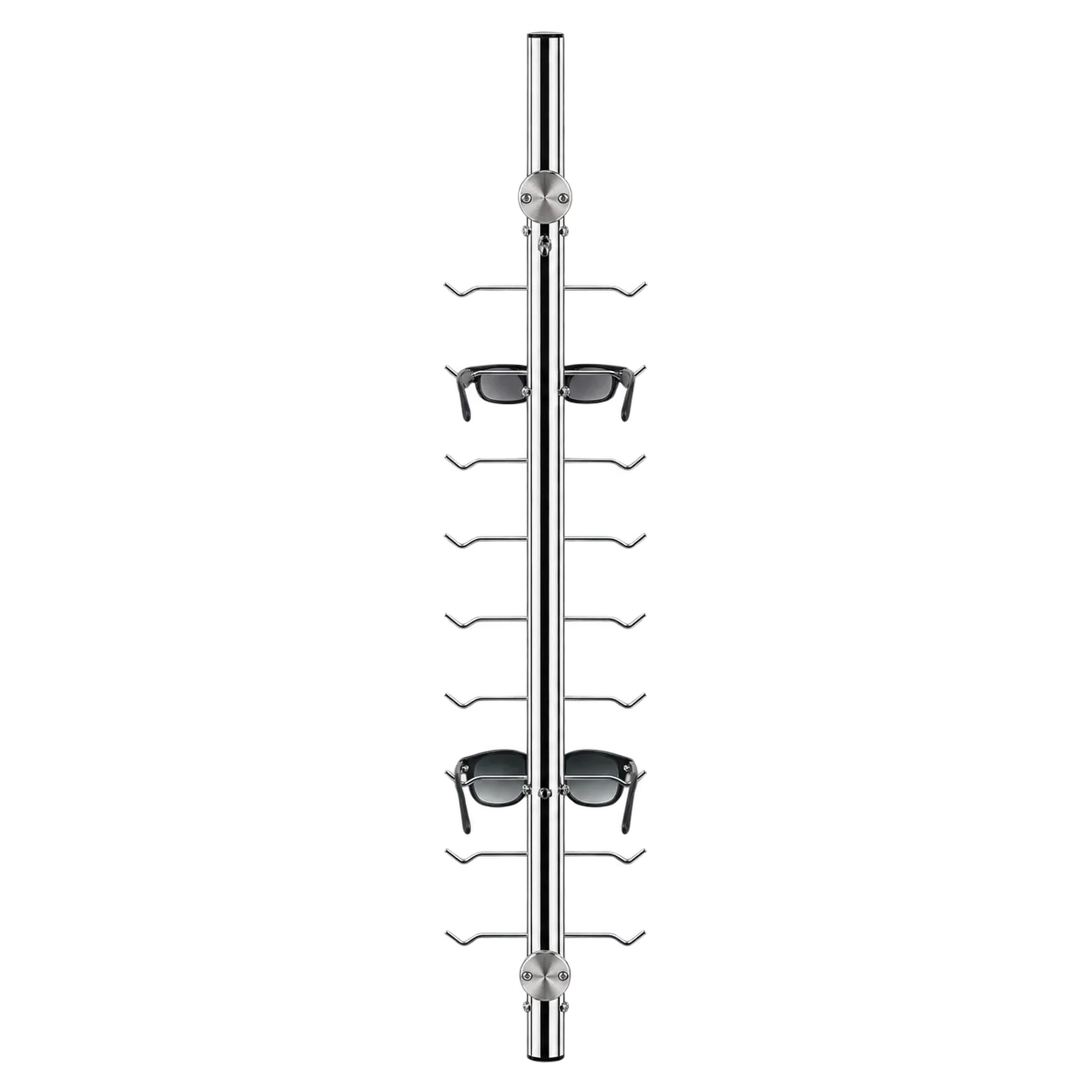
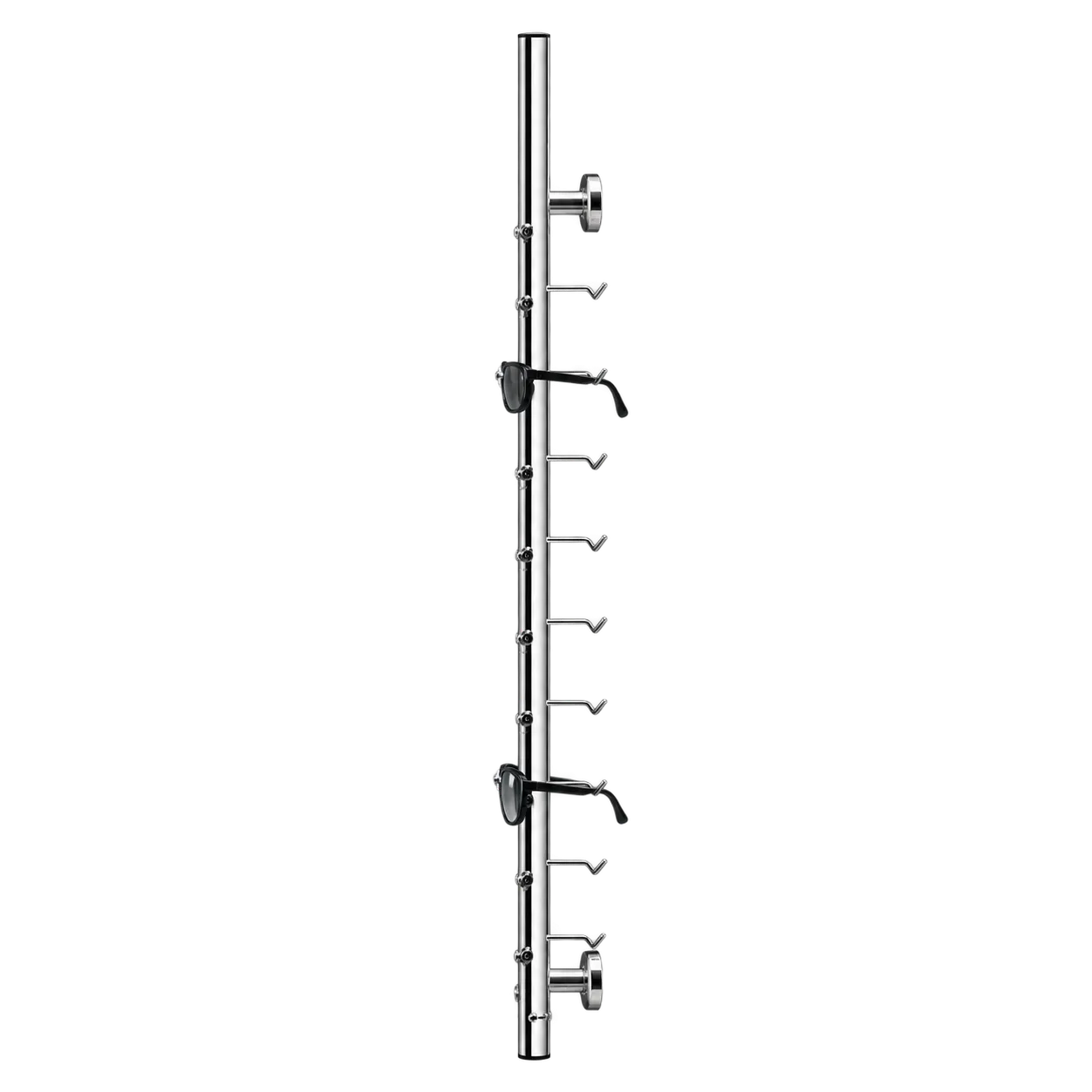

The AA-12 belongs on the retail side of eye care: optical practices, sunglass shops, department store eyewear concessions and pharmacies with a frame wall. It suits lines that carry enough value to justify a lock and a staffed try-on, such as designer frames, premium sunglasses and sports eyewear. A wall of rods holds stock at eye level, where customers can see shape and colour before asking to try a pair. The locked guard keeps the wall intact during busy periods or with one member of staff on the floor.
Evidence on locking stock points both ways. In the UK, the British Retail Consortium's 2025 crime survey recorded about 20 million incidents of customer theft over the previous year, with £2.2bn lost to shoplifting and a further £1.8bn spent on prevention. Locking has a cost of its own. In a 2024 United States survey of more than 5,000 shoppers by Numerator, 27% said they would switch retailer or abandon the purchase when products were locked up, although 62% said they usually wait for help. A locked rod therefore earns its place where theft losses on a line outweigh the friction of a staffed try-on.
Accessibility shapes where the rods go. Service providers have a duty under the Equality Act 2010 to make reasonable adjustments, and BS 8300-2 sets out reach ranges for people using wheelchairs, so a wall plan that keeps some stock within seated reach serves more customers. Independent shops buy fixtures directly, while groups and franchises usually buy through a shopfitting specification or a central procurement route. The conformity documentation those procurement routes require is issued by the manufacturer and shared by the enquiry team.